
Best LeanLens Alternatives in 2026: Stop Checking, Start Tracking
LeanLens is the best free one-shot web check. The alternatives matter when you want more than a reading: a tracked timeline, muscle depth, measurements — and a plan that changes.
By Reset90 AI Editorial Team
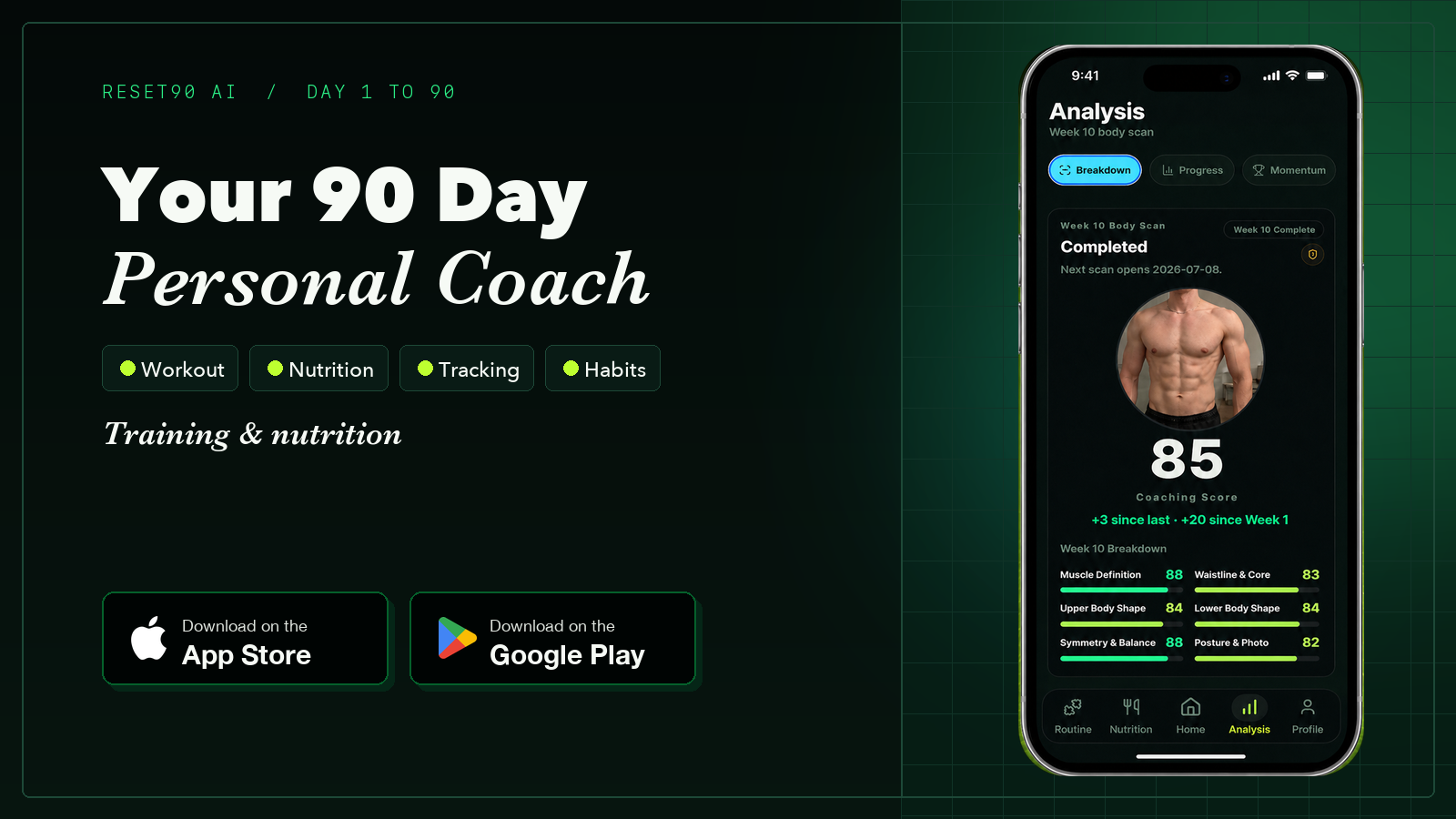
Short answer: LeanLens is a strong free one-shot web check: upload one to four photos and get a directional body-fat range, physique feedback, and next-step context without an account. The right alternative depends on what you need after that first reading. Choose Reset90 if you want repeatable Body Skin check-ins connected to a 90-day training and nutrition plan, Recomp AI for scan-and-avatar composition, MeThreeSixty for 3D measurements, Spren for a guided scan, or another free web analyzer for a second opinion.
01Best LeanLens alternatives at a glance
Start with the job you need the app to do. A one-shot estimate, a tracked timeline, 3D measurements, scan-style composition, and an adaptive plan are different outputs, so “best” depends on the next decision you want to make.
| If you need | Choose | What it adds | Best for | Main limitation |
|---|---|---|---|---|
| A free one-shot estimate | LeanLens | Browser upload, no-account start, directional body-fat and symmetry feedback | Checking where you are now | Limited memory between sessions |
| A tracked weekly plan | Reset90 | Guided Body Skin check-ins, a 90-day timeline, and plan adjustments | Turning progress signals into next actions | Not a 3D measurement tool |
| Scan-and-avatar composition | Recomp AI | Phone-based scan with avatar-oriented body-composition estimates | People who prefer scan sessions and visual models | Newer product with a smaller public track record |
| Free 3D measurements | MeThreeSixty | 3D avatar and tape-style circumference estimates | Users who want measurement numbers | Avatar output is not the same as muscle-detail feedback |
| A guided scan with a research angle | Spren | Front-camera scan with body-composition estimates | People who value a structured scan workflow | Regular use may require a subscription |
| A free second opinion | Another web analyzer | A second reading from the same standardized photos | Checking whether one estimate is an outlier | Still one-shot; no shared timeline or plan |
LeanLens remains useful when you want a low-friction answer to “what might my current physique look like?” It should be treated as directional, not medical. The alternatives become useful when you want history, measurements, a different scan method, or a clear next action.
02How we compared these LeanLens alternatives
These tools do not all measure the same thing. We compared them by the user task they support, not by treating every body-fat number as interchangeable.
- Input and method: photo upload, guided camera scan, or 3D model.
- Output: a range, visible physique feedback, muscle-group detail, circumference estimates, a timeline, or a plan.
- Repeatability: whether the product helps you compare consistent check-ins over weeks and months.
- Practical access: web versus iOS or Android, account requirements, free limits, history limits, and subscription boundaries.
- Evidence boundary: whether a claim is a product description, a third-party review, or a validated measurement. Current prices and availability can change, so check the official product listing before subscribing.
For any photo-based tool, use the same lighting, camera height, distance, pose, and fitted clothing each time. A strange result is a reason to repeat the setup consistently, not proof that you need to switch apps immediately.
03When one-shot analysis stops being enough
A browser check can answer “where am I right now?” It becomes less useful when your real question is about change:
- When you want a record, not a reading. Progress happens across months, which requires a tracked timeline.
- When you want muscle-group depth. “Balanced” is a start; a lifter may want to know which groups are moving and which are lagging.
- When you want scan-style measurements. Circumferences and 3D shape answer a different question than a photo estimate.
- When you want the next step. The most useful check-in does not only describe today; it helps you decide what to repeat, change, or review next.
04The 5 best LeanLens alternatives by what they add
| Tool | Platform / input | Price or access | History or output | Best for | Main limitation |
|---|---|---|---|---|---|
| LeanLens | Web; one to four photos | Free start; verify current Pro pricing | Body-fat range, muscle balance, symmetry, and physique feedback | A quick, low-friction first check | One-shot sessions do not automatically become a long-term plan |
| Reset90 AI | iOS + Android; guided Body Skin check-ins | Free to start; current app terms may vary | Repeatable check-ins, 90-day timeline, training and nutrition targets, and plan review | People who want progress signals connected to action | No 3D avatar or circumference output |
| Recomp AI | iOS; phone scan | Free download plus subscription tiers | 3D avatar with body-composition and circumference-style estimates | Scan-and-avatar composition sessions | Smaller public track record than established measurement tools |
| MeThreeSixty | iOS + Android; two photos in fitted clothing | Free scan tier; premium history may apply | 3D avatar and more than a dozen circumference-style measurements | Measurement numbers without buying hardware | Geometry is not the same as muscle-balance analysis |
| Spren | iOS; guided front-camera scan | Subscription access may apply | Body-fat and lean-mass estimates with a structured scan workflow | Users who value guided scanning and published research positioning | No photo archive or deep muscle-group breakdown |
LeanLens — best for a fast web check
LeanLens is built around almost no friction: open the web experience, upload one to four photos, and receive an estimated body-fat range with observations about muscle balance and symmetry. It does not require special hardware or an account to start.
Strengths: fast setup, free starting experience, directional range instead of false decimal precision, and clear photo-quality limitations.
Weaknesses: a one-shot check does not automatically give you a repeatable timeline, detailed training progression, or a plan that changes with your trend.
Best for: someone who wants a first read before deciding whether they need a deeper tracking system.
Reset90 AI — best for turning check-ins into next actions
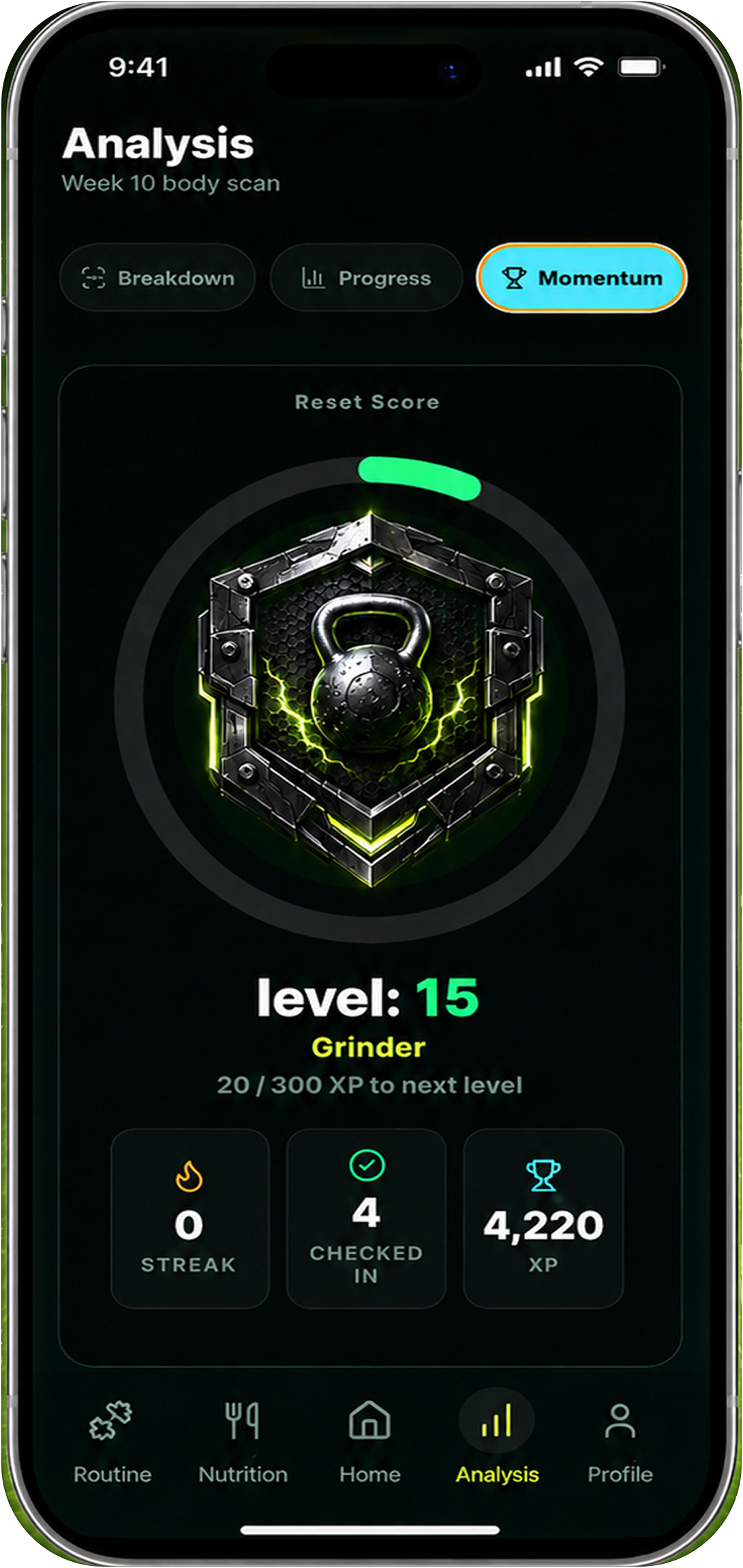
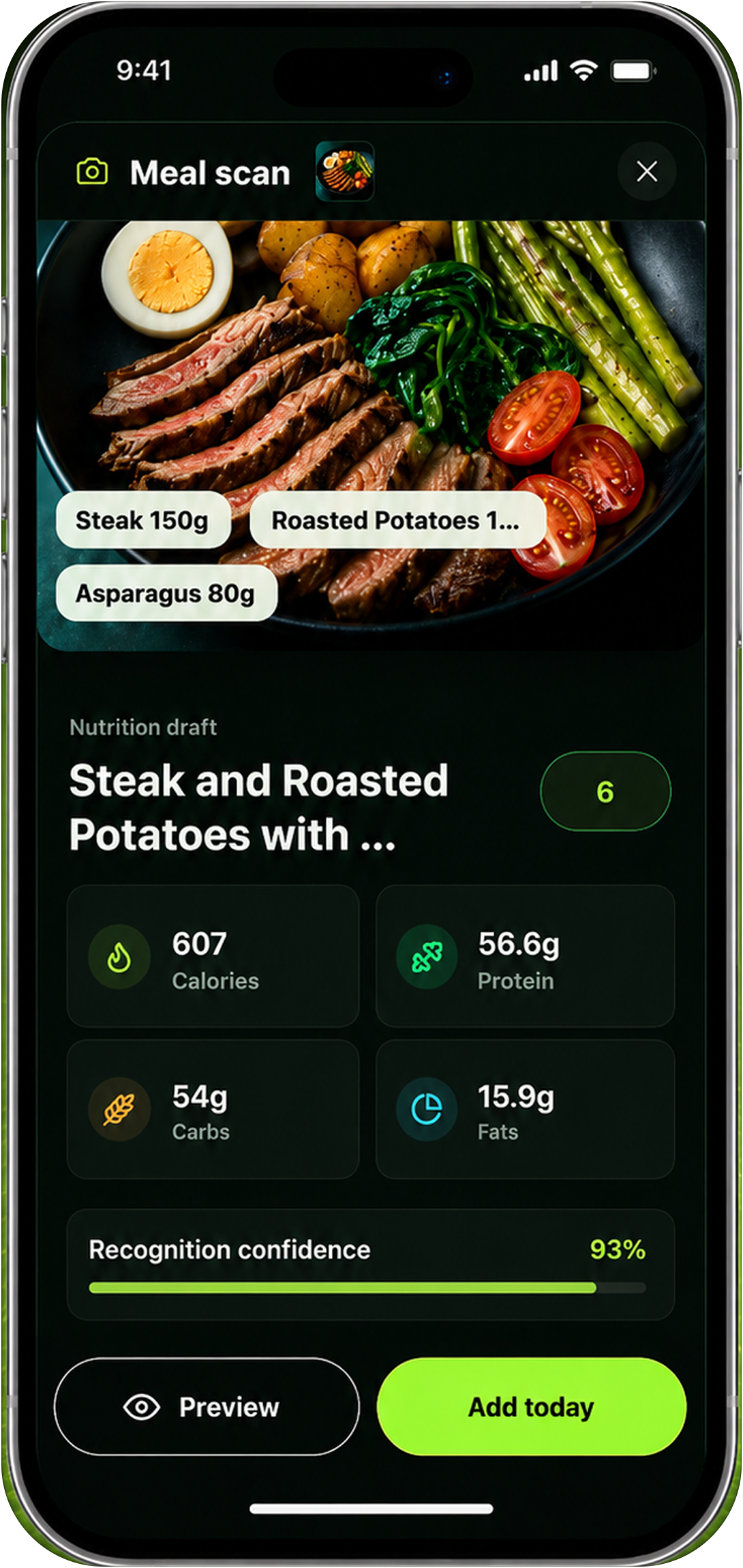
Reset90 is designed for the step after a body check. A guided Body Skin check-in creates a more repeatable progress signal, and the 90-day experience connects that signal with training, nutrition targets, and review points. It is for people who do not only want to know where they are; they want a practical system for deciding what to do next.
Strengths: a repeatable weekly rhythm, a timeline instead of isolated sessions, training and nutrition context, and a plan-review loop.
Weaknesses: Reset90 does not produce a 3D avatar or circumference numbers. If geometry is your priority, MeThreeSixty or a scan-style tool may fit better.
Best for: users who have tried a one-shot analyzer and now want to connect consistent check-ins to a 90-day training and nutrition routine. Learn how Reset90 AI fits into a complete progress routine.
Recomp AI — best for a scan-and-avatar approach
Recomp AI takes the camera in a different direction: a phone scan creates a 3D model with estimates for body fat, lean mass, and regional circumference-style measurements. It suits users who want scan-session output rather than a simple photo upload.
Strengths: measurement-flavored output and a visual model for comparing composition sessions.
Weaknesses: it is a newer product with a smaller public track record, and a scan session is not the same as a photo archive or adaptive plan.
Best for: people who want a scan-and-avatar view of composition.
MeThreeSixty — best for free 3D measurements
MeThreeSixty uses photos to create a 3D avatar and estimate circumference-style measurements such as chest, waist, hips, thighs, and arms. It answers a geometry question: how might these body-site measurements be changing?
Strengths: measurement numbers, Android availability, and a free starting scan experience.
Weaknesses: premium history limits may apply, and a smoothed avatar does not provide the same visible muscle-balance feedback as a physique-analysis tool.
Best for: users who prefer circumference-style numbers to a body-fat range.
Spren — best for a guided scan workflow
Spren replaces the photo-upload workflow with a guided front-camera scan: stand at a set distance, follow the prompts, and receive body-composition estimates. Its differentiating angle is a published research and validation positioning.
Strengths: structured scanning, a clear capture protocol, and a research-oriented trust signal.
Weaknesses: regular access may require a subscription, and the output is a data point rather than a photo archive or detailed muscle-group plan.
Best for: people who value a guided scan and want to understand the method behind the output.
Another free web analyzer — best for a second opinion
A second free analyzer can be useful when you run the same standardized photos through two independent systems. If the readings are close, you have more confidence in the general neighborhood; if they differ substantially, treat both as uncertain and repeat the setup rather than choosing the more flattering result.
Strengths: free, low friction, and useful for calibration.
Weaknesses: it is still one-shot by design, with no shared timeline, muscle progression, or adaptive plan.
05Why Reset90 is different from a web check
A web analyzer answers “where am I right now?” Reset90 is built for the follow-up question: “What should I do next, and what evidence will we review?” The difference is a workflow, not a claim that one photo can become a clinical measurement.
- The check-in is repeatable. A guided routine helps keep lighting, camera position, and poses more consistent.
- The check-in has memory. Each check-in can sit in a 90-day timeline, so you can review direction instead of reacting to one noisy result.
- The check-in connects to action. Training and nutrition targets give the signal a practical next step, while the next review provides a chance to keep, change, or question the plan.
Reset90 is a good fit for someone who wants a structured progress routine around training and nutrition. It is not the right choice if the primary requirement is a 3D avatar, circumference measurement, or clinical body-composition assessment.
06How to choose
- Happy with an occasional web check? Stay with LeanLens and use consistent photos; a second free analyzer can provide a rough cross-check.
- Ready to track instead of check? Choose Reset90 if you want repeatable Body Skin check-ins connected to a 90-day training and nutrition routine.
- Want scan-style measurements? Choose MeThreeSixty for 3D circumference-style output, or Recomp AI for a scan-and-avatar approach.
- Prefer a guided scan? Spren is the clearest fit for a structured front-camera workflow and research-oriented positioning.
- Need clinical certainty? None of these photo or phone tools replaces DEXA, Bod Pod, medical imaging, or professional assessment.
07Frequently asked questions
What is LeanLens?
LeanLens is a web-based AI body analyzer. You upload one to four photos and receive a directional body-fat range plus observations about muscle balance and symmetry. It is designed for fitness context, not medical diagnosis.
Is LeanLens accurate?
It can be useful as directional feedback, but it is not a clinical measurement. Lighting, pose, clothing, camera distance, hydration, and model uncertainty can change a photo-based result. Use the same conditions repeatedly and read the trend rather than treating one number as final.
What is the difference between LeanLens and Reset90?
LeanLens is a low-friction web check that focuses on a current photo-based estimate. Reset90 is a broader progress routine: repeatable Body Skin check-ins are connected to a 90-day training and nutrition workflow. Choose LeanLens for a quick reading; choose Reset90 when you want the reading to inform what you review and do next.
Is there a free LeanLens alternative?
Yes. MeThreeSixty has a free starting scan experience, and other web analyzers can provide a second opinion. Reset90 is aimed at a different job: building a repeatable check-in and plan-review rhythm rather than replacing a one-shot scanner.
How often should I repeat a photo-based scan?
Weekly or every two weeks is usually more useful than checking multiple times per day. Keep the camera position, lighting, pose, distance, and clothing as consistent as possible. If a result looks surprising, repeat the setup before changing your plan.
Can AI body analysis replace DEXA?
No. Photo and phone-based tools provide estimates and trends. They do not replace DEXA, Bod Pod, medical imaging, or a qualified professional assessment. They are most useful when you treat them as consistent, informational signals rather than precise diagnoses.
08Final verdict: choose the workflow, not the loudest number
LeanLens is a useful starting point because it makes a first body-analysis check easy. The best alternative depends on what you want next: measurements, a guided scan, a second opinion, or a timeline that turns check-ins into training and nutrition decisions.
For a simple web reading, LeanLens may be enough. For a repeatable 90-day routine, Reset90 is designed to connect progress signals with next actions. For 3D geometry, choose a measurement-focused tool. Whichever you use, consistent conditions and realistic limits matter more than chasing a single exact-looking number.
The Reset90 system
Useful ideas for building a body you can keep.
Training notes, product updates, and practical ways to make your next 90 days count.
Start your next 90 days
Get your daily training, nutrition, and check-in priorities in one adaptive system.


Keep reading
Related articles

Ideal Body Measurements for Women
There is no single ideal body measurement set for women. Learn how averages, waist-to-height, body shape and repeatable tracking fit together without chasing a fixed beauty standard.
Read article
Bulk, Cut, or Recomp? A Practical Decision Guide
A practical way to choose a bulk, cut, recomp, or maintenance phase using your goal, training age, recovery, and repeatable progress signals.
Read article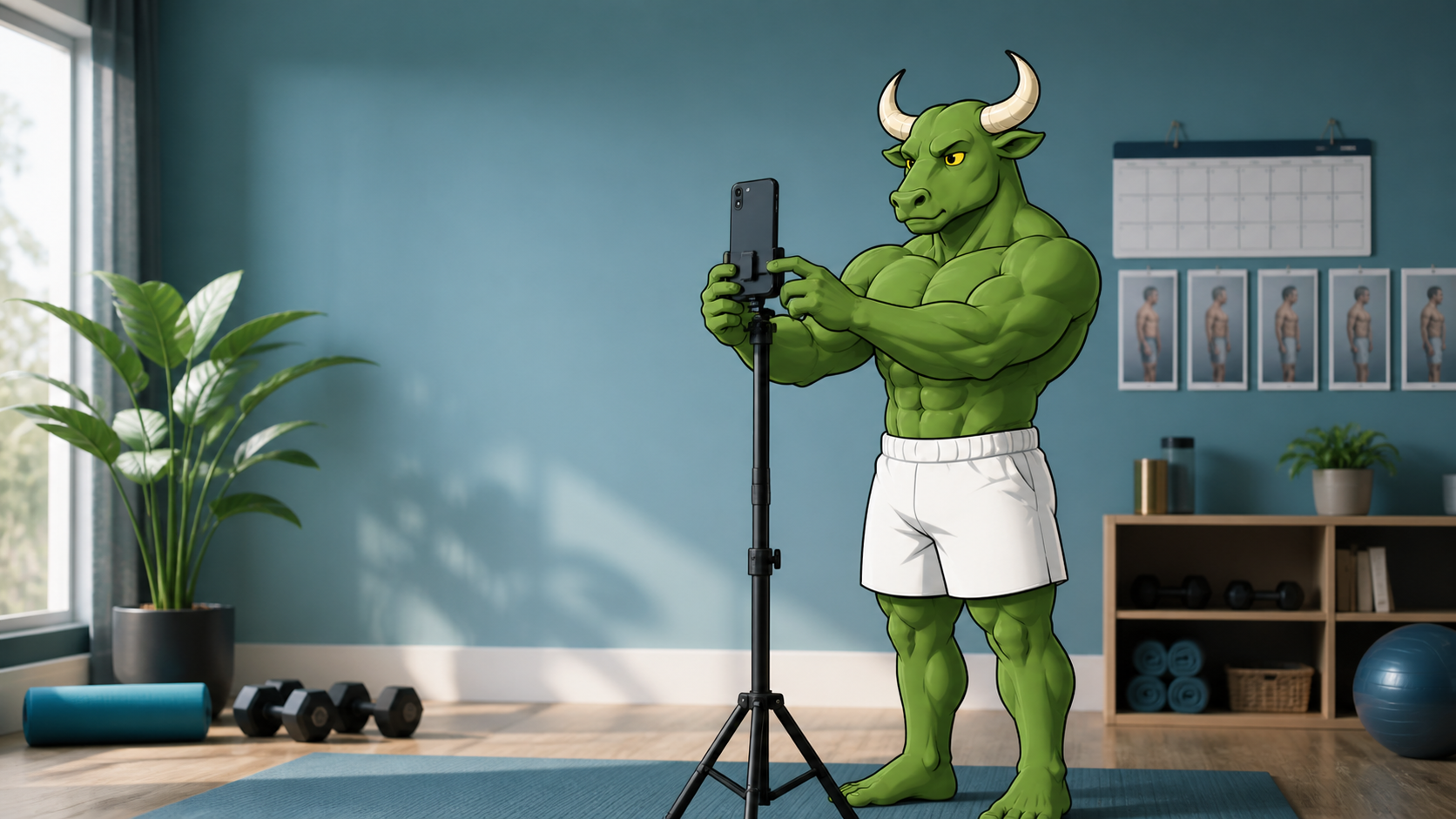
How Often Should You Take Progress Photos?
How often should you take progress photos? Use this goal-based guide to choose weekly, biweekly, or monthly check-ins and make every comparison more consistent.
Read article