

Bulk, Cut, or Recomp? A Practical Decision Guide
A practical way to choose a bulk, cut, recomp, or maintenance phase using your goal, training age, recovery, and repeatable progress signals.
By Reset90 AI Editorial Team
Short answer: Choose a cut when reducing body fat is the clearest priority, a bulk when adding muscle and accepting some weight gain is worth the tradeoff, and a recomp when you want to improve body composition more gradually while keeping body weight near maintenance. If none of those decisions is urgent, maintenance is a valid phase. Your goal, training age, recovery, current habits, and time horizon matter more than a single body-fat cutoff.

“Should I bulk, cut, or recomp?” sounds like a question with one correct answer. In practice, it is a planning decision. The best phase is the one that fits what you want next, what you can consistently execute, and how much uncertainty you are willing to tolerate.
This guide gives you a practical way to choose. It separates the purpose of each phase from the internet’s rigid rules, then gives you a simple review system for deciding whether to stay the course or change direction.
01What each phase means
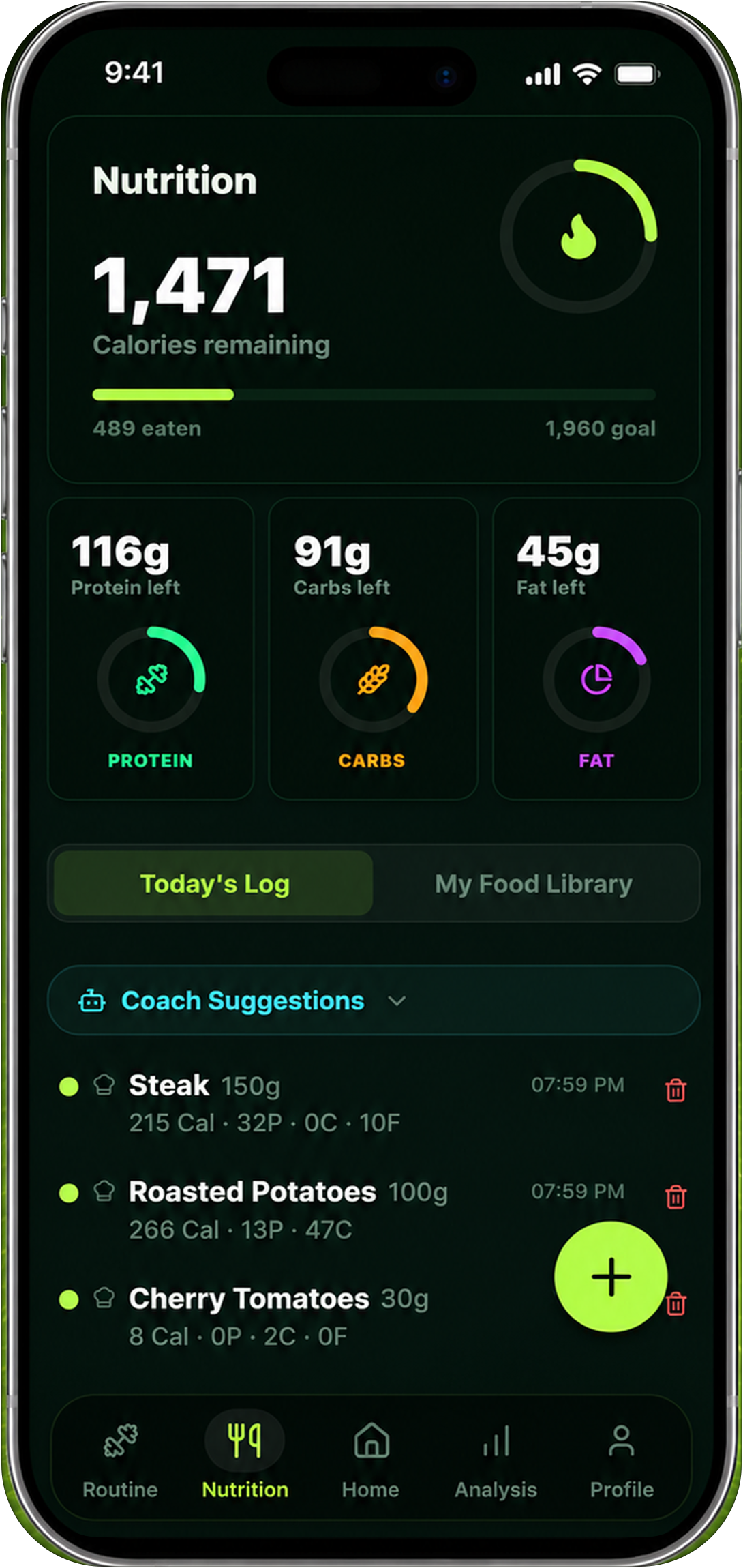
Cutting means creating a sustained energy deficit so stored body fat can decrease over time. The aim is not to make the scale fall as quickly as possible. A useful cut keeps training quality, recovery, food quality, and adherence workable while body weight and waist measurements trend down.
Bulking means spending a period in a controlled energy surplus with the main goal of gaining muscle and improving performance. Some weight gain may be fat, water, glycogen, or food volume as well as muscle. A good bulk is not an excuse to eat without limits; it is a deliberate tradeoff with feedback.
Recomposition means trying to reduce fat and build or preserve lean tissue while body weight stays relatively stable. It can work especially well for beginners, people returning after time away, people with more body fat to lose, or lifters whose training and nutrition have not been organized yet. It is usually slower and harder to measure than a dedicated cut or bulk.
Maintenance means holding body weight and habits near a stable level while you focus on performance, recovery, skill, health, or simply making the routine easier to sustain. Maintenance is not “doing nothing.” It can be the most useful phase when you need a baseline or when another phase would add more stress than value.
02Start with the decision in front of you
Before looking at a body-fat estimate, answer the practical question you are actually trying to solve:
- Do I want to look or feel leaner soon? A cut is the clearest fit when reducing fat is the immediate priority.
- Do I want to add size and improve key lifts? A bulk may fit if you are ready to accept a measured amount of weight gain.
- Do I want better composition without a major scale change? Recomp can fit when you can train consistently and accept a slower, less obvious result.
- Do I need to make the routine stable first? Maintenance may be the right starting point if sleep, meals, training attendance, or stress are unpredictable.
Your answer should also include a time horizon. Someone preparing for a beach holiday in eight weeks has a different decision from someone trying to add muscle over the next two years. Neither timeline makes a phase universally correct; it changes which tradeoff is reasonable.
03Who tends to fit each phase?
There is no universal body-fat percentage at which everyone must switch phases. Reference charts can provide context, but they do not know your medical history, sport, preferences, training age, or relationship with food. Use body-composition estimates as one input, not as an automatic command.
A cut may fit when
- Reducing body fat is more important to you right now than adding scale weight.
- Your current eating pattern can support a modest deficit without repeated binges, severe hunger, or constant fatigue.
- You can maintain a sensible resistance-training plan and enough protein while your weight trends down.
- You have a clear reason for the timeline and a plan for what happens after the cut.
A cut is a poor fit when you are already struggling with energy, recovery, performance, or rigid food rules. It is also not a good solution for an unexplained change in weight; that calls for professional evaluation rather than a more aggressive diet.
A bulk may fit when
- Adding muscle or improving strength is the main outcome you want next.
- You are comfortable with some scale and possibly waist gain in exchange for a better muscle-building environment.
- You have a repeatable training plan, adequate sleep, and enough consistency to make use of additional food.
- You can monitor the rate of change and adjust before the phase moves far beyond your preference.
New lifters often do not need to rush into a surplus. If training quality, protein intake, and recovery have been inconsistent, simply organizing those basics can produce progress without a formal bulk. Likewise, a bulk is not a reason to ignore a rapid or uncomfortable change in waist, digestion, blood pressure, or well-being.
Recomp may fit when
- You are a beginner, returning lifter, or someone who has room to improve training quality quickly.
- You prefer not to intentionally gain or lose much scale weight.
- You can be patient with a result that may show first in photos, waist, or performance rather than the scale.
- You are willing to track several signals because no single number will tell the whole story.
Recomp becomes harder to judge as you get more advanced, because changes in muscle and fat are often smaller and slower. That does not make it impossible. It means the plan needs a longer review window and more consistent measurements.
Maintenance may fit when
- You have just finished a cut and want to stabilize before choosing another direction.
- Your training goal is performance, skill, or recovery rather than a major physique change.
- Your life is unusually busy and sustainability is more valuable than forcing a faster result.
- You need a few weeks of reliable data before making a bigger decision.
04Bulk vs. cut vs. recomp at a glance
| Phase | Main goal | Expected scale direction | Best progress signals | Main tradeoff |
|---|---|---|---|---|
| Cut | Reduce body fat | Down over time | Weight trend, waist, photos, strength, recovery | Hunger, fatigue, and possible performance pressure |
| Bulk | Gain muscle and support performance | Up over time | Strength, reps, body weight, waist, photos | Some fat gain and the need to manage appetite |
| Recomp | Improve composition near maintenance | Flat or slowly changing | Waist, photos, strength, weight average, consistent composition method | Slower results and more measurement noise |
| Maintenance | Stabilize habits, recovery, or performance | Relatively stable | Weight average, training quality, recovery, hunger, waist | Less immediate physique change |
Notice that “the scale went up” does not automatically mean a bulk is working, and “the scale stayed flat” does not automatically mean a recomp is working. The phase is successful only when the direction of the other signals matches the reason you chose it.
05A practical decision tree
Use this sequence instead of arguing over a single cutoff:
- Choose the priority. If fat loss is the clear priority, start with a cut. If muscle and strength are the clear priority, consider a bulk. If you want both without a major scale change, consider recomp.
- Check readiness. Can you train regularly, eat consistently, sleep reasonably, and review data without extreme behaviors? If not, start with maintenance and build the routine.
- Check the tradeoff. Would gaining weight create more distress than benefit? Would dieting make recovery or your relationship with food worse? Your honest answer matters more than a generic online rule.
- Pick a measurable target. A cut might use a downward weight and waist trend. A bulk might use improved performance with controlled weight gain. A recomp might use a smaller waist, stable weight, and maintained or improving strength.
- Set a review date. Decide in advance when you will evaluate the plan. This keeps one noisy weigh-in or one bad workout from changing the phase.
If you are stuck between two options, choose the less aggressive phase for a short baseline. Maintenance can reveal what your current intake does. Recomp can be a useful bridge while you improve consistency. You can move to a dedicated cut or bulk once the data and your preference point in the same direction.
06Run a 28-day review
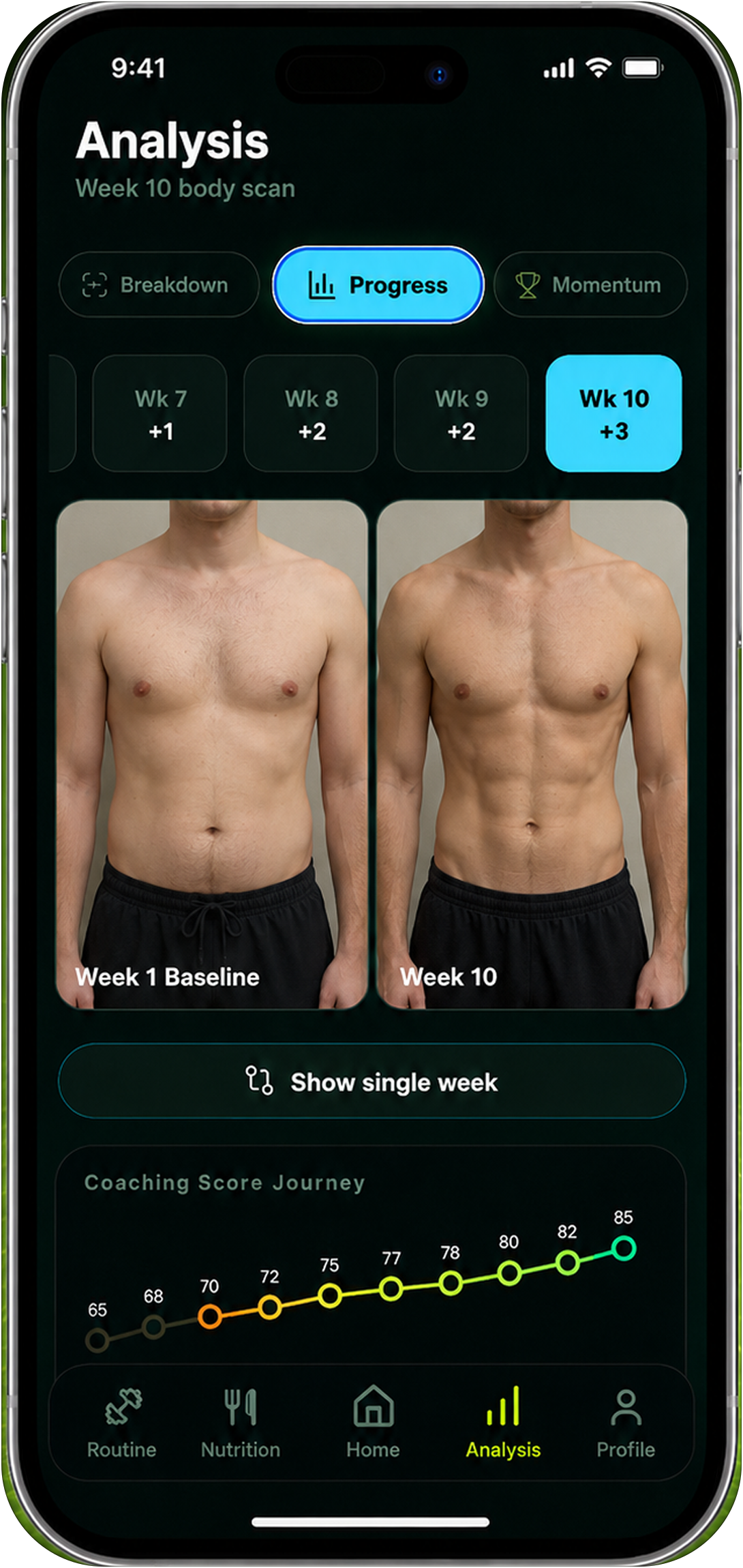
A four-week review is long enough to reduce some day-to-day noise without forcing you to commit indefinitely. It is not a promise that a dramatic transformation will happen in 28 days. It is a checkpoint for asking whether the current plan is producing the type of change you intended.
- Weight trend: use readings taken under similar conditions and compare averages. Salt, carbohydrates, digestion, menstrual-cycle changes, travel, and hard training can all move daily weight.
- Waist and measurements: use the same landmarks, posture, tape tension, and timing. A gradual waist change can be meaningful even when the scale is noisy.
- Progress photos: use a repeatable camera angle, distance, lighting, clothing, and relaxed pose. Photos are not a medical test, but they can show changes that a daily number hides.
- Training performance: compare similar lifts, reps, range of motion, and effort. Strength is not a perfect muscle meter, but it gives useful context for whether the plan is supporting training.
- Recovery and adherence: note sleep, hunger, soreness, mood, energy, missed sessions, and how often the plan was actually followed.
For recomposition, look for a pattern such as a smaller waist, stable or slowly changing weight, and stable or improving performance. For a cut, look for a downward trend without a collapse in recovery. For a bulk, look for performance and body weight moving up while waist change remains acceptable to you. These are decision signals, not guarantees.
07How long should you stay in one phase?
Stay long enough to learn from the plan, but not so long that you ignore clear problems. Two weeks can reveal adherence issues, but it is often too short to judge body-composition change. A cut, bulk, or recomp commonly needs at least several weeks of consistent data; many people use an eight-to-twelve-week block before making a major change, provided health, recovery, and the relationship with food remain in a good place.
Do not extend a phase just because a calendar says you should. Switch or pause when the original goal has been met, the tradeoff no longer feels worthwhile, performance or recovery is deteriorating, or your measurements show a direction you did not intend. A planned maintenance period can make the next phase easier to execute.
08Common mistakes that make the choice harder
- Treating a body-fat chart as a command: estimates vary by method, and a chart cannot account for your goals or health context. See the body-fat percentage chart guide for how to use ranges more carefully.
- Calling every flat scale a recomp: stable weight may mean maintenance, inconsistent tracking, water shifts, or no meaningful change. Confirm with waist, photos, performance, and time.
- Starting a bulk before earning consistency: more calories cannot fix an irregular training plan, poor sleep, or low protein intake.
- Making a cut more aggressive after one plateau: first check measurement conditions, adherence, sodium, digestion, stress, and the length of the plateau.
- Switching phases every week: constant changes make it difficult to learn what caused any result.
- Using a smart-scale estimate as the verdict: BIA readings are sensitive to hydration and timing. Keep the method consistent and treat the number as a trend signal.
09How Reset90 fits into the decision
Reset90 is useful for organizing the inputs that make a phase review more honest: workouts, nutrition targets, weight, measurements, progress photos, and check-ins. Keeping those signals in one routine can help you see whether your plan matches your stated goal instead of reacting to whichever number is most visible today.
It does not clinically measure body fat, muscle mass, FFMI, or health risk, and it cannot promise that a bulk, cut, recomp, or maintenance phase will produce a specific physique. Use it as a consistency and trend-tracking layer. If you want a deeper metric comparison, start with body composition for lifters. For a practical way to tell whether a recomp is working, read the body recomposition tracker guide.
10Frequently asked questions
Should I cut before I bulk?
Not automatically. Cut first when reducing body fat is your clear priority or when gaining more weight would move you farther from the physique and health context you want. If you are new to lifting or your routine is not consistent, maintenance or recomp may be more productive than either an aggressive cut or a formal bulk.
Can beginners recomp?
Beginners and returning lifters often have a good opportunity to improve strength and body composition at the same time because training provides a new stimulus. Results still depend on adequate protein, progressive resistance training, recovery, and consistent habits. Recomp is gradual, so do not judge it from a single scale reading.
What if my weight stays flat during a bulk?
Check whether your intake is actually above your maintenance average and whether the time window is long enough. If weight is flat but strength, reps, waist, and photos are improving, you may be recomping or simply training well at maintenance. Adjust only after reviewing adherence and the full trend.
What if my waist grows quickly during a bulk?
Review the rate of weight change, food consistency, digestion, water retention, and measurement technique. If the direction is faster or less comfortable than intended, a smaller surplus or a maintenance period may fit better. You do not need to wait until the end of a long bulk to respond to clear feedback.
Is maintenance a waste of time?
No. Maintenance can stabilize appetite, recovery, training performance, and measurement conditions. It is also a useful reset after a cut or a way to build consistency before a future bulk or recomp.
When should I ask for professional help?
Speak with a qualified healthcare or nutrition professional about unexplained or rapid weight changes, persistent fatigue or weakness, symptoms, pregnancy-related questions, medical conditions, or distress around food, exercise, or body image. A training phase is not a substitute for individualized medical care.
11The bottom line
Bulk, cut, recomp, and maintenance are tools for different jobs. Pick the phase that matches your immediate goal and the tradeoff you can sustain. Then give it enough time, track more than one signal, and set a review date before you start. If the data and your lived experience disagree, adjust the plan rather than forcing yourself to obey a universal rule.
The Reset90 system
Useful ideas for building a body you can keep.
Training notes, product updates, and practical ways to make your next 90 days count.
Start your next 90 days
Get your daily training, nutrition, and check-in priorities in one adaptive system.


Keep reading
Related articles

Ideal Body Measurements for Women
There is no single ideal body measurement set for women. Learn how averages, waist-to-height, body shape and repeatable tracking fit together without chasing a fixed beauty standard.
Read article
How Often Should You Take Progress Photos?
How often should you take progress photos? Use this goal-based guide to choose weekly, biweekly, or monthly check-ins and make every comparison more consistent.
Read article
Withings Body Scan Review: Is the Premium Scale Worth It?
The Withings Body Scan adds segmental BIA, ECG-style checks, wellness signals, and Apple Health sync to a premium smart-scale workflow. Here is who should buy it—and who should skip the price.
Read article