
How Often Should You Take Progress Photos?
How often should you take progress photos? Use this goal-based guide to choose weekly, biweekly, or monthly check-ins and make every comparison more consistent.
By Reset90 AI Editorial Team
Short answer: For most people, take progress photos every one to two weeks and judge the comparison every two to four weeks. A weekly check-in can work during a faster cut or with a coach; a monthly comparison is often better for slow recomp, muscle gain, or maintenance. The exact interval matters less than repeating the same time, lighting, camera position, clothing, and poses.
01How Often Should You Take Progress Photos?
The best default is simple: take a standardized set every two weeks, then compare it with the previous set instead of inspecting your body every day. This gives enough time for real change to accumulate while keeping feedback frequent enough to catch a plan that is not working.
There is no universal “correct” schedule. The right cadence depends on how quickly your body is likely to change, what decision you are trying to make, and whether taking photos helps or harms your consistency. Daily images usually add camera and water noise without adding useful evidence. Waiting three or four months can make it harder to know when a routine started drifting.
| Goal or situation | Capture cadence | Meaningful comparison | Why |
|---|---|---|---|
| Faster fat-loss phase | Weekly or every 2 weeks | Every 2–4 weeks | Change may accumulate faster, but daily water, food, and training effects still make same-week comparisons noisy. |
| Slow cut or beginner phase | Every 2 weeks | Every 4 weeks | A month gives small changes more time to become visible and reduces discouragement from nearly identical photos. |
| Muscle-gain phase | Every 2–4 weeks | Every 4–8 weeks | Muscle gain is gradual; longer comparisons are better for judging size while shorter check-ins can catch unwanted fat gain. |
| Recomposition | Every 2 weeks | Every 4–8 weeks | Fat loss and muscle gain can partly offset scale changes, so photos need consistent conditions and a longer review window. |
| Maintenance or lifestyle | Monthly | Monthly or quarterly | You are documenting stability rather than trying to react to a visible change every few days. |
| Coach or group check-in | Weekly if useful | Every 2–4 weeks | Frequent capture supports accountability, but a coach should still judge trends rather than one isolated image. |
If you want one starting rule, use this: take photos every other week, on the same morning, and make your larger decision once a month. Keep the photos if they help you learn. If they turn into compulsive checking, move to monthly or use measurements and training performance as your primary review signals.
02A Simple Progress-Photo Protocol
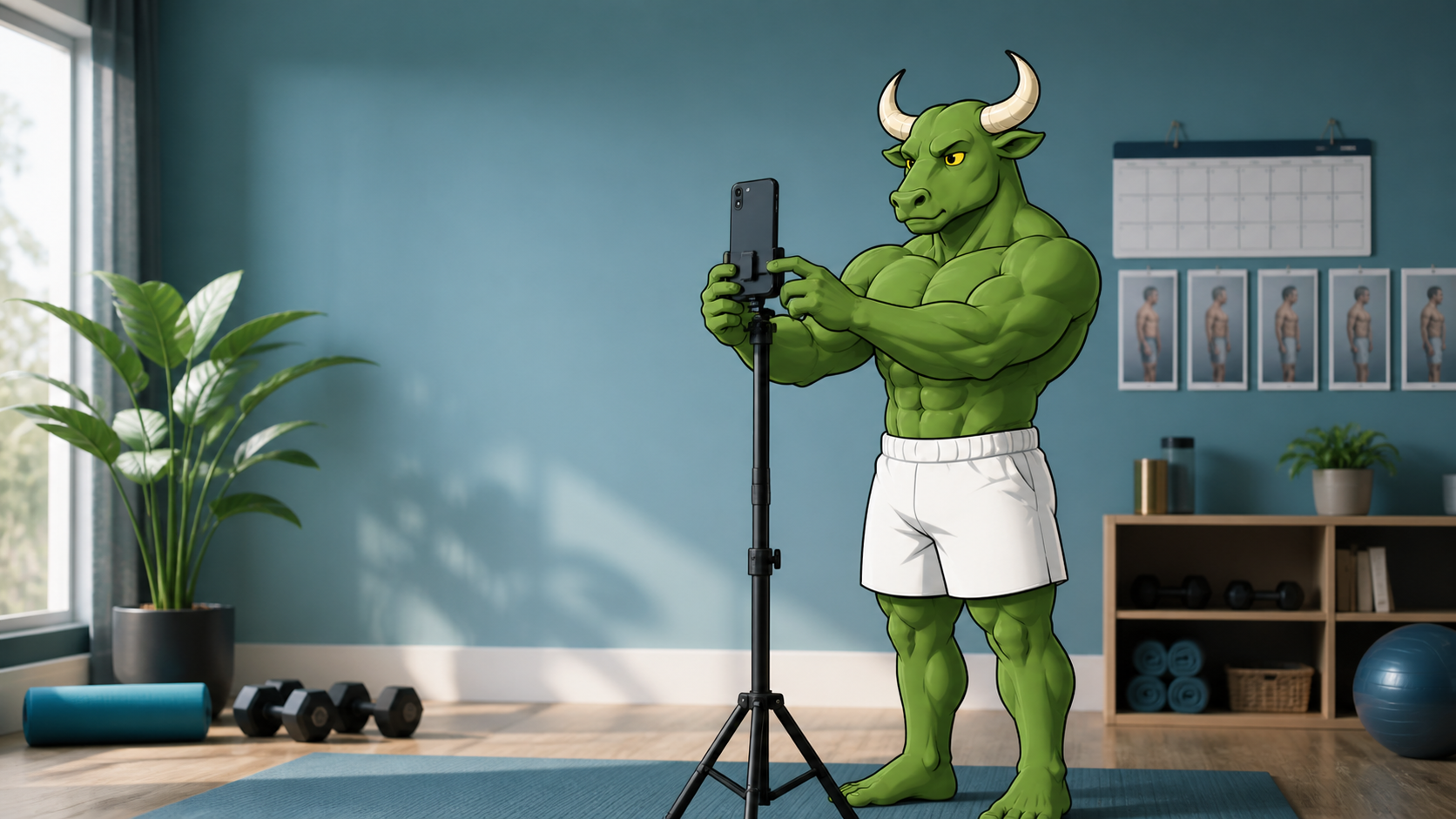
A progress photo is only useful as evidence when the conditions are reasonably comparable. You do not need a studio or expensive equipment. You need a repeatable setup that removes avoidable differences from one check-in to the next.
- Choose a fixed appointment. Pick a day and time that you can repeat, such as every other Sunday morning. Put it on your calendar instead of relying on motivation.
- Use a similar body state. Morning photos after using the bathroom and before breakfast are easy to repeat. If that routine does not fit your life, choose another consistent window and label it honestly.
- Fix the camera. Use a tripod, shelf, or stable stand. Keep the phone height, lens, zoom, distance, and orientation as close as possible. Mark the floor if that helps.
- Keep the room and light predictable. The same background and even lighting make shape changes easier to interpret than dramatic shadows or a new wide-angle perspective.
- Wear the same type of clothing. Similar fitted clothing or the same shorts makes the outline easier to compare. Clothes should not be so revealing that you feel unsafe or pressured.
- Repeat a small pose set. Use relaxed front, relaxed side, and relaxed back views. Stand naturally, breathe normally, and do not suck in or flex for one date but not the next.
- Save the date and conditions. A short note such as “Sunday, morning, before training” is enough. If you trained, ate unusually late, or changed the room, record that context rather than pretending the image is a perfect match.
For a deeper camera station and pose workflow, see how to build a progress-photo timeline. That guide covers alignment and evidence-versus-motivation photos. This article’s narrower question is how often to repeat the routine and when to make a decision from it.
03Capture Often, Compare Rarely
“How often should I take progress pictures?” contains two different questions:
- How often should I capture? This is about building a reliable record and making sure you do not lose the starting point of a new training or nutrition phase.
- How often should I evaluate? This is about giving enough time for visible change to separate from lighting, posture, digestion, hydration, and a temporary training pump.
You can capture weekly and compare every two or four weeks. That is useful for people who like a check-in habit but become discouraged when consecutive images look similar. You can also capture monthly and compare every month if a shorter interval makes you overanalyze your appearance. The schedule should support a better decision, not create another form of daily body checking.
Do not compare a relaxed morning photo with a flexed post-workout photo and call the difference progress. Do not compare a low-sodium weekday with a late-night meal, or a phone held close with a camera placed several feet away. A larger gap cannot fix inconsistent conditions, and a perfect protocol cannot make a one-day change meaningful.
04How Your Goal Changes the Schedule
Fat loss
During a faster cut, weekly or biweekly photos can provide useful feedback because visible changes may accumulate more quickly. Still, a photo taken after a salty meal or a hard leg session can look softer or fuller for reasons unrelated to fat loss. Use a two- to four-week comparison window before changing calories or adding more cardio.
During a slower cut, monthly comparisons are often easier to interpret. If you are frustrated that weekly pictures look the same, that does not prove that nothing is happening. Pair the photos with a consistent waist measurement and a trend in body weight rather than expecting one image to answer everything.
Muscle gain
New lifters may notice posture, fullness, or technique-related changes quickly, but actual muscle growth is not a day-to-day visual event. Every two to four weeks is reasonable for capture, while four- to eight-week comparisons are better for judging size. In the meantime, your training log, recovery, and gradual performance changes may provide earlier feedback.
Photos are still valuable during a bulk because they can show whether the visual result is moving in the direction you want. Use them alongside the rate of weight gain and waist trend. The goal is not to chase a flattering frame; it is to make the tradeoff between muscle, fat, and performance easier to review.
Recomposition
Recomposition is a strong case for patience. Losing fat while gaining muscle can produce a slow change in body outline and little movement on the scale. Take photos every two weeks if you can keep the conditions stable, but judge the larger pattern over four to eight weeks. The progress photos versus the scale guide explains why photos, waist, scale trends, and strength answer different questions.
Maintenance
At maintenance, monthly photos are usually enough. You are not trying to make a change visible as quickly as possible; you are checking whether your routine keeps your body and habits in a stable range. A quarterly comparison can be useful for long-term perspective, especially if you do not enjoy frequent photographs.
05What to Do When the Photos Show No Change
First, check the interval and the conditions. If you are comparing two photos taken one week apart, under different light and after different meals, the result may be too noisy to interpret. Recheck the same setup at the next planned interval rather than taking more pictures immediately.
Second, use a small evidence stack. Ask:
- Is the average body weight moving in the intended direction?
- Is the waist measurement changing when taken with the same tape protocol?
- Are key lifts, repetitions, energy, and recovery improving, stable, or declining?
- Has your food intake, sodium, sleep, stress, or training volume changed?
- Do your clothes fit differently even if the photo is ambiguous?
If most signals agree, keep the plan steady long enough to learn from it. If they disagree, improve the measurement routine before making a large adjustment. The repeatable body-measurement protocol can help you add a circumference trend without turning every day into a progress test.
Visual references can also mislead. A stranger’s before-and-after or body-composition image cannot tell you what your own photo should look like. Use body-composition pictures as broad visual education, not as an exact body-fat test or a standard you must match.
06Progress Photos Should Support Your Routine
The purpose of a progress photo is to improve a decision: keep the plan, adjust one variable, ask for coaching, or recognize that your body is changing in a way the scale does not show. It is not to create a daily verdict about your appearance.
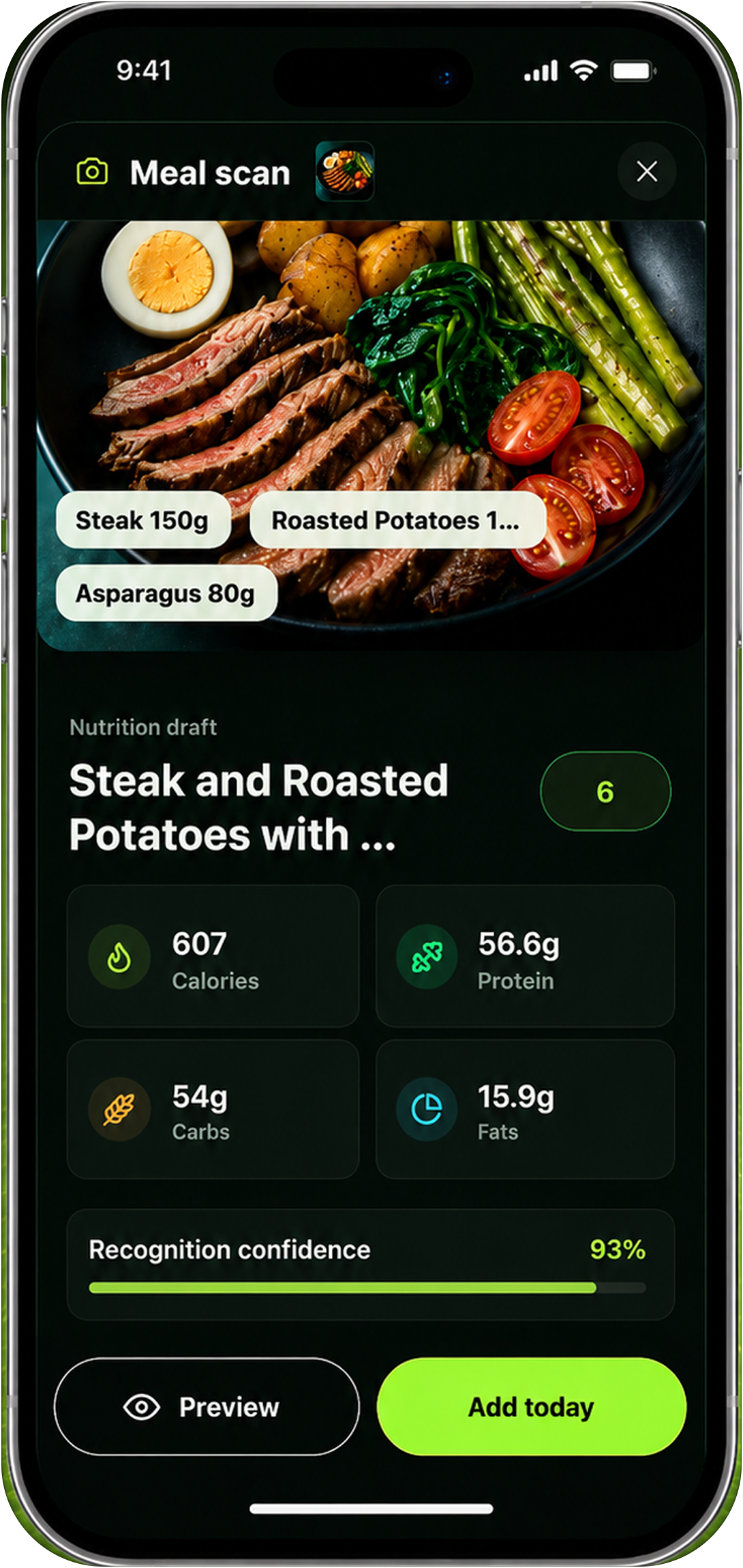
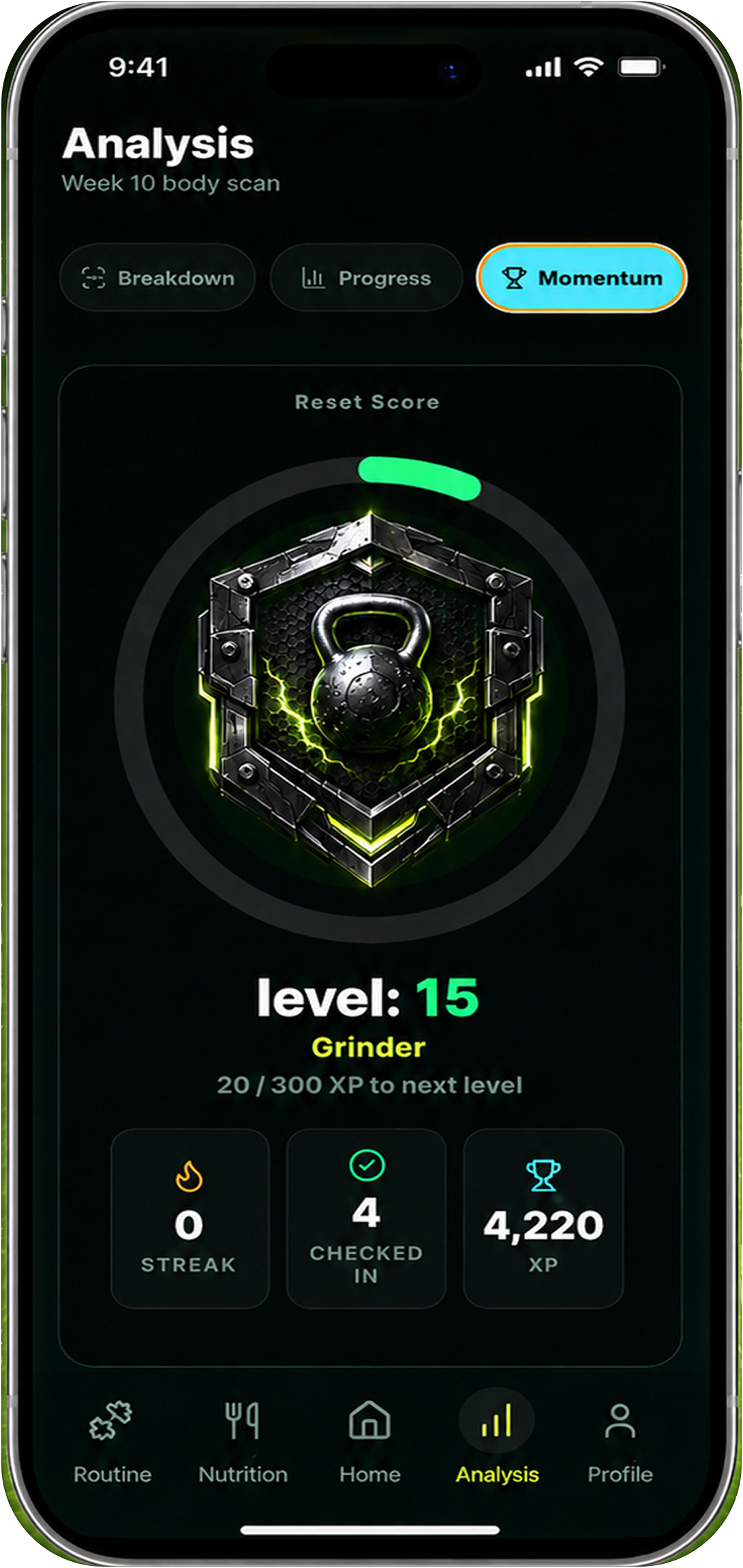
That is where a structured tracker can help. Reset90 can keep workouts, nutrition targets, measurements, progress photos, and check-ins in the same context so a monthly review is easier to repeat. You can use the app as an organization layer for a 28-day review, not as a promise that a photo produces an objective body-fat number.
Reset90 does not clinically measure body fat, diagnose health conditions, or replace medical or professional support. If body photos are triggering intense anxiety, compulsive checking, or pressure to restrict or overtrain, choose a less visual method and talk with a qualified professional. You can also keep photos private and use only the signals that help you train and recover well. Learn more about the broader body-tracking workflow if you want to compare ways to organize those signals.
07FAQ: Progress-Photo Frequency
Is taking progress photos every week too often?
Not necessarily. Weekly photos can work for coaching, accountability, or a faster cut when the setup is consistent. They are often too frequent for judging small changes in muscle gain or slow recomposition. If weekly comparisons make you discouraged, keep the weekly capture but compare every two to four weeks.
Is once a month enough?
Yes. Monthly photos are a practical default for many people, especially beginners, maintenance phases, and slow changes. They provide enough spacing to show more than day-to-day noise while still giving you timely feedback. Use a shorter interval only when it serves a clear purpose.
Should I take progress photos before or after a workout?
For standardized evidence, take them before training and under the same general conditions each time. A post-workout pump can change how muscles look, so post-workout images are fine as motivation or context but should not be mixed with relaxed baseline photos.
What poses should I use?
Use a relaxed front, side, and back view with the same camera height, distance, lighting, clothing, and foot and arm positions. Add flexed or lifestyle images only if you label them separately. A small repeatable set is more useful than many inconsistent angles.
How long should I wait before comparing two photos?
Start with two weeks for a faster-changing phase and four weeks for a slower phase. Use eight- to twelve-week comparisons for a clearer long-term view of muscle gain or recomp. The slower the expected change, the more important it is to compare a longer interval.
What if I do not want to take body photos?
You do not have to. Use waist or other body measurements, clothing fit, training performance, energy, recovery, and a weight trend if those methods feel better. Tracking works when it helps you make a good decision; no single metric is mandatory.
08The Bottom Line
For most people, take progress photos every two weeks and compare them every two to four weeks. Use weekly photos when you have a clear reason, such as coaching or a faster cut. Use monthly or longer comparisons for slow muscle gain, recomp, and maintenance. Always repeat the same basic conditions, and never let one ambiguous photo overrule the rest of your progress evidence.
The most reliable routine is the one you can follow without constant checking: one scheduled capture, a consistent setup, a thoughtful review window, and a decision based on more than appearance alone.
The Reset90 system
Useful ideas for building a body you can keep.
Training notes, product updates, and practical ways to make your next 90 days count.
Start your next 90 days
Get your daily training, nutrition, and check-in priorities in one adaptive system.


Keep reading
Related articles

Ideal Body Measurements for Women
There is no single ideal body measurement set for women. Learn how averages, waist-to-height, body shape and repeatable tracking fit together without chasing a fixed beauty standard.
Read article
Bulk, Cut, or Recomp? A Practical Decision Guide
A practical way to choose a bulk, cut, recomp, or maintenance phase using your goal, training age, recovery, and repeatable progress signals.
Read article
Withings Body Scan Review: Is the Premium Scale Worth It?
The Withings Body Scan adds segmental BIA, ECG-style checks, wellness signals, and Apple Health sync to a premium smart-scale workflow. Here is who should buy it—and who should skip the price.
Read article