
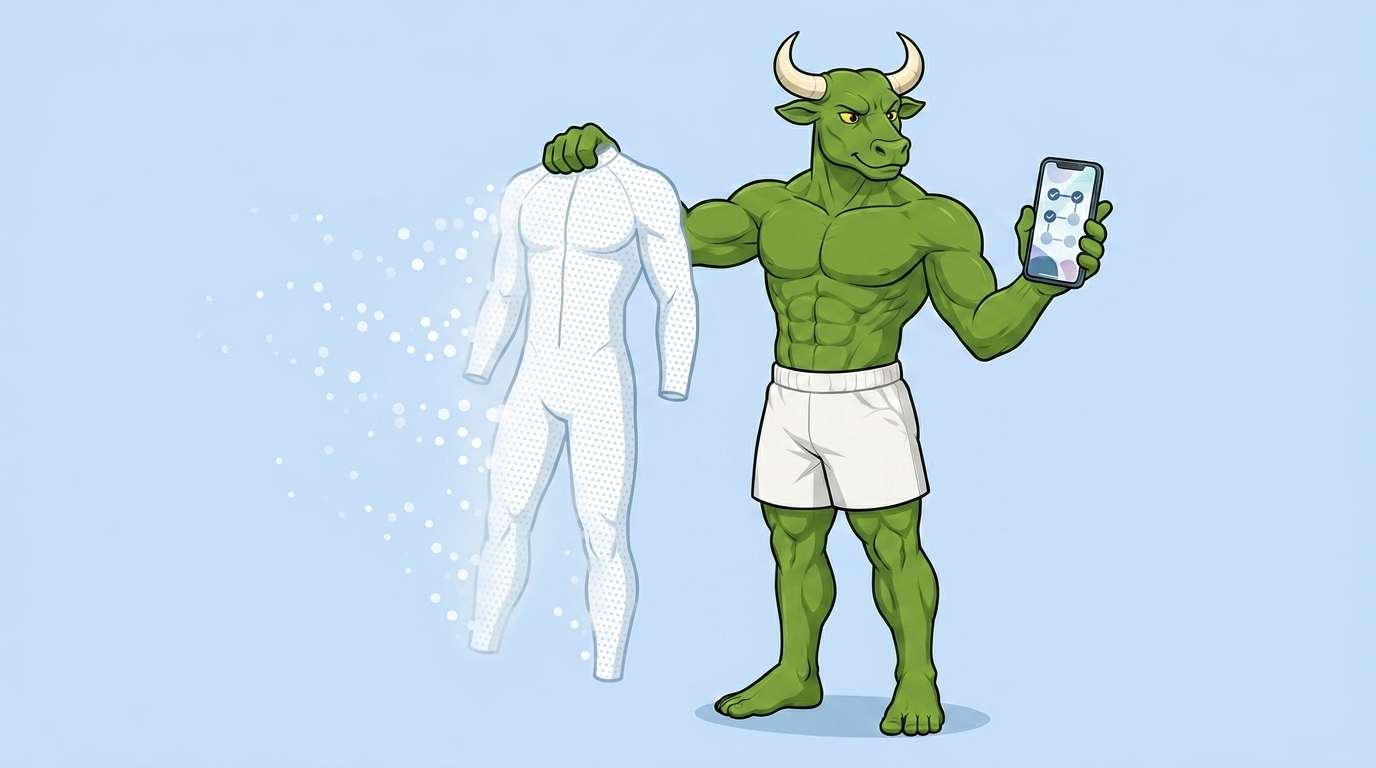
Best ZOZOFIT Alternatives in 2026: Stop Comparing Scanners, Pick the Evidence You Need
The best ZOZOFIT alternative depends on why you're leaving: free 3D scans, no subscription hardware, clinical accuracy, or a system that changes your plan. Reset90 AI is the alternative that does the last one.
By Reset90 AI Editorial Team
ZOZOFIT made body scanning simpler: no polka-dot suit, a free plan, and measurements from your phone. If it works for you, keep it. But the people searching for alternatives usually have one of three complaints: the scan ritual still feels like a chore, the useful data sits behind a subscription, or the numbers don't tell them whether anything actually changed.
Those are three different problems, and no single alternative solves all of them. The right choice depends on the job you need the data to do.
Short answer: MeThreeSixty is the closest free 3D-scan alternative, Hume Health Body Pod removes the subscription with hardware, DEXA is the accuracy benchmark, and Reset90 AI is the alternative that turns weekly body evidence into an adaptive 90-day plan instead of just another measurement log.
01Why people leave ZOZOFIT
ZOZOFIT deserves credit for modernizing the category. The suit is optional now, and the free tier makes the entry point low. The remaining reasons to switch are practical:
- The scan ritual: tight clothing, propped phone, specific poses — every single time.
- The subscription: the features that make the data useful tend to live behind Premium.
- The data type: circumference numbers are precise, but they can't show whether your chest got harder or your waist got visibly leaner.
- The missing decision: a measurement log tells you what changed, not what to do next.
That last point is the one most comparison posts ignore. An alternative should not just measure your body differently. It should make the next training or nutrition decision obvious.
02First, decide what evidence you actually need
Before comparing apps, separate the four kinds of evidence:
- Shape: circumference and 3D measurements — useful for clothing and rough size tracking.
- Composition: body-fat and lean-mass estimates — useful as a trend, not a lab result.
- Visible change: definition, leanness, proportions — the evidence most lifters actually want.
- Decision: what to change this week — the step most apps never reach.
ZOZOFIT is strong at the first. Most alternatives compete on the second. Reset90 AI is built around the third and fourth.
03The best ZOZOFIT alternatives by job
MeThreeSixty: closest free 3D scan
If you like ZOZOFIT's method and just want it cheaper, MeThreeSixty is the most direct alternative. Two poses produce a 3D avatar with an estimated set of body measurements, and processing happens on-device. The catch is that the free tier now keeps only your most recent five scans, with unlimited history moved to a paid plan.
Best for: people who want ZOZOFIT-style scanning without paying for it. Limitation: five-scan history on free; a smoothed avatar won't show muscle definition.
Hume Health Body Pod: no-subscription hardware
If your complaint is paying for your own body data, a multi-frequency BIA device like the Body Pod removes the recurring cost. It behaves more like a gym-grade InBody machine than a basic scale, and readings take seconds. The tradeoff is the upfront price and BIA's sensitivity to hydration and timing.
Best for: daily readings with zero subscription. Limitation: composition estimates, not shape; hydration changes the numbers.
DEXA scan: clinical accuracy benchmark
No consumer app matches DEXA for absolute accuracy. If you doubt your current numbers, the answer isn't another phone scan — it's a periodic DEXA to anchor your trend, then a consistent daily tool between visits.
Best for: a 2–4 times per year accuracy check. Limitation: cost and scheduling make it a benchmark, not a tracker.
Progress plus tape measure: the manual baseline
The tape measure never needed a subscription. A manual logging app like Progress plus disciplined technique gives you trend data as actionable as most consumer scans. The weak point is consistency: the data is only as good as your ability to measure the same way every time.
Best for: people who trust their own tape technique. Limitation: entirely manual; lighting, posture, and measuring position can drift.
Photo-based trackers: visible change without a scan ritual
Photo-based tracking answers the question ZOZOFIT can't: did you actually look different? Instead of scanning circumferences, it reads body signals from consistent progress photos. The method removes the tight-clothes setup, but most photo apps still stop at analysis — they show you the change without telling you what caused it.
Best for: lifters who want zero-ritual visual evidence. Limitation: analysis alone doesn't adjust training or nutrition.
Reset90 AI: the alternative that changes the plan
Reset90 AI is not trying to be a scanner. It is a 90-day system that uses weekly body evidence as the engine of the plan.
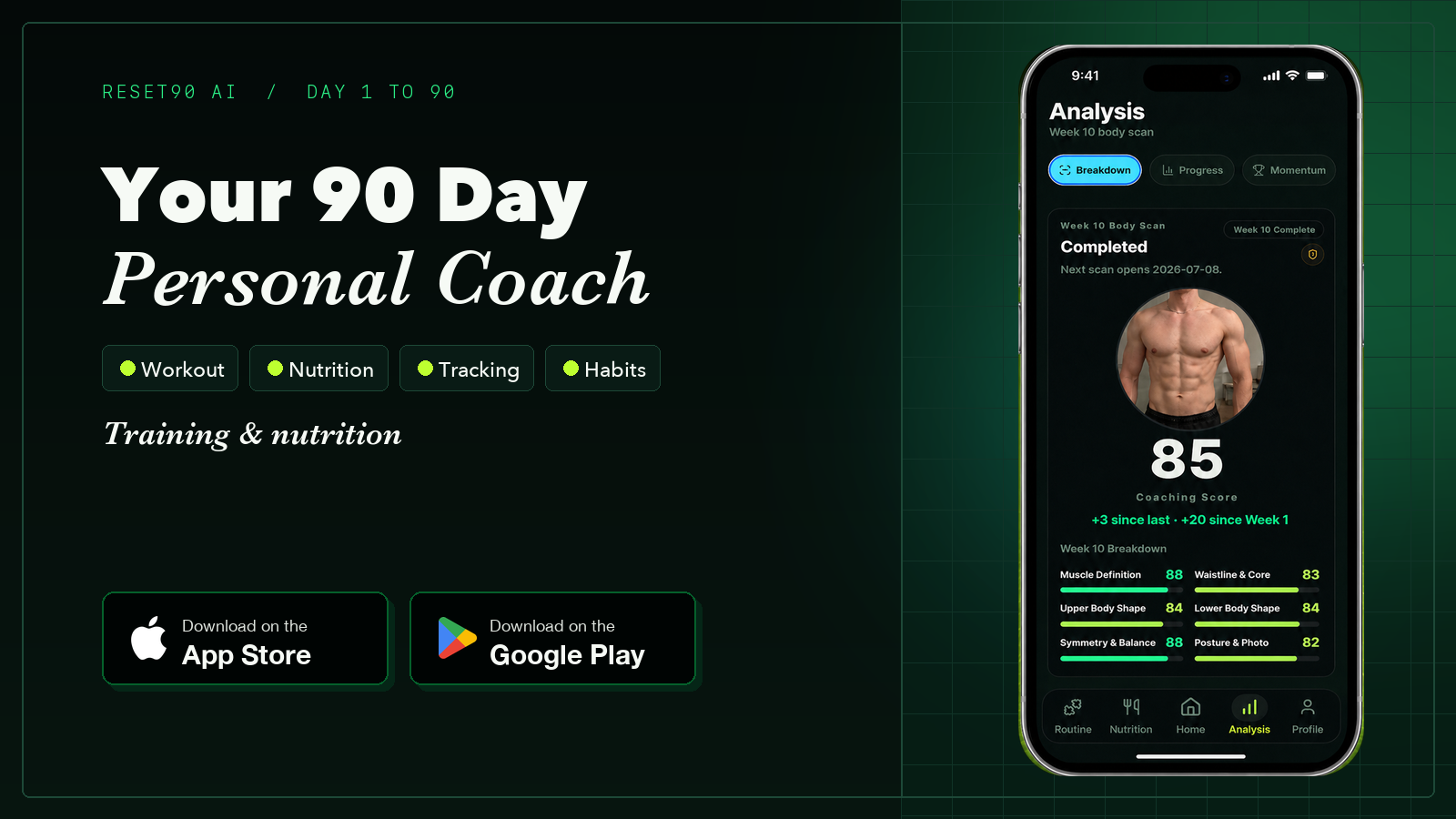
Every week, the app walks you through a consistent Body Skin check-in: same lighting, camera position, and poses. The photos are comparable, so the trend is real instead of a camera artifact. That evidence feeds a plan built around your age, sex, height, weight, goals, and schedule.
An AI reasoning layer reads the trend and decides what to adjust — next week's target, carbohydrate intake, training load — and explains every change. You don't just see what happened. You know what to do next.
04Comparison table
| Alternative | Method | Price | Best for | Key limitation |
|---|---|---|---|---|
| Reset90 AI | Weekly Body Skin + adaptive plan | Freemium | Managed 90-day transformation | Requires weekly rhythm |
| MeThreeSixty | 3D phone scan | Free / ~$5 mo | Free ZOZOFIT-style scanning | Five-scan free history |
| Hume Body Pod | Multi-frequency BIA | ~$229 one-time | No-subscription readings | Hydration sensitivity |
| DEXA | Clinical X-ray | ~$100–200 per scan | Periodic accuracy benchmark | Cost and scheduling |
| Progress + tape | Manual measurements | Free / premium | Tape-measure purists | Manual consistency |
| Photo analysis apps | Photo-based body signals | Freemium | Visible change without scanning | No plan adjustment |
05How to choose based on your real complaint
- "I want the same kind of scan, but free." → MeThreeSixty.
- "I don't want to pay forever for my own data." → Hume Health Body Pod.
- "I doubt every app's numbers." → DEXA as a quarterly anchor.
- "I want simpler, not fancier." → Tape measure plus Progress.
- "I want to see real change without a scan ritual." → Photo-based tracking.
- "I want the data to change what I do next." → Reset90 AI.
06Mistakes people make when switching
- Buying a new scanner but keeping the old habit: a scan once a month is a photo, not a trend.
- Expecting daily precision from a consumer device: consistency matters more than brand.
- Choosing hardware first and ignoring the plan: measurements don't create progress.
- Comparing one-off numbers instead of trends: a single reading is noise.
- Switching tools every month: every switch resets your baseline.
07How to test Reset90 AI in 15 minutes
- Install Reset90 AI and enter your stats, goals, and schedule.
- Let it build your personalized 90-day plan.
- Do your first Body Skin check-in with the guided lighting and pose protocol.
- Repeat the same check-in weekly — same day, same conditions.
- Read the plan's explanation after each check-in and follow the next adjustment.
08Frequently asked questions
What is the best free alternative to ZOZOFIT?
MeThreeSixty is the closest free alternative for 3D-style scanning, though its free tier keeps only your most recent five scans. If you want visible change without a scan ritual, photo-based tracking is free to start — and if you want the evidence to drive an adaptive plan, Reset90 AI combines weekly Body Skin check-ins with a 90-day plan.
Do you still need the ZOZOSUIT to use ZOZOFIT?
No. ZOZOFIT now scans with just your phone camera and tight-fitting clothing; the polka-dot suit is optional. The remaining reasons to switch are the subscription, the scan ritual, or wanting different data like visible-change evidence and next-step guidance.
Is there a ZOZOFIT alternative without a subscription?
For one-time cost, a multi-frequency BIA device like the Hume Health Body Pod gives unlimited readings with no recurring fee. Among apps, most use freemium pricing. Reset90 AI's free tier lets you start the 90-day system and weekly check-in rhythm without paying upfront.
Are ZOZOFIT alternatives as accurate as ZOZOFIT?
Consumer 3D scans are all estimates with similar sensitivities: clothing, posture, and lighting move the numbers. None matches DEXA for absolute accuracy. Whichever tool you pick, consistency of setup matters more than the brand — that's why Reset90 AI standardizes lighting, camera position, and poses every week.
What is better than a 3D body scan for tracking muscle gain?
3D scans measure circumference, which can't separate muscle from fat inside a measurement. For visible muscle gain, consistent progress photos show definition changes a circumference number misses. Reset90 AI goes one step further: the weekly Body Skin check-in feeds an adaptive plan, so the evidence changes your training and nutrition instead of just sitting in a log.
The best ZOZOFIT alternative isn't the one with the closest scan. It's the one that gives you the evidence you actually need — and knows what to do with it.
The Reset90 system
Useful ideas for building a body you can keep.
Training notes, product updates, and practical ways to make your next 90 days count.
Start your next 90 days
Get your daily training, nutrition, and check-in priorities in one adaptive system.


Keep reading
Related articles
Ideal Body Measurements for Women
There is no single ideal body measurement set for women. Learn how averages, waist-to-height, body shape and repeatable tracking fit together without chasing a fixed beauty standard.
Read article
Bulk, Cut, or Recomp? A Practical Decision Guide
A practical way to choose a bulk, cut, recomp, or maintenance phase using your goal, training age, recovery, and repeatable progress signals.
Read article
How Often Should You Take Progress Photos?
How often should you take progress photos? Use this goal-based guide to choose weekly, biweekly, or monthly check-ins and make every comparison more consistent.
Read article