
FFMI Calculator for Women: How to Use Lean-Mass Metrics Without a Universal Cutoff
Women can use FFMI to track estimated lean mass, but there is no universal female cutoff. Learn the formula, why male benchmarks can mislead, and how to read your own trend with better context.
By Reset90 AI Editorial Team
Short answer: Women can use FFMI to track estimated lean mass relative to height, but there is no single “good FFMI for women” cutoff that can grade everyone. Use the same formula and measurement method consistently, compare your own trend, and do not import a male athlete benchmark as a universal standard.

01FFMI for a woman: the quick answer
For a woman, FFMI is an estimate of fat-free mass relative to height. The formula is the same, but the result should be interpreted as a personal tracking signal—not as a universal female target, a health diagnosis, or proof that a person is natural or enhanced.
| If you are asking... | The practical answer |
|---|---|
| Is the FFMI formula different for women? | No. The arithmetic is the same; the context around the result is what changes. |
| Is there one good FFMI for a woman? | No. Reference values depend on age, training history, sport, body-fat method, and the population being compared. |
| How should I use my result? | Repeat it with the same inputs and method, then compare the trend with strength, measurements, photos, and training consistency. |
| What should I do if the number looks surprising? | Check the body-fat estimate and measurement conditions before drawing conclusions from the score. |
Where Reset90 AI fits: If you want to connect an FFMI baseline with the habits that may change it, the Reset90 AI app is designed for people who want workouts, nutrition targets, check-ins, and progress tracking in one ongoing 90-day workflow. Use the FFMI calculator for the metric itself, then use Reset90 AI to keep the surrounding training and nutrition process consistent. Reset90 AI does not calculate FFMI, directly measure body fat, or diagnose health; learn how the Reset90 AI app fits into your routine.
If you searched for an FFMI calculator for women, the arithmetic is simple. The interpretation is where the context matters. This guide explains what FFMI measures, why a single cutoff is misleading, and how to use the number without turning a rough body-composition estimate into a judgment.
02What FFMI measures
FFMI stands for fat-free mass index. It estimates your fat-free mass — everything in your body that is not fat — relative to your height. That makes it more useful than scale weight alone when the question is about lean mass and muscularity.
It is still an estimate. FFMI does not directly measure muscle tissue, diagnose health, or tell you whether a person is “fit enough.” The result depends on your body weight, body-fat estimate, height, hydration, and measurement method.
The metric became popular through research on athletes, but athletes are not a universal reference population. Training history, sport, age, sex, genetics, and measurement quality all change the context around a score.
03Does FFMI work for women?
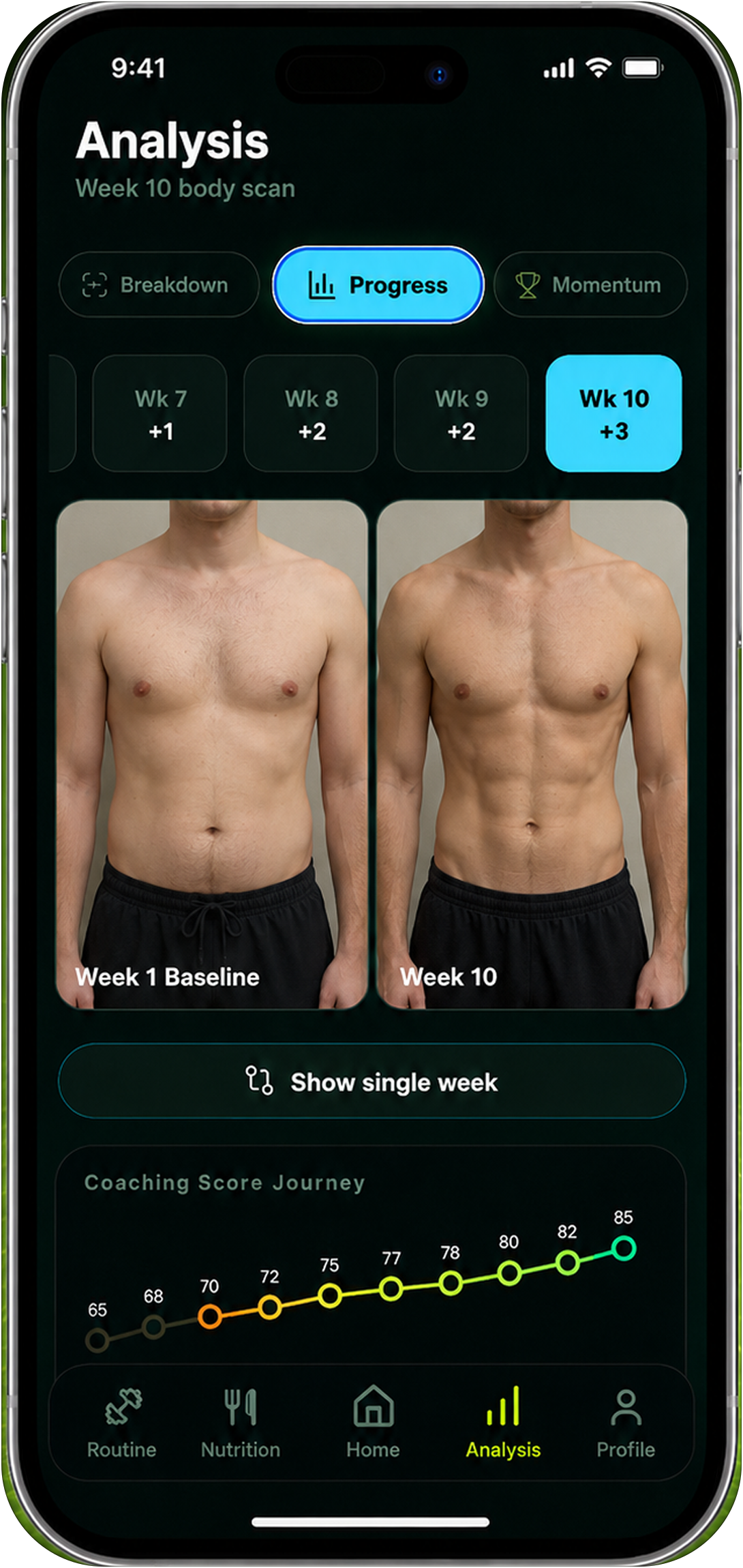
Yes. The formula itself does not stop working because the person using it is a woman. Fat-free mass can still be estimated and normalized to height. The mistake is assuming that the same table or “natural limit” should be applied identically to every sex, age group, sport, and body-composition method.
Research on FFMI includes women and shows that reference values vary across groups. A large study of collegiate athletes, for example, examined men and women across multiple sports rather than treating one small group as the definition of normal. That is a better model for interpreting FFMI: understand the population behind a reference, then use your own repeated measurements for progress.
So the useful question is usually not “Do I match a male bodybuilding number?” It is “Is my estimate moving in a direction that matches my training goal, under comparable conditions?”
04How to calculate FFMI
You need three inputs:
- Body weight
- Estimated body-fat percentage
- Height
First estimate fat-free mass:
Fat-free mass = body weight × (1 − body-fat percentage)
Enter body-fat percentage as a decimal. For example, 25% becomes 0.25. Then calculate raw FFMI:
Raw FFMI = fat-free mass (kg) ÷ height (m)²
A commonly used height correction is:
Adjusted FFMI = raw FFMI + 6.1 × (1.8 − height in meters)
The adjustment is intended to make comparisons less misleading when people have different heights. It does not create a more “feminine” or “masculine” score. It is simply a normalization step.
05Why the body-fat estimate matters most
Most FFMI calculators are precise with the arithmetic and uncertain with the input. If your body-fat estimate is wrong, your calculated fat-free mass is wrong too. A smart scale, calipers, a visual estimate, and a clinical scan may all produce different numbers.
To make the result useful as a trend:
- Use the same body-fat method each time.
- Measure under similar conditions, such as the same time of day.
- Do not compare a smart-scale result with a DEXA result as if they were interchangeable.
- Look at several weeks of change instead of reacting to one reading.
- If your weight or measurements fluctuate with your menstrual cycle, note the timing and compare similar points when practical.
Consistency does not make an estimate perfect. It makes the next estimate more comparable with the previous one.
06What is a good FFMI for women?
There is no single number that can answer that responsibly for every woman. A useful reference depends on who was measured, how body fat was measured, the person’s age, training history, sport, and the purpose of the comparison.
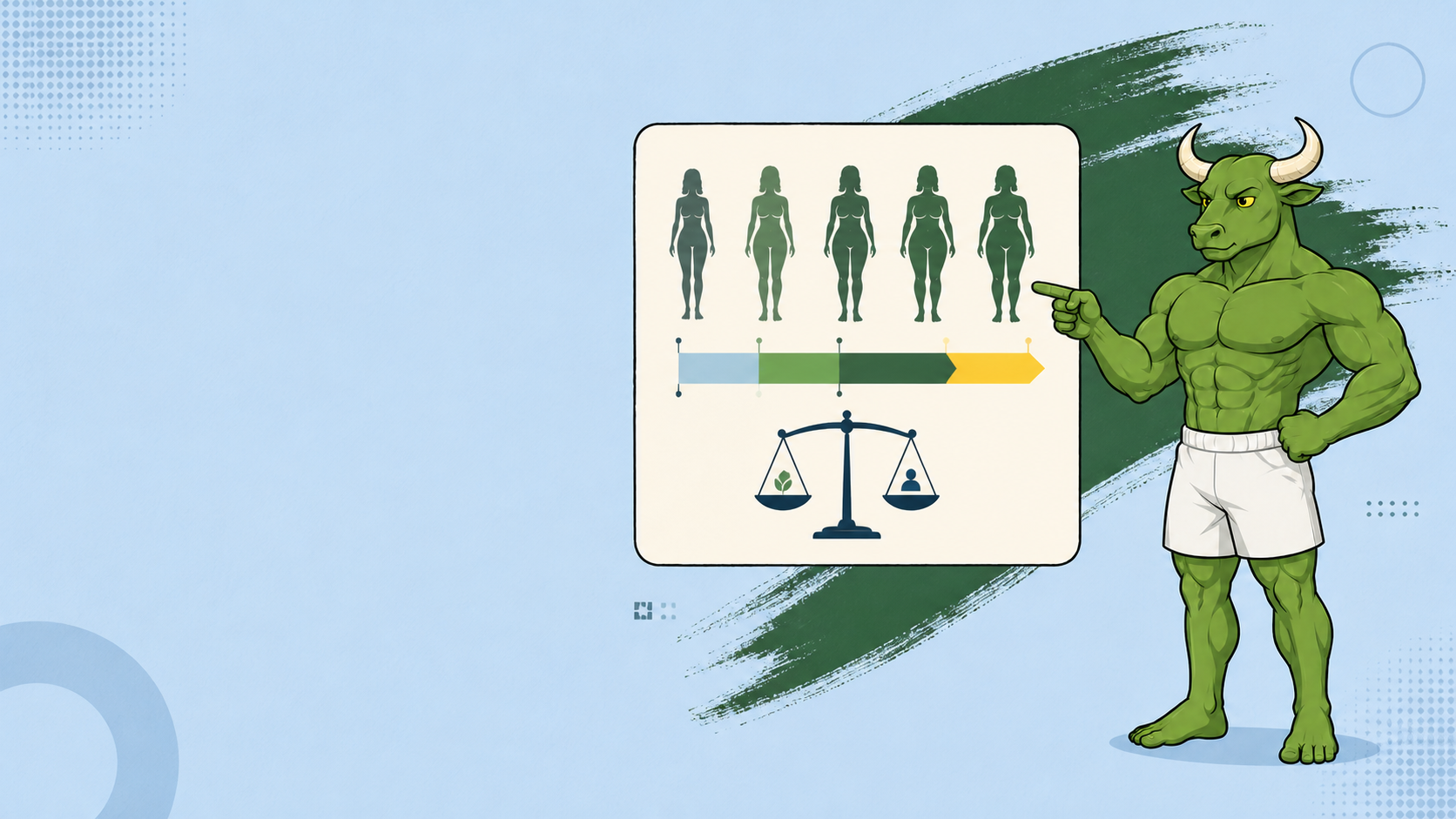
The broad bands shown in the Reset90 FFMI Calculator are educational landmarks, not female-specific medical norms:
| What the number can do | What it cannot do |
|---|---|
| Put estimated lean mass in context with height | Diagnose health or body composition |
| Help you compare your own measurements over time | Prove that one person is natural or enhanced |
| Give you a starting point for a training conversation | Set a universal female “ideal” |
| Show whether your inputs produce a plausible trend | Replace strength, measurements, photos, or professional assessment |
If a calculator gives you a result that feels surprising, check the inputs before judging the result. The body-fat estimate and measurement conditions may explain more than the number itself.
07Why the commonly cited FFMI 25 limit is not a universal rule
You may see articles describe FFMI 25 as a “natural limit.” That idea comes from a specific historical comparison, not a universal test for every person. It was based on a particular sample and has been debated and tested against other athlete populations.
For women especially, applying a male reference ceiling as if it were a universal biological boundary is not a sound interpretation. A high result may reflect measurement error, a different population, a different body-fat method, or genuinely high lean mass. FFMI alone cannot tell you which explanation is correct.
Use the number to ask better questions, not to assign a verdict.
08How to use an FFMI calculator for women
Use the Reset90 FFMI Calculator as a baseline tool:
- Enter height in centimeters.
- Enter body weight in kilograms.
- Enter your best current body-fat estimate.
- Save the raw FFMI, adjusted FFMI, and estimated lean mass.
- Repeat later using the same measurement approach.
The calculator shows raw FFMI, adjusted FFMI for taller lifters, estimated lean mass, and a broad interpretation band. The tool is most useful when you treat the first result as a baseline rather than a score you need to defend.
09Track the whole progress picture
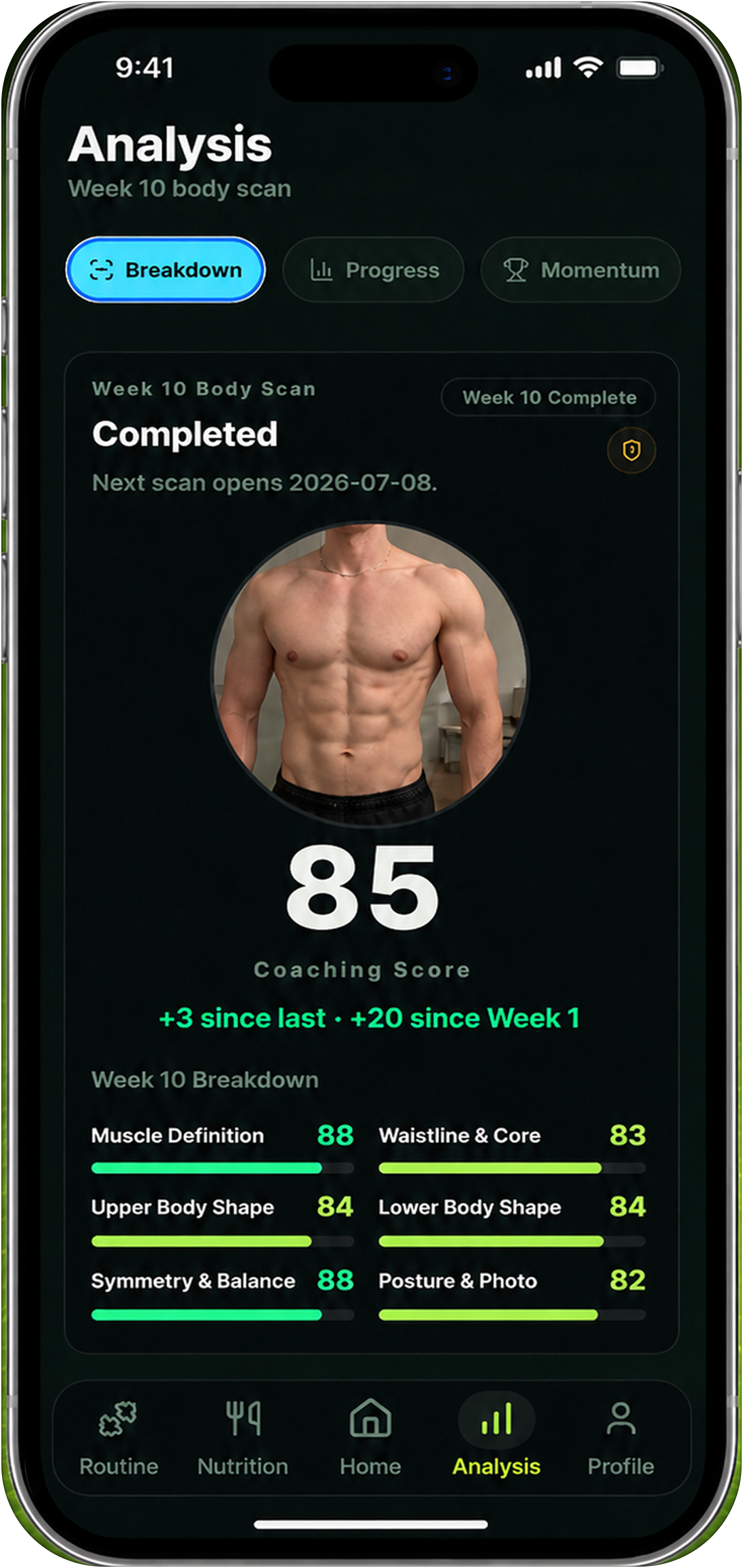
FFMI cannot see everything that matters. Pair it with a small group of signals:
| Signal | What it adds |
|---|---|
| Strength trend | Shows whether your training performance is holding or improving |
| Waist and limb measurements | Adds physical context that a single index cannot provide |
| Repeatable progress photos | Shows visual change when the scale is noisy |
| Training consistency | Explains whether the behavior needed for progress is actually happening |
| FFMI trend | Places estimated lean mass in the context of height over time |
A small change in FFMI alongside stronger lifts and stable measurements may be meaningful. A large change caused by a different body-fat method may not be. The stack is more useful than the isolated number.
10How often should women calculate FFMI?
Every four to eight weeks is usually more informative than daily. Give training, nutrition, sleep, and recovery enough time to create a measurable pattern. Daily calculations can magnify normal changes in water, food, and measurement noise.
If your goal is muscle gain, compare the same inputs and look for a trend. If your goal is fat loss, do not celebrate or panic over an FFMI change without looking at strength, measurements, and how quickly body weight is changing.
11FFMI calculator for women FAQs
Is FFMI different for women?
The core formula is the same, but interpretation depends on the population and measurement method. Do not assume that a table built from male athletes is a universal reference for women.
What is a good FFMI for a woman?
There is no single universal answer. Use reference ranges as rough context and use repeated measurements to understand your own trend. A qualified professional can help interpret a result when the context matters.
Does an FFMI over 25 mean a woman is using steroids?
No. FFMI cannot prove drug use. A high result can reflect body-fat estimation error, population differences, genetics, training history, or genuinely high lean mass. It is not a detection test.
Can FFMI show whether I am gaining muscle?
It can contribute to the answer, but it cannot show muscle directly. Track FFMI alongside strength, measurements, photos, and training consistency. Repeat the measurement under similar conditions.
Why did my FFMI change when my weight barely changed?
A changed body-fat estimate, hydration, measurement device, or height entry can move the result. Check the inputs first, then compare a longer trend instead of one reading.
12Sources and limitations
The original FFMI research is described by Kouri, Pope, Katz, and Oliva. Later work has examined FFMI in broader and more varied groups, including men and women athletes across multiple sports and adult body-composition populations. These studies provide context, not a universal female cutoff.
This calculator and article are for general education. They do not measure muscle directly or provide medical advice. If a result concerns you, discuss the underlying measurements with a qualified health professional.
13Final takeaway
FFMI can be useful for women when it is treated as a consistent tracking metric rather than a universal scorecard. Use the formula, keep your inputs comparable, avoid importing male cutoffs, and read the trend alongside strength, measurements, photos, and training consistency.
Start with the Reset90 FFMI Calculator, save your baseline, and revisit it after several weeks. The number is only one piece of the picture. Better context leads to better decisions.
The Reset90 system
Useful ideas for building a body you can keep.
Training notes, product updates, and practical ways to make your next 90 days count.
Start your next 90 days
Get your daily training, nutrition, and check-in priorities in one adaptive system.


Keep reading
Related articles

Ideal Body Measurements for Women
There is no single ideal body measurement set for women. Learn how averages, waist-to-height, body shape and repeatable tracking fit together without chasing a fixed beauty standard.
Read article
Bulk, Cut, or Recomp? A Practical Decision Guide
A practical way to choose a bulk, cut, recomp, or maintenance phase using your goal, training age, recovery, and repeatable progress signals.
Read article
How Often Should You Take Progress Photos?
How often should you take progress photos? Use this goal-based guide to choose weekly, biweekly, or monthly check-ins and make every comparison more consistent.
Read article