

90-Day Workout Schedule for Busy People: 2-Day, 3-Day, and 4-Day Templates
A 90-day plan only works if it survives your real calendar. Use these 2-day, 3-day, and 4-day weekly schedules to build a repeatable training block without cramming missed sessions.
By Reset90 AI Editorial Team
Short answer: A 90-day workout schedule for busy people should have a normal-week version and a busy-week version. Choose two, three, or four training days based on your real calendar, repeat the same weekly structure long enough to learn it, and replace missed sessions with the next useful option instead of cramming everything back in.

The difference between a 90-day plan and a 90-day schedule is simple: a plan describes the direction; a schedule tells you when the work happens. If your week keeps changing, the schedule is the part that needs to be flexible.
This page gives you three repeatable templates for a 90 day training plan: a two-day schedule, a three-day schedule, and a four-day schedule. For the broader principles behind the block, see the 90-Day Workout Plan for Busy People.
01Choose the schedule your calendar can actually support
Do not choose the schedule that looks most impressive. Choose the one that leaves enough room for work, travel, family, sleep, and recovery.
| Weekly schedule | Best fit | Busy-week fallback |
|---|---|---|
| Two days | Unpredictable weeks, beginners, or people rebuilding consistency | Two short full-body sessions, even if the days move |
| Three days | Most people who want a balanced repeatable routine | Two full sessions plus one optional short session |
| Four days | People with stable time and a clear recovery habit | Two priority strength sessions plus one or two short add-ons |
If you are not sure, start with two or three days. You can always add a fourth session when the first version has become boringly reliable.
02Template A: the two-day full-body schedule
Two days per week is not a consolation prize. It is a useful schedule when your main goal is to build a routine that survives a crowded calendar.
Normal week
- Session A: squat or knee-dominant movement, horizontal push, row or pull, a simple core movement.
- Session B: hinge or hip-dominant movement, vertical push or press, pull, a carry or core movement.
Leave at least one day between sessions when possible. Keep the main movements consistent for several weeks so you can see whether the same work is becoming easier or stronger.
Busy week
Keep the same two anchors, but shorten each session. Complete one main lower-body movement, one push or pull, and one short finisher. The goal is to preserve the habit and the movement pattern, not to recreate a perfect long session in half the time.
03Template B: the three-day full-body schedule
Three days is often the best middle ground for a realistic 90-day fitness program. It gives you enough frequency to practice the basics without requiring every weekday to cooperate.
Normal week
- Day 1: squat pattern, push, row, optional core.
- Day 2: hinge pattern, pull, press, optional carry.
- Day 3: single-leg or lighter squat pattern, push or pull variation, core or conditioning.
A Monday–Wednesday–Friday rhythm is easy to remember, but it is not mandatory. Tuesday–Thursday–Saturday works just as well if it fits your life better.
Busy week
Protect the first two sessions and make the third optional. If the third session happens, keep it short and technique-focused. If it does not happen, do not turn the next week into a punishment week.
04Template C: the four-day schedule
Four days can work well when your time is stable and your sessions are short enough to recover from. The common mistake is turning four training days into four maximum-effort days.
Option one: upper/lower
- Day 1: upper-body push and pull.
- Day 2: lower-body squat and accessory work.
- Day 3: upper-body variations and arms or shoulders.
- Day 4: lower-body hinge, single-leg work, and core.
Option two: two strength days plus two short add-ons
- Day 1: full-body strength.
- Day 2: short conditioning, mobility, or a walk.
- Day 3: full-body strength.
- Day 4: short technique, core, or recovery session.
The second option is often easier for busy people because missing an add-on does not destroy the main training week.
05Organize the 90 days into three training blocks
A 90-day schedule gives you enough time to build a rhythm, add a little challenge, and review what actually worked. Keep the weekly structure recognizable while changing only one important variable at a time.
| Block | Primary focus | Scheduling rule |
|---|---|---|
| Days 1–30 | Make the sessions repeatable and learn your realistic minimum | Protect the calendar slots before adding volume |
| Days 31–60 | Progress one variable such as load, sets, duration, or difficulty | Keep the same weekly rhythm unless it repeatedly fails |
| Days 61–90 | Keep the useful parts and compare the trend | Use the review to choose the next block, not to judge the old one |
The exact exercises depend on your experience, equipment, and goal. The schedule is the reusable part: decide the frequency first, then fill each session with movements you can perform safely and consistently.
06Build a busy-week fallback before you need it
A fallback is not an excuse. It is a pre-decided response to a predictable week.
Write down three versions of the same schedule:
- Full version: the session you do when time and energy are normal.
- Short version: the first two or three movements, with less accessory work.
- Minimum version: one movement pattern, a short walk, or a brief mobility session that keeps the routine alive.
If you miss a session, use the next available version. Do not double the next workout just to make the calendar look perfect. A plan that lets you return is more valuable than a plan that only works when nothing goes wrong.
07Schedule around anchors, not wishes
Choose calendar anchors that already exist: the morning after a regular school drop-off, the first evening after work, or a weekend window before errands. Then add a backup window for each priority session.
Use these rules:
- Put the two most important sessions on the most reliable days.
- Keep the same start cue, such as changing clothes immediately after work.
- Set a time limit before the session begins.
- Keep equipment visible or pre-packed when possible.
- Move a session when needed; do not treat movement as failure.
The schedule should reduce decisions. If every session requires a new negotiation with your calendar, the problem is the system, not your motivation.
08Use a weekly review to improve the schedule
At the end of each week, answer four questions:
- Which sessions did I complete?
- Which time slot was most reliable?
- What caused the missed or shortened session?
- What is the smallest change that would make next week easier?
Change one thing at a time. Move a session, shorten the warm-up, switch to a home option, or reduce accessory work. Do not rewrite the whole 90-day plan because one week was crowded.
09How Reset90 fits into the schedule
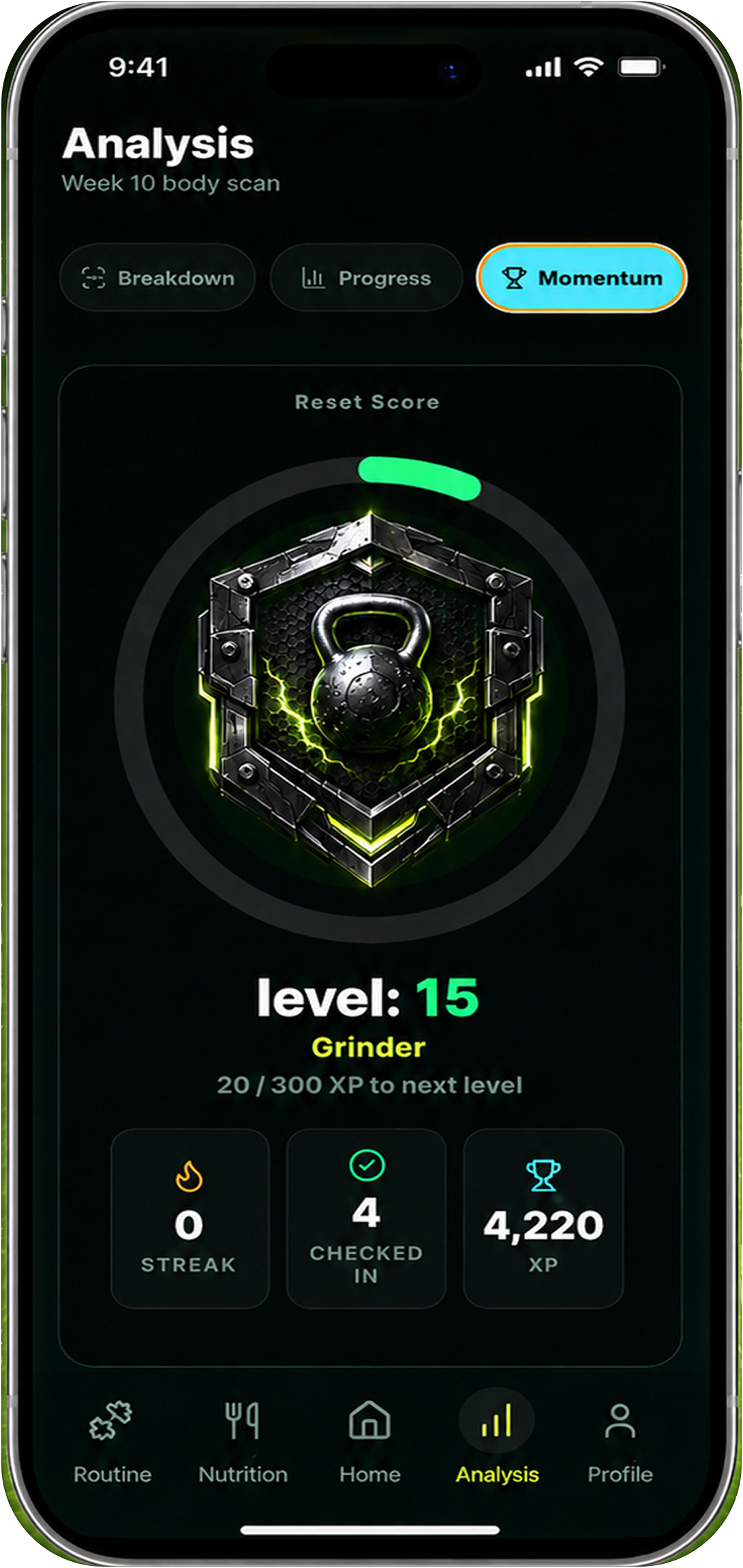
A schedule is easier to follow when it connects to a larger direction. Reset90 AI is designed to turn a 90-day goal into daily priorities and help you choose the next workable action when the week changes.
Use the free Reset90 Plan Fit Check to think through your time, equipment, and consistency before choosing the template. The app is not a replacement for your calendar; it is a way to keep the next decision connected to the plan.
1090-day workout schedule FAQs
How many days per week should I work out in a 90-day plan?
Choose the number of days you can repeat during a normal month, not the number you can survive for one enthusiastic week. Two or three days is a strong starting point for many busy people. Add a fourth day only when the main sessions are stable.
What if I miss a workout in my 90-day plan?
Use the next available session or your short version. Do not cram two difficult sessions together just to compensate. The goal is to resume the rhythm.
Is a two-day workout plan enough?
Two days can be enough to build a repeatable strength habit, especially when each session covers the major movement patterns and you progress gradually. The best frequency is the one you can sustain and recover from.
Should I change my workout every week?
Usually not. Keep enough of the structure the same to see whether you are improving. Change one variable when the current version is stable or when a movement no longer fits your goal or equipment.
What is the best 90-day workout schedule for a busy person?
For many people, a three-day schedule with two priority full-body sessions and one optional session is a practical starting point. If your weeks are highly unpredictable, use the two-day template and add short sessions only when they fit.
11Final takeaway: schedule the version you can repeat
A 90-day workout plan becomes useful when it survives real life. Start with two, three, or four weekly sessions based on your actual calendar. Give each session a full, short, and minimum version. Review the schedule every week and adjust one variable at a time.
The objective is not a perfect 90-day calendar. It is a training system that makes the next useful session easy to find.
General educational information only. If you have an injury, medical condition, or unusual symptoms, seek advice from a qualified professional.
The Reset90 system
Useful ideas for building a body you can keep.
Training notes, product updates, and practical ways to make your next 90 days count.
Start your next 90 days
Get your daily training, nutrition, and check-in priorities in one adaptive system.


Keep reading
Related articles

Ideal Body Measurements for Women
There is no single ideal body measurement set for women. Learn how averages, waist-to-height, body shape and repeatable tracking fit together without chasing a fixed beauty standard.
Read article
Bulk, Cut, or Recomp? A Practical Decision Guide
A practical way to choose a bulk, cut, recomp, or maintenance phase using your goal, training age, recovery, and repeatable progress signals.
Read article
How Often Should You Take Progress Photos?
How often should you take progress photos? Use this goal-based guide to choose weekly, biweekly, or monthly check-ins and make every comparison more consistent.
Read article