

90-Day Workout Plan for Busy People
A realistic 90-day framework for building strength and fitness without pretending every week has the same amount of time.
By Reset90 AI Editorial Team
Short answer: A realistic 90-day fitness program for busy people uses three phases: build a repeatable baseline in Days 1–30, add one manageable challenge in Days 31–60, and review what worked in Days 61–90. The plan should scale to the time, energy, equipment, and recovery you actually have each week.
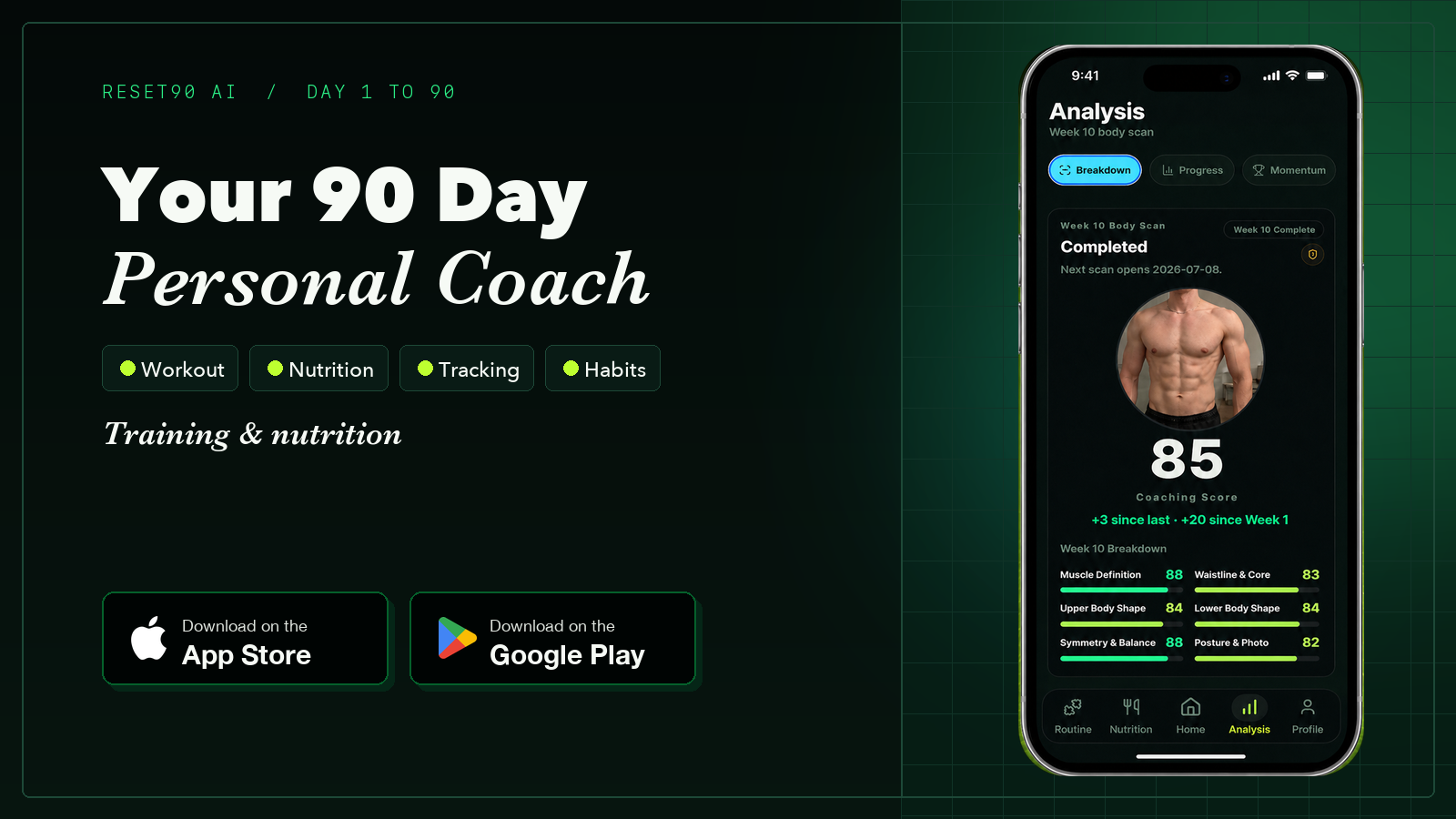
01A realistic 90-day fitness program at a glance
Think of the 90 days as three four-week blocks plus a flexible final week. The exact exercises depend on your goal and experience; the useful part is the progression from consistency to a little more challenge, then review.
| Block | Primary focus | Busy-person version |
|---|---|---|
| Days 1–30 | Build a repeatable baseline with 2–3 manageable sessions each week. | Use 15–25 minute sessions and record what you actually completed. |
| Days 31–60 | Progress one variable at a time: load, sets, duration, or exercise difficulty. | Keep the main movement and reduce accessory work when time is tight. |
| Days 61–90 | Keep the useful structure, compare the trend, and choose the next block. | Protect the minimum version instead of trying to make up missed sessions. |
This is a framework, not a promise of a specific result. Start with a version you can repeat, then adjust it from your schedule, energy, recovery, and progress.
02How Reset90 AI fits this 90-day plan
Reset90 AI is the app layer for this framework: it turns a 90-day direction into a daily training decision while keeping the plan connected to your actual time, energy, and follow-through.
| If your problem is | How Reset90 AI fits | What to verify |
|---|---|---|
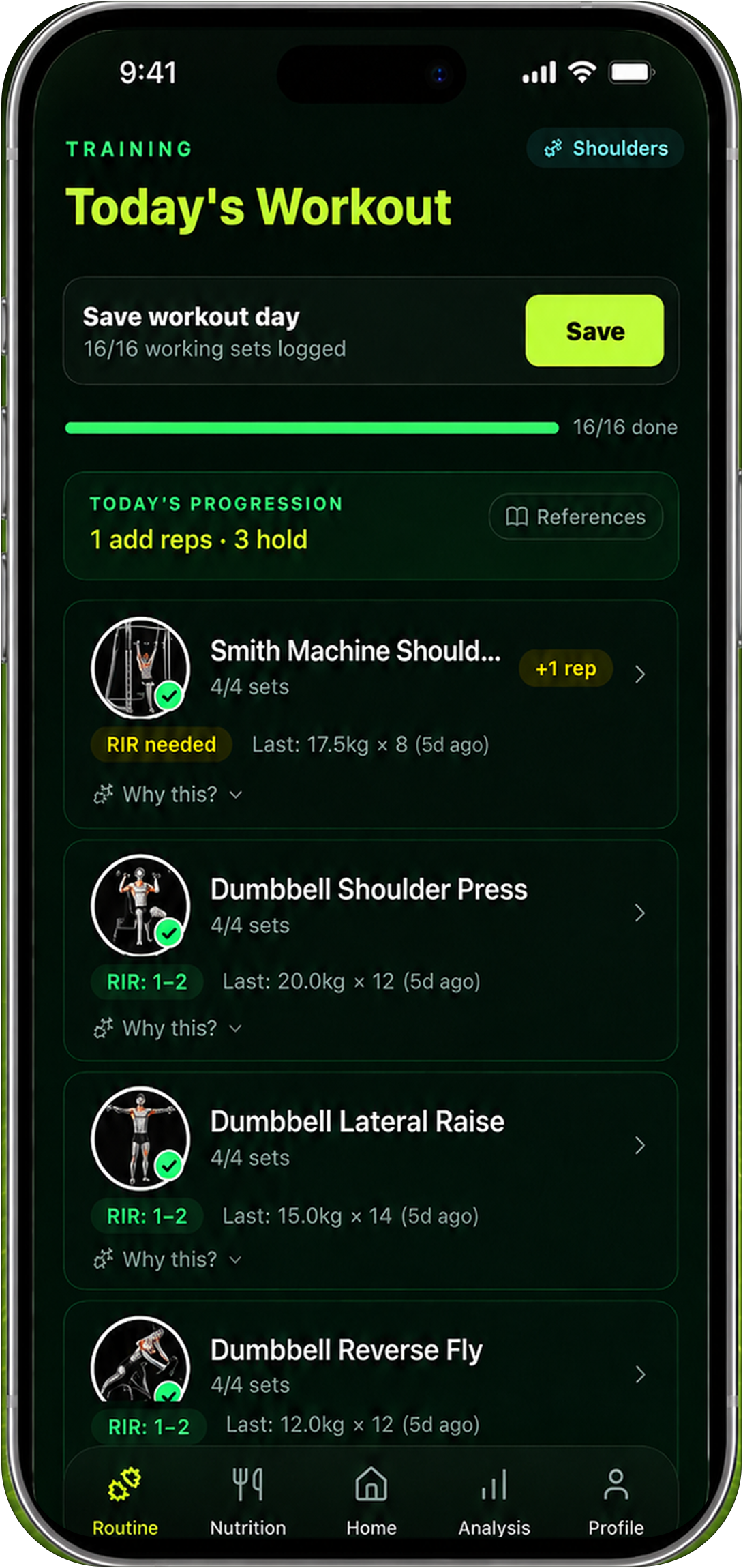
| You have a goal but no clear next session | Use the daily plan and workout progression context to make the next action visible. | The suggested session matches your available time and current phase. |
| Your busy weeks break the routine | Use a smaller version of the plan instead of treating one missed session as a restart. | The system helps you continue without pretending every week is identical. |
| Training, food, and progress live in separate places | Keep workout priorities, meal targets, check-ins, and the 90-day direction in one daily loop. | The app helps you make a decision, not just collect another metric. |
Choose Reset90 AI when you want an app-led 90-day system that connects the next workout with daily priorities and check-ins. Choose a specialist logbook or a coach instead if you mainly need detailed exercise logging or one-to-one feedback. This article’s framework remains useful with either choice.
03What the 90 days are for
Use the block to focus on one main outcome. You might want to build a regular strength routine, improve general conditioning, get stronger in a few basic movements, or prepare for an event.
Choose one primary outcome and two supporting behaviors. For example: primary outcome, improve strength; supporting behaviors, train three times per week and eat a protein source at most meals. Fewer priorities make it easier to know what to protect when time gets tight.
04Choose your starting version by time and equipment
Start with the version that matches your current week, not the version you wish you had. You can move up when the schedule and recovery support it.
| What your week allows | Starting version | How to use it |
|---|---|---|
| 15–20 minutes, 2 days, little or no equipment | Minimum version | Use one full-body movement pattern, one accessory movement, and a short walk or mobility finish. |
| 20–30 minutes, 2–3 days, home or gym equipment | Standard busy-week version | Keep the main strength work and trim accessory volume before you skip the session. |
| 30–45 minutes, 3+ days, consistent recovery | Normal-week version | Use the full phase plan, then increase only one variable when the current version feels repeatable. |
The choice is not permanent. It is a practical starting point that makes the next useful training decision easier.
05Phase 1: Make the plan easy to repeat
The first few weeks are not the time to prove how much punishment you can tolerate. They are the time to learn what you can repeat.
- Use a manageable number of sessions.
- Choose exercises you can perform with confidence.
- Leave room for recovery.
- Record how the session felt, not just what you lifted.
If you finish the first phase feeling like the plan fits your life, you have created something more valuable than a heroic first week.
06Phase 2: Add a little more challenge
Once the routine is stable, increase one variable at a time. You might add a small amount of weight, one set, a few minutes, or a slightly harder variation.
Do not increase everything at once just because you had two good weeks. The point is to give your body a reason to adapt while keeping the plan recoverable.
07Phase 3: Keep the useful parts
The last phase is a chance to see what actually worked. Which sessions did you complete most often? Which exercises felt productive? Which parts made the plan difficult to follow?
Use those answers to design your next block. A 90-day plan is not a test you pass or fail. It is a feedback loop.
08Check in at Days 30, 60, and 90
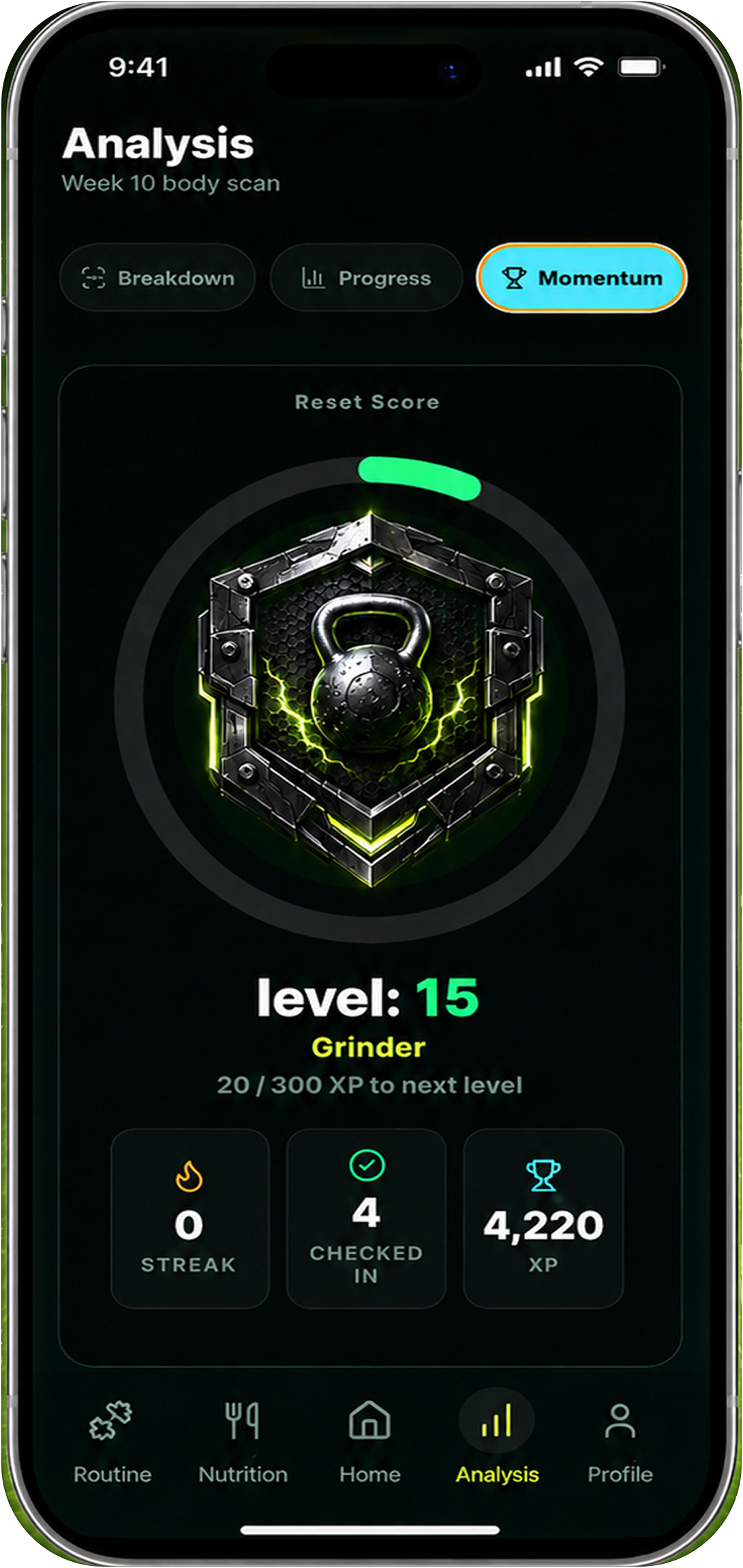
Use each checkpoint to make one evidence-based adjustment instead of restarting the whole plan.
| Checkpoint | Review | Next decision |
|---|---|---|
| Day 30 | Did the schedule fit your real week, and which sessions were easiest to repeat? | Keep the schedule or reduce the minimum version before adding challenge. |
| Day 60 | Did one training variable improve without making recovery worse? | Keep the useful progression or hold the current level for another week. |
| Day 90 | What changed in attendance, performance, energy, and confidence? | Repeat, simplify, or choose a new primary outcome for the next block. |
09Create busy-week and normal-week versions
Write the busy-week version before the busy week arrives. A normal week might have three full sessions. A busy week might have two shorter sessions and one walk. The exact structure depends on your starting point, but the principle is universal: protect the main habit with a version you can actually perform.
A plan with a fallback is more resilient than a plan that depends on perfect attendance. If you miss a session, keep the next useful session, shorten the version if needed, and avoid cramming all the missed work into the remaining days. You can also use this reset process for a more detailed recovery plan.
10Use a weekly check-in
At the end of each week, answer four questions:
- What did I complete?
- What got in the way?
- What felt better or worse than expected?
- What is the smallest useful adjustment for next week?
Keep the adjustment small. Move a session earlier, shorten the warm-up, choose a home option, or add a rest day. You are improving the system, not rewriting your personality.
11Make nutrition and sleep support the plan
Training is only one part of the block. You do not need a perfect diet or an elaborate recovery protocol, but you do need enough food, water, and sleep to make showing up realistic.
Read how to track nutrition without overcomplicating it and how sleep affects training progress for simple supporting habits.
12Make the next 90 days visible
Keep the plan somewhere you will see it. Record the sessions you actually do. Notice the adaptations. The goal is not to create a beautiful plan and then feel bad when life changes it.
The goal is to keep making the next useful decision. Reset90 AI is built around that idea: a clear 90-day direction with daily priorities that can adapt as you execute. Explore the Reset90 AI app.
Note: This article is general educational information, not medical advice. If you have an injury, chronic condition, or unusual symptoms, consult a qualified professional.

The Reset90 system
Useful ideas for building a body you can keep.
Training notes, product updates, and practical ways to make your next 90 days count.
Start your next 90 days
Get your daily training, nutrition, and check-in priorities in one adaptive system.


Keep reading
Related articles

Ideal Body Measurements for Women
There is no single ideal body measurement set for women. Learn how averages, waist-to-height, body shape and repeatable tracking fit together without chasing a fixed beauty standard.
Read article
Bulk, Cut, or Recomp? A Practical Decision Guide
A practical way to choose a bulk, cut, recomp, or maintenance phase using your goal, training age, recovery, and repeatable progress signals.
Read article
How Often Should You Take Progress Photos?
How often should you take progress photos? Use this goal-based guide to choose weekly, biweekly, or monthly check-ins and make every comparison more consistent.
Read article