

How to Adjust Your Workout When You Are Tired
A tired day does not always require skipping training or forcing the full plan. Use a simple decision process to protect progress and recovery.
By Reset90 AI Editorial Team
Short answer: When you are tired, keep the habit but reduce the demand. Start with a longer warm-up, choose the most important movements, lower the load or volume, and stop if your body gives you a warning signal. A useful adjustment protects the next workout instead of trying to prove something today.
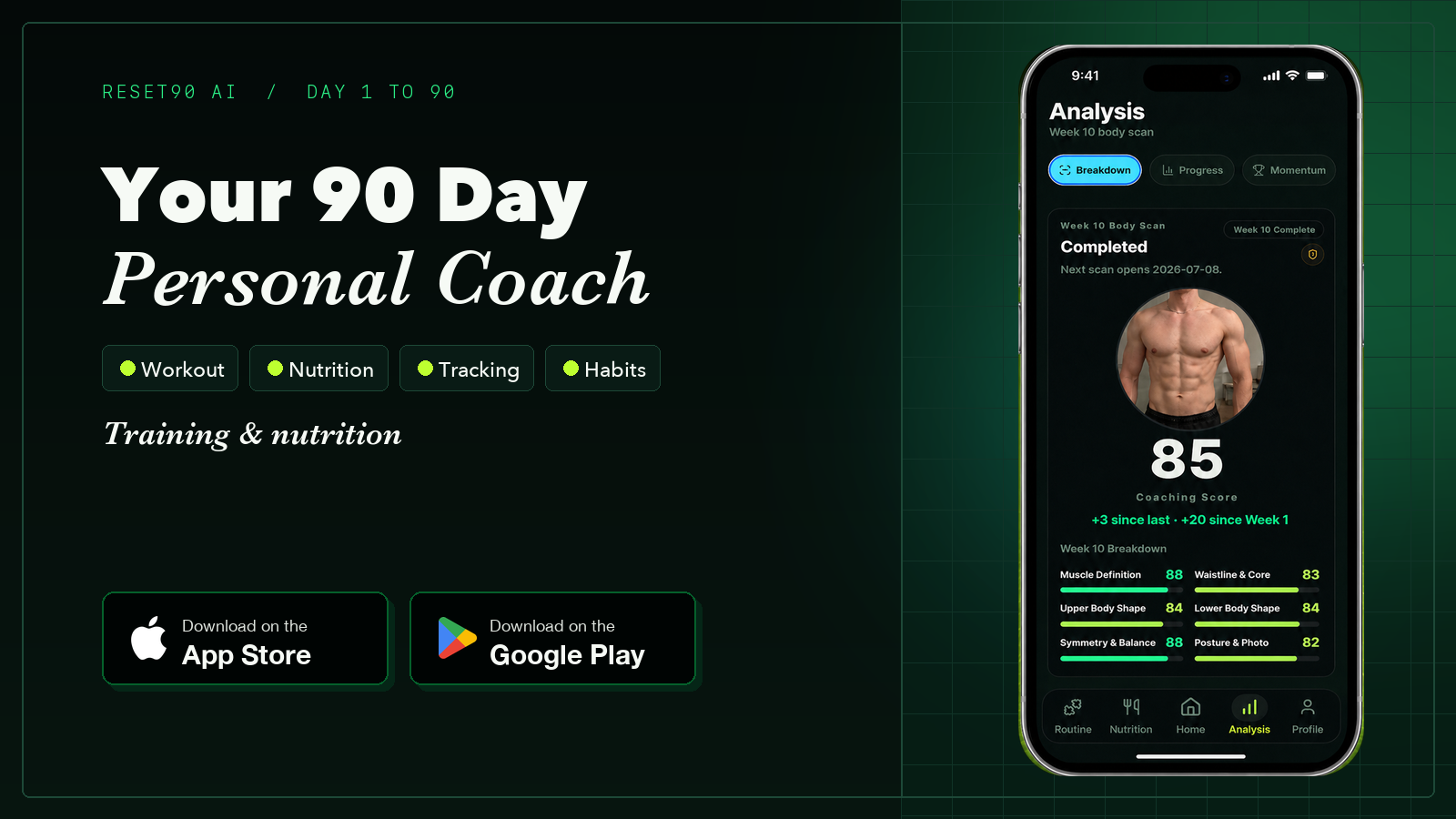
Tired is not one condition. A short night of sleep, a stressful day, unusual soreness, illness, and sharp pain should not all receive the same response. The goal is to make a smaller decision that matches the reason you feel off.
01Use a three-question readiness check
- Is the feeling general fatigue, or is there sharp or unfamiliar pain?
- Can a gentle warm-up make your movement feel more coordinated?
- Would completing the full session reduce the quality of the next few days?
If you have sharp pain, symptoms of illness, dizziness, chest pain, or an injury concern, stop and seek appropriate professional guidance. This article is for ordinary low-energy days, not for overriding medical signals.
02Choose one adjustment, not a completely new program
Make the smallest change that solves the problem. If time is short, cut accessory work before the main movement. If your energy is low, reduce load or leave more repetitions in reserve. If your joints feel unusually irritated, change the movement pattern or choose recovery work instead.
03Four practical ways to scale a session
- Reduce volume: keep the main exercises and remove one or two sets.
- Reduce intensity: use a lighter load and stop farther from failure.
- Reduce complexity: choose movements with simple technique and stable setup.
- Reduce duration: complete a focused 15–25 minute version and leave.
04Use a tool to make the decision easier
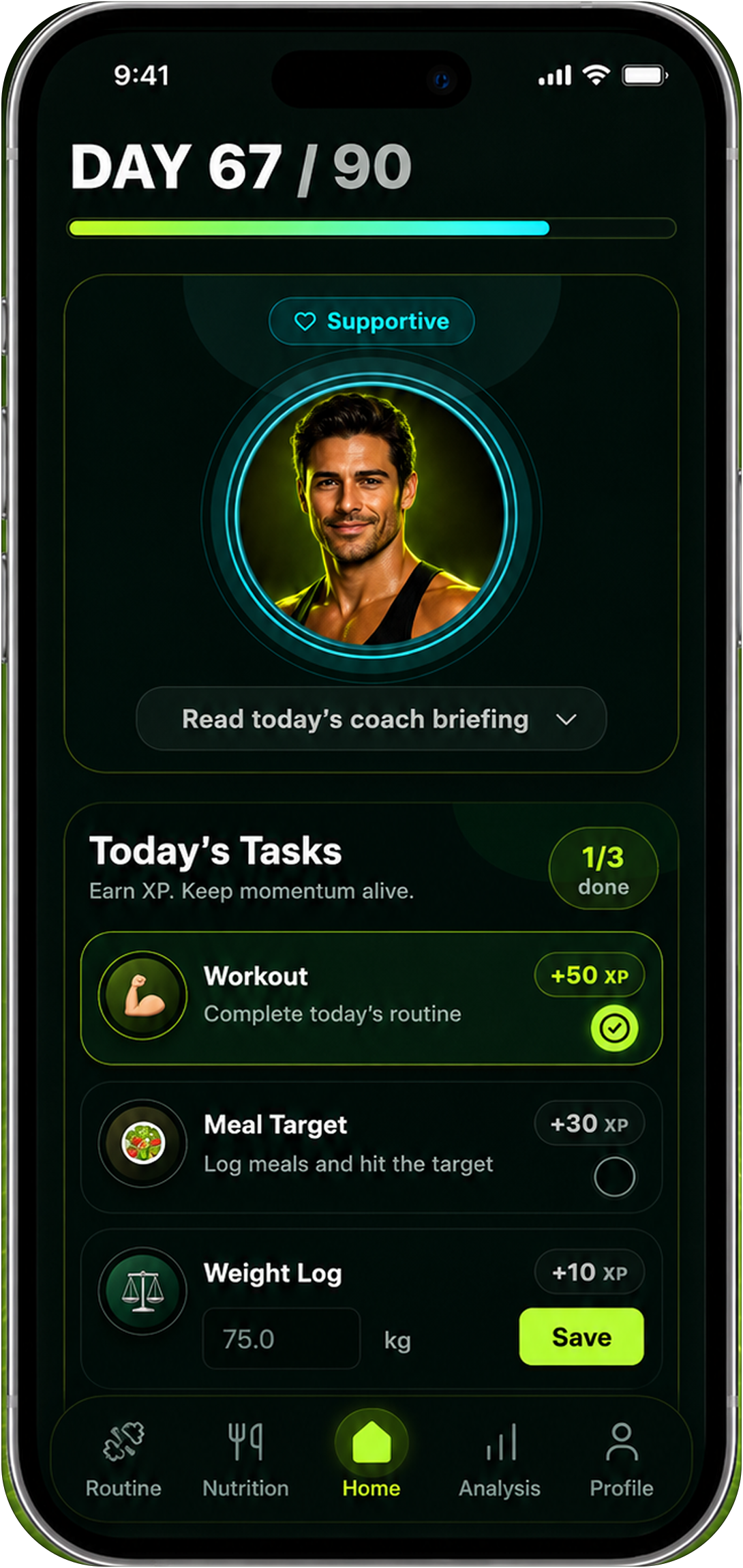
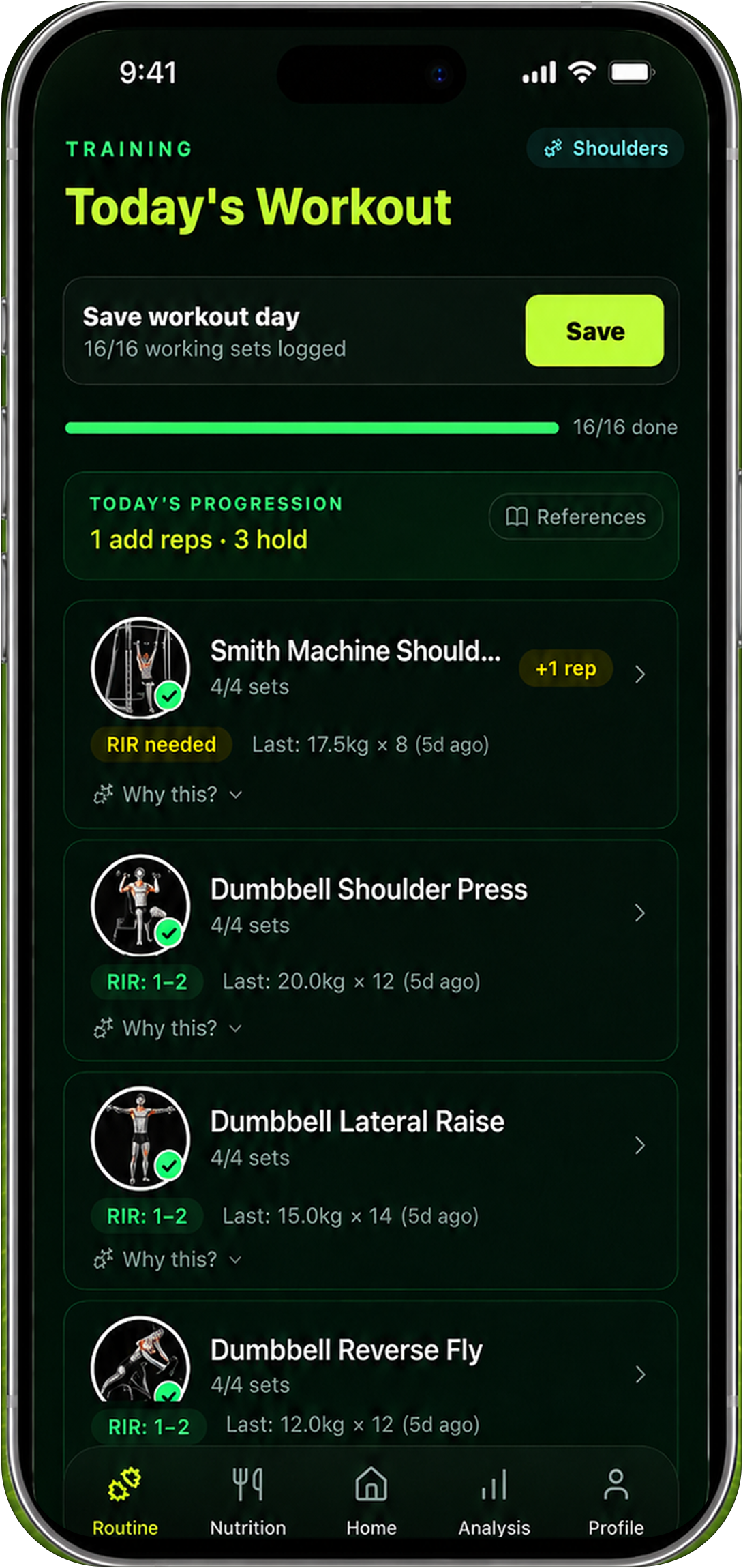
The Reset90 Plan Fit Check is a quick way to turn available time, energy, and equipment into a realistic starting option. In the app, the daily plan and workout progression screens provide the same principle: make the next useful action visible, then adjust from what you actually did.
05When rest is the productive option
Rest is not a failed version of training. It is the right choice when you are ill, unusually exhausted, dealing with sharp pain, or noticing that technique is breaking down. A 90-day plan is measured across weeks, so protecting the next few sessions can be more productive than forcing one session.
06Related Reset90 reads
- How sleep affects your training progress
- What to do when you miss a workout
- How to create a workout plan that adapts
Ready for a plan that can bend? Download Reset90 AI on the App Store or get it on Google Play.
General educational information only. Stop if exercise causes sharp pain or concerning symptoms, and seek qualified advice when needed.
The Reset90 system
Useful ideas for building a body you can keep.
Training notes, product updates, and practical ways to make your next 90 days count.
Start your next 90 days
Get your daily training, nutrition, and check-in priorities in one adaptive system.


Keep reading
Related articles

Ideal Body Measurements for Women
There is no single ideal body measurement set for women. Learn how averages, waist-to-height, body shape and repeatable tracking fit together without chasing a fixed beauty standard.
Read article
Bulk, Cut, or Recomp? A Practical Decision Guide
A practical way to choose a bulk, cut, recomp, or maintenance phase using your goal, training age, recovery, and repeatable progress signals.
Read article
How Often Should You Take Progress Photos?
How often should you take progress photos? Use this goal-based guide to choose weekly, biweekly, or monthly check-ins and make every comparison more consistent.
Read article