
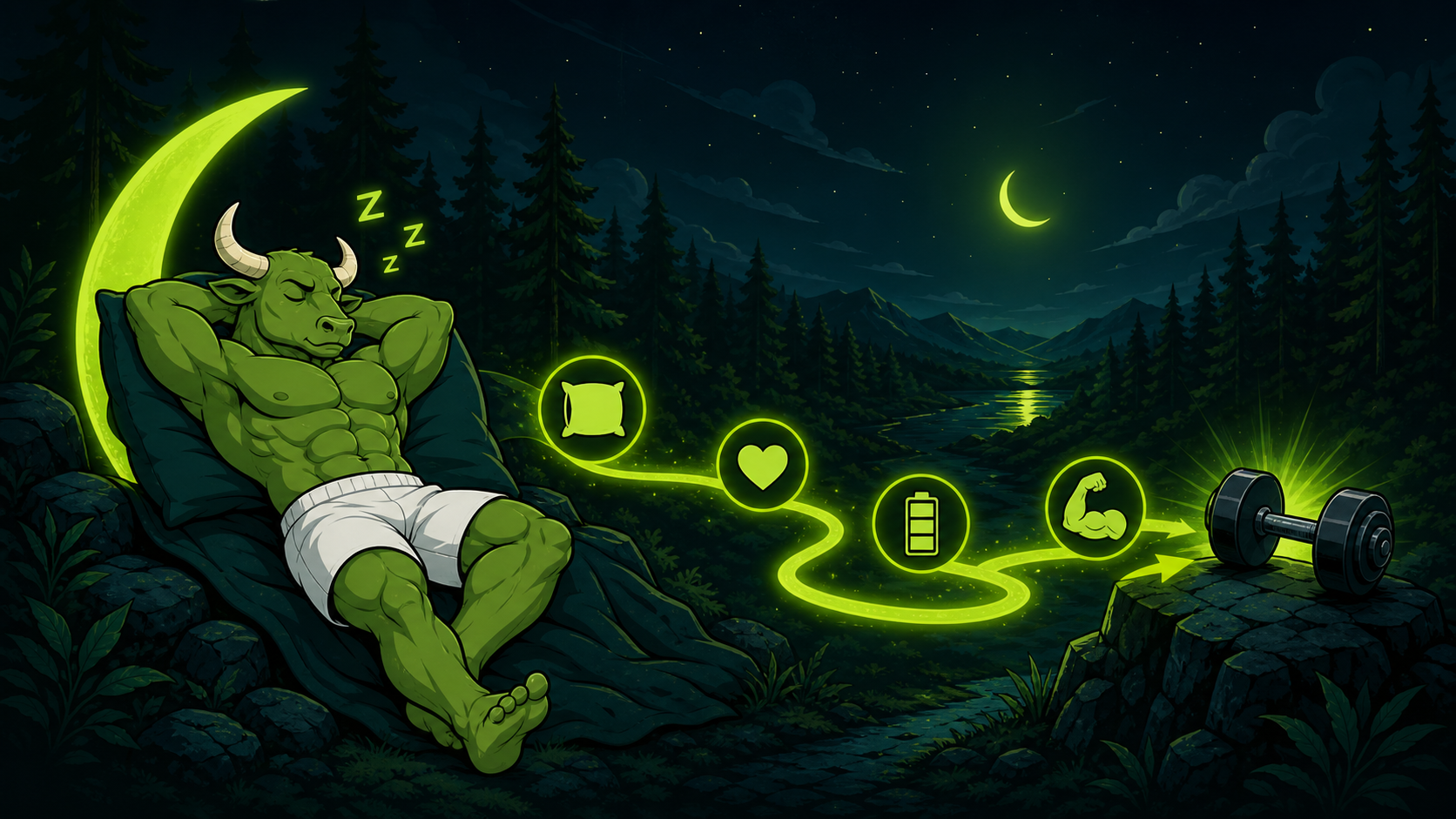
How Sleep Affects Your Training Progress
Sleep is not a bonus feature for serious athletes. It is part of the recovery system that makes your training easier to repeat.
By Reset90 AI Editorial Team
Training is the part people like to talk about. Recovery is the part that decides whether the plan still feels possible next week.
Sleep does not make every workout perfect, and one bad night does not erase your progress. But sleep is part of the system that supports energy, mood, attention, and the ability to recover from repeated training.
For most adults, the CDC lists at least seven hours per night as the recommended amount. You can review its sleep guidance here.
01Think in trends, not one night
You slept badly once. That is a data point. You have slept badly for two weeks, your mood is different, and every session feels heavier. That is a pattern worth responding to.
Track a few simple signals: approximate sleep time, how rested you feel, and how training felt. You do not need a perfect wearable score. A short honest note is enough to notice whether recovery is becoming a problem.
02Use a simple tool to choose the next step
Try the free Reset90 Plan Fit Check: answer a few questions about time, equipment, and consistency to turn this article into a realistic starting point.
03Choose a consistent wake time first
People often begin with a complicated bedtime routine. A more practical anchor is a consistent wake time that fits your life. Once the morning is more predictable, it becomes easier to choose a bedtime that gives you enough opportunity to sleep.
This does not mean every day needs to look identical. It means you create a rhythm instead of letting every night become a new negotiation.
04Create a short landing sequence
A wind-down routine should be short enough that you will use it on a normal night:
- Finish the last urgent task.
- Dim the lights and put the phone away from the bed.
- Prepare clothes or equipment for the morning.
- Do one quiet activity you can repeat.
The purpose is not to create a perfect sleep performance. It is to give your brain a clear transition out of work and stimulation.

05Do not use a poor night as a reason to quit
After a bad night, you may need to change the workout, not abandon the week. Lower the intensity, shorten the session, focus on technique, or take a walk. The right choice depends on how you feel and what your training requires.
If you are dangerously sleepy, sick, or experiencing symptoms that concern you, rest and seek appropriate professional advice. Training harder is not always the answer.
06Protect the basics before buying more tools
A tracker can help you notice patterns, but it cannot create sleep for you. Before chasing a perfect score, look at the basics: enough time in bed, a reasonably dark and quiet room, a repeatable routine, and caffeine or alcohol choices that do not regularly disrupt your nights.
Tools are helpful when they support a decision. They become noise when the number matters more than how you actually feel and function.
07Let your workout plan respond to recovery
A rigid plan asks you to perform the same way no matter what happened the night before. A more useful plan keeps the goal stable while changing the day’s version.
That might mean a full strength session after a good night, a shorter technique-focused session after an average night, and a recovery option after a very poor night. This is not weakness. It is how a plan stays repeatable.
Read how to create a workout plan that adapts to your schedule for more on this approach.
08Recovery should be visible in the plan
Sleep is easy to ignore because it does not look like an action item. Add it to the same weekly review as your workouts and meals. Ask: did I give myself enough opportunity to recover, and what needs to change this week?
Reset90 AI helps you connect daily training, nutrition, and check-in priorities so the next step can match the week you are actually having. Try Reset90 AI on the App Store.
Note: This article is general educational information, not medical advice. Talk with a healthcare provider if sleep problems persist or affect your daily life.

09Related Reset90 reads
- How to compare AI workout planners
- How to create an adaptive workout plan
- Fitness apps for staying consistent
Ready to test the plan? Download Reset90 AI on the App Store or get it on Google Play.
The Reset90 system
Useful ideas for building a body you can keep.
Training notes, product updates, and practical ways to make your next 90 days count.
Start your next 90 days
Get your daily training, nutrition, and check-in priorities in one adaptive system.


Keep reading
Related articles
Ideal Body Measurements for Women
There is no single ideal body measurement set for women. Learn how averages, waist-to-height, body shape and repeatable tracking fit together without chasing a fixed beauty standard.
Read article
Bulk, Cut, or Recomp? A Practical Decision Guide
A practical way to choose a bulk, cut, recomp, or maintenance phase using your goal, training age, recovery, and repeatable progress signals.
Read article
How Often Should You Take Progress Photos?
How often should you take progress photos? Use this goal-based guide to choose weekly, biweekly, or monthly check-ins and make every comparison more consistent.
Read article