
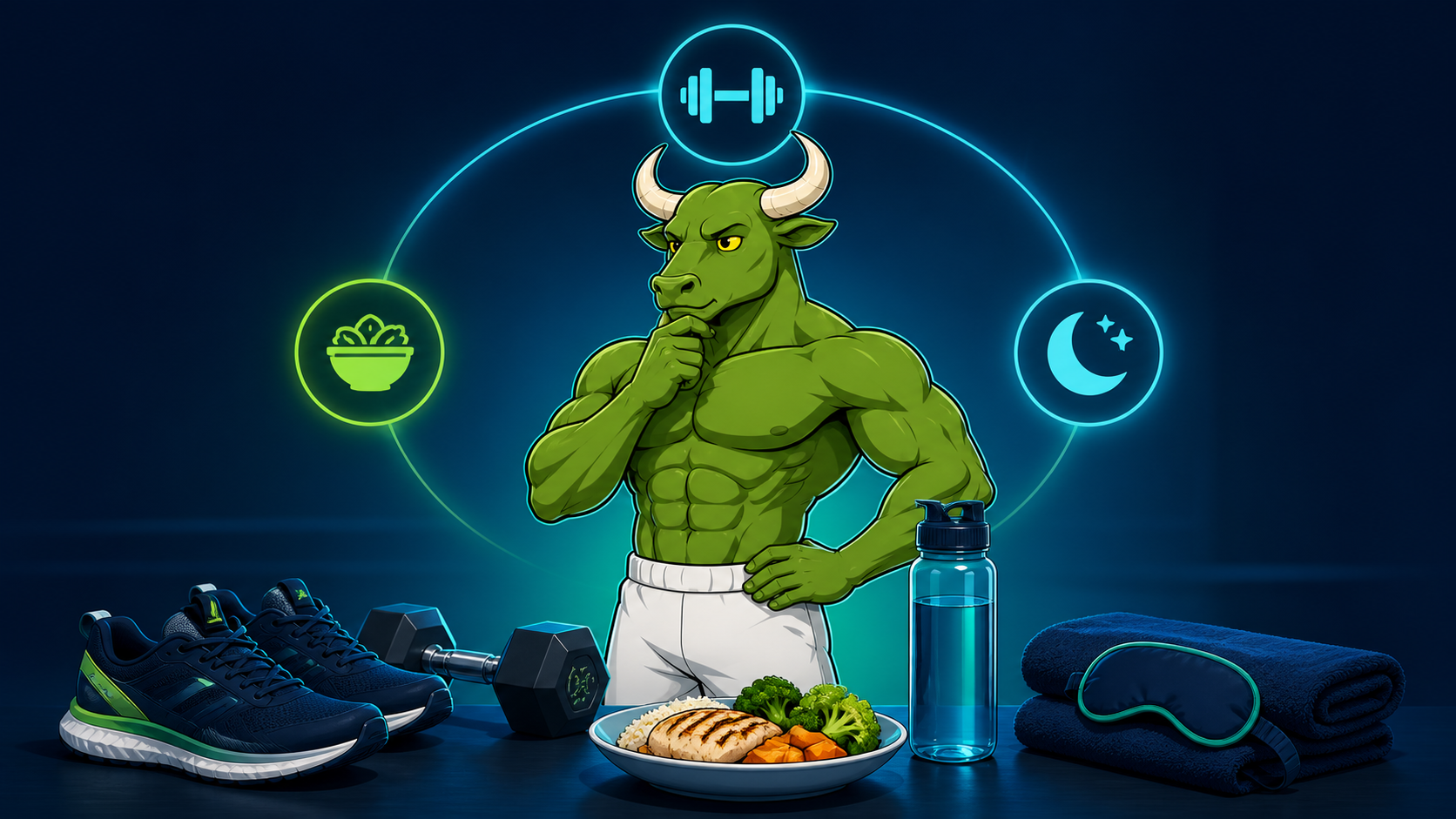
Best Apps for Training, Nutrition, and Recovery Together
How to choose one fitness system that connects workouts with food, sleep, and recovery without turning your day into a spreadsheet.
By Reset90 AI Editorial Team
Short answer: The best app for training, nutrition, and recovery depends on the job you need it to do. Choose a specialist tracker for depth, a dashboard for seeing signals together, or a goal-based integrated system when you want one next action that connects workouts, food, and recovery.
01Best apps at a glance
Start with the decision you need to make, not the longest feature list. This is a role-based comparison, not a claim that one app is best for every person:
| Your main need | Best fit | What it should help you do | Main trade-off |
|---|---|---|---|
| Detailed workouts, sets, reps, and progression | Specialist workout tracker | Keep a clean training history and repeat a known program | You connect nutrition and recovery yourself |
| Calories, protein, meals, or nutrition trends | Nutrition tracker | See what you eat and adjust one food behavior | It may not tell you how today’s training should change |
| Sleep, readiness, soreness, or wearable signals | Recovery dashboard | Notice patterns across several recovery signals | More charts do not automatically create a next action |
| One plan connecting training, nutrition, and recovery | Goal-based integrated system | Turn the three areas into a small set of daily decisions | It may not be the deepest specialist tool in every category |
Fitness is not three separate dashboards. A hard training week affects appetite and sleep. Poor sleep affects training quality. A chaotic meal pattern can make recovery harder. The most helpful app is the one that makes those relationships easier to notice without creating another full-time job.
02What “all-in-one” should mean
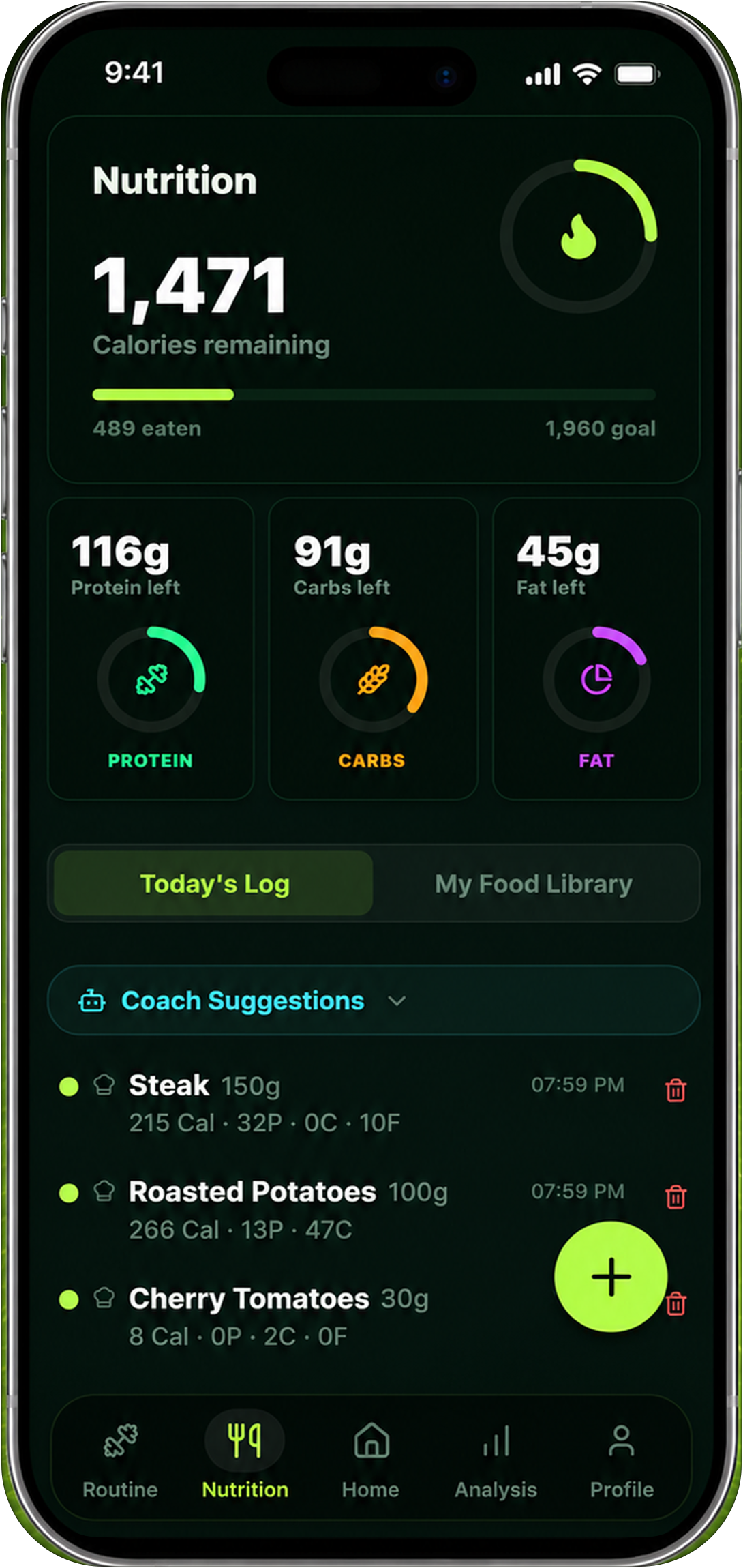
An app does not become all-in-one because it has a tab for nutrition and a tab for sleep. The parts should influence the next action. If the recovery check-in never changes the workout, it is just another number to collect.
Look for a system that can:
- Set a training direction and a realistic weekly rhythm.
- Keep nutrition guidance simple enough to use on busy days.
- Make recovery visible without pretending to measure your entire biology.
- Help you adjust the day when the signals do not match the plan.
- Show trends and decisions instead of overwhelming you with raw data.
03Training: the anchor
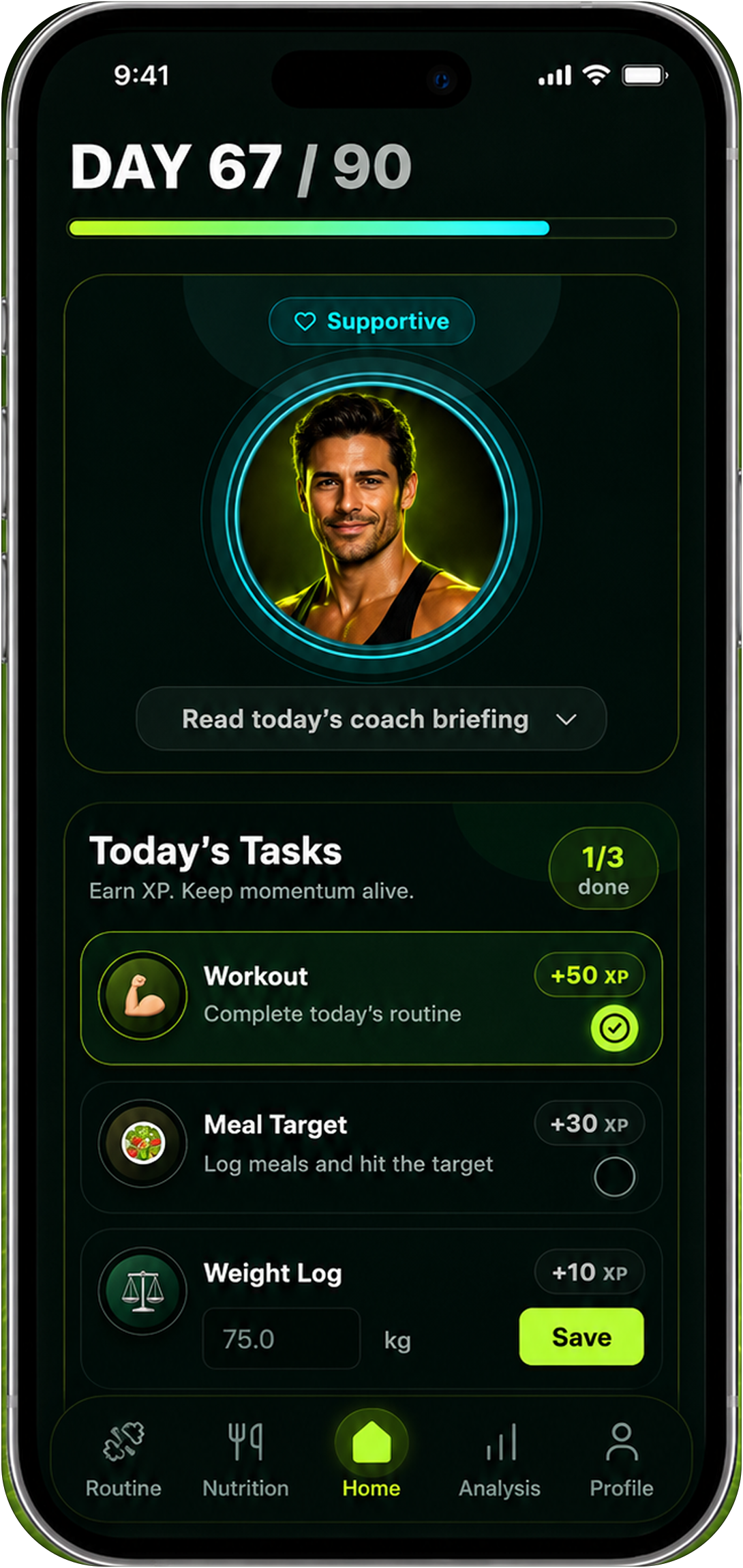
Training is often the anchor because it gives the week a concrete action. A good app should help you know what to do, why it matters, and how much is enough today. It should also make a shorter version available when the normal session does not fit.
Start with an adaptive workout plan if your current routine changes more than your app expects.
04Nutrition: support, not punishment
Nutrition tracking can be useful, but accuracy is not the only goal. Some people need a simple protein or meal structure. Others need regular meals, more vegetables, better hydration, or less decision fatigue. The right app should help you choose a useful next meal rather than turn every meal into a grade.
For a simpler approach, read how to track nutrition without overcomplicating it and what to eat before and after a workout.
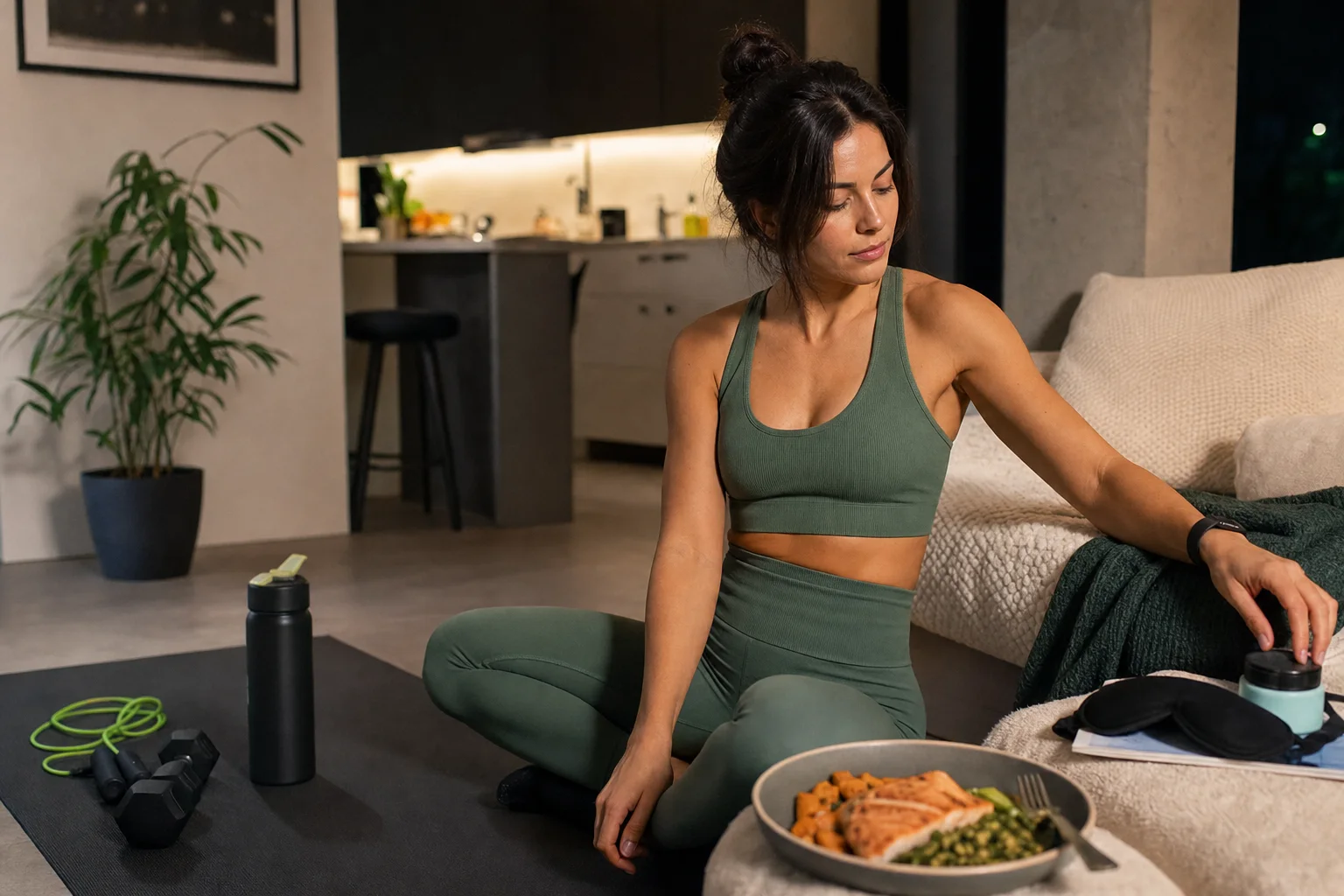
05Recovery: the missing context
Recovery is not only a rest day. It includes sleep, stress, soreness, workload, and whether you can perform the next session with reasonable quality. A useful app asks a few simple questions and changes the recommendation when the answer matters.
Do not confuse an app check-in with a medical assessment. The goal is to notice patterns and make conservative training choices, not to diagnose an issue through a score.
06Three app approaches
Separate specialist apps
You can use one app for workouts, another for food, and another for sleep. This gives you depth, but it also creates more data entry and more places to look.
Dashboard aggregators
These apps bring metrics into one view. They are useful for people who already collect data and want a single overview. Check whether the dashboard leads to decisions or only more charts.
Goal-based reset systems
These systems begin with a goal and use training, nutrition, and recovery as supporting behaviors. They are a good fit if you want a simple routine rather than a detailed research project about yourself.
07How to choose without overtracking
- Choose one training action for the week.
- Choose one nutrition behavior that supports it.
- Choose one recovery behavior you can repeat.
- Check whether the app helps these three reinforce one another.
- Remove any metric that does not change a decision.
08Founder case study: why I stopped chasing perfect tracking
In the first 33 days of Reset90, 7 accounts logged a meal, 5 completed a workout, and 2 uploaded progress photos. The sample is small and self-selected, so it is not evidence of how fitness apps perform in general. It did teach me something about product design: every extra tracking request competes with the first useful action.
That is why I prefer a small set of decisions that connect together—what to train, one nutrition priority, and one recovery behavior—over three separate dashboards that each demand a perfect day. I keep established nutrition guidance visible as background context rather than turning a general guideline into a personalized prescription.
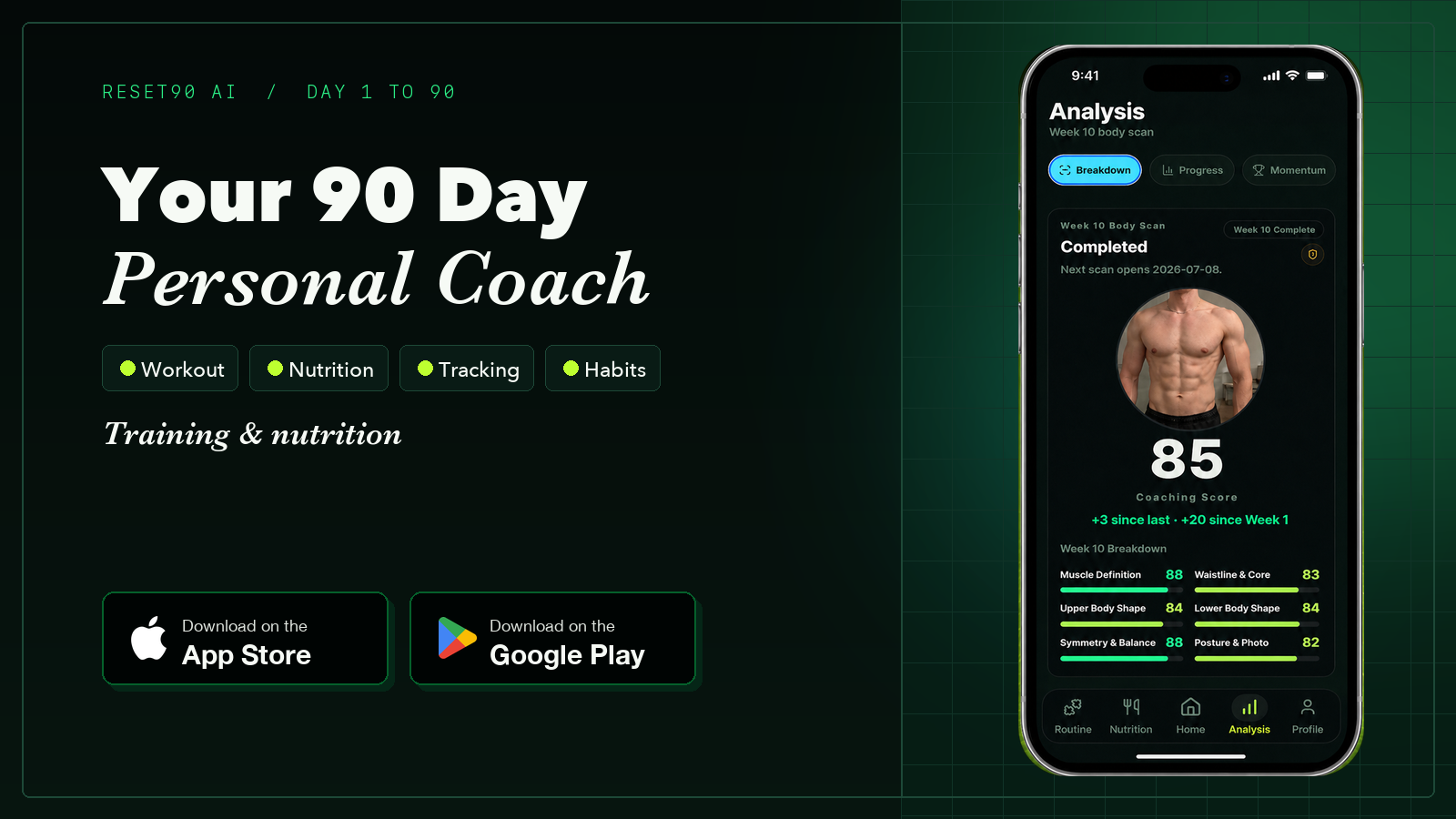
Reset90 AI uses a 90-day reset to connect those daily behaviors without requiring perfect tracking. If that sounds closer to the system you need, explore Reset90 AI through the site’s download options.
General educational information only. Nutrition and recovery needs vary; seek qualified guidance for medical or dietary concerns.
The Reset90 system
Useful ideas for building a body you can keep.
Training notes, product updates, and practical ways to make your next 90 days count.
Start your next 90 days
Get your daily training, nutrition, and check-in priorities in one adaptive system.


Keep reading
Related articles
Ideal Body Measurements for Women
There is no single ideal body measurement set for women. Learn how averages, waist-to-height, body shape and repeatable tracking fit together without chasing a fixed beauty standard.
Read article
Bulk, Cut, or Recomp? A Practical Decision Guide
A practical way to choose a bulk, cut, recomp, or maintenance phase using your goal, training age, recovery, and repeatable progress signals.
Read article
How Often Should You Take Progress Photos?
How often should you take progress photos? Use this goal-based guide to choose weekly, biweekly, or monthly check-ins and make every comparison more consistent.
Read article