

Best Fitness Apps for Staying Consistent
The best fitness apps for consistency reduce daily decisions, make missed sessions recoverable, and help you see progress beyond a single workout.
By Reset90 AI Editorial Team
Short answer: If you searched for an app to stay consistent with plank, choose the app type that removes your biggest obstacle: a timer for getting started, a habit tracker for remembering, a form coach for movement quality, or an adaptive planner for recovering after a missed day. For broader fitness consistency, the best app is the one that gives you a clear next step, a realistic minimum session, and progress you can understand without making every workout feel like a test.
Many fitness apps are good at showing workouts. Fewer are good at helping you return after work, soreness, travel, or a low-energy day changes the plan. That difference is what separates an app you use for a week from an app that can become part of your routine.
01What “consistent” should mean
Consistency does not mean doing the same workout at the same time forever. It means returning to the important behavior often enough for it to compound. A 30-minute workout three times a week can be more useful than an ambitious plan you abandon after ten days.
Before comparing apps, decide what you are trying to repeat:
- Strength training on a few reliable days.
- Daily movement and a minimum activity target.
- A mix of training, nutrition, and recovery habits.
- A small routine such as a plank challenge.
- Preparation for a specific event or performance goal.
02Which app type fits your consistency problem?
The phrase “best fitness app” hides several different jobs. Use this table before choosing a brand or downloading a new app.
| App type | Best for | What to check | Main limitation |
|---|---|---|---|
| Plank or workout timer | You know what to do but keep delaying the start. | Custom intervals, rest periods, audio cues, and a quick way to begin. | A timer may record seconds without helping you plan the rest of your week. |
| Habit or streak tracker | You forget the routine or lose the thread after a few busy days. | Reminders, a small minimum, history, and a recovery path after a missed day. | A streak can create pressure if the app treats one missed day as failure. |
| Form or camera coach | You need feedback on posture or movement quality. | Whether the camera is required, how feedback is delivered, and whether you can review the session afterward. | Camera feedback is not a substitute for qualified medical or coaching advice, and it can add setup friction. |
| Adaptive workout planner | Your schedule, energy, or available equipment changes often. | Can you shorten, move, or swap a session while keeping the next action clear? | A complex planner can create more decisions if the default plan is not easy to follow. |
| Coach-led tracker | You need accountability, programming, or someone else to set the next step. | Coach access, plan changes, progress review, price, and what happens when you miss a session. | It can cost more and may be less flexible than a self-guided app. |
03What the leading plank-app patterns actually offer
Search results for an “app to stay consistent with plank” are currently dominated by app-store listings rather than independent comparison articles. The public descriptions reviewed for this guide repeatedly mention timers, 30-day challenges, streaks, progress statistics, audio cues, gamification, and form feedback. Those features are useful, but they solve different problems.
| Example listing | Positioning described in the public listing | Best fit to test | What to verify before relying on it |
|---|---|---|---|
| Plank Timer | Custom durations, difficulty, rest periods, challenges, progress history, audio cues, and social features. | You want a fast, configurable timer and a visible challenge. | Whether the challenge is flexible enough for missed days and whether the free tier meets your needs. |
| Plank Pulse | A guided timer, a 30-day challenge, streaks, and simple progress statistics. | You want a narrow daily habit with a short feedback loop. | Platform availability, current in-app purchase terms, and whether the small review sample represents your experience. |
| Proplank | Camera-based posture feedback, a smart timer, progressive challenge goals, XP, achievements, streaks, and a heatmap. | You want form feedback and game-like motivation in one place. | Camera permissions, privacy details, device compatibility, and how accurate the feedback is for your body position. |
| Pure Plank | A short, full-core routine built around a three-minute-per-day positioning. | You want a very short, focused core routine. | Whether the equipment and routine match your goal; a short session still needs sensible progression and controlled form. |
These are not endorsements or independent product test scores. App-store descriptions are written by product teams and can change. Use the table to decide what to test, then check the current platform, price, privacy, and review details before downloading.
04Example: how to stay consistent with a plank
A small habit such as a plank makes an app’s consistency features easy to test. The useful question is not whether the app can display a plank. It is whether the app helps you choose a repeatable minimum, record what happened, and return after a missed day.
| What you need | What to look for in an app | Simple test |
|---|---|---|
| A repeatable minimum | A reminder or plan that lets you set a manageable hold or short session. | Can you complete the minimum on a busy day without starting over? |
| Useful progress | Low-friction logging that keeps duration, completion, or weekly history visible. | Can you tell what changed over the last seven days? |
| A recovery path | A way to move the habit or resume after a missed day without shame or penalty. | Miss one day and check whether the next action is still clear. |
| Controlled form | Technique cues, a form checklist, or feedback that helps you stop before your position breaks down. | Can you finish the minimum with controlled form rather than chasing a longer streak? |
For any exercise, including a plank, start at a level you can perform with controlled form and stop if you feel sharp pain. A timer can count seconds, but it cannot decide whether a painful movement is appropriate for you.
05The best app features for consistency
A visible minimum
On a great day, you can complete the full session. On a busy day, you need to know the minimum version that still counts. An app that only presents one long workout makes every interruption feel like a binary failure.
Flexible scheduling
A reminder is useful only if the app gives you a reasonable response when you cannot train at the original time. Look for plans that let you move, shorten, or swap a session without starting over.
Progress you can understand
Consistency improves when you can see evidence that your actions matter. That evidence might be more completed sessions, a better range of motion, improved strength, or simply fewer abandoned weeks. Avoid dashboards that show so many metrics that the important trend disappears.
Low-friction logging
If recording a workout takes longer than the workout, you will eventually stop recording. Good tracking captures enough detail to help the next decision without turning every session into paperwork.
06How to choose a plank app by your real obstacle
If starting is the problem: begin with the simplest timer that lets you set a short, repeatable hold. A fast start is more valuable than a large exercise library when the main obstacle is getting moving.
If remembering is the problem: look for reminders, a weekly history, and a minimum version. Test whether you can reschedule the session without losing all context.
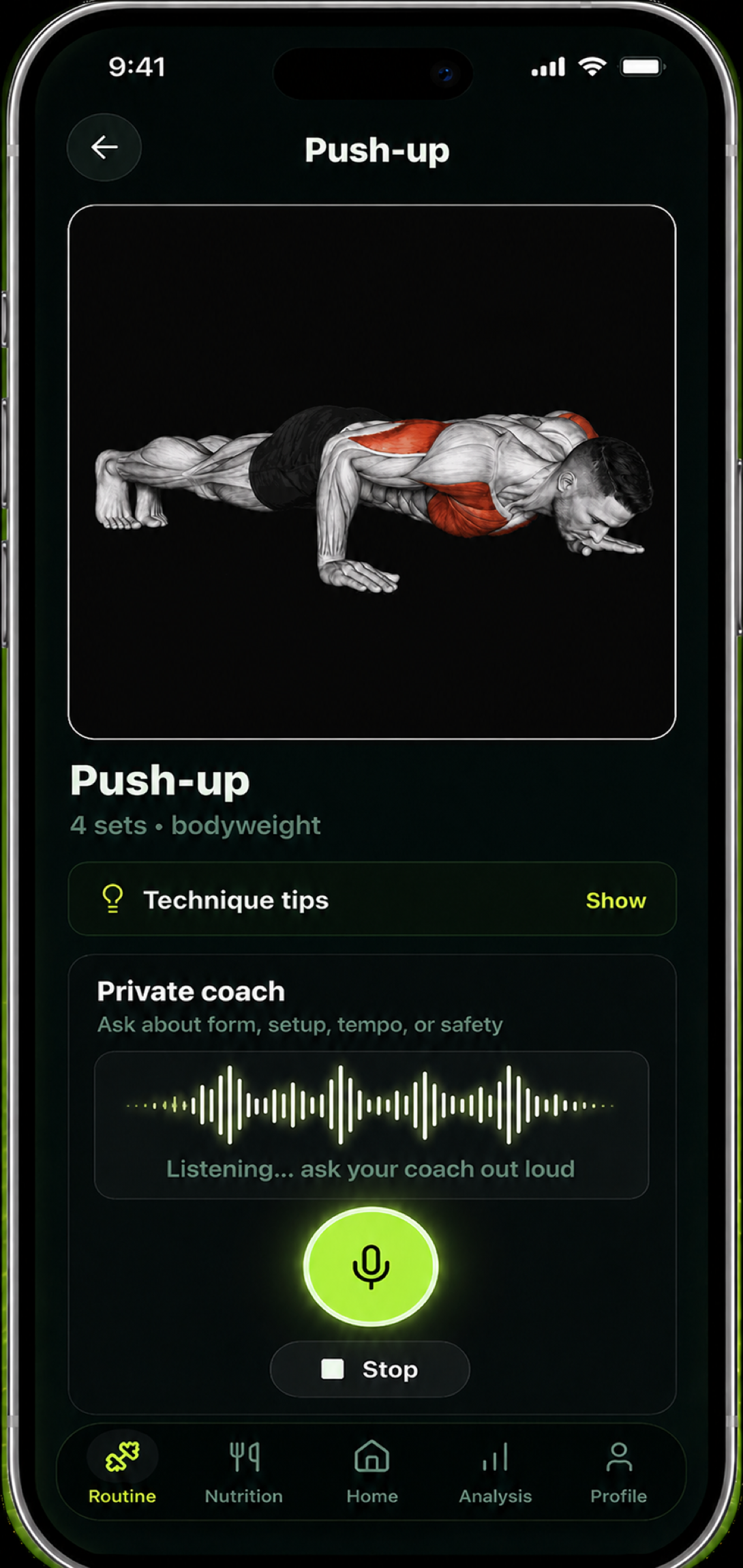
If form is the problem: consider technique cues or camera feedback, but verify privacy settings and treat the feedback as a training aid rather than a diagnosis.
If boredom is the problem: challenges, audio guidance, achievements, or varied progress views may help. Make sure the game layer still leaves you with a coherent progression.
If missing one day is the problem: choose the system with the clearest reset path. The best test is to deliberately miss or move one session and see whether the next action remains obvious.
07What “stability app workouts” might mean
One low-volume query associated with this page was “stability app workouts.” That phrase can mean two different things, so do not choose an app until you know which problem you mean.
| If you mean… | Look for… | Do not confuse it with… |
|---|---|---|
| Body stability and balance | Balance, core control, mobility, stability-ball or bodyweight exercises, and clear technique guidance. | A generic streak tracker that records completion but teaches no movement. |
| Stable training execution | Scheduling, reminders, a minimum session, progress history, and a way to recover after interruptions. | An athlete-only performance platform that may be more complex than you need. |
| Coach-managed stability work | Personalized programming, coach review, exercise libraries, and clear pricing. | A timer that cannot adapt the plan or explain why an exercise was selected. |
If you are returning from pain, injury, or a medical restriction, use qualified professional guidance for exercise selection. An app can organize a plan, but it cannot determine whether a movement is medically appropriate for you.
08Why motivation-based plans break
Motivation is strongest at the beginning of a new goal. The plan feels exciting, progress feels close, and missing a day seems impossible. Then work, stress, soreness, or a normal low-energy day appears. If the app has no graceful fallback, the user feels behind and begins avoiding the plan.
A better system separates the full version from the minimum version. The full version builds fitness. The minimum version protects the habit and keeps the next decision close. For a practical example, read how to stay consistent when motivation drops.
09A seven-day test for any fitness app
- Use your real schedule and normal energy level.
- Complete one full session.
- Complete one deliberately shorter session.
- Move a workout by one day.
- Record one simple progress signal.
- Check whether the app still knows what you should do next.
- Decide whether the app reduced friction or added another task to manage.
10Use a simple tool to choose the next step
Try the free Reset90 Plan Fit Check: answer a few questions about time, equipment, and consistency to turn this article into a realistic starting point.
11Founder note: consistency is not the same as retention
When I launched Reset90, I assumed the obvious product goal was to keep people opening the app. My first month pushed me toward a different definition. The goal is to help someone build a routine, even if that eventually means they need fewer reminders and less app time.
That is not a claim about long-term outcomes; it is the product principle I am using while the sample is still small. In the first 33 days, 37 of the 38 accounts were real users, but only 5 recorded a completed workout. The gap between signing up and doing the work is more useful to me than a flattering download number. It tells me to reduce friction before adding more features. I wrote about that early signal here.
If the app becomes harder to use after one imperfect day, it is not built for consistency. Reset90 AI focuses on the reset itself: a 90-day direction, daily priorities, and a plan that can bend when the week does.
General educational information only. Stop if exercise causes sharp pain and seek qualified advice when needed.
12Related Reset90 reads
- How to compare AI workout planners
- How to create an adaptive workout plan
- How to stay consistent when motivation drops
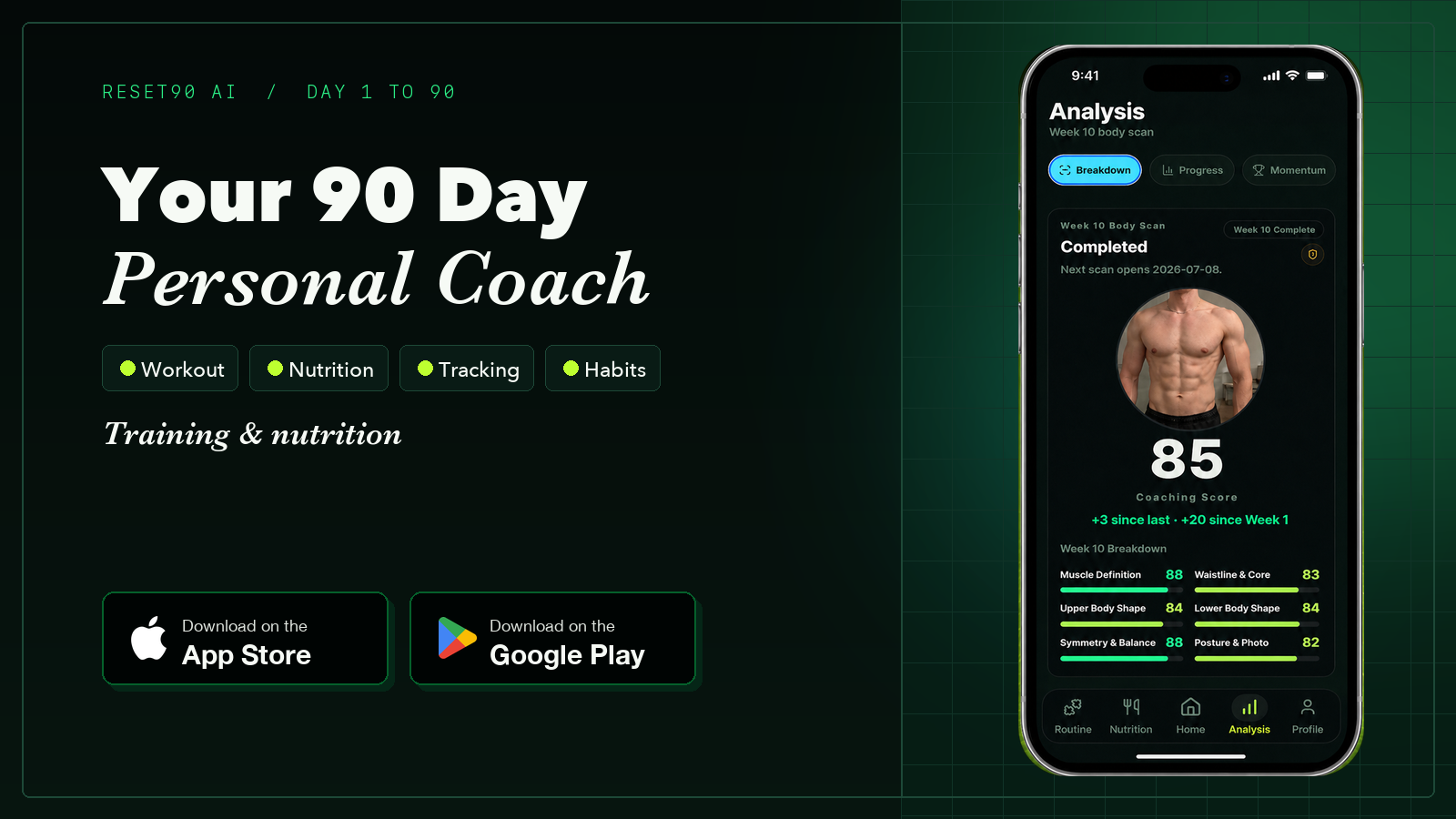
Ready to test the plan? Download Reset90 AI through the App Store or Google Play download options shown on this page.
The Reset90 system
Useful ideas for building a body you can keep.
Training notes, product updates, and practical ways to make your next 90 days count.
Start your next 90 days
Get your daily training, nutrition, and check-in priorities in one adaptive system.


Keep reading
Related articles
Ideal Body Measurements for Women
There is no single ideal body measurement set for women. Learn how averages, waist-to-height, body shape and repeatable tracking fit together without chasing a fixed beauty standard.
Read article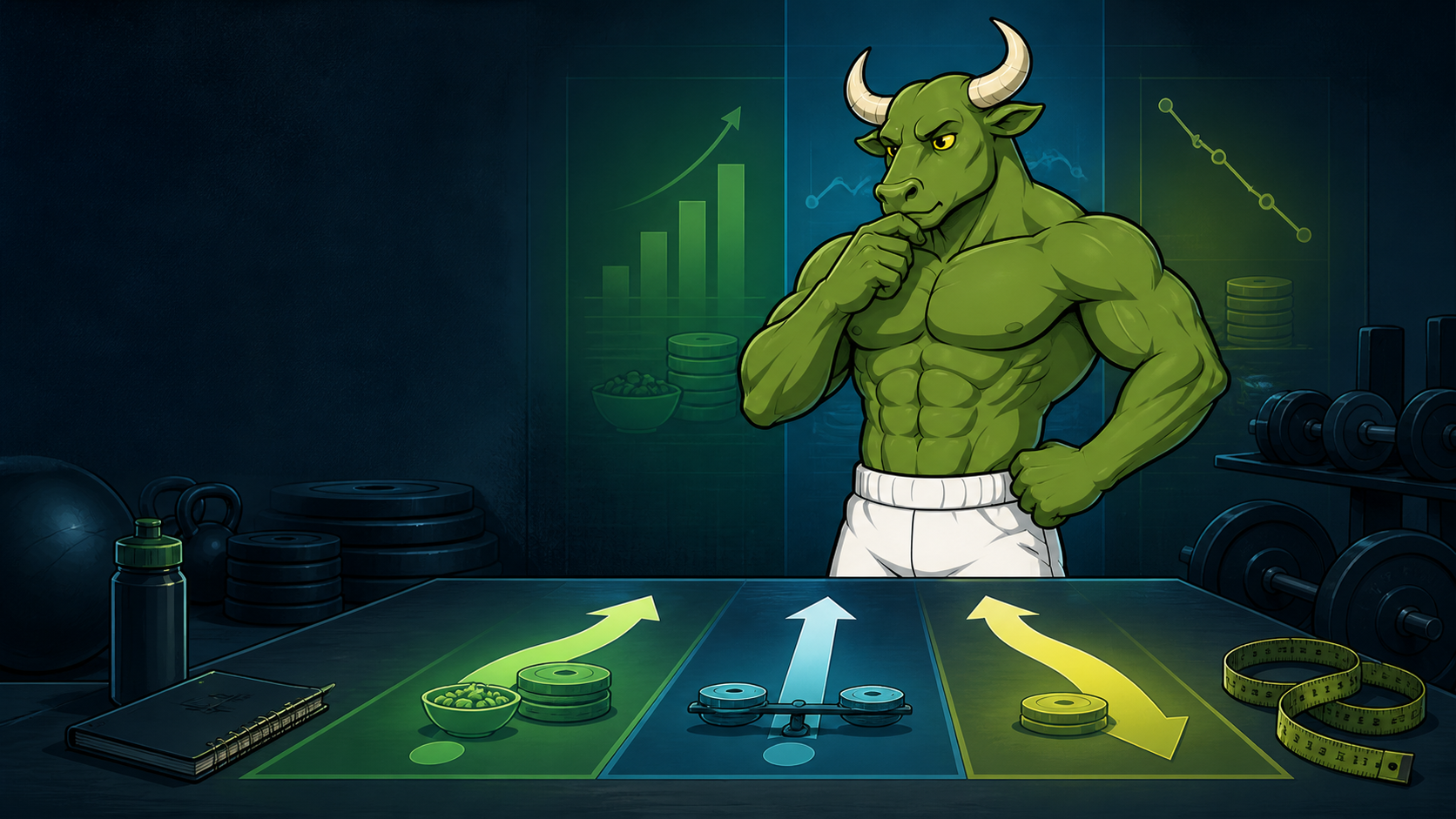
Bulk, Cut, or Recomp? A Practical Decision Guide
A practical way to choose a bulk, cut, recomp, or maintenance phase using your goal, training age, recovery, and repeatable progress signals.
Read article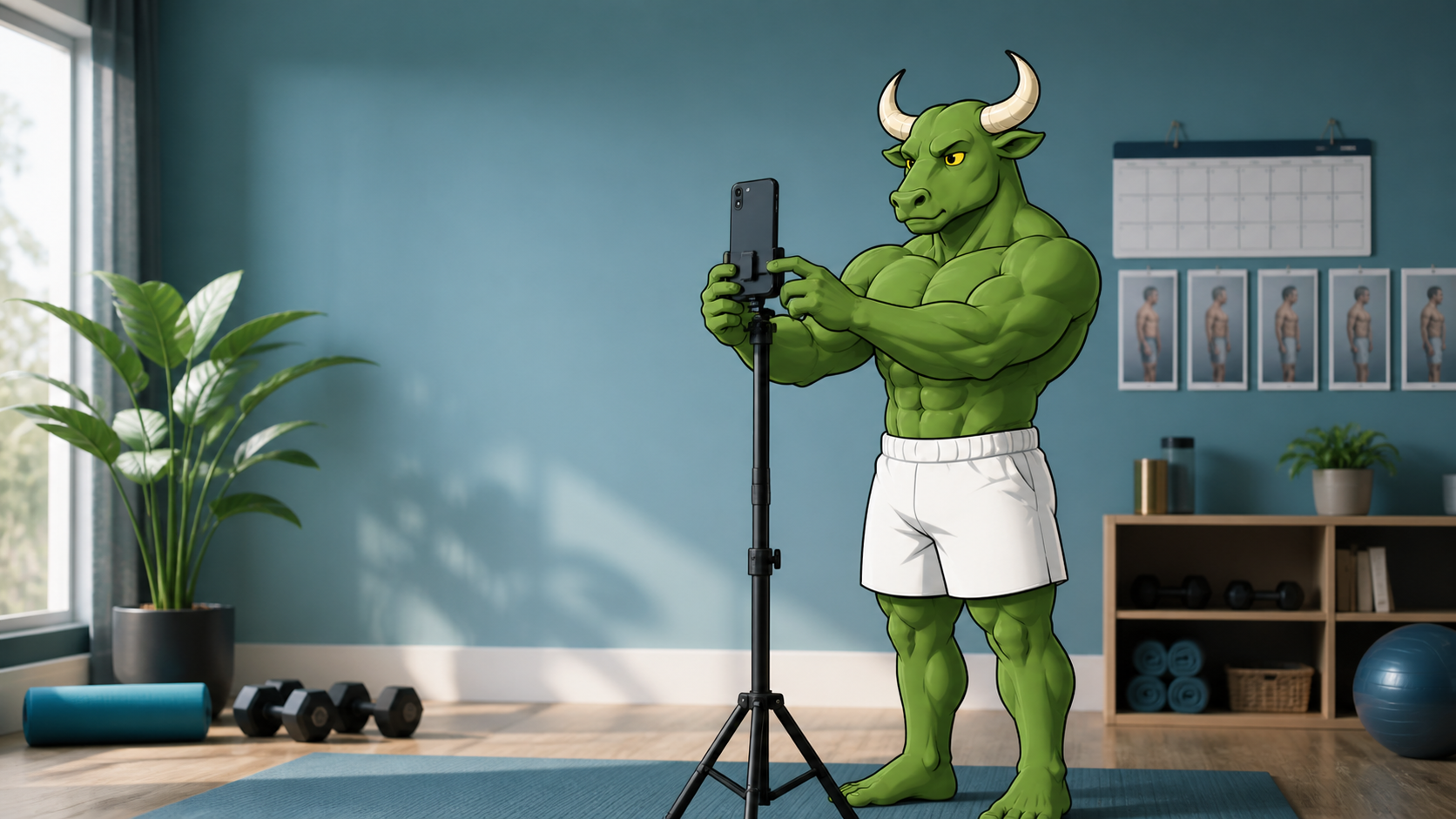
How Often Should You Take Progress Photos?
How often should you take progress photos? Use this goal-based guide to choose weekly, biweekly, or monthly check-ins and make every comparison more consistent.
Read article