
Best AI Workout Planner Apps in 2026
What to look for in an AI workout planner in 2026, how to compare recommendations, and where human judgment still matters.
By Reset90 AI Editorial Team
Short answer: The best AI workout planner is not the one that generates the longest workout. It is the one that uses your goal, time, equipment, training history, and recovery feedback to produce a sensible next session. In 2026, compare the quality of the adaptation, not the novelty of the word “AI.”
AI can make fitness planning feel more personal, but personalization is only useful when it changes the decision in a helpful way. A plan that ignores your last three workouts is not personalized just because it has your name on the screen.
01What an AI workout planner should actually do
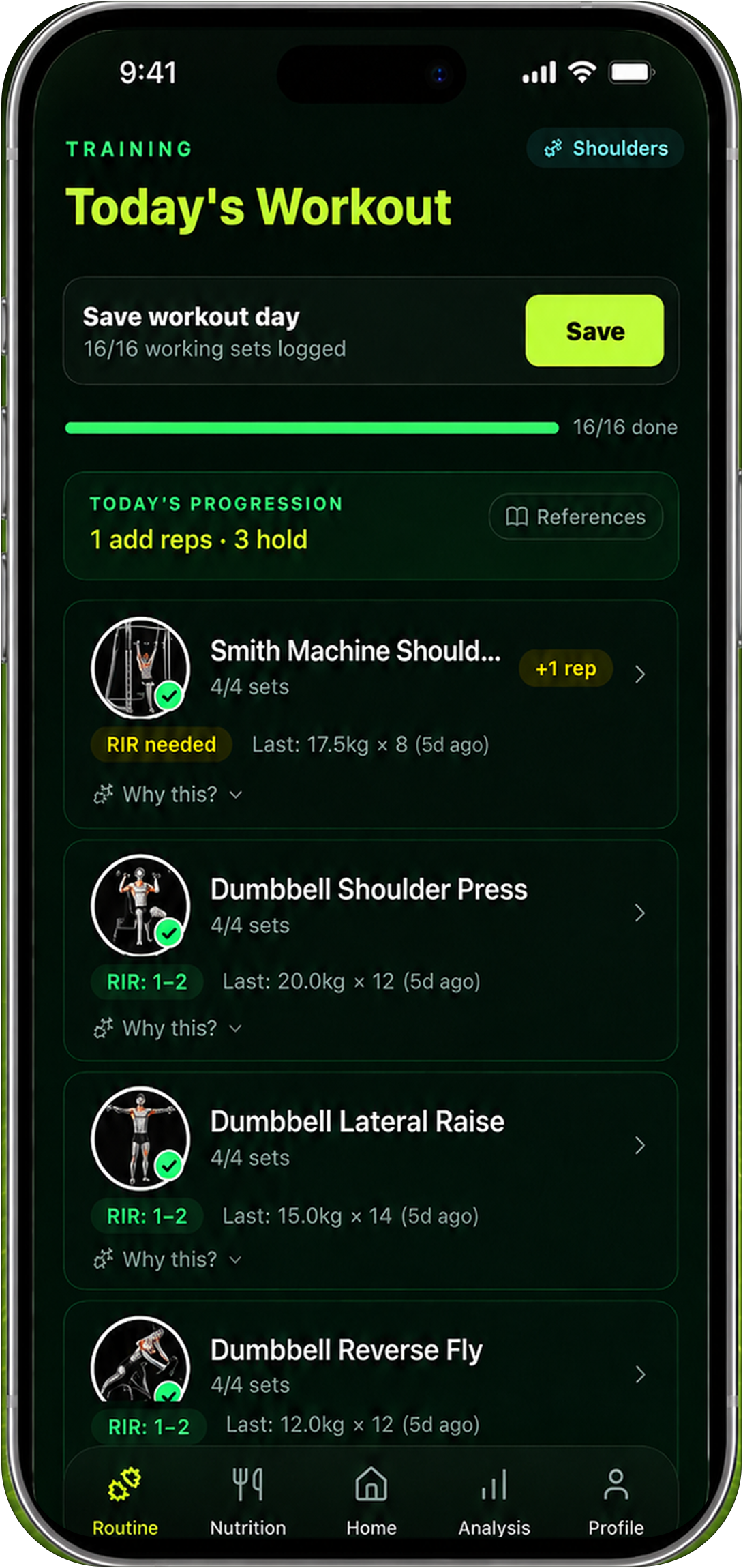
A good planner should reduce the gap between intention and action. It should turn a broad goal such as “get stronger” or “train consistently for 90 days” into a workout you can do today, with enough context to know why it is next.
Look for five capabilities:
- Goal translation: it turns a goal into a progression rather than a random list of exercises.
- Constraint awareness: it respects your available time, equipment, location, and experience.
- History: it remembers what you completed and how it felt.
- Recovery adjustment: it can lower the demand when sleep, soreness, or stress makes a hard session a poor choice.
- Explainable recommendations: it gives you enough reasoning to trust or edit the next step.
02Use a simple tool to choose the next step
Try the free Reset90 Plan Fit Check: answer a few questions about time, equipment, and consistency to turn this article into a realistic starting point.
03Four ways AI fitness apps differ
Exercise generators
These tools are useful for inspiration. You enter a muscle group, goal, or time limit and receive a workout. They are a good starting point, but they may not create a connected plan unless they also use your history.
Adaptive progression planners
These apps focus on what comes after the last session. They can be valuable for people who want progression but do not want to write every week themselves. The key question is whether the changes make sense, not whether the app changes something every time.
AI coaching companions
These products combine recommendations with conversational support. They can help you think through barriers and make the plan feel less mechanical. Treat the conversation as support, not as a replacement for professional care or an in-person assessment.
Goal-and-habit systems
These apps connect training with daily actions such as nutrition, sleep, or check-ins. They are useful when the user’s real problem is not exercise knowledge but the ability to keep several basics moving together.
04How to spot AI theater
Be cautious when “AI” only means a chatbot layered on top of a fixed library. Ask what information changes the plan. Can the app respond to a shorter day? Does a missed workout change the next recommendation? Can you explain why a hard session appears after poor recovery?
Also watch for overconfident language. An app can suggest a useful training option, but it should not pretend to diagnose injuries, guarantee body changes, or replace a qualified clinician.
05Which app type should you choose?
Choose an exercise generator if you already know your own progression. Choose an adaptive progression planner if you want structured training with less manual planning. Choose an AI coaching companion if encouragement and reflection are the main missing pieces. Choose a goal-and-habit system if you want training, nutrition, and recovery to share one direction.
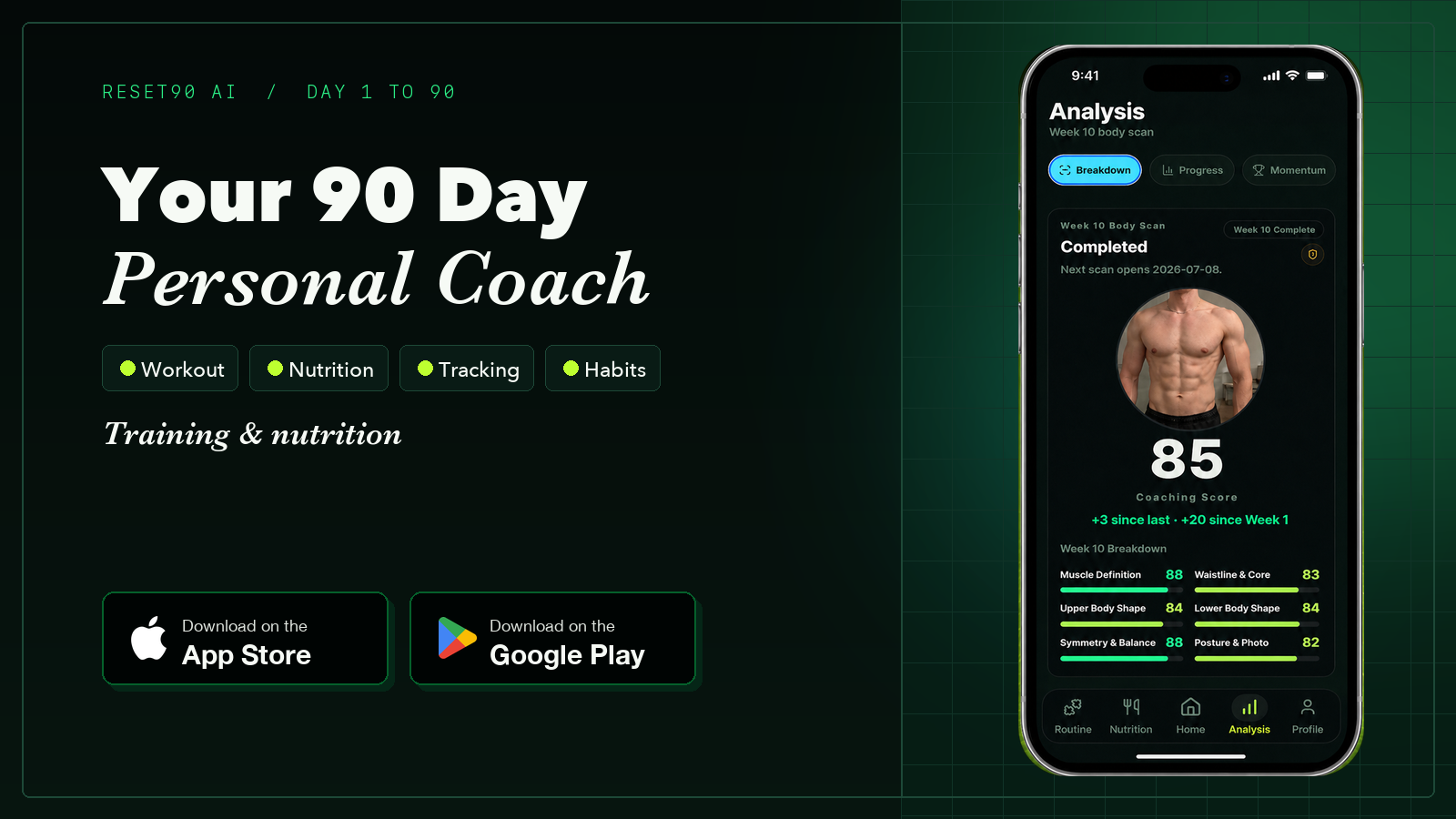
Reset90 AI sits in the last two categories: it is built around a 90-day direction and the daily decision that keeps the direction alive. It is especially useful for someone who wants structure without pretending every week is predictable. You can compare the underlying idea in this guide to adaptive workout planning. For a longer-horizon comparison, see our comparison of 90-day fitness apps.
06Questions to ask during a trial
- What does the app know about me after the first week?
- What changes when I only have 20 minutes?
- What happens after I miss a workout?
- Can I see a reason for the next recommendation?
- Does the app help me act, or does it only give me more information?
07Founder note: where I draw the AI boundary
I am building Reset90 with a deliberately boring rule: AI should reduce planning friction, not pretend to be a doctor or a personal trainer who has watched every rep. A recommendation is useful when it respects the goal, time, equipment, and recent history. It is not useful when it sounds confident but cannot explain what changed.
That boundary also affects the product architecture. When AI consent is disabled, Reset90 can use built-in programming logic for planning; AI is not treated as the only source of value. The app's own Terms of Use and Health & Safety guidance spell out the limits. I would rather be clear about those limits than use “AI” as a reason to overpromise.
AI is most useful when it makes the next good action obvious. Try Reset90 AI on the App Store if you want to test a 90-day planning approach.
General educational information only. AI recommendations are not medical advice and should be adapted to your health and experience.
08Related Reset90 reads
- How to compare AI workout planners
- How to create an adaptive workout plan
- Fitness apps for staying consistent
Ready to test the plan? Download Reset90 AI on the App Store or get it on Google Play.
The Reset90 system
Useful ideas for building a body you can keep.
Training notes, product updates, and practical ways to make your next 90 days count.
Start your next 90 days
Get your daily training, nutrition, and check-in priorities in one adaptive system.


Keep reading
Related articles
Ideal Body Measurements for Women
There is no single ideal body measurement set for women. Learn how averages, waist-to-height, body shape and repeatable tracking fit together without chasing a fixed beauty standard.
Read article
Bulk, Cut, or Recomp? A Practical Decision Guide
A practical way to choose a bulk, cut, recomp, or maintenance phase using your goal, training age, recovery, and repeatable progress signals.
Read article
How Often Should You Take Progress Photos?
How often should you take progress photos? Use this goal-based guide to choose weekly, biweekly, or monthly check-ins and make every comparison more consistent.
Read article