

Calorie Cycling for Training: When It Helps and When It Adds Complexity
Calorie cycling changes how a similar weekly calorie budget is distributed across training and rest days. It may make eating feel more practical around workouts, but it is not automatically better for fat loss or muscle gain.
By Reset90 AI Editorial Team
Short answer: Calorie cycling changes how a similar weekly calorie budget is distributed across training and rest days. It may make eating feel more practical around workouts, but it is not automatically better for fat loss or muscle gain. Use it only when the pattern improves adherence and remains easy to review.

Calorie cycling sounds more advanced than it usually is. In its simplest form, you eat somewhat more on days that demand more training and somewhat less on easier days, while keeping the overall weekly direction aligned with your goal.
That can be useful for some routines. It can also add a second layer of tracking to a plan that was already difficult to follow. The important question is not whether cycling sounds optimized. It is whether changing the daily distribution helps you train, recover, and repeat the plan without turning food into a full-time scheduling project.
01What calorie cycling changes—and what it does not
Calorie cycling changes the timing and distribution of energy intake. It does not remove the importance of the total pattern across the week. A higher-calorie training day still belongs to the same weekly budget, and a lower-calorie rest day is not a free pass to ignore hunger, recovery, or basic nutrition.
The pattern also does not guarantee a special metabolic advantage. If two plans create a similar average energy balance and are followed with similar consistency, the simpler plan may be just as effective. Cycling is a scheduling tool, not a shortcut.
Keep the distinction visible:
- What can change: the amount of food assigned to different days, meals, or training windows.
- What should stay coherent: the weekly goal, protein habits, hydration, food quality, and the amount of training you can recover from.
- What must be tested: whether the distribution improves adherence rather than simply creating more decisions.
02Start with the weekly budget
Before you assign different numbers to different days, understand the average pattern you are trying to support. If you do not know whether your current intake is roughly stable, rising, or falling, cycling can make the signal harder to interpret.
Think of the week as a budget first. Then ask whether certain days deserve more of that budget because they contain a longer session, a demanding lower-body workout, or a social meal that you can plan for without losing the weekly structure.
This order prevents a common mistake: treating the training-day number as the goal and the rest-day number as a punishment. Both are simply parts of one plan.
03When cycling may reduce friction
Calorie cycling can be worth testing when your schedule has predictable differences between days. For example, a person may prefer a larger meal before or after a long training session, while naturally eating less on a rest day. Someone with regular weekend activities may also find a flexible distribution easier than forcing the same number every day.
Possible reasons to test it include:
- You feel more satisfied when food is concentrated around the sessions that matter most.
- Your training schedule is regular enough that higher-demand days are easy to identify.
- A flat target makes you unnecessarily hungry before hard sessions or leaves you overfed on quiet days.
- You can plan the difference without turning every meal into a negotiation.
These are adherence reasons, not proof that cycling has a unique physiological effect. If the plan makes your week easier to execute, that practical benefit may be enough.
04When cycling adds more complexity than value
A flat daily target is often the better choice when your training days change frequently, your hunger is already difficult to read, or tracking different targets creates anxiety. It is also hard to evaluate a cycle when weekends regularly include restaurant meals, travel, or unplanned changes in activity.
Watch for these warning signs:
- You spend more time calculating tomorrow’s target than reviewing the actual weekly trend.
- A lower rest-day target makes you arrive at the next workout overly hungry or under-recovered.
- You compensate for a higher day by skipping meals or adding unplanned exercise.
- You cannot tell whether a change in weight or performance came from the cycle, the training plan, or inconsistent logging.
When those signs appear, simplify first. A consistent target with a repeatable meal structure is not a less serious approach. It may be the more useful experiment.
05Build an example without chasing precision
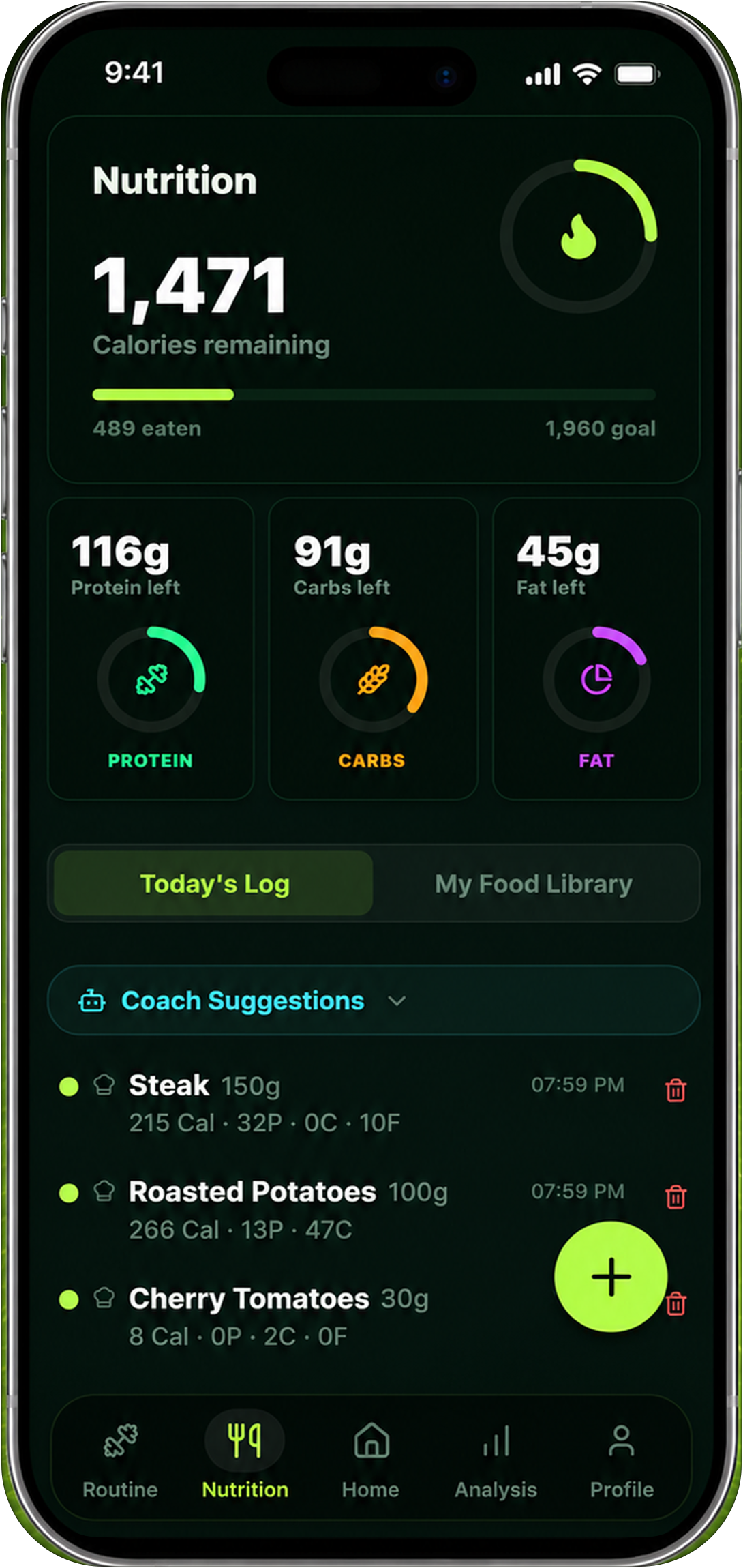
Use an example to understand the structure, not to copy a prescription. Imagine a hypothetical weekly budget of 14,000 calories. A flat version would average 2,000 per day. A simple cycle could place 2,200 on three demanding training days and 1,850 on four lower-demand days. Both patterns total 14,000 for the week.
The arithmetic is not the point. The point is that the cycle reallocates food; it does not create extra energy. If the lower days are so restrictive that the person cannot follow them, the theoretical plan loses to the flat plan in real life.
Keep the rest of the structure recognizable. Protein can remain consistent, meals can use the same familiar ingredients, and the difference can come from portions or an additional carbohydrate serving around a longer session. A cycle does not require a completely different menu every day.
06Match the higher days to actual training demand
Not every workout deserves a higher target. A short technique session, an easy walk, and a long lower-body session do not create the same planning problem. If you cycle, connect the higher day to the sessions that genuinely affect appetite, performance, or recovery.
Use a few practical questions:
- Is the session longer or more demanding than the rest of the week?
- Will extra food make the session or the next day easier to complete?
- Can the higher day be planned without turning it into a reward or binge?
- Does the following lower day still support normal hunger and recovery?
If the answer is no, keep the distribution flatter. Training-day eating should support the session, not create a cycle of restriction and compensation.
07Run an adherence test before you judge the strategy
Give the pattern a defined trial rather than changing it every other day. For roughly two weeks, keep the training schedule, meal structure, and tracking method as consistent as practical. Record whether you completed the planned days, how training felt, how hunger changed, and whether the weekly average moved in the intended direction.
Do not judge the plan from a single weigh-in. Water, glycogen, sodium, digestion, and training soreness can move body weight. Look for the broader pattern and ask whether the cycle made the routine easier to follow.
At the end of the test, choose one of three outcomes:
- Keep it: the pattern was easy to repeat and improved training-day or rest-day adherence.
- Flatten it: the daily differences created more friction than benefit.
- Adjust it: keep the idea but make the spread smaller or align higher days with more demanding sessions.
08Keep the plan safe and flexible
Calorie cycling is not a good reason to ignore persistent fatigue, dizziness, compulsive tracking, or a history of disordered eating. If you have a medical condition, are taking medication that affects appetite or weight, are pregnant or breastfeeding, or feel distressed by calorie targets, get individualized support from a qualified healthcare professional or registered dietitian.
For a general training plan, keep the same safety boundaries you would use with any nutrition change: progress gradually, do not use exercise to punish food choices, and do not treat a calculator or a formula as a diagnosis.
09How Reset90 can support the experiment
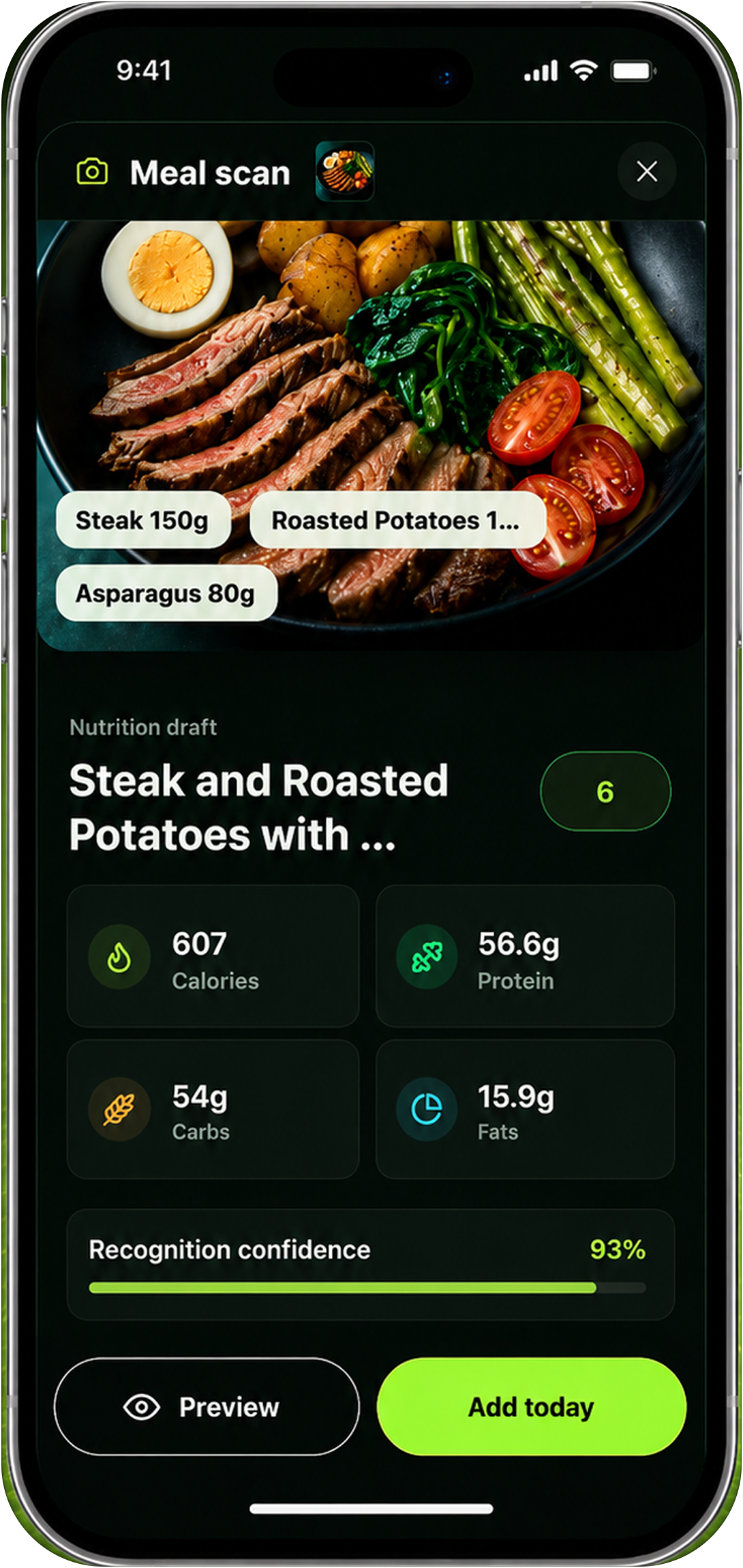
The value of cycling comes from seeing the relationship between training, meals, hunger, and weekly consistency. Reset90 can help keep those observations in one routine so you can review the pattern instead of relying on memory after a noisy week.
If you want a simpler starting point, use this guide to tracking nutrition without overcomplicating it. Start with a stable pattern, test a small distribution change only when it solves a real adherence problem, and return to the simpler plan whenever the extra complexity stops helping.
The Reset90 system
Useful ideas for building a body you can keep.
Training notes, product updates, and practical ways to make your next 90 days count.
Start your next 90 days
Get your daily training, nutrition, and check-in priorities in one adaptive system.


Keep reading
Related articles

Ideal Body Measurements for Women
There is no single ideal body measurement set for women. Learn how averages, waist-to-height, body shape and repeatable tracking fit together without chasing a fixed beauty standard.
Read article
Bulk, Cut, or Recomp? A Practical Decision Guide
A practical way to choose a bulk, cut, recomp, or maintenance phase using your goal, training age, recovery, and repeatable progress signals.
Read article
How Often Should You Take Progress Photos?
How often should you take progress photos? Use this goal-based guide to choose weekly, biweekly, or monthly check-ins and make every comparison more consistent.
Read article