
Fitness Apps When Motivation Drops: What Should Happen After a Missed Workout?
The real test of a fitness app is not whether it starts a workout on a motivated day. Learn how minimum sessions, flexible scheduling, recovery paths, and better progress signals help you return after a missed workout.
By Reset90 AI Editorial Team
Short answer: When motivation drops, the best fitness app does not demand a perfect streak. It gives you a clear way to shorten, move, or resume the next workout without losing the larger plan. Look for a visible minimum session, flexible scheduling, useful recovery after a missed day, low-friction logging, and progress that rewards returning rather than punishing interruption.
01What should happen after you miss a workout?
A missed workout creates a decision. You need to know whether to move the session, shorten it, substitute it, or continue with the next priority. A useful fitness app should make that decision visible.
| What happened | Useful app response | Warning sign |
|---|---|---|
| You have less time than planned | Offer a short or minimum version | Only one long workout is available |
| You missed the scheduled day | Move or resume the priority session | The plan resets or creates guilt-heavy streak messaging |
| You are sore or low energy | Suggest a lower-load, recovery, or mobility option | Every day is treated as maximum effort |
| Your week is disrupted | Rebuild the next few priorities without deleting the block | The app gives unrelated random workouts |
The important word is resume. The app should help you return to the plan, not convince you that the plan only counts when the calendar is perfect.
Most fitness apps are easy to judge on a good day. Open the app, start the workout, finish the session, and watch the checkmark appear. The real test starts when motivation disappears, work runs late, sleep is poor, or you miss the planned day.
This is not another list of the best fitness apps for staying consistent. It is a feature test: what should an app do when you do not feel like training, and how can you tell whether it helps you return instead of simply tracking the miss?
02Feature one: a visible minimum workout
On a high-energy day, a full workout may be realistic. On a difficult day, the useful option may be a shorter version that keeps the habit and movement pattern alive.
A minimum workout should be:
- short enough to complete on a crowded day;
- specific enough that you do not have to design it from scratch;
- meaningful enough to support the larger goal;
- clearly different from the full session.
An app that only shows “complete” or “skip” turns normal life into a binary test. An app with full, short, and minimum versions gives you a better decision without pretending that every version creates the same training effect.
03Feature two: flexible scheduling without losing progression
Flexibility is not the same as randomness. A good app lets you move a workout while keeping its role in the week clear. If you miss the first session, you should still understand which priority comes next.
Test the app by moving a workout one day. Ask:
- Does the next session still make sense?
- Does the app preserve the important movement or training focus?
- Does it avoid stacking too much difficult work together?
- Can you see what changed and why?
If the app simply pushes every item forward until the calendar is full, it is displaying a schedule rather than helping you manage one.
04Feature three: a recovery path after a missed day
Streaks can make a routine visible, but they can also make one missed day feel like the entire effort disappeared. When motivation drops, the recovery path matters more than the streak badge.
Look for an app that can:
- show the next useful action immediately;
- record a shortened or adapted session honestly;
- keep the larger training block intact;
- separate a missed day from a failed goal;
- help you review the pattern without judgment.
The goal is not to hide missed workouts. The goal is to make the data useful. If you miss every Monday because of a recurring schedule conflict, the app should help you learn that pattern and change the plan.
05Feature four: low-friction logging
Logging is valuable only when it supports the next decision. If recording a workout takes longer than the workout, you will eventually stop recording, especially during the low-motivation weeks when information is most useful.
Check whether the app lets you quickly record:
- what you completed;
- what you shortened or substituted;
- how difficult or recoverable it felt;
- what the app recommends next.
You do not need every possible metric. You need enough history to notice whether you are returning more reliably, which sessions keep failing, and whether the plan fits your current life.
06Feature five: progress that is bigger than a streak
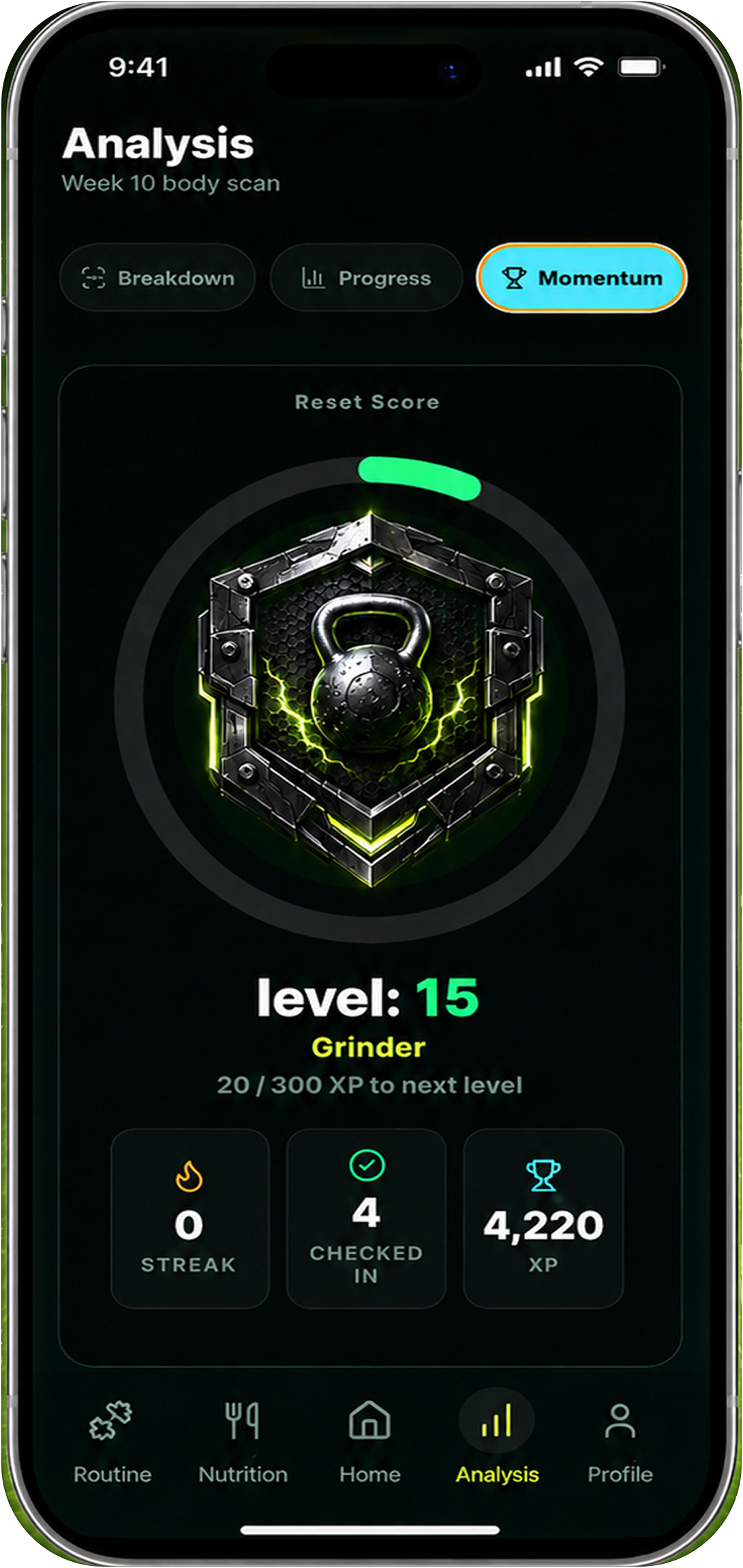
When motivation drops, progress should not disappear just because one session was missed. A useful dashboard can show completed sessions, repeatable weeks, strength trends, recovery, or adherence to the minimum version.
Be cautious with dashboards that make the streak the only proof of progress. A person who trains three times per week for twelve weeks may be building a stronger routine than someone who completes ten days in a row and disappears for a month.
The best metric depends on the goal. For strength, look at performance and completed priority work. For general fitness, look at repeatable activity and recovery. For a restart, look at whether the gap between missed sessions and returning sessions is getting smaller.
07A five-minute app test for a low-motivation week
You can evaluate almost any fitness app without committing to a long subscription. Run this small test during a normal week:
- Start one full session.
- Choose the short version for the next session.
- Move one workout by a day.
- Mark one session as missed or incomplete.
- Open the app again and see whether the next action is still clear.
After the test, answer three questions:
- Did the app reduce decisions when motivation was low?
- Did it preserve the goal after the schedule changed?
- Did its feedback help me return, or did it make me want to avoid the app?
08Which app approach fits your motivation problem?
| Your problem | Look for | Do not overvalue |
|---|---|---|
| You keep changing programs | A clear plan with limited daily choices | A huge exercise library |
| You start hard and disappear | Minimum workouts and a recovery path | Long streak rewards |
| You miss sessions because of schedule changes | Move, shorten, and substitute controls | Fixed reminders with no adjustment |
| You train but cannot see progress | Simple history and understandable trends | More badges and notifications |
| You need accountability | Check-ins, coaching, or a supportive group | Public pressure that makes missed days feel shameful |
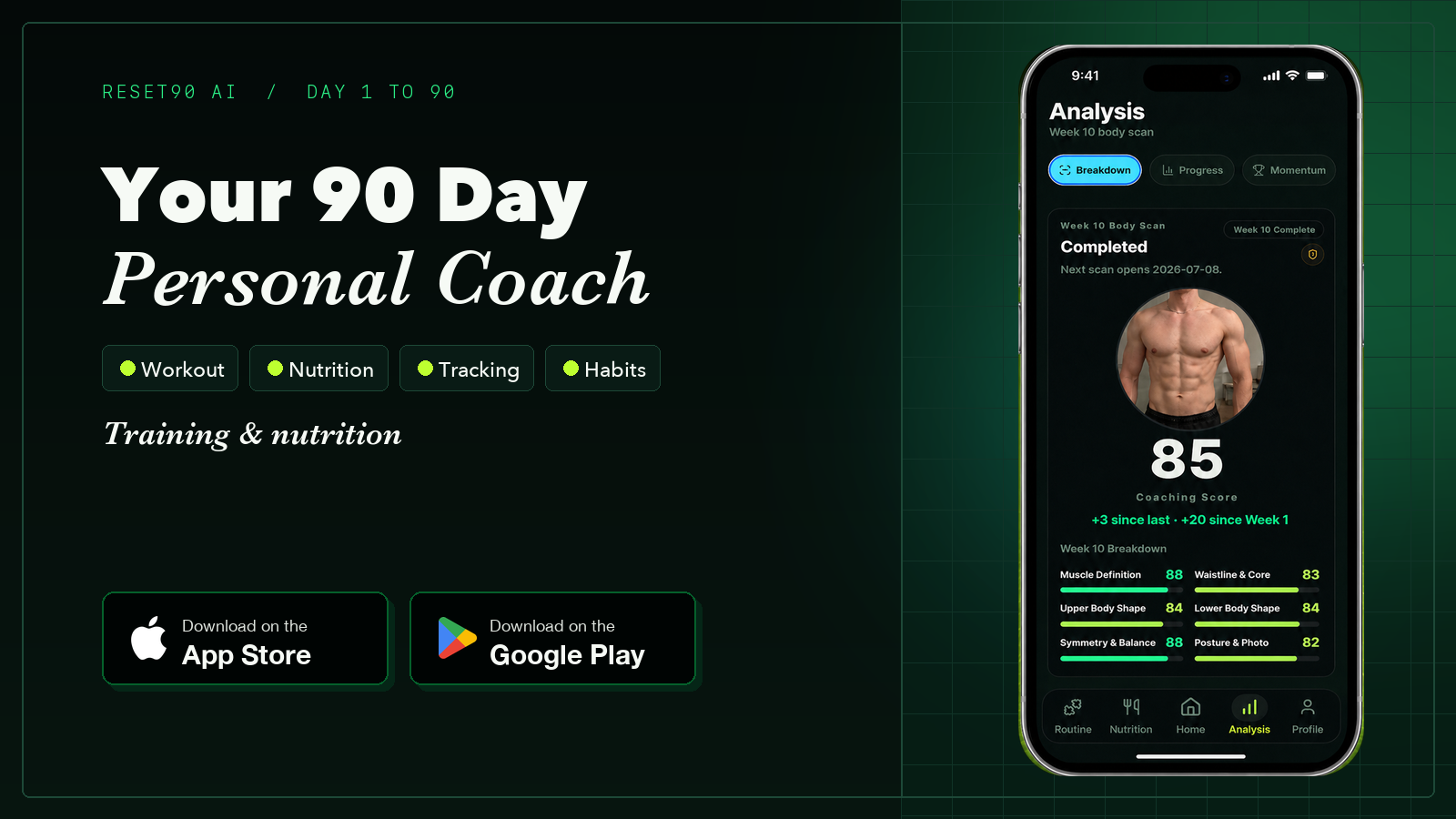
09How Reset90 handles the restart problem
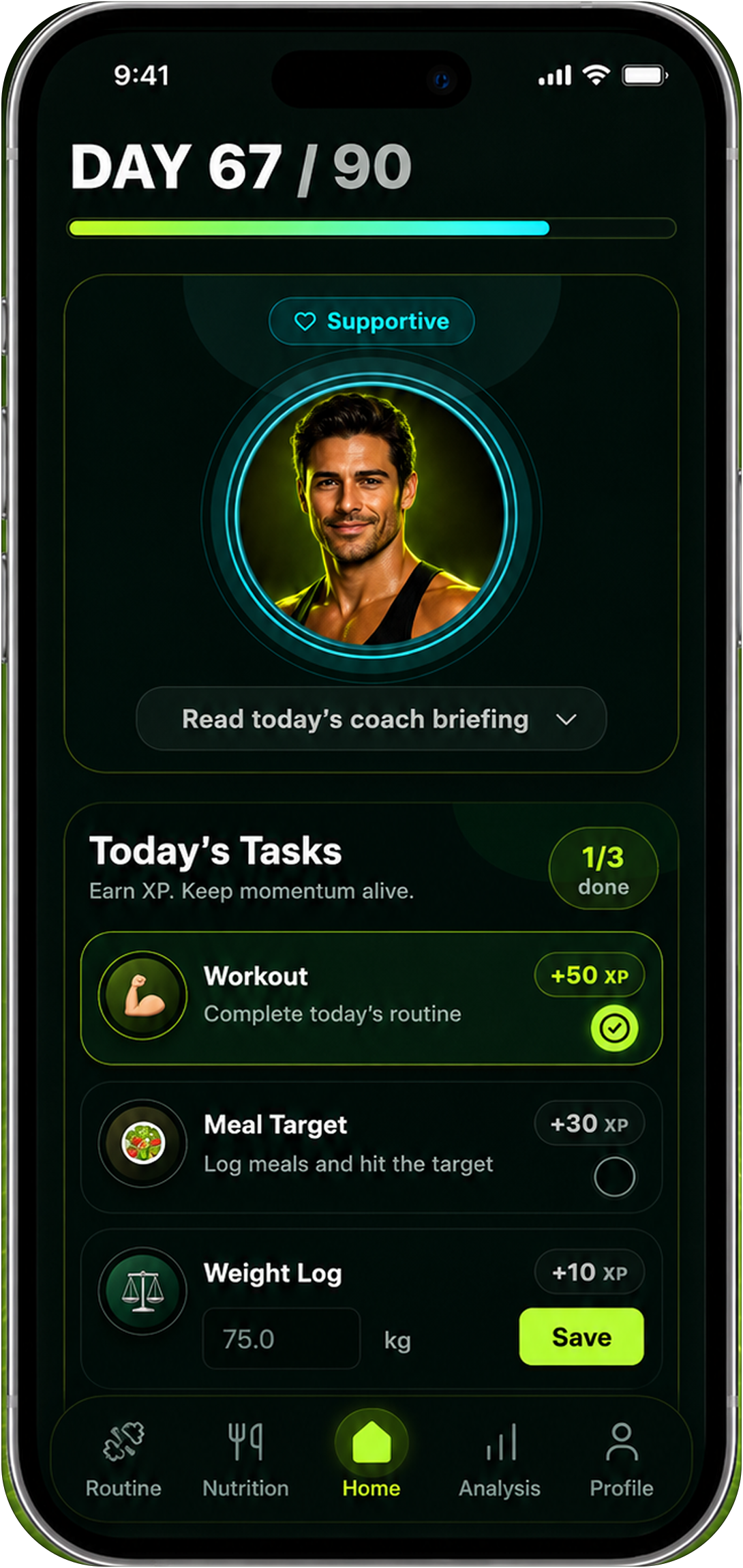
Reset90 AI is a fitness planning app for people who want a structured training direction but still need to adapt when real life interrupts. It treats the 90-day block as the larger direction and the daily plan as the next workable action. If a week changes, the goal is not to erase the block or pretend the missed session did not happen; it is to decide what matters next while keeping training, nutrition, and recovery context connected.
This product fit is strongest for someone who benefits from one connected plan instead of a separate workout log, meal tracker, and reminder list. The useful value here is not a promise of perfect motivation. It is a clearer bridge from “I missed the plan” to “here is the next reasonable action.”
Use the free Reset90 Plan Fit Check to think through your real time, equipment, and consistency constraints. If you want the broader principles behind minimum sessions and reliable cues, read how to stay consistent when motivation drops.
The app is not a substitute for judgment or professional care, and it cannot tell you whether exercise is safe when you have pain, symptoms, or a medical condition. Its job is to reduce the friction between a disrupted week and the next useful decision.
10What a fitness app should not do
A fitness app should not make you feel that one missed workout cancels your effort. It should not force a hard session when recovery is clearly the priority. It should not hide adaptations behind a perfect-looking streak. And it should not add complexity merely to appear personalized.
Good software makes the plan easier to understand. It gives you enough structure to progress and enough flexibility to return. If the interface makes you feel behind every time real life happens, the product is increasing friction at exactly the wrong moment.
11Fitness apps when motivation drops FAQs
What is the best fitness app when motivation drops?
The best fit is the app that gives you a clear next action after a missed or shortened session. Look for minimum workouts, flexible scheduling, low-friction logging, and progress signals that reward returning rather than only protecting a streak.
Should I work out when I have no motivation?
Use a smaller version as a decision tool. A warm-up, short session, walk, or mobility block may be appropriate depending on your goal and condition. Stop if you feel sharp pain, and seek qualified advice when your health or symptoms require it.
Are streaks bad for fitness consistency?
Streaks can be motivating, but they are incomplete. They become unhelpful when one missed day makes the entire plan feel invalid. A stronger system shows how to resume and keeps a wider view of progress.
How do I restart after missing a week?
Return with the next priority at a manageable intensity. Do not cram all missed sessions into one week. Record what happened, choose the minimum version if needed, and use the experience to improve the schedule.
Is this medical advice?
No. This is general fitness education. Adjust exercise to your experience and health needs, and speak with a qualified professional about injuries, symptoms, or medical conditions.
12Final takeaway
The real test of a fitness app is not whether it can start a workout on a motivated day. It is whether it can help you return after the day goes wrong.
Choose software with a visible minimum, flexible scheduling, a recovery path, low-friction logging, and progress that remains meaningful after interruption. Motivation may start the plan, but a good system keeps the next step available.
The Reset90 system
Useful ideas for building a body you can keep.
Training notes, product updates, and practical ways to make your next 90 days count.
Start your next 90 days
Get your daily training, nutrition, and check-in priorities in one adaptive system.


Keep reading
Related articles

Ideal Body Measurements for Women
There is no single ideal body measurement set for women. Learn how averages, waist-to-height, body shape and repeatable tracking fit together without chasing a fixed beauty standard.
Read article
Bulk, Cut, or Recomp? A Practical Decision Guide
A practical way to choose a bulk, cut, recomp, or maintenance phase using your goal, training age, recovery, and repeatable progress signals.
Read article
How Often Should You Take Progress Photos?
How often should you take progress photos? Use this goal-based guide to choose weekly, biweekly, or monthly check-ins and make every comparison more consistent.
Read article