

How Long Does Body Recomposition Take?
Most people need at least 8–12 weeks of consistent training, nutrition, and recovery before body-recomposition changes become easier to see. Here’s how to read the timeline.
By Reset90 AI Editorial Team
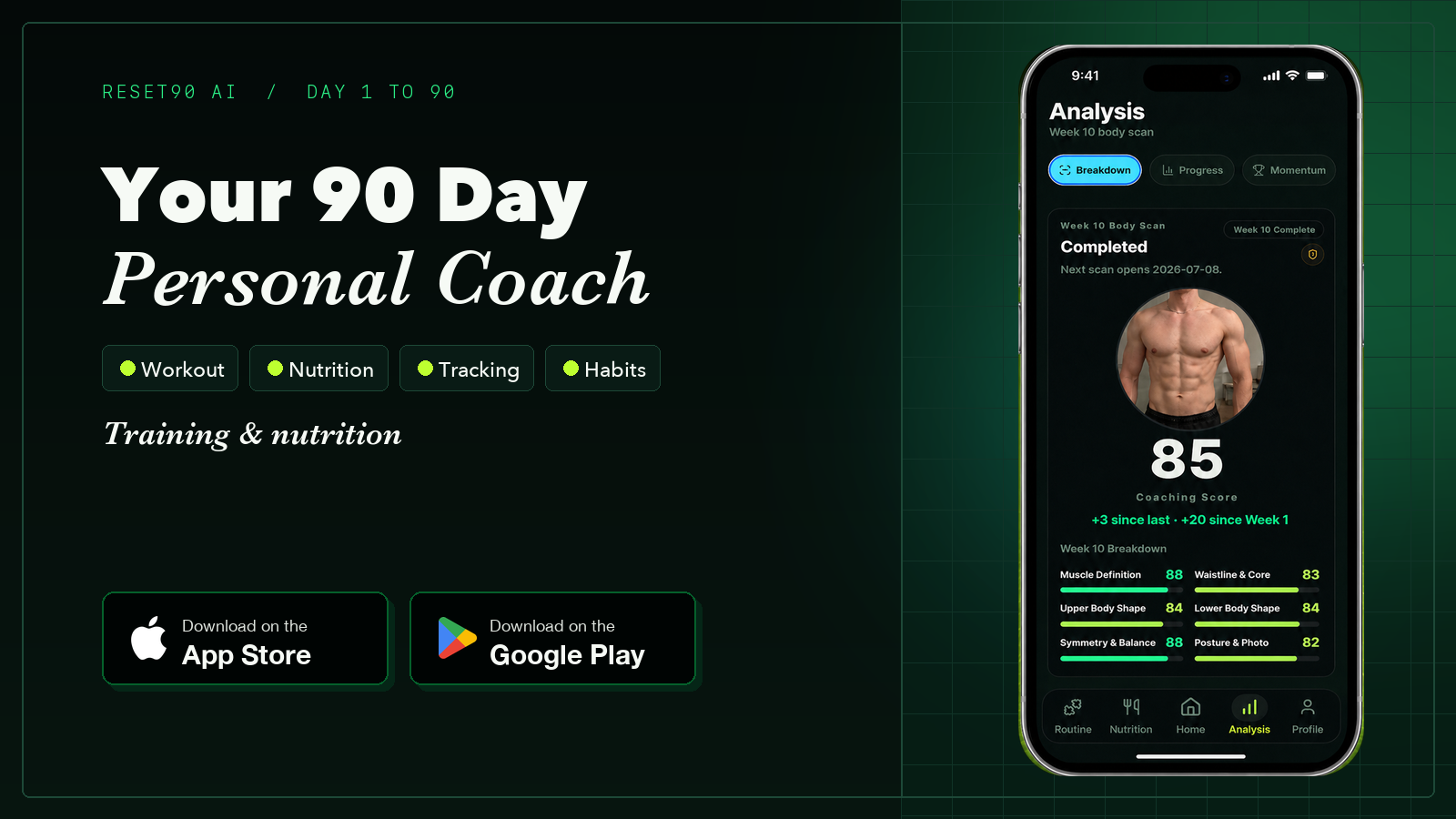
Short answer: Most people need at least 8–12 weeks of consistent training, nutrition, and recovery before body-recomposition changes become easier to see. A clearer change often takes 3–6 months, and a major transformation can take a year or longer. The timeline depends on your starting point, training history, calorie intake, protein, sleep, and how consistently you measure progress. Reset90 AI can help you run that process as a 90-day experiment by keeping your workouts, nutrition targets, weight entries, and progress check-ins together.
01What body recomposition actually means
Body recomposition means improving the relationship between fat mass and lean mass. In practical terms, that usually means losing some fat while maintaining or building muscle, rather than chasing the lowest possible scale weight.
That combination makes the timeline harder to read than ordinary weight loss. Fat loss, muscle gain, water changes, glycogen, digestion, and training inflammation can all move at different speeds. Your scale weight may stay nearly flat while your waist, strength, clothing fit, or photos change.
It is also not a promise that everyone can build muscle and lose fat at the same rate. Beginners, people returning to training, and people with more body fat to lose may see a different pattern from experienced lifters who are already relatively lean. The useful question is not “What should my body do by day 30?” It is “What evidence should I expect to collect next?”
02The realistic body-recomposition timeline
Use the ranges below as checkpoints, not guarantees. They describe when different types of evidence may start becoming useful—not when every person will look dramatically different.
| Time period | What may change first | What to measure |
|---|---|---|
| Weeks 1–4 | Routine, coordination, energy, and early strength improvements | Completed sessions, loads, reps, recovery, and consistent baseline measurements |
| Weeks 8–12 | Early changes in fit, measurements, or muscle definition for some people | Comparable photos, waist measurements, strength trends, and a weekly weight average |
| Months 3–6 | Clearer changes in shape, strength, and the fat-to-muscle pattern | Four-week comparisons instead of isolated daily readings |
| Months 6–12+ | More substantial and durable changes, often with slower periods between improvements | Longer-term adherence, training progression, measurements, photos, and recovery |
Some people notice a meaningful difference sooner, especially when they are new to resistance training and make several sustainable changes at once. Others need longer because they start leaner, have more training experience, have limited recovery, or are trying to change slowly enough to preserve performance. A timeline is useful only when it leaves room for both kinds of reality.
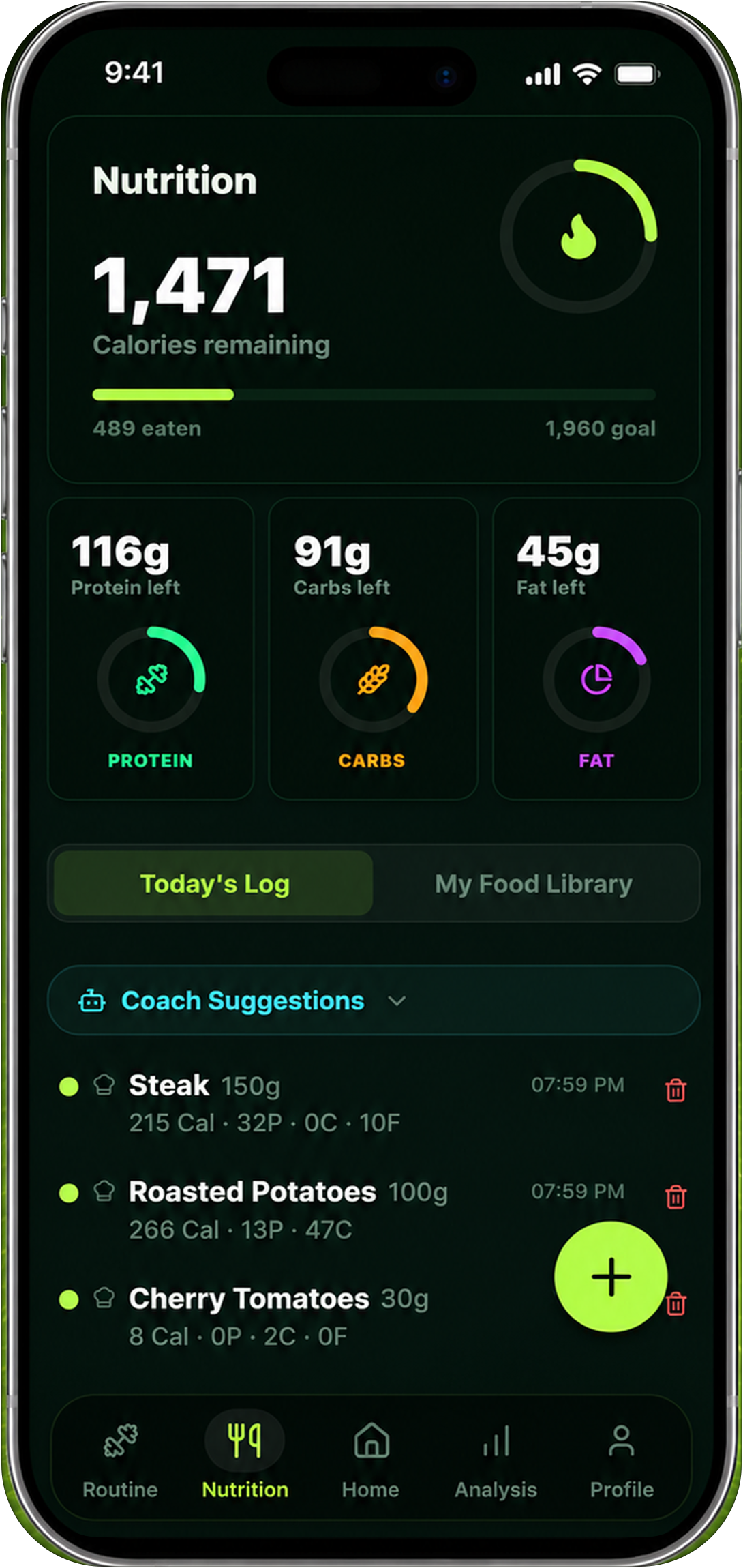
Where Reset90 AI fits: Use the app’s daily workout and nutrition targets to make the first four weeks repeatable, then use your logged weight and check-ins to compare the 28-day pattern. The point is not to make the app predict your deadline; it is to make the inputs and the feedback easier to follow long enough for a real trend to appear.
03Why body recomposition takes longer than simple weight loss
Weight loss can show up on a scale relatively quickly because body mass can change through fat, water, glycogen, and food volume. Muscle growth is a slower biological adaptation, and body recomposition asks you to manage two outcomes at the same time.
A large calorie deficit may make the scale move faster, but it can also make training, recovery, and muscle retention harder. A smaller deficit or maintenance intake may produce a slower scale trend while giving resistance training and recovery more support. There is no single calorie setup that works for every person.
This is why a successful recomp may look “slow” if you judge it only by pounds. You may be getting stronger while your waist slowly changes, or your clothes may fit differently while your average weight stays stable. Those outcomes are not automatically proof of muscle gain, but they are useful signals to review together.
04What usually changes first?
Different signals tend to appear on different schedules. Early changes are often easier to feel or record than to see in a mirror.
- Training performance: Beginners may improve reps, load, control, or coordination before their body looks noticeably different.
- Energy and routine: Better sleep, a more repeatable schedule, and improved workout confidence can appear before visible body changes.
- Measurements and clothing: A waist measurement or the fit of a familiar item may change before photos look obviously different.
- Photos: Comparable photos can reveal gradual changes, but lighting, pose, camera distance, and muscle pump can easily create false differences.
- Scale trend: Weight can fall, rise, or stay steady. The direction is useful only when interpreted with the other signals.
Do not expect every signal to improve every week. The point of tracking multiple signals is to avoid making a major decision because one of them is noisy.
Reset90 AI gives those signals a practical home: you can follow the day’s workout, keep nutrition targets visible, and record the progress that would otherwise end up scattered across notes, photos, and separate tracking apps. That makes it easier to stay focused on the full process instead of checking the mirror for a new result every morning.
05What determines how long your recomp will take?
Your starting point matters. Someone returning after a long training break may regain strength and muscle faster than an experienced lifter who has trained consistently for years. Someone with more fat to lose may see a faster early change in measurements, while someone already lean may need more time to notice a visual difference.
Your plan matters too. A body recomposition needs a repeatable resistance-training stimulus, enough protein and energy to support the work, and recovery that you can sustain. More workouts, more cardio, or a harsher deficit are not automatically better. If the plan makes you exhausted, injured, or unable to train consistently, it may slow the outcome you want.
Other factors include sleep, stress, age, genetics, medication, health conditions, training quality, measurement method, and how closely your actual week matches your intended plan. These factors do not make progress impossible; they make a universal deadline unreliable.
06How to know if your body recomposition is working
A body recomp is easier to evaluate with a small dashboard than with one “before and after” number. Use the same measurement routine long enough to see a pattern.
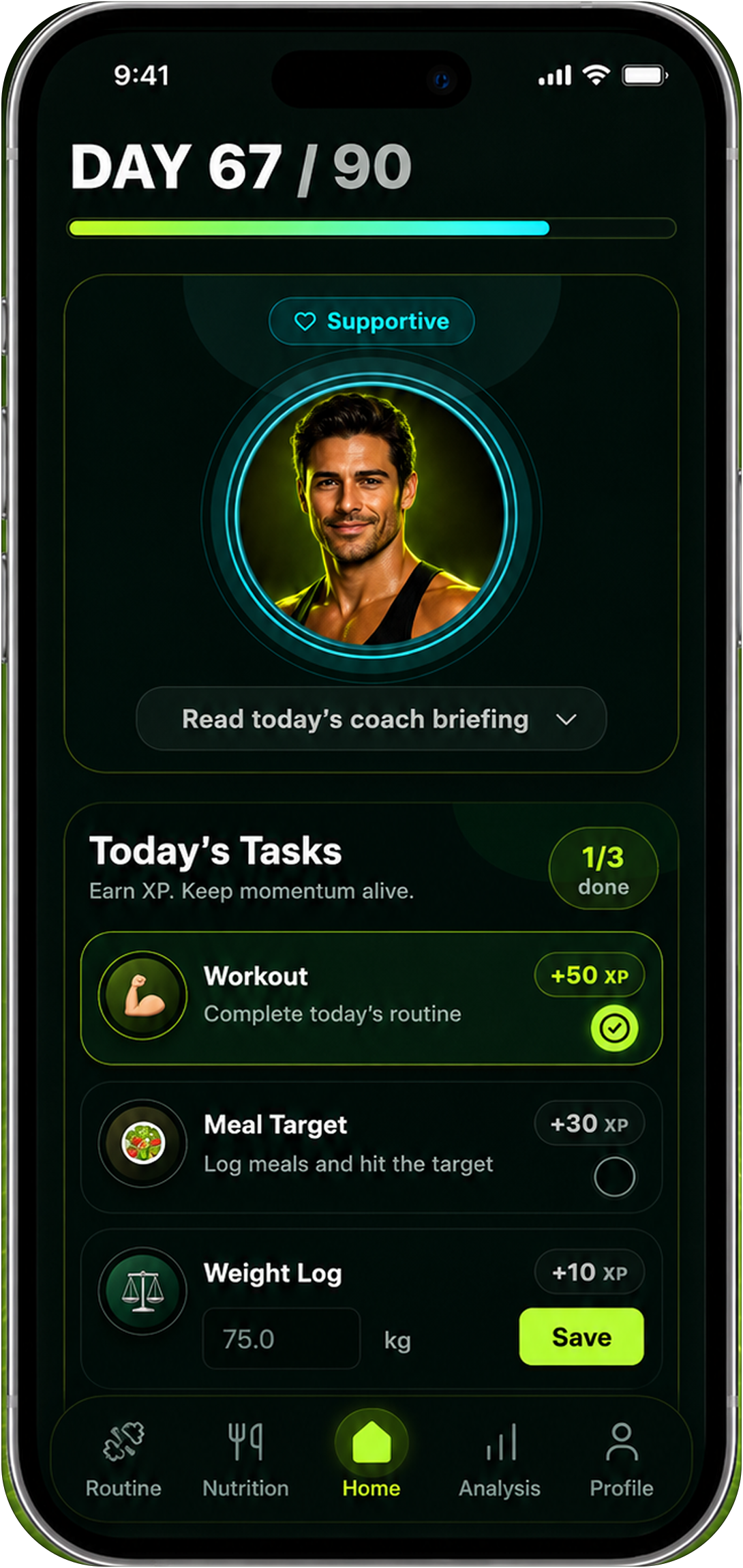
Reset90 AI is built for this kind of review: keep your workout progress, meal targets, weight log, and regular check-ins in one 90-day routine. You still decide what the data means, but the app reduces the friction of collecting the evidence you need before making an adjustment.
| Signal | Helpful question | How often to review |
|---|---|---|
| Strength and reps | Am I maintaining or improving comparable work at a similar effort? | Every workout; review the trend every 4 weeks |
| Measurements | Are the same body sites moving in the direction my goal requires? | Weekly or every two weeks under similar conditions |
| Progress photos | Do comparable images show a repeated change rather than a lighting change? | Every 4 weeks |
| Weight average | Is my multi-day average stable, falling, or rising in a way that fits the plan? | Use weekly averages; avoid reacting to one day |
| Adherence and recovery | Was the plan followed consistently enough to interpret the result? | Weekly |
For a more detailed protocol, read our guide on how to track a body recomposition when the scale barely moves. That article focuses on the decision process once you have started collecting the signals.
07Use a 28-day review instead of a daily verdict
Four weeks is a practical first review window. It is long enough to reduce some daily noise while still short enough to make one controlled adjustment if the combined pattern calls for it.
If you download Reset90 AI, use the first 28 days to establish your baseline rather than chasing a dramatic result. Let the app keep the daily actions visible, then use the end-of-month review to decide whether your training, nutrition, and recovery are consistent enough to continue or adjust.
- Set your baseline: Record a few comparable weigh-ins, your anchor-lift performance, measurements, photos, and the plan you intend to follow.
- Keep the inputs stable: Do not change your training, calories, cardio, supplements, and measurement routine all at once.
- Log the context: Note unusual sleep, illness, travel, soreness, stress, or other factors that could affect a reading.
- Review the pattern: Compare averages and like-for-like measurements, not the highest and lowest numbers you can find.
- Change one variable: If the full pattern is flat or moving away from the goal, adjust one meaningful input and give it another review window.
A 28-day review does not prove that you gained a specific amount of muscle. It gives you a better basis for deciding whether to continue, improve adherence, or change the plan.
08Why a body-recomp calculator cannot tell you the exact deadline
A body recomp calculator can help estimate starting calories, protein, or a rate of change. It cannot know exactly how your body will respond over the next six months. The inputs are estimates, and the output depends on assumptions about activity, body composition, training history, and adherence.
Use a calculator as a starting point, not as a contract. After a few weeks, compare the estimate with what actually happened: training performance, hunger, recovery, weight averages, measurements, and photos. If the calculator says the plan is perfect but your recovery is poor and your performance is falling, the real-world feedback matters more than the decimal.
09Why body recomp can feel unusually slow
Slow progress is not always a sign that the goal is failing. It can mean the change is small enough to be hidden by normal measurement noise, or that the current plan is asking for a longer adaptation period.
Common reasons include:
- The comparison is too short: One or two weeks is rarely enough to judge visible muscle change.
- The measurements are inconsistent: Different lighting, tape placement, poses, or weigh-in conditions can hide a real trend.
- The program is not progressive: Training hard is not the same as creating a repeatable stimulus that improves over time.
- The deficit is too aggressive: Fast scale loss can come with poor recovery and weaker training performance.
- Adherence is different from intention: The plan on paper may not match the average week you actually completed.
- Recovery is limiting the signal: Poor sleep, high stress, or unmanaged soreness can affect performance and consistency.
Audit the inputs before you abandon the goal. If every signal is flat after a consistent review period, make one small change. If your performance is falling, fatigue is persistent, or weight is changing rapidly without an obvious explanation, get appropriate professional guidance.
10How Reset90 helps you stay with the timeline
Reset90 AI is useful for the part of body recomposition that is easy to lose: the feedback loop. The app brings training, nutrition targets, daily accountability, and progress check-ins into one ongoing record so you can review a trend instead of reacting to a single weigh-in.
In practical terms, you can use it to keep today’s workout visible, stay aware of your nutrition target, record weight and progress signals, and return to the same 28-day review rhythm. That is the product’s role in this timeline: helping you keep the process organized and repeatable while your body adapts.
That does not mean Reset90 AI can guarantee muscle gain, fat loss, or a specific deadline. It can help you follow a repeatable plan, keep the review cadence, and connect what you did with what changed. If you want to run your own 90-day experiment with that structure, use the App Store or Google Play download buttons on this page to get started.
Use the app as a decision aid, not as a diagnosis. An estimate, scan, or score is one piece of evidence; your full trend and your personal context still matter.
11Frequently asked questions
Can you see body-recomposition results in 30 days?
You may notice early strength, routine, energy, or measurement changes in 30 days. Clear visual changes are less predictable, especially if you already have training experience. Treat the first month as a baseline and consistency phase rather than a final verdict.
Is three months enough for a body recomposition?
Three months is long enough to identify a useful trend for many people, especially when training, nutrition, and measurements are consistent. It is not a guaranteed endpoint. Some people need six months or longer for a visible change that feels substantial.
Why am I getting stronger but not looking different?
Early strength can improve through coordination and nervous-system adaptation before visible muscle growth is easy to see. Check whether your photos and measurements are comparable, then continue the review long enough to collect more evidence.
Can body recomposition happen if my weight stays the same?
It can. Stable weight alongside improving strength, measurements, clothing fit, or comparable photos can be consistent with a favorable body-composition change. Those signals do not prove the exact amount of muscle or fat changed, so keep reviewing the pattern.
Should I give up if my recomp is slow?
Not automatically. First check the review window, measurement quality, training progression, nutrition consistency, and recovery. If the plan was consistent and every signal is flat, change one variable and reassess instead of restarting everything.
12The practical answer
Expect the first useful evidence in roughly 8–12 weeks, a clearer body-composition trend in 3–6 months, and larger changes over a longer horizon. Your exact timeline will depend on your starting point and the quality of the process you can repeat.
Build a baseline, review several signals every 28 days, and let the trend—not one scale reading—decide what happens next. Body recomposition is slow enough that patience matters, but structured enough that you should not have to rely on guesswork.
The Reset90 system
Useful ideas for building a body you can keep.
Training notes, product updates, and practical ways to make your next 90 days count.
Start your next 90 days
Get your daily training, nutrition, and check-in priorities in one adaptive system.


Keep reading
Related articles

Ideal Body Measurements for Women
There is no single ideal body measurement set for women. Learn how averages, waist-to-height, body shape and repeatable tracking fit together without chasing a fixed beauty standard.
Read article
Bulk, Cut, or Recomp? A Practical Decision Guide
A practical way to choose a bulk, cut, recomp, or maintenance phase using your goal, training age, recovery, and repeatable progress signals.
Read article
How Often Should You Take Progress Photos?
How often should you take progress photos? Use this goal-based guide to choose weekly, biweekly, or monthly check-ins and make every comparison more consistent.
Read article