

How to Take Body Measurements: A Repeatable Monthly Protocol
Use a soft tape, consistent landmarks, and the same monthly conditions to make body measurements comparable instead of noisy.
By Reset90 AI Editorial Team
Short answer: Body measurements become useful when the landmark, posture, tape tension, breathing, time of day, and frequency stay consistent. Use a soft tape, measure relaxed, keep it level and snug without compressing the skin, and log the result immediately. Measure the full set monthly; use waist more often during a cut if that cadence helps you make better decisions.

01Why measurement technique matters more than the tape
A soft tape is inexpensive and can be a useful progress tool, but the number is only comparable when the method is comparable. Move the tape one inch, pull it tighter, flex the muscle, or measure after a large meal and you may create a larger change than a month of training did.
The human body is not a rigid object. Breathing, posture, hydration, food volume, muscle pump, and the exact landmark all add variation. A study on waist circumference found that measurements differed depending on the anatomical site used and concluded that a standard protocol improves interpretation. Another review of anthropometry describes measurement error as inherent because living bodies move and change shape.
That is not a reason to avoid the tape. It is a reason to treat the tape as a repeatable trend tool rather than a perfect instrument.
02Use these universal rules for every site
- Use a soft, non-stretch tape. A cloth, vinyl, fiberglass, or spring-loaded body tape follows curves better than a rigid construction tape.
- Choose one landmark and keep it. “Waist” can mean the narrowest point, the navel, or a protocol-defined midpoint. Do not switch between them month to month.
- Measure relaxed. Keep arms at the sides, breathe normally, and avoid flexing unless you intentionally choose a flexed convention for a specific site.
- Keep the tape level. Check the front and back in a mirror. A tape that dips behind the body changes the reading.
- Use snug tension, not compression. The tape should touch the skin all the way around without leaving a dent.
- Measure under similar conditions. Morning, before food and training, is a practical low-noise window, but consistency matters more than a perfect clock time.
- Write the number down immediately. A log is part of the measurement; memory is not.
GainFrame’s body-measurement guide makes the same practical case: the tool is rarely the main source of variance; landmark placement, tape tension, posture, and timing are. Its site-by-site instructions are a product editorial reference, so use them alongside a consistent protocol rather than treating any one app’s method as universal.
03Choose a measurement set by your goal
You do not need to measure every site every week. Use the smallest set that answers your current question, then run a fuller session occasionally so you do not mistake one local change for the whole result.
| Goal | Core measurements | Practical frequency |
|---|---|---|
| Fat-loss phase | Waist, hips, body weight, progress photos | Waist weekly or biweekly; full set monthly |
| Recomposition | Waist, chest, shoulders, arms, thighs, strength, photos | Full set monthly; photos weekly or biweekly |
| Muscle-gain phase | Target muscle sites, waist, weight average, strength | Full set monthly; track the waist as a check on the surplus |
| Maintenance | Waist, one or two goal sites, weight range, photos | Monthly or whenever the goal changes |
More measurements do not automatically create more certainty. They create more opportunities for inconsistent technique. Start with the sites that can change your decision.
04How to measure the waist correctly
Waist is often the highest-value circumference because it responds to body-size changes and is easy to repeat. It is also one of the easiest sites to measure differently each time.
For a standardized health-surveillance approach, the WHO STEPS protocol locates the tape at the midpoint between the lower margin of the last palpable rib and the top of the hip bone, keeps it horizontal, and measures after normal breathing with the tape snug but not constricting. Follow that protocol if you need a formal, repeatable landmark.
- Stand with feet together and weight distributed evenly.
- Keep the arms relaxed at the sides and the abdomen unbraced.
- Place the tape at your chosen landmark and check that it is level all the way around.
- Breathe normally for a few breaths, then read at the end of a normal expiration.
- Record the result and the landmark in your log.
Some fitness protocols use the navel or the narrowest visible point instead. That can be workable for personal tracking if you use the same spot every time. Do not compare a navel measurement with a rib-to-hip midpoint measurement and call the difference progress.
05How to measure the upper body
| Site | Repeatable landmark | Posture and note |
|---|---|---|
| Neck | Just below the larynx, with the tape level around the neck | Head level, eyes forward, no chin tuck; keep the tape snug |
| Shoulders | Widest point across the deltoids | Arms relaxed at the sides; a mirror or helper helps keep the tape level |
| Chest | Choose a consistent horizontal line, such as nipple level | Arms relaxed; read after a normal exhale, not a deep breath |
| Biceps | Widest point between shoulder and elbow | Choose relaxed or flexed and record which one; never mix conventions |
| Forearm | Widest point below the elbow | Keep the hand relaxed; do not make a fist or create a pump |
| Wrist | Just below the wrist bone | Mostly a frame-size reference; it usually changes little with training |
Shoulders and chest are difficult to measure alone because the tape can dip behind your back. If you are solo, use a mirror and accept that the reading may have more noise. The goal is not to produce a laboratory value; it is to repeat the same household protocol.
06How to measure the hips and legs
| Site | Repeatable landmark | Posture and note |
|---|---|---|
| Hips | Widest point around the glutes | Feet together, weight even, tape parallel to the floor |
| Thigh | Choose the widest upper-thigh point or a fixed distance below the glute fold | Keep the chosen convention; do not switch between widest point and midpoint |
| Calf | Widest point around the calf | Stand flat with weight even; do not rise onto your toes |
Leg measurements are particularly sensitive to stance and flexion. Measure both sides only if asymmetry is a meaningful question; otherwise choose one side and repeat it. If the site is close to the edge of your tape’s accuracy or hard to locate, take a photo of the landmark setup for your own reference.
07Repeat each measurement without creating a ritual
For a new protocol, take two readings at a site while keeping your position and tape placement consistent. If the readings differ noticeably, check the tape level and tension, then take one more. Use a simple pre-decided rule, such as recording the median of three, rather than choosing the smaller number because it feels better.
Once you know the method, one careful reading may be enough for a home log. More repetitions are not always better if they turn the check-in into repeated body checking. A good protocol is brief, consistent, and easy to stop.
If you change the tape, room, measurement landmark, or posture convention, mark the date in the log. The first reading under a new protocol is a new baseline, not a clean continuation of the old series.
08How often should you measure?
For most people, a full 10-site session once per month is enough. Circumference changes at the arms, chest, shoulders, thighs, and calves are usually too slow for daily or even weekly readings to add much signal. Measuring every few days mostly captures tape placement, hydration, food volume, and expectation.
Waist can be checked weekly or every two weeks during a fat-loss phase if the result helps you make calmer decisions. Progress photos can be weekly or biweekly under a standardized setup. Body weight can be collected more often, but read it as a weekly average rather than a single-day verdict.
Pick a review day and keep the full session attached to it. Monthly measurements become more useful when they sit beside training performance, nutrition adherence, photos, sleep, and the plan you were actually following.
09Build a measurement log that preserves context
A number without context is hard to interpret. Use a simple log with one row per session.
| Field | What to record |
|---|---|
| Date and time | When the session happened and whether it was morning, afternoon, or evening |
| Conditions | Before food, after training, unusual meal, poor sleep, travel, or other relevant context |
| Protocol | Tape type, landmark convention, relaxed or flexed, and side measured |
| Measurements | Numbers with units; do not rely on memory or screenshots alone |
| Supporting signals | Weekly weight average, progress-photo date, anchor-lift performance, and adherence note |
| Next review | What you will compare and which single decision the data might inform |
Keep the log boring. A consistent row is more valuable than a long note that you cannot repeat next month.
10What tape measurements can and cannot tell you
A circumference is a size measurement, not a composition measurement. A larger arm can reflect muscle, fat, pump, or a different tape position. A smaller waist can reflect fat loss, lower food volume, hydration, posture, or a tighter pull on the tape.
Formula-based body-fat estimates such as the Navy method use circumference and height inputs, but the output is still an estimate with population and technique limitations. Do not turn one formula result into a medical claim or a precise answer about what changed under the skin.
Pair the tape with standardized photos, strength, and a weight trend. Our guide to progress photos versus the scale explains how each signal answers a different question. The combination is stronger because each method covers another method’s blind spot.
11Use month-to-month numbers without overreacting
Compare the same site with the same convention across at least two or three sessions. A small change is not automatically meaningful, especially when it is close to the amount your technique varies in an immediate repeat test.
Look for coherent patterns:
- Waist down, photos leaner, strength stable: a favorable fat-loss or recomposition signal is plausible.
- Arms or thighs up, strength up, waist stable: a productive training response is possible, but the tape cannot prove the increase is muscle.
- Every site changes suddenly: check timing, meal volume, hydration, tape tension, and whether you used a different protocol.
- One site changes while everything else is stable: repeat the landmark and consider local training pump or placement error before changing the plan.
Use the trend to decide whether to keep observing, improve measurement quality, or make one controlled adjustment. Do not change training and nutrition based on one circumference reading.
12How Reset90 uses monthly measurements
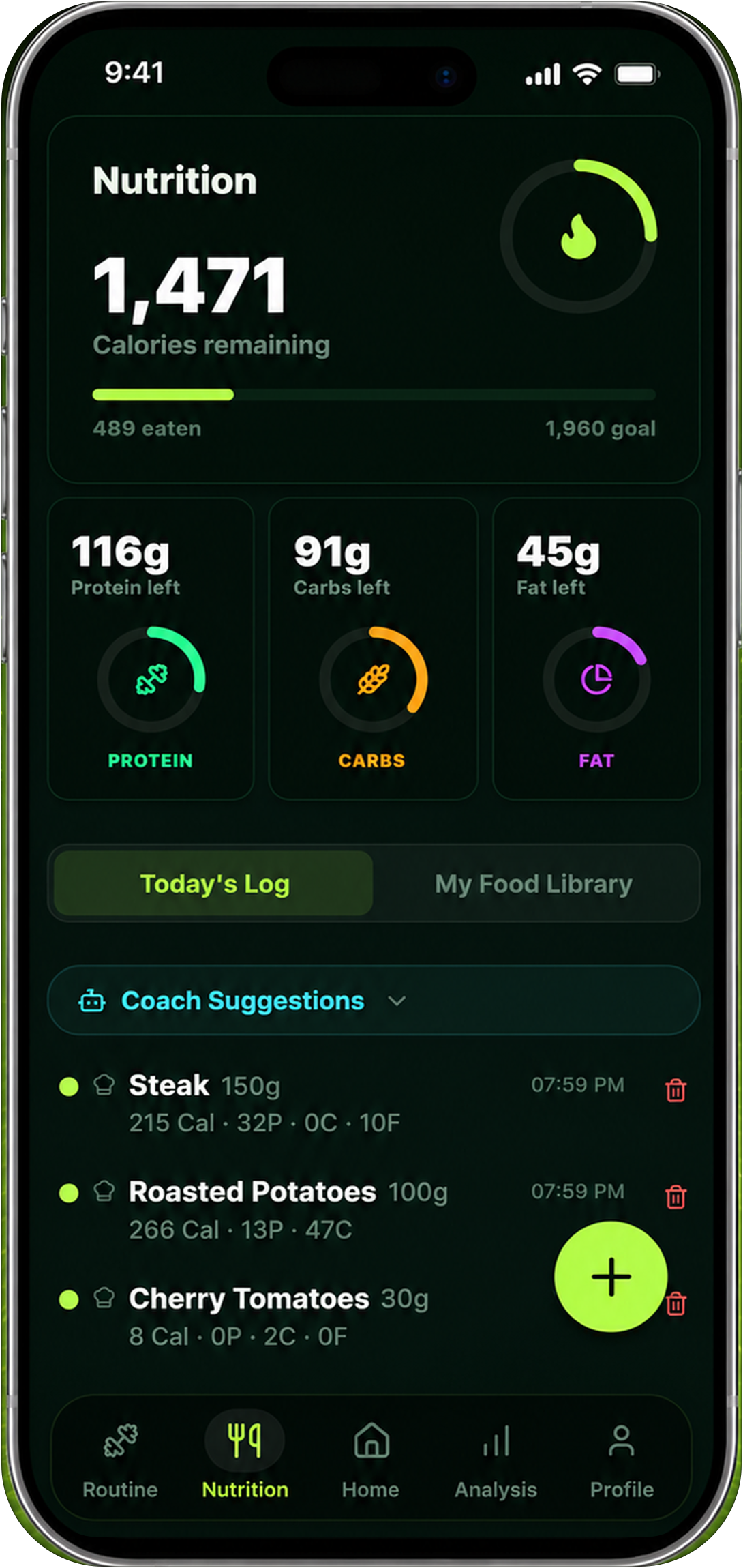
Reset90 can treat monthly measurements as an optional evidence layer inside a 90-day training and nutrition plan. The value is not asking you to measure everything constantly. It is giving a consistent check-in a place beside progress photos, workouts, nutrition adherence, and the next decision.
Reset90 does not turn tape measurements into a diagnosis or promise a specific body-composition result. A guided check-in can help you keep the routine, review whether the plan was followed, and choose whether to continue, adjust one variable, or wait for another comparable reading.
If you want a broader product comparison, see our guide to body-composition scales. If you use a lean-mass metric, the FFMI calculator can help you understand the formula inputs, but it is still an estimate and not a clinical assessment.
13When body measurements are not enough
Do not use home measurements to diagnose illness, decide whether a symptom is safe, or replace a clinician’s assessment. Seek qualified guidance for unexplained rapid changes, swelling, pain, pregnancy-related questions, eating-disorder risk, or any health decision that depends on body composition.
Also pause the routine if measuring is becoming compulsive, distressing, or tied to restrictive eating. A measurement system should help you train and eat with more clarity, not make your body occupy every thought.
See the Reset90 health and safety guidance for the boundary between fitness planning and medical advice.
14Frequently asked questions
How often should I take body measurements?
Measure the full set monthly for most fitness goals. Waist can be measured weekly or every two weeks during a cut if that information helps you make better decisions. More frequent full sessions usually add technique noise.
Should I measure relaxed or flexed?
Measure relaxed for repeatability. A flexed bicep can be useful if that is your chosen convention, but record it clearly and never mix flexed and relaxed readings in one trend.
How tight should a measuring tape be?
Snug but not compressing. The tape should touch the skin without leaving a dent. Keep it level around the body and use the same tension rule every time.
Can body measurements tell me my body-fat percentage?
They can be used in formulas that produce estimates, but a tape measure alone cannot distinguish fat from muscle or establish a clinical body-composition result. Use the estimate cautiously and combine it with other signals.
Can Reset90 replace a body-composition test?
No. Reset90 is a fitness and nutrition planning tool. Its progress check-ins and optional measurement tracking support trends and decisions, but they are not medical diagnostics.
15The practical answer
Make the tape boring: choose the landmark, keep it level, use the same tension, measure under similar conditions, and log the result immediately. Run the full set monthly and give waist, photos, strength, and weight their separate jobs.
Month-to-month numbers become meaningful when the method stays stable long enough for real change to rise above technique noise. The goal is not a perfect measurement. It is a repeatable signal that helps you make a calmer next decision.
The Reset90 system
Useful ideas for building a body you can keep.
Training notes, product updates, and practical ways to make your next 90 days count.
Start your next 90 days
Get your daily training, nutrition, and check-in priorities in one adaptive system.


Keep reading
Related articles

Ideal Body Measurements for Women
There is no single ideal body measurement set for women. Learn how averages, waist-to-height, body shape and repeatable tracking fit together without chasing a fixed beauty standard.
Read article
Bulk, Cut, or Recomp? A Practical Decision Guide
A practical way to choose a bulk, cut, recomp, or maintenance phase using your goal, training age, recovery, and repeatable progress signals.
Read article
How Often Should You Take Progress Photos?
How often should you take progress photos? Use this goal-based guide to choose weekly, biweekly, or monthly check-ins and make every comparison more consistent.
Read article