
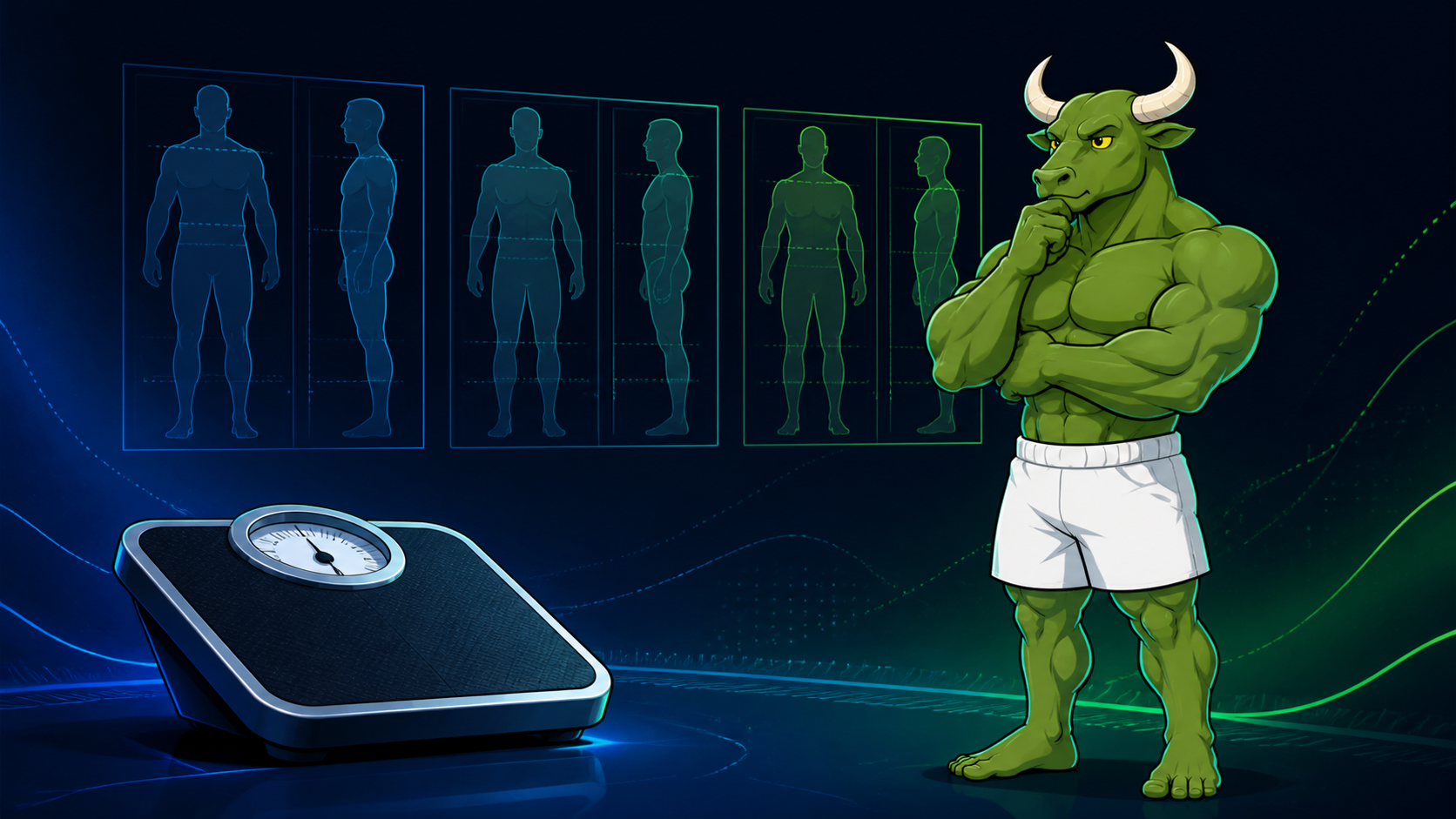
Progress Photos vs. the Scale: What to Trust on a Cut or Recomp
The scale tracks total mass; standardized progress photos show visible shape. Learn which signal should lead on a cut, recomp, bulk, or maintenance phase.
By Reset90 AI Editorial Team
Short answer: The scale and progress photos are not competing measurements. The scale tracks total mass and, when read as a weekly average, gives you a useful clue about energy balance. Standardized photos show visible shape and proportion. On a cut, let the weekly average lead and use photos to check where the change is coming from. On a recomp, let photos and waist measurements carry more weight. On a bulk, use the scale to control the rate and photos to audit the result.
01The scale and progress photos answer different questions
The scale answers: Is total body mass moving over time? It cannot tell you whether the change is fat, muscle, water, food volume, or some combination.
Progress photos answer: Is my visible shape moving in the direction I want? They can show changes in outline, waist-to-shoulder proportion, muscle visibility, posture, and clothing fit. They are slower and more sensitive to camera conditions, but they are closer to the visual outcome most people are training for.
Neither tool is “the truth” in every situation. They are two different instruments. The mistake is using a total-mass signal to judge a shape goal, or using one flattering photo to judge energy balance.
GainFrame’s progress photos versus the scale comparison makes the same distinction from a product perspective: use the scale for a frequent trend and photos for the visible result. It is a market guide, not independent clinical evidence, but the division of jobs is a useful starting point.
02What each signal can and cannot see
| Signal | It can show | It cannot show by itself | Best reading frequency |
|---|---|---|---|
| Single scale reading | Total mass at one moment | Whether the change is fat, muscle, water, glycogen, or food volume | Collect often if useful; do not treat one reading as a verdict |
| Weekly weight average | The direction of total mass and a rough energy-balance signal | Where the change is located or whether body shape improved | Review weekly |
| Standardized photos | Visible outline, proportion, posture, muscle visibility, and clothing fit | Exact fat or muscle change, health status, or cause of a visual difference | Weekly or every two weeks |
| Waist measurement | A repeatable circumference trend when measured consistently | Full-body composition or whether muscle was gained elsewhere | Weekly or every two weeks |
| Strength log | Training performance and the quality of a repeated movement | Whether a stronger lift came from better technique, leverage, or muscle alone | Every workout; review in blocks |
The most reliable decision usually comes from two or more signals agreeing. If they disagree, that is a reason to collect better context, not to declare one instrument broken.
03Why a weekly average beats a single weigh-in
Body weight can move quickly because water, sodium, carbohydrate intake, digestion, stress, sleep, and training soreness move quickly. A single number is precise about that moment but weak as a statement about body-fat change.
Use the same scale under similar conditions and record several readings if daily weighing is comfortable for you. Then compare this week’s average with the previous week’s average. If daily weighing increases anxiety or body checking, choose a less frequent routine and focus on the longer trend.
A systematic review of self-weighing in weight-management interventions found that regular self-weighing was associated with improved weight outcomes, particularly when done daily or weekly. That does not mean daily weighing is right for everyone, or that a scale can identify body composition. It supports a narrower point: repeated observations are more informative than an isolated reading when the question is total-mass direction.
The scale is especially useful when you are trying to control the rate of a cut or bulk. A slow trend can reveal drift before it is obvious in the mirror. It is less useful when your goal is to gain muscle and lose fat at the same time, because those changes can offset one another in total mass.
04Why photos need a protocol
A photo is not automatically a measurement. Different lighting, distance, lens, posture, clothing, hydration, pump, and time of day can create a visible difference even when your body is unchanged.
For a fair comparison, keep the following stable:
- Camera: same phone, lens, orientation, height, distance, and zoom when possible.
- Room: same background, floor position, and light direction.
- Pose: relaxed front, side, and back as the evidence set; flexed photos belong in a separate category.
- Timing: a similar time of day and similar relationship to meals and training.
- Posture: normal breathing, no bracing, no sucking in, and no gradually stronger shoulder pullback.
Research on standardized photographic assessment shows why this matters. A photogrammetry study indexed by PubMed found good repeatability for several posture variables under a controlled setup, while the measurement literature also documents technical and positioning errors. This does not make casual progress photos a clinical body-composition test. It does show why the same setup can make visual comparisons more defensible.
Our progress-photo timeline guide has the full capture and alignment routine. The short version is simple: make the camera boring enough that the body is the variable you are actually watching.
05Add waist and strength to break a tie
When the scale and photos disagree, add one simple circumference and one performance signal. Waist helps localize a change that total mass cannot. Strength helps you see whether training quality is holding or improving.
If you measure waist, use a repeatable landmark and tape tension. The WHO STEPS measurement protocol describes a level tape at the midpoint between the lower rib and the top of the hip bone, with a normal expiration and the tape snug but not compressing the skin. You do not need to turn a home check-in into a clinical assessment, but using a consistent location is better than measuring wherever the tape happens to land.
For strength, choose a few movements that stay comparable. Track load, reps, sets, and effort. An improved number can reflect better technique or practice, so interpret it as training performance rather than a direct muscle meter.
06Choose a lead signal for your phase
| Phase or goal | Lead signal | Supporting signals | What to demote |
|---|---|---|---|
| Cut | Weekly weight average | Standardized photos, waist, strength, hunger, and adherence | Single daily readings and dramatic mirror judgments |
| Recomp | Photos and waist trend | Strength, weekly weight average, and nutrition adherence | Expecting the scale to fall every week |
| Bulk or lean gain | Weekly weight average | Strength, photos, waist, and training volume | Day-to-day scale movement and unstructured “eat more” decisions |
| Maintenance | Weight range and performance stability | Photos, waist, energy, and routine adherence | Chasing visible change every week |
“Lead” does not mean “only.” It means the signal gets first say in the decision because it matches the mechanism of the goal. A cut needs a credible energy-balance trend. A recomp needs evidence of shape change even when mass is stable. A bulk needs a controlled rate of gain with photos checking where the gain appears.
07When the scale is flat but photos improve
This is the classic recomp pattern, but it still needs a fair comparison. First confirm that the photos use the same pose, camera, lighting, and timing. Then look for support from a shrinking waist, stable or improving strength, and consistent nutrition.
If the scale is flat for two weeks and the photos look better, keep collecting rather than changing the plan immediately. If the pattern holds over four to eight weeks, confidence increases that the visible change is meaningful. Your goal may be working even though total mass is not moving.
If photos improve only because one image is flexed, darker, closer, or more carefully posed, the scale may not be the problem. Fix the timeline before changing calories or training.
08When photos look better but the scale rises
A rising scale is not automatically fat gain. It can reflect a planned gaining phase, increased glycogen and water, more food volume, or a short-term change in routine. It can also mean the calorie surplus is larger than you intended.
Use the rate of change and the other signals. If strength is moving up, photos are improving, and waist change is within your goal, the gain may be productive. If the waist rises quickly while performance and photos do not improve, review portions, logging consistency, and the size of the surplus.
Do not use a single good photo to dismiss a six-week weight trend. Photos are slower and more subjective; the average scale trend is better at showing whether total mass is accumulating. The correct response is a review of both, not a victory for whichever signal you prefer.
09Run a four-week review with both signals
A four-week review is long enough to lower daily noise while still giving you a chance to adjust the plan.
- Set the baseline. Record the previous week’s average weight, waist, three relaxed photos, anchor-lift performance, and current nutrition target.
- Collect without reacting. Weigh on your chosen schedule, take photos weekly or biweekly, and log training and adherence. Do not change the plan because of one reading.
- Compare like with like. Match the same pose, crop, lighting, and time window. Compare weekly averages rather than isolated weights.
- Classify the pattern. Are the signals aligned, is one noisy, or are two signals moving against the goal?
- Change one variable. Adjust calories, training volume, photo protocol, or recovery routine—not everything at once.
| Four-week pattern | Likely reading | Next question |
|---|---|---|
| Weight average down, photos leaner, waist down | Cut is producing a coherent result | Is strength and recovery acceptable? |
| Weight stable, photos and waist improve | Possible recomp or favorable visual change | Are the photos truly comparable and is strength stable? |
| Weight up, strength up, photos improve | Possible productive gain phase | Is the rate of gain and waist trend within your goal? |
| Weight unchanged, photos unchanged, strength unchanged | No clear signal yet or no effective change in inputs | Was adherence and measurement quality high enough to judge? |
| Weight down quickly, strength falling, photos look flat | Plan may be too aggressive or recovery may be poor | Should you review nutrition, training, and professional guidance? |
10How Reset90 connects the signals
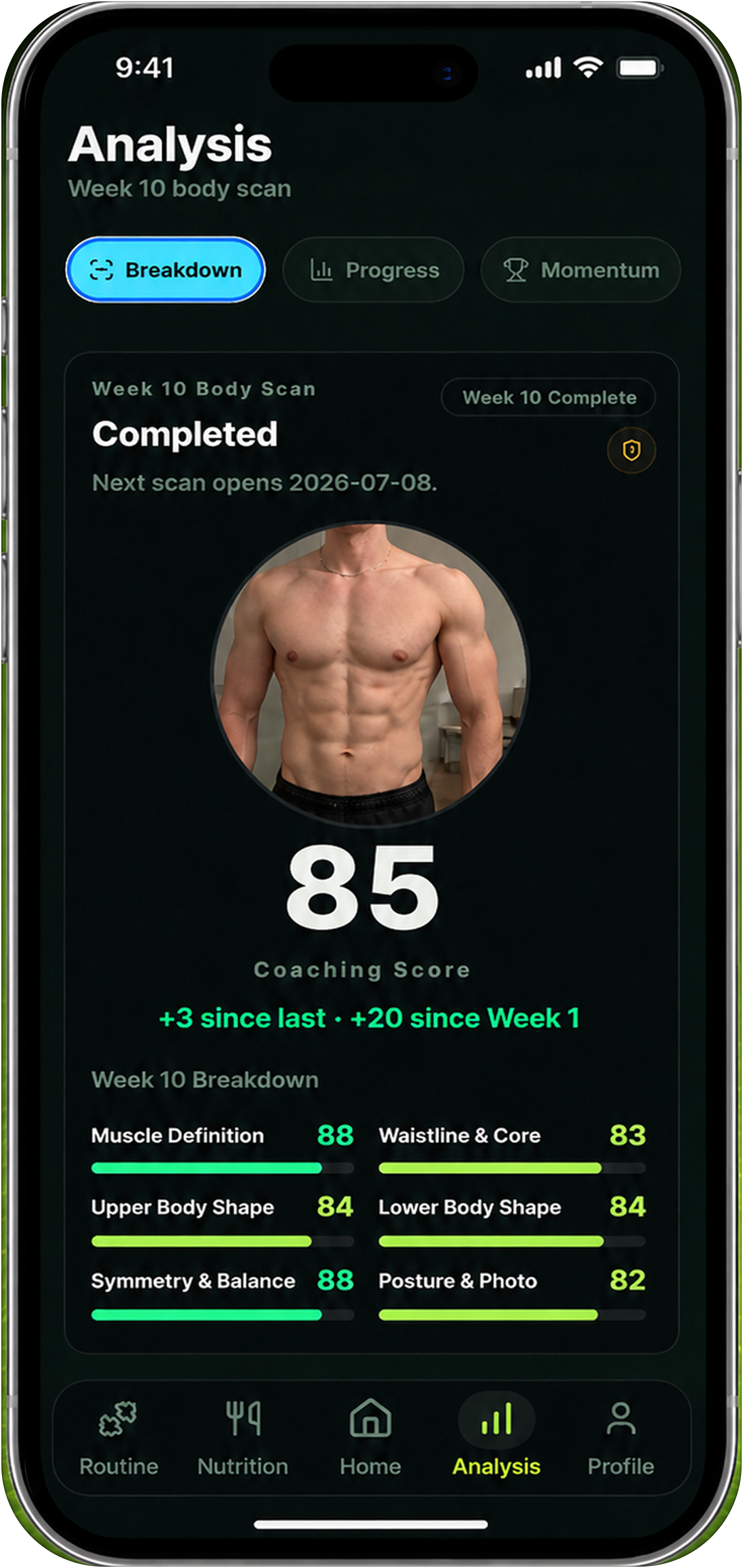
Reset90 is useful when the question is not only “What changed?” but also “What should I do next?” A visual progress check-in can sit beside training, nutrition, and adherence context inside a 90-day plan.
That does not mean the app can diagnose body composition or turn a photo into a clinical measurement. It means the check-in can help you keep a consistent evidence layer, review whether the plan was followed, and decide whether to keep the routine steady or make one controlled adjustment.
For the wider product landscape, see our guides to body-composition apps and muscle-gain tracking apps. If nutrition is the variable you need to audit, use the macro calculator as a planning starting point and compare it with your actual weekly pattern.
11Do not turn either signal into a verdict
Weight and appearance can both become emotionally loaded. A higher scale reading is not a moral failure, and a photo you dislike is not a diagnosis. The point of tracking is to see a pattern clearly enough to make a reasonable decision.
If weighing or photographing yourself becomes compulsive, distressing, or tied to restrictive eating, reduce the frequency and seek appropriate support. A useful system should make training and nutrition decisions calmer, not make your body occupy every thought.
For medical concerns, rapid unexplained changes, or eating-disorder risk, use qualified professional guidance. Fitness tracking tools are not a substitute for clinical assessment.
12Frequently asked questions
Should I trust progress photos or the scale?
Trust each for what it measures. Use the weekly average scale trend for total-mass direction and energy-balance context. Use standardized photos for visible shape and proportion. The lead signal depends on whether you are cutting, recomping, bulking, or maintaining.
Why do I look leaner but weigh the same?
Fat mass and lean mass can change in opposite directions while total mass stays similar. Water and food volume can also hide a short-term change. Confirm the pattern with comparable photos, waist, strength, and several weeks of weight averages.
Can the scale miss fat loss?
Yes, for a period of time. Water, sodium, glycogen, digestion, stress, and new training can mask a change in fat mass. Use the weekly average and supporting signals rather than one weigh-in.
How often should I take progress photos?
Weekly or every two weeks is practical for many people. Use the same setup and judge the timeline at four weeks or longer. Daily photos usually add noise and can encourage excessive checking.
Can Reset90 replace a DEXA scan or medical body-composition test?
No. Reset90 is a fitness and nutrition planning tool. Its progress check-in supports repeatable visual tracking, but it is not a medical device or diagnostic service.
13The practical answer
Do not ask whether progress photos or the scale is universally better. Ask which one is closest to the question you need answered.
Use the weekly average scale trend to manage total-mass direction. Use standardized photos to see whether your body is changing in the direction you want. Add waist and strength to resolve disagreement, then review the full pattern every four weeks.
The scale reports movement. Photos report shape. A good tracking system lets both speak without asking either one to do a job it cannot do.
The Reset90 system
Useful ideas for building a body you can keep.
Training notes, product updates, and practical ways to make your next 90 days count.
Start your next 90 days
Get your daily training, nutrition, and check-in priorities in one adaptive system.


Keep reading
Related articles

Ideal Body Measurements for Women
There is no single ideal body measurement set for women. Learn how averages, waist-to-height, body shape and repeatable tracking fit together without chasing a fixed beauty standard.
Read article
Bulk, Cut, or Recomp? A Practical Decision Guide
A practical way to choose a bulk, cut, recomp, or maintenance phase using your goal, training age, recovery, and repeatable progress signals.
Read article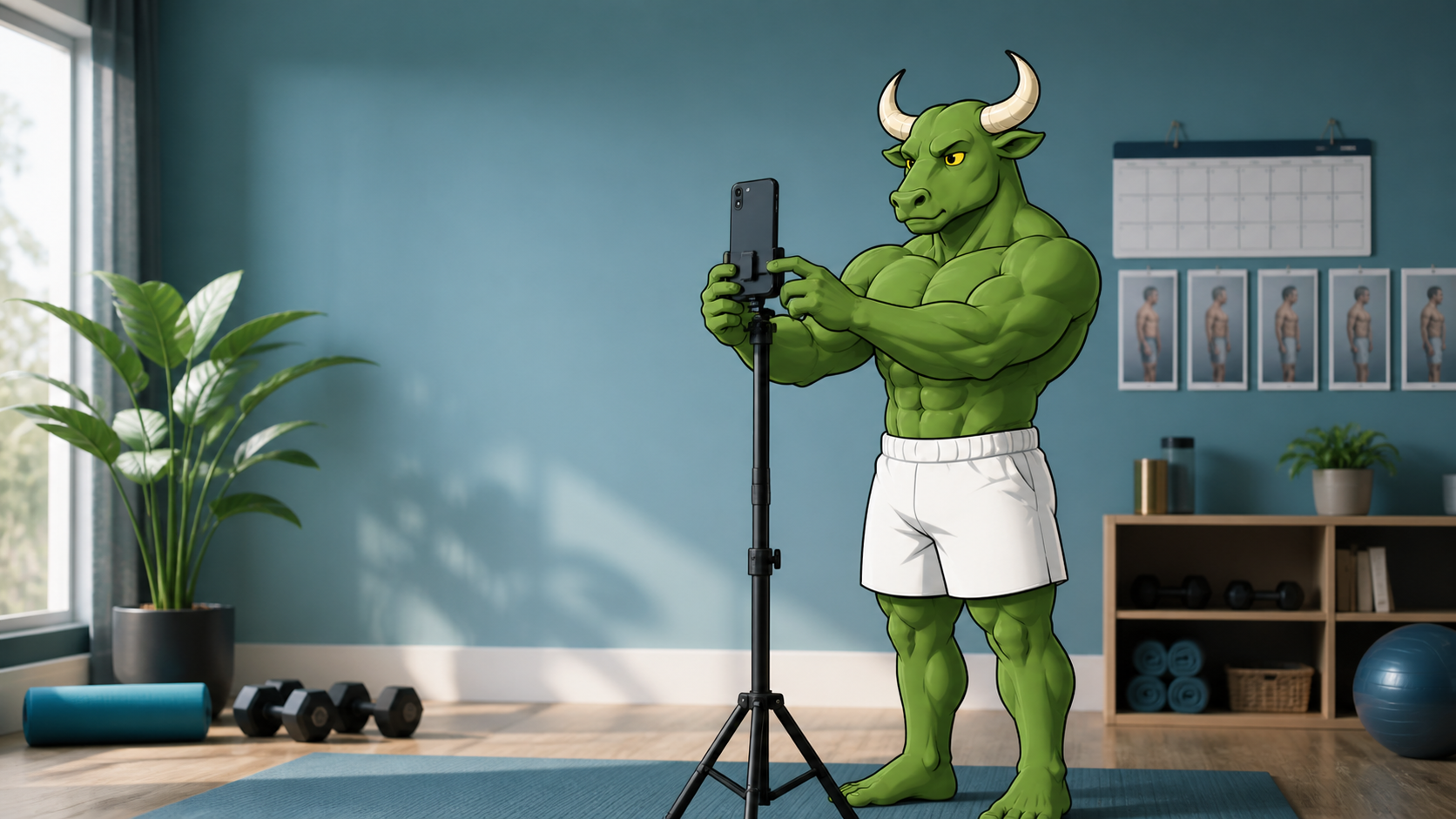
How Often Should You Take Progress Photos?
How often should you take progress photos? Use this goal-based guide to choose weekly, biweekly, or monthly check-ins and make every comparison more consistent.
Read article