
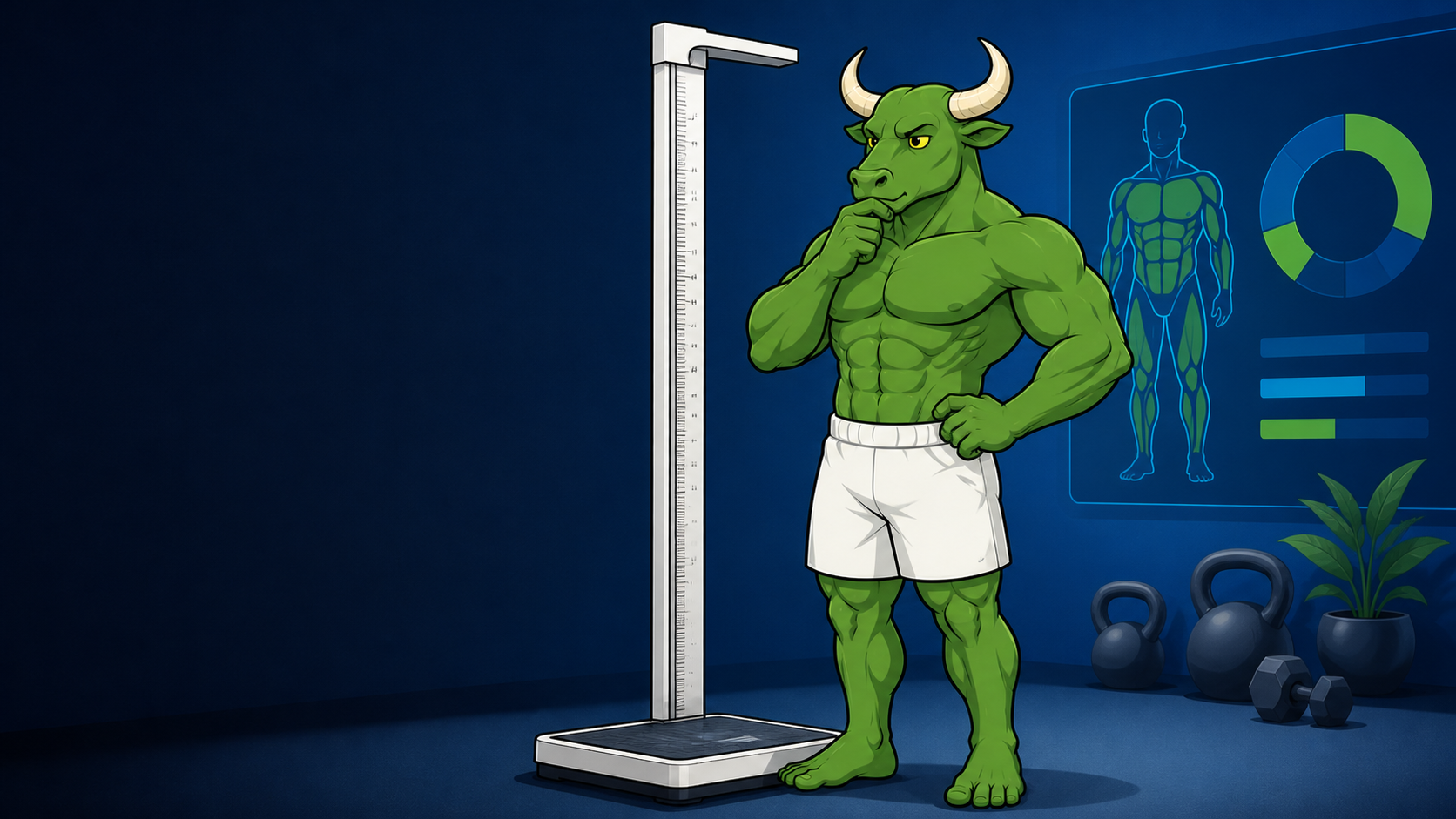
Is BMI Accurate? What BMI Gets Wrong for Muscular People
BMI can be a useful screening signal, but it cannot distinguish muscle from fat. Learn when BMI misleads muscular people and what to track alongside it.
By Reset90 AI Editorial Team
Short answer: BMI is accurate as a calculation of weight relative to height, and it can be useful as a broad screening signal. It is not accurate as a standalone measurement of body fat, muscle mass, fat distribution, or overall health. That matters most for muscular people, older adults, people with different body-composition patterns, and anyone whose result does not match their waist, performance, measurements, or health context.
01What does “accurate” mean when people ask about BMI?
When someone asks, “Is BMI accurate?” they may be asking two different questions.
First: Is the number calculated correctly? Yes. BMI is a simple height-and-weight ratio:
BMI = weight in kilograms ÷ height in meters²
Second: Does that number accurately describe my body and health? Not always. BMI does not directly measure body fat. It also cannot tell whether your weight comes mostly from muscle, fat, bone, water, or a combination of those factors. It does not show where fat is stored, how much muscle you have, or whether you are getting stronger and healthier.
That distinction is the key to using BMI well. The calculation can be precise while the interpretation is incomplete.
02Why BMI is still useful
It is easy to dismiss BMI because it has obvious limitations. That would also be a mistake. BMI remains useful because it is inexpensive, quick, repeatable, and available for nearly everyone. A clinician, researcher, or individual can calculate it without a scan, special device, or complicated protocol.
For adults, BMI categories are commonly used as a first-pass screen:
| Adult BMI | Common screening category | What it does not tell you |
|---|---|---|
| Below 18.5 | Underweight | Whether the result reflects low muscle, recent illness, nutrition issues, or another factor |
| 18.5–24.9 | Healthy-weight range | Whether body fat, muscle mass, fitness, or health markers are optimal |
| 25.0–29.9 | Overweight | Whether the extra weight is mostly muscle, fat, or another part of body composition |
| 30 or higher | Obesity range | A diagnosis, the location of fat, or an individual risk assessment by itself |
These categories are screening boundaries, not a complete description of a person. A BMI outside the middle range can justify a closer look. It should not end the conversation.
03Why BMI can be misleading for muscular people
BMI treats every kilogram the same. It sees total body weight and height, but it does not know whether that weight comes from muscle or excess fat.
That is why a muscular person can fall into the overweight or obesity category even when their body-fat level is relatively low. A strength athlete, bodybuilder, or recreational lifter may carry more lean mass than the population used to create a broad height-and-weight screen. The BMI calculation is not broken in that situation. It is simply answering a narrower question than the person wants answered.
For example, two people can have the same height, weight, and BMI while having different amounts of muscle, fat, waist circumference, training history, and health markers. BMI cannot separate those cases.
This does not mean every person with a high BMI is muscular or that a high BMI should automatically be ignored. Most people should not assume their result is “just muscle” without looking at other evidence. The useful question is not “Can muscle raise BMI?” It can. The useful question is “What else should I check before deciding what this number means for me?”
For a deeper discussion of the difference between a broad weight-to-height screen and a lean-mass metric, see FFMI vs BMI: Which Body-Composition Metric Should You Use?.
04Does BMI use a different formula for women?
The adult BMI formula is the same for women and men: weight relative to height. The category cutoffs are also used as broad adult screening categories rather than as a separate body-composition test for each sex.
The search phrase “BMI for women” often points to calculator or healthy-range questions. That is a different task from this article. Here, the important boundary is that the adult arithmetic is the same, while the number still does not directly describe body fat, muscle, or fat distribution.
Use BMI as one starting signal. Add waist measurement, weight trend, strength or activity, body-composition estimates when they are collected consistently, and relevant health information. If the result is connected to pregnancy, an eating disorder, a medical condition, or a clinical decision, use professional guidance rather than a general fitness calculator.
05What BMI cannot tell you
BMI is often criticized for being “inaccurate,” but the more precise criticism is that it is incomplete. It does not answer several questions people commonly want it to answer:
- How much body fat do I have? BMI is correlated with body fat across groups, but it does not measure body fat directly.
- Where is my fat stored? BMI does not show abdominal or visceral fat distribution. Waist measurements add information that height and weight alone cannot provide.
- How much muscle do I have? BMI cannot distinguish muscle from fat or bone.
- Am I making progress? A single BMI value cannot show whether changes came from muscle, fat, water, food volume, or measurement noise.
- Am I healthy? A BMI category is not a diagnosis. Blood pressure, blood glucose, lipids, symptoms, medical history, fitness, sleep, and other factors can matter.
- What should my goal weight be? A category boundary is not automatically a personal target.
A normal-range BMI can coexist with low muscle or a less favorable fat distribution. A higher BMI can coexist with substantial muscle. The number needs context in both directions.
06How to interpret your BMI without overreacting
Use this five-step process instead of treating one BMI result as a verdict.
1. Check the input
Confirm your height and weight units, and make sure you entered current measurements. A small height error can affect the calculation because height is squared. Do not compare a morning weigh-in with a post-workout or post-meal measurement as if they were identical conditions.
2. Treat the category as a screen
Ask what the category suggests you should investigate, not what it proves. A result in the overweight or obesity range can be a reason to look at waist circumference, health markers, habits, and body composition. It is not enough information to explain your whole body.
3. Add a waist measurement
Waist circumference can add information about central fat that BMI does not capture. Use a repeatable method and measure at a consistent location. Avoid turning one measurement into a diagnosis; look for a trend and consider the context in which you are measuring it.
4. Add body-composition and performance signals
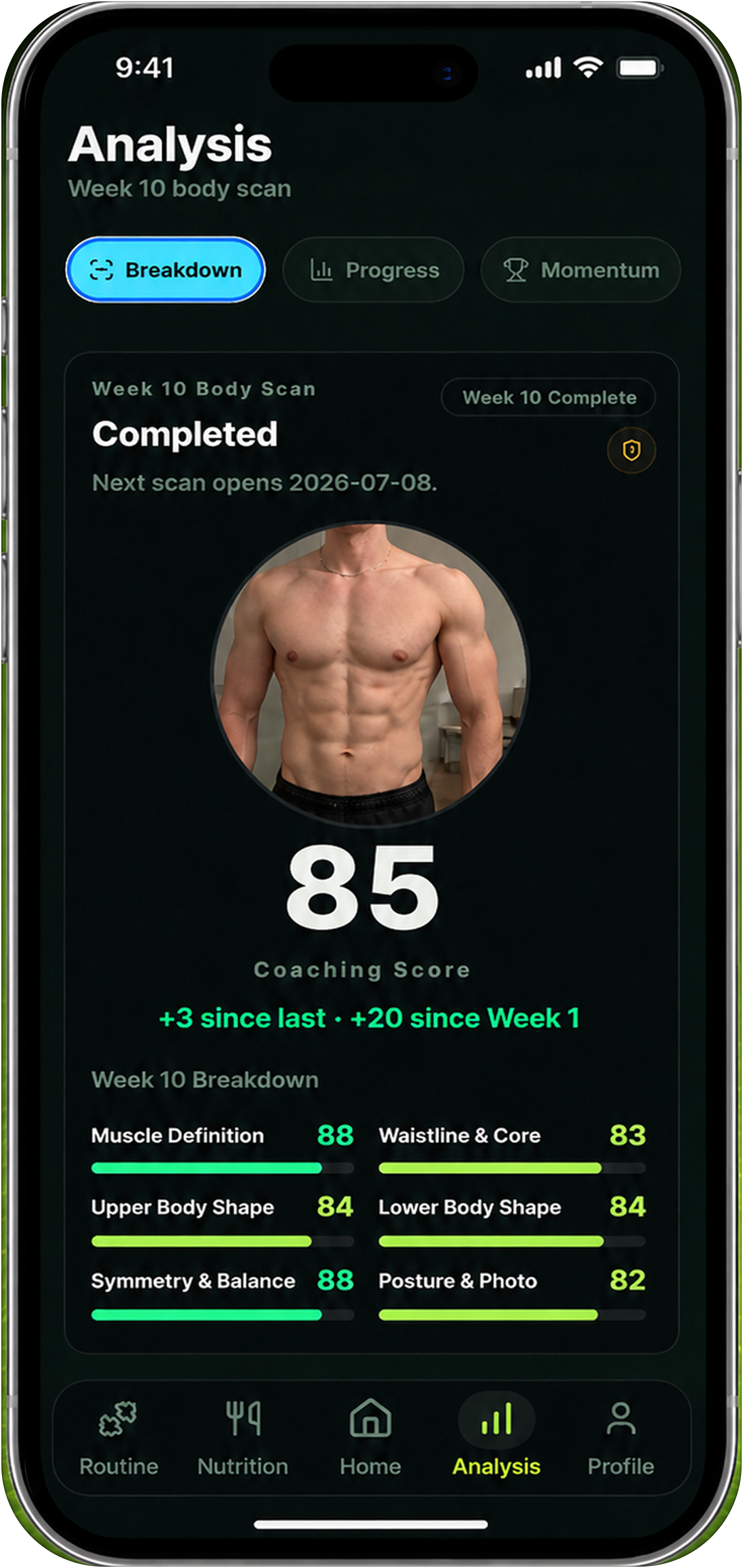
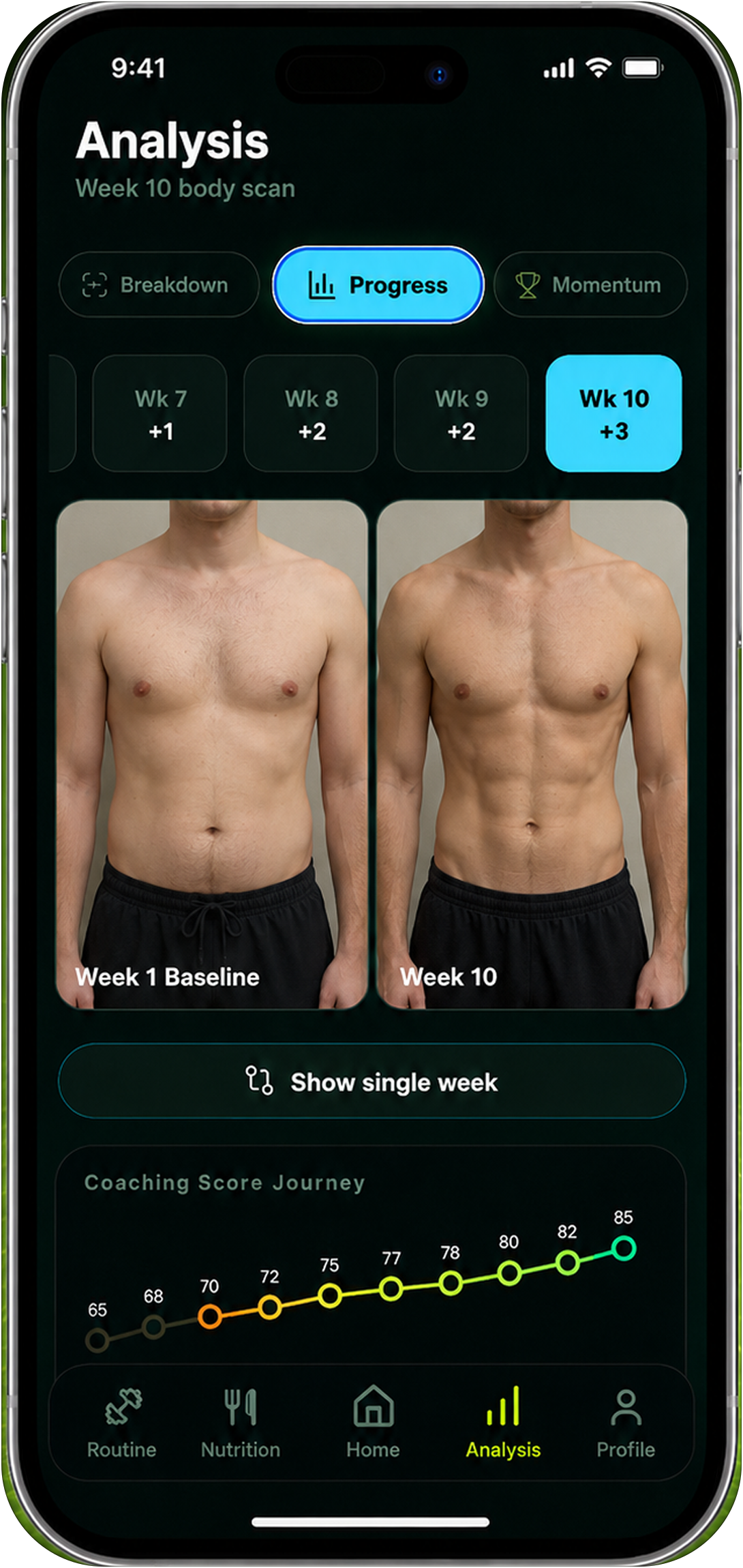
If your goal is muscle gain or body recomposition, track more than scale weight. Useful signals can include progress photos, waist and other body measurements, strength or training performance, recovery, and a consistent body-fat estimation method. Each measure has its own error. The advantage comes from looking at several signals over time, not from finding one perfect number.
5. Ask whether the result matches the rest of the evidence
If your BMI, waist trend, photos, strength, and health information point in the same direction, the result is easier to interpret. If they disagree, do not force them into one conclusion. Check the measurement conditions, extend the observation window, and ask a qualified professional when the result has medical significance.
07What should you track instead of BMI?
The answer depends on your question. BMI is not something every person needs to replace. It is something you may need to supplement.
| Your question | Useful starting signal | Add for context |
|---|---|---|
| How does my weight compare with my height? | BMI | Waist, health history, and relevant clinical measurements |
| Am I gaining muscle while training? | Strength and training performance | Photos, measurements, nutrition, and a consistent body-composition estimate |
| Is my waist changing? | Waist trend | Weight trend, photos, timing, and measurement conditions |
| Is my plan working? | A repeated progress dashboard | Adherence, recovery, performance, measurements, and how you feel |
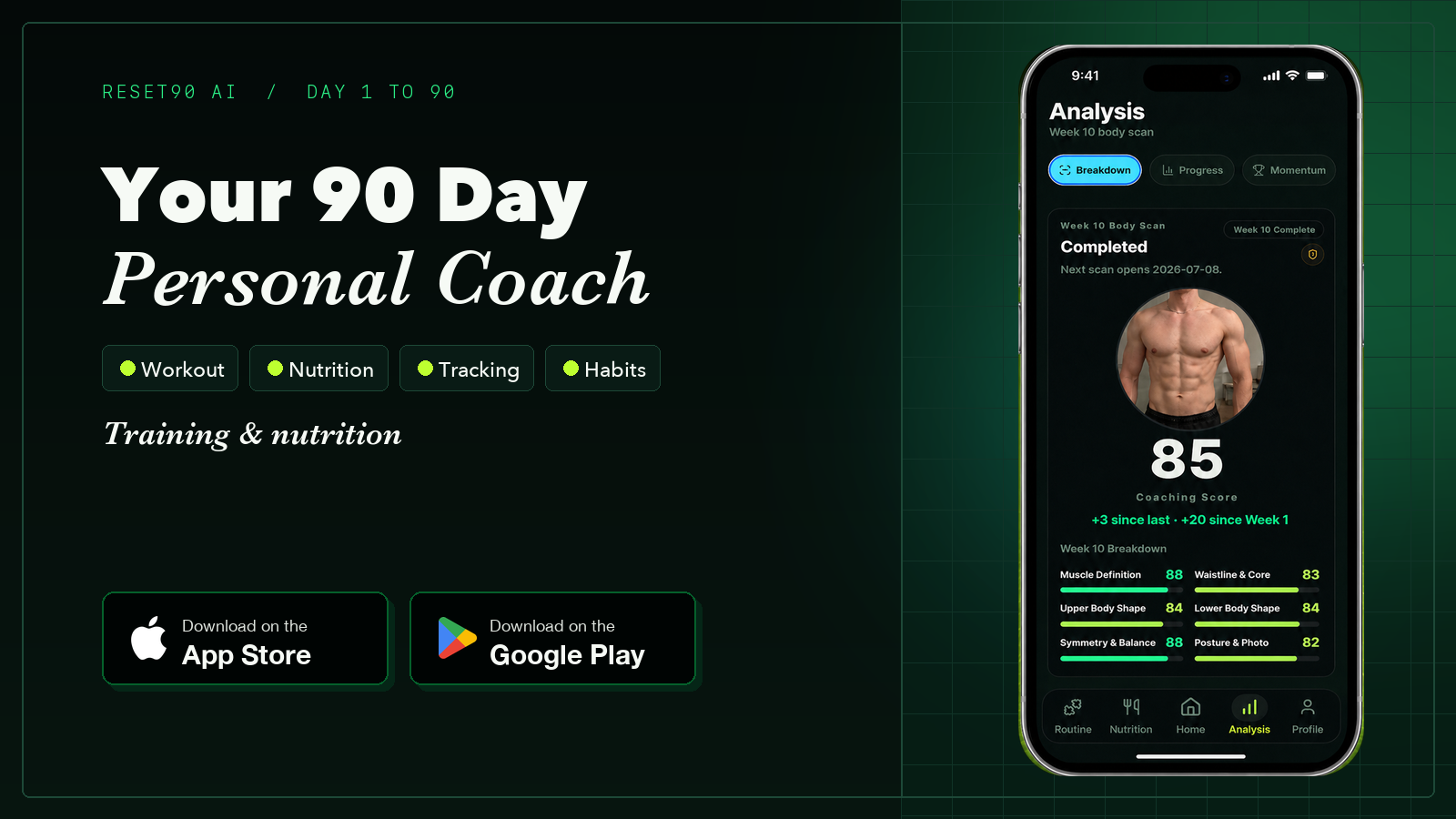
Reset90 is designed for this trend-based approach: keep body measurements, progress signals, training, nutrition, and check-ins in one repeatable record instead of reacting to one isolated weigh-in. It is a fitness and nutrition planning tool, not a diagnostic system or a substitute for medical advice.
08Frequently asked questions
Is BMI accurate for athletes?
BMI can be calculated accurately for athletes, but it may overstate body-fat risk when a large share of body weight comes from muscle. Use it as a screening signal and add body-composition, waist, performance, and health context.
Is BMI reliable for people who lift weights?
It can provide a broad weight-to-height reference, but it cannot tell whether a lifter’s extra weight is muscle or fat. The more muscular the person, the more important it is to avoid interpreting BMI as a direct body-fat measurement.
Can you have a high BMI and be healthy?
A high BMI does not by itself diagnose health or disease, and it may be influenced by muscle mass. At the same time, “I lift” is not enough evidence to dismiss a high result. Look at the full context, including waist, health markers, habits, symptoms, and professional assessment when appropriate.
Can you have a normal BMI and still have too much body fat?
Yes. People with the same BMI can have different muscle mass and fat distribution. A normal-range BMI is useful information, but it is not proof that body composition or health is optimal.
Should women use a different BMI calculator?
Adult women use the same height-and-weight BMI calculation. The result still needs personal context because BMI does not measure body fat, muscle, or fat distribution directly. Children and teenagers are interpreted differently using age- and sex-specific growth references.
Is BMI a medical diagnosis?
No. BMI is a screening measure. If you are concerned about a weight change, body composition, symptoms, an eating disorder, pregnancy, or a health-screening result, speak with a qualified healthcare professional.
09The bottom line
BMI is not fake, and it is not a complete body-composition measurement. The calculation is accurate; the interpretation has boundaries.
For many people, BMI is a useful first screen. For muscular people, it can misclassify the relationship between weight and body fat because it cannot separate muscle from fat. For everyone, it leaves out fat distribution, performance, health markers, and the direction of change.
Use BMI to start a better question, not to end the conversation. Then track the signals that match your actual goal: waist, photos, measurements, strength, nutrition, recovery, and consistent trends over time.
The Reset90 system
Useful ideas for building a body you can keep.
Training notes, product updates, and practical ways to make your next 90 days count.
Start your next 90 days
Get your daily training, nutrition, and check-in priorities in one adaptive system.


Keep reading
Related articles
Ideal Body Measurements for Women
There is no single ideal body measurement set for women. Learn how averages, waist-to-height, body shape and repeatable tracking fit together without chasing a fixed beauty standard.
Read article
Bulk, Cut, or Recomp? A Practical Decision Guide
A practical way to choose a bulk, cut, recomp, or maintenance phase using your goal, training age, recovery, and repeatable progress signals.
Read article
How Often Should You Take Progress Photos?
How often should you take progress photos? Use this goal-based guide to choose weekly, biweekly, or monthly check-ins and make every comparison more consistent.
Read article