

Maintenance Calories After Weight Loss: How to Find Your New Baseline
Maintenance calories after weight loss are best treated as a measured range, not a permanent number from a calculator. Use a two-week baseline test, compare weekly averages, and adjust one variable at a time.
By Reset90 AI Editorial Team
Short answer: Maintenance calories after weight loss are best treated as a measured range, not a permanent number from a calculator. Start with an estimate, keep intake and activity reasonably consistent for about two weeks, compare weekly weight averages, and adjust one variable at a time.

Finishing a cut can feel like reaching a finish line. In practice, it is usually the start of a different measurement problem: how much food and activity now keeps your weight broadly stable while you recover from the deficit and return to a routine you can actually live with?
That number may be lower than an old estimate because your body mass, movement, training load, and daily habits have changed. It may also look unstable for a few days because water, glycogen, sodium, digestion, and menstrual-cycle changes can move the scale without representing a comparable change in body fat.
01Start with an estimate, not a verdict
A calorie calculator can give you a useful starting point. It cannot observe your actual food intake, spontaneous movement, training quality, sleep, stress, or the way your weight has been trending since the cut began. Even a carefully chosen activity setting is still an assumption.
Use an estimate to choose a reasonable first range, then let repeated observations improve it. The goal is not to discover a perfect maintenance number with one calculation. The goal is to find a range that produces a stable trend under your current routine.
02Why the old maintenance number may no longer fit
After weight loss, several inputs can change at once:
- Your body is carrying less mass, so the energy cost of moving through the day may be different.
- Your step count or unconscious movement may have drifted during the deficit.
- Your training schedule, exercise performance, and recovery needs may not match the plan you used before.
- Food tracking may have become more or less precise as the diet progressed.
- Scale weight may be temporarily affected by water and glycogen as carbohydrate intake and training volume change.
None of these points means your metabolism is “broken,” and none gives you a reason to chase daily scale noise. It means the old number is a hypothesis built for old conditions. Your current routine deserves a fresh test.
03Build a two-week maintenance test
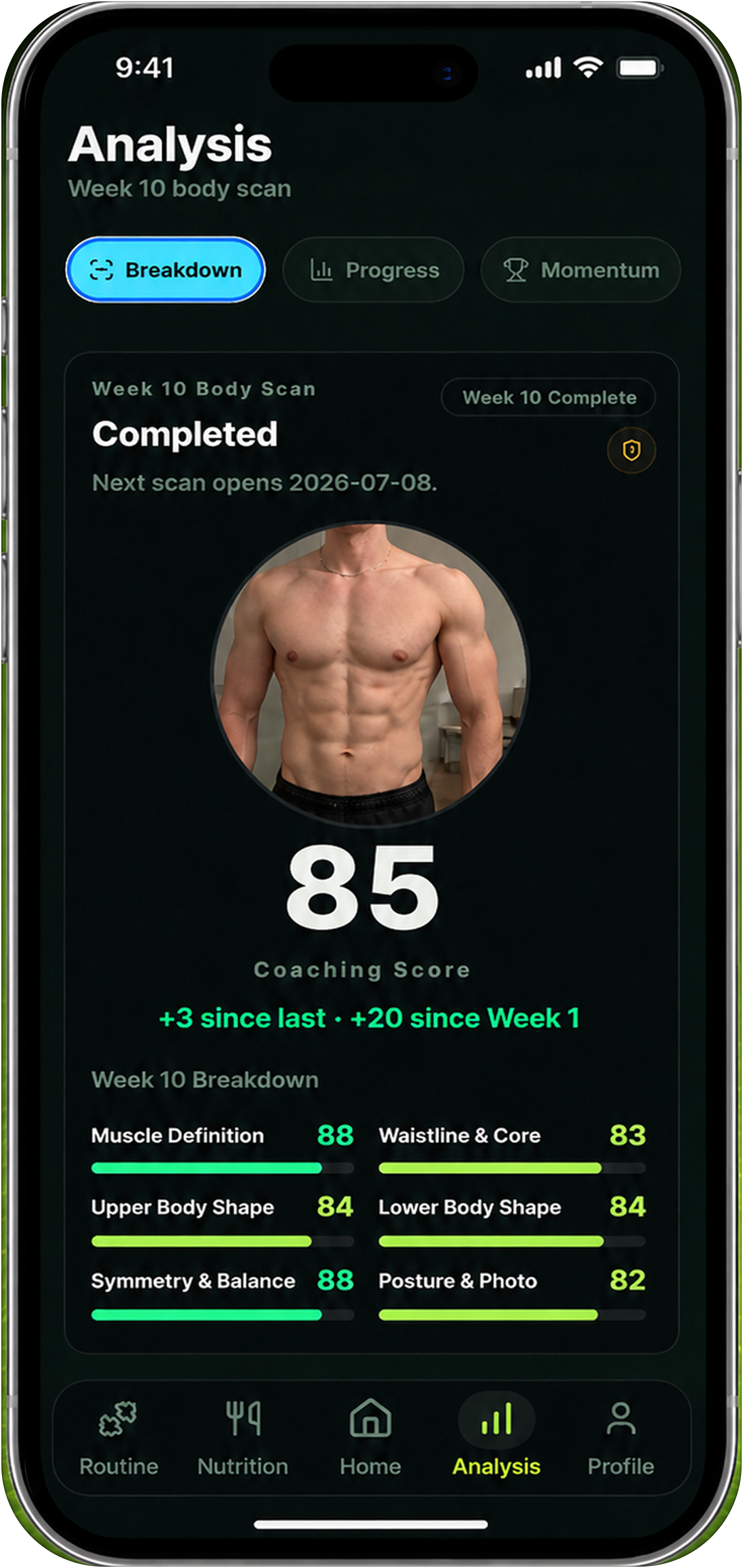
A short maintenance test works best when you reduce unnecessary variation. Pick a starting calorie range based on your current body size, recent intake, and activity. Then keep the big anchors stable for roughly 14 days: meal timing, protein habits, training schedule, and a realistic step pattern.
Weigh under similar conditions when you can, such as after waking and using the bathroom. Record the result without trying to “correct” it with extra cardio or a very low-calorie day. Also note unusual travel, restaurant meals, hard sessions, poor sleep, or a high-sodium day so you can interpret the context later.
The test is not a pass-or-fail challenge. It is a way to gather enough repeated observations to see whether your average weight is broadly stable, drifting down, or drifting up.
04Read the trend correctly
Compare weekly averages rather than two individual weigh-ins. A simple review can ask:
- What was the average weight in week one?
- What was the average weight in week two?
- Were calories, steps, and training reasonably similar?
- Were there obvious reasons for temporary water changes?
If the two averages are close and your routine feels sustainable, you may already be near a workable maintenance range. If the average is still falling, you may be below maintenance or your activity may be higher than expected. If it is rising for multiple weeks, intake may be above your current maintenance range, or the transition may include a short-lived increase in water and glycogen.
Do not turn a single week into a dramatic conclusion. Extend the observation window when the signal is noisy. A stable decision is more useful than reacting to every change on the scale.
05Separate maintenance from active recovery
The first days after a diet can be physiologically and psychologically different from an ordinary maintenance phase. Increasing carbohydrates, eating more food volume, restoring training performance, and reducing diet fatigue can all affect scale weight without meaning that the whole change is body fat.
That is why the initial transition should focus on a repeatable routine. Keep protein and meals structured, allow normal food flexibility, and judge the direction of the weekly average over time. Maintenance is not a single “cheat day” followed by compensation; it is a pattern you can repeat without needing to repair it every morning.
06Adjust one variable at a time
If your trend continues in an unwanted direction after the first test, change one meaningful lever and observe again. You might make a modest food adjustment, restore a consistent walking baseline, or review whether training volume has changed. Changing calories, steps, cardio, and meal timing all at once makes it difficult to learn what actually mattered.
A useful adjustment is small enough to repeat and clear enough to evaluate. Avoid presenting any single number as a universal prescription: the right change depends on the size and speed of the trend, your hunger and recovery, your activity, and your health context.
07Use a calculator as a starting point
A calculator is still useful when you treat it as an opening estimate. It can help you avoid choosing a completely arbitrary starting point and give you a framework for discussing activity level. The important step is what happens afterward: log the inputs, observe the trend, and revise the estimate when real data disagrees with it.
Reset90’s calorie deficit calculator can help you establish that first estimate. Use it alongside your own trend review rather than as a promise that one output will remain accurate after your body weight, schedule, or activity changes.
08A simple weekly review template
Once a week, write down a short review instead of reopening the entire plan:
- Weight trend: What happened to the weekly average?
- Intake consistency: Was the planned range close to the actual pattern?
- Activity: Did steps, cardio, or lifting volume change?
- Recovery: How were hunger, sleep, energy, and training performance?
- Next test: What single variable, if any, should change?
This turns maintenance into a feedback loop. You are not trying to earn a perfect score; you are trying to make the next week easier to interpret than the last one.
09When to get professional support
Calorie targets and weight trends are not the whole picture. If you have a history of disordered eating, a medical condition, are taking medication that affects appetite or weight, are pregnant or breastfeeding, or feel that tracking is becoming compulsive, ask a qualified healthcare professional or registered dietitian for individualized guidance.
Stop treating the process as a self-experiment when you have persistent symptoms, rapid unexplained changes, or distress that is interfering with daily life. A maintenance protocol should support health and normal living, not become another source of punishment.
10How Reset90 can support the routine
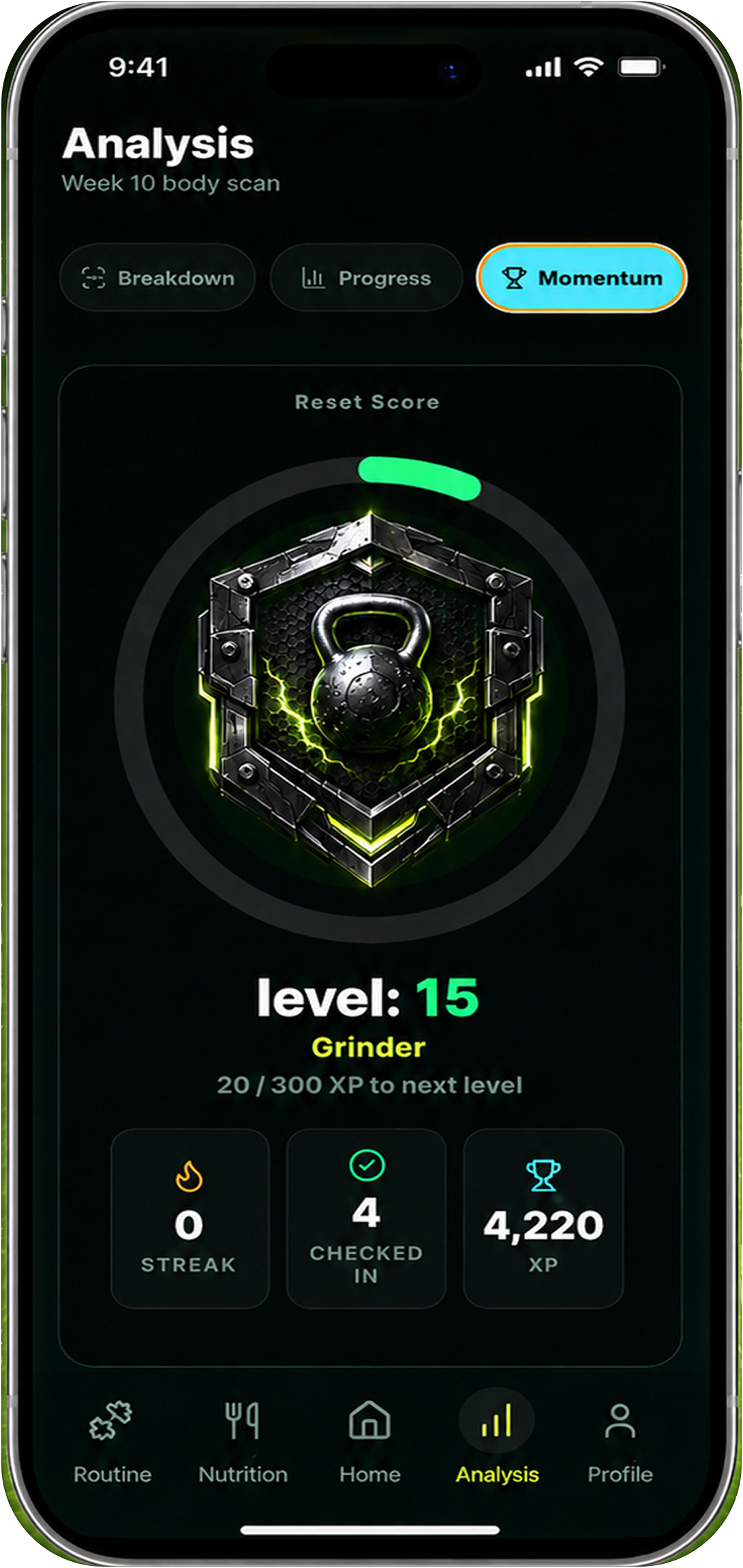
The hard part is usually not calculating a starting number. It is remembering what happened, seeing the trend, and making a calm decision after a noisy week. Reset90 can give you a place to keep the routine visible: log the relevant food and weight information, review the pattern, and use the next check-in to decide whether the current plan still fits.
For a broader approach to consistent nutrition logging, see how to track nutrition without overcomplicating it. Keep the principle simple: estimate, observe, adjust one variable, and give the next test enough time to teach you something.
The Reset90 system
Useful ideas for building a body you can keep.
Training notes, product updates, and practical ways to make your next 90 days count.
Start your next 90 days
Get your daily training, nutrition, and check-in priorities in one adaptive system.


Keep reading
Related articles

Ideal Body Measurements for Women
There is no single ideal body measurement set for women. Learn how averages, waist-to-height, body shape and repeatable tracking fit together without chasing a fixed beauty standard.
Read article
Bulk, Cut, or Recomp? A Practical Decision Guide
A practical way to choose a bulk, cut, recomp, or maintenance phase using your goal, training age, recovery, and repeatable progress signals.
Read article
How Often Should You Take Progress Photos?
How often should you take progress photos? Use this goal-based guide to choose weekly, biweekly, or monthly check-ins and make every comparison more consistent.
Read article