

Ozempic Muscle Loss Before and After: What Progress Photos Can and Cannot Show
Ozempic muscle loss before-and-after photos can show changes in appearance, but they cannot prove muscle loss on their own. Learn how to combine photos with strength, measurements, nutrition, and weight trends.
By Reset90 AI Editorial Team
Short answer: Ozempic muscle loss before-and-after photos can show changes in shape, size, posture, and definition, but photos alone cannot prove that muscle was lost. For a more useful check, take consistent photos and review them with strength performance, body measurements, weight trend, nutrition, recovery, and—when appropriate—a professional body-composition assessment.
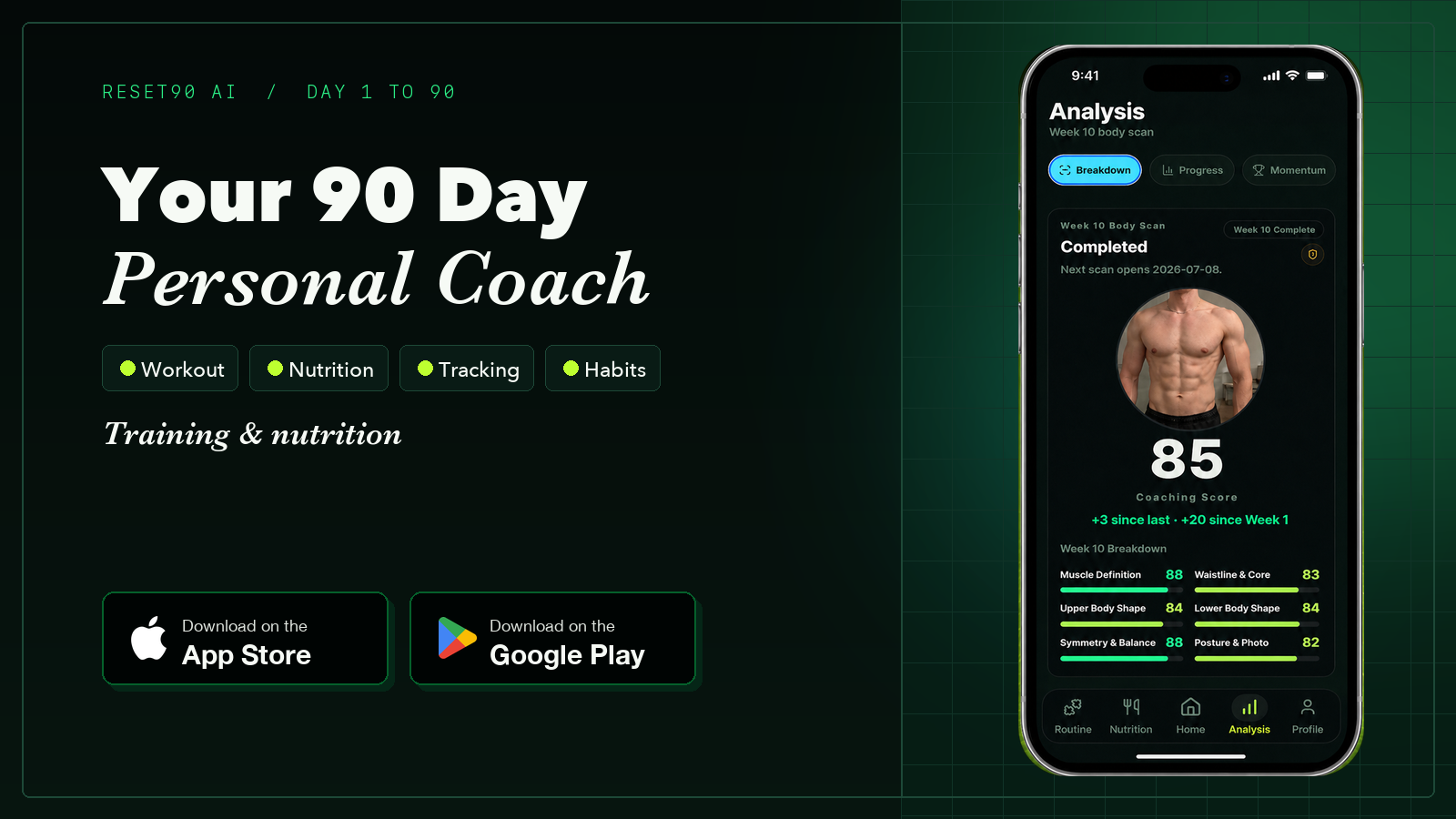
If you search for Ozempic muscle loss before and after, you may be hoping a picture can answer a difficult question: “Did I lose fat, muscle, water, or some combination?” The problem is that a photograph records appearance, not tissue composition.
This guide explains what Ozempic muscle loss pictures can and cannot tell you, how to create a repeatable progress-photo routine, and how to combine visual evidence with the signals that matter for strength and health. It is general education, not a diagnosis or personal medical advice. If you have persistent vomiting, severe pain, dehydration, unusual weakness, or cannot meet basic nutrition needs, contact your prescribing clinician.
01What Ozempic before-and-after photos can show
Consistent photos can be useful for noticing visual changes that the scale does not describe. Over time, they may help you see:
- Changes in waist, hip, shoulder, or limb shape.
- Changes in muscle definition or the way clothing fits.
- Posture, stance, and visible training changes.
- Whether your appearance is changing in the direction that matches your goal.
That makes photos a valuable progress signal, especially when body weight is moving slowly or fluctuating. They are also subjective: you may notice changes that another person would miss, or miss changes because you see yourself every day.
A photo can support a question. It cannot settle the question by itself.
02What before-and-after photos cannot prove
A picture cannot directly measure muscle mass, fat mass, hydration, bone, or organ tissue. A different pose, brighter light, a pump from recent exercise, a meal, or a change in water retention can make the same body look different.
That is why a more defined photo does not automatically prove that muscle was preserved, and a flatter-looking photo does not automatically prove muscle loss. Even a body-composition device is an estimate with its own assumptions and measurement noise. The practical goal is not to find one perfect test; it is to collect several repeatable signals.
03How to take useful Ozempic progress photos
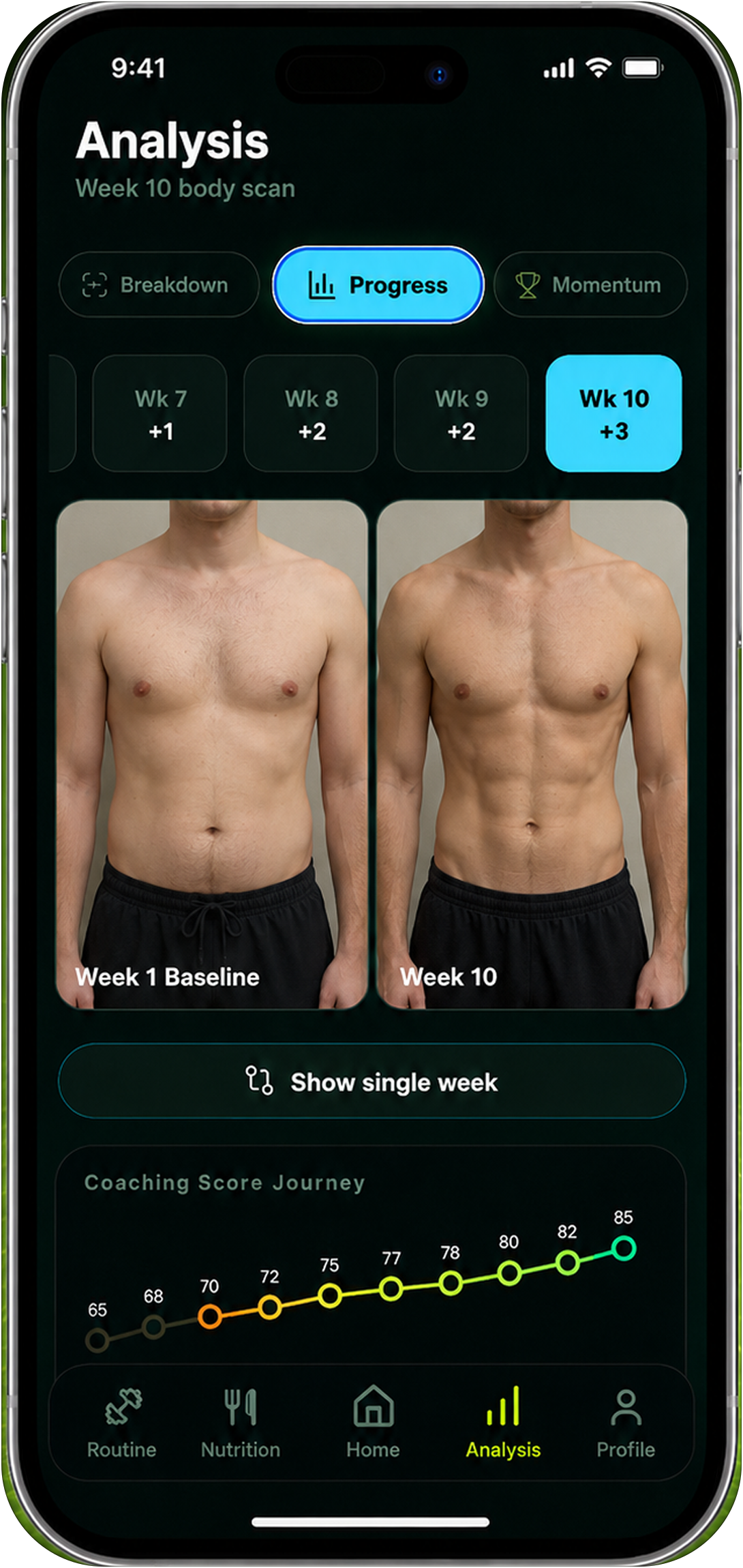
If you want your before-and-after photos to be useful, make the conditions boring and repeatable:
- Use the same location. Keep the background, camera height, and distance similar.
- Use similar lighting. Avoid comparing a bright overhead photo with a dark side-lit photo.
- Keep clothing consistent. Wear similar fitted clothing that lets you see the same areas without exposing more than you want to share.
- Repeat the same angles. Front, side, and back views are more useful than a single dramatic pose.
- Stand naturally first. Add a relaxed or trained pose only if you can repeat it every time.
- Record the date and context. Note unusual travel, illness, a hard workout, a high-sodium meal, or anything else that may change appearance.
Take photos for yourself, not because you owe the internet a transformation story. Store them privately, choose a review cadence, and avoid checking them repeatedly throughout the day. A photo timeline is most useful when it reduces uncertainty instead of increasing body-image pressure.
04Use a four-signal check for possible muscle loss
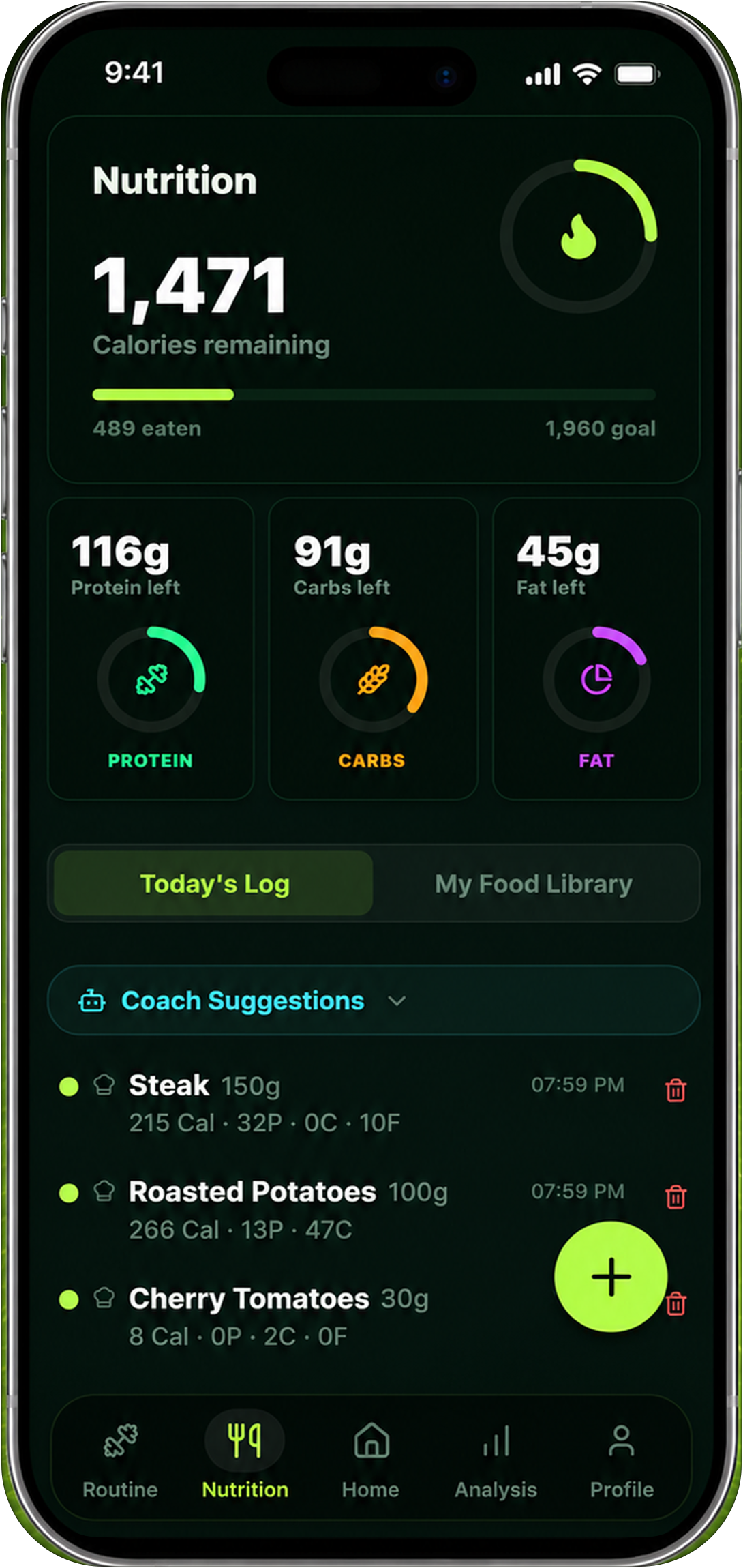
A practical GLP-1 muscle check combines four signals:
- Visual change: repeatable photos and how clothing fits.
- Strength trend: performance on the same exercises under similar conditions.
- Nutrition consistency: whether you are regularly getting enough food and protein for your individual plan.
- Composition context: waist or limb measurements, body weight trend, and an optional professional assessment.
One signal moving does not tell the whole story. For example, a lower workout number after poor sleep may not represent muscle loss. A scale plateau may happen while waist measurements change. A photo may look flatter after a rest day because muscle glycogen and exercise-related fullness are different.
Review the direction across several weeks. For a deeper overview of this approach, read the Reset90 guide to tracking muscle loss on GLP-1s.
05Signs that deserve a closer look
Photos are worth reviewing more carefully when they line up with other changes, such as:
- A repeated decline in strength across familiar movements, not just one difficult session.
- Noticeable drops in training tolerance, recovery, or daily energy.
- Consistently very low food or protein intake because appetite is too limited.
- Weight falling quickly while performance and measurements are also moving in an unwanted direction.
- Persistent nausea, vomiting, pain, dizziness, or difficulty keeping fluids down.
These are reasons to review the situation, not proof of a diagnosis. A qualified clinician can help determine whether symptoms, nutrition, training, medication, or another health issue needs attention. Do not respond by changing your Ozempic dose on your own.
06Can Ozempic muscle loss be reversed?
Some people may regain strength or lean tissue after a period of loss, but the outcome depends on why the change happened, training history, nutrition, health, recovery, and the plan being followed. No article or before-and-after image can promise how quickly that will happen.
The general building blocks are straightforward:
- Use resistance training that matches your current ability and recovery.
- Make protein practical rather than trying to force one enormous meal.
- Eat enough total nutrition for the goal and medical context you have been given.
- Allow rest and adjust training when symptoms or recovery require it.
- Track the trend so you can make one change at a time.
If appetite is the main barrier, the Reset90 Macro Calculator can help you organize a starting nutrition target. It is a planning tool, not a substitute for medical or dietetic guidance.
07Why face changes are especially difficult to interpret
Searches about whether Ozempic causes muscle loss in the face often combine several different visual changes. A thinner face can reflect overall fat loss, fluid changes, lighting, facial expression, skin laxity, or the angle of the photo. It is not a reliable way to measure muscle loss.
Use the same principle as with full-body photos: treat the face as an appearance signal, not a tissue-composition test. If a facial change is sudden, concerning, or accompanied by other symptoms, discuss it with a healthcare professional instead of relying on social-media comparisons.
08Common mistakes with muscle-loss before-and-after photos
- Comparing different conditions: different lighting, distance, posture, clothing, or camera lenses can create a false story.
- Using one photo as evidence: a single image cannot show a trend.
- Confusing weight loss with muscle loss: body weight does not identify which tissue changed.
- Over-trusting a scan: a scan can add context, but it is still a measurement with assumptions and error.
- Reacting to social-media transformations: other people’s photos rarely disclose the conditions, timeline, training, or health context behind them.
- Changing medication without guidance: photo anxiety is not a reason to alter treatment on your own.
A consistent, private record is more useful than a dramatic comparison. Review the evidence at a sensible cadence, make one adjustment when the combined trend supports it, and ask for professional help when symptoms or nutrition become difficult to manage.
09Frequently asked questions about Ozempic muscle loss before and after
Can before-and-after photos show muscle loss?
They can show changes in appearance, but they cannot prove that muscle was lost. Combine photos with strength, measurements, nutrition, recovery, and weight trends.
How often should I take progress photos?
Use a schedule that gives your body time to change and keeps the process manageable. Many people find that every two to four weeks, under similar conditions, is more useful than daily photos.
What are signs I may be losing muscle on Ozempic?
A sustained decline in familiar strength, poor recovery, very low intake, and unwanted measurement changes may deserve a closer review. None of these signs proves muscle loss on its own, so discuss persistent concerns with a qualified professional.
Can Ozempic muscle loss be regained?
Some people can regain strength or lean tissue, but the timeline and outcome vary. Training, nutrition, recovery, health status, and the reason for the change all matter. Do not treat a before-and-after photo as a promise.
Should I stop Ozempic if I am worried about muscle loss?
Do not stop or change a prescribed medication without speaking with your prescriber. Bring your symptoms, food intake, training record, weight trend, and questions to that conversation.
Use before-and-after photos as one piece of evidence, not a verdict. Download Reset90 AI to keep photos, training, nutrition, and check-ins in one 90-day routine, or use the Android download page if that is your platform.
The Reset90 system
Useful ideas for building a body you can keep.
Training notes, product updates, and practical ways to make your next 90 days count.
Start your next 90 days
Get your daily training, nutrition, and check-in priorities in one adaptive system.


Keep reading
Related articles

Ideal Body Measurements for Women
There is no single ideal body measurement set for women. Learn how averages, waist-to-height, body shape and repeatable tracking fit together without chasing a fixed beauty standard.
Read article
Bulk, Cut, or Recomp? A Practical Decision Guide
A practical way to choose a bulk, cut, recomp, or maintenance phase using your goal, training age, recovery, and repeatable progress signals.
Read article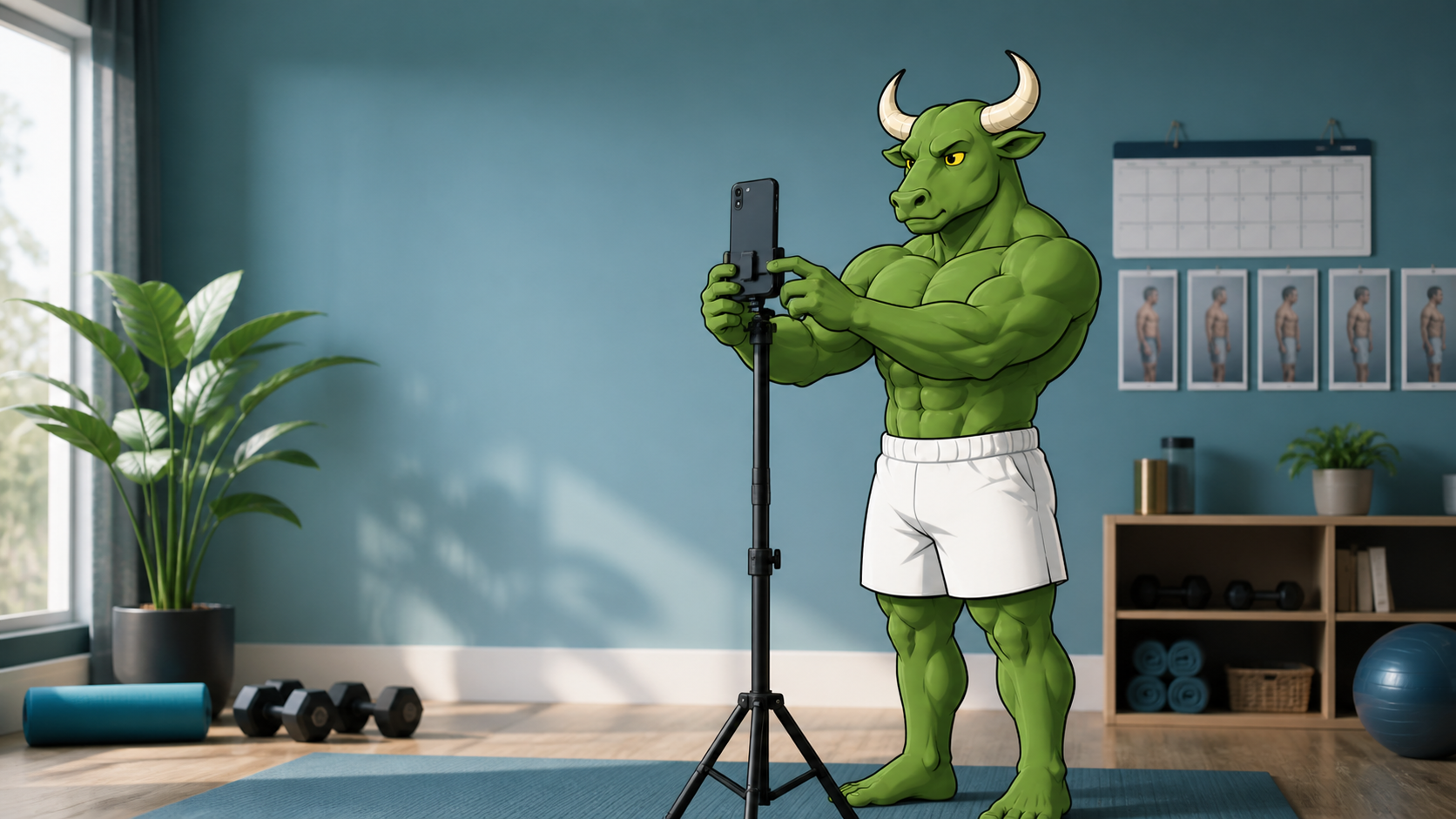
How Often Should You Take Progress Photos?
How often should you take progress photos? Use this goal-based guide to choose weekly, biweekly, or monthly check-ins and make every comparison more consistent.
Read article