
RPE vs. RIR: Which Effort Metric Should You Track?
RPE and RIR describe training effort from different angles. Learn how to choose one metric, estimate it consistently, and use it to guide progression and recovery.
By Reset90 AI Editorial Team
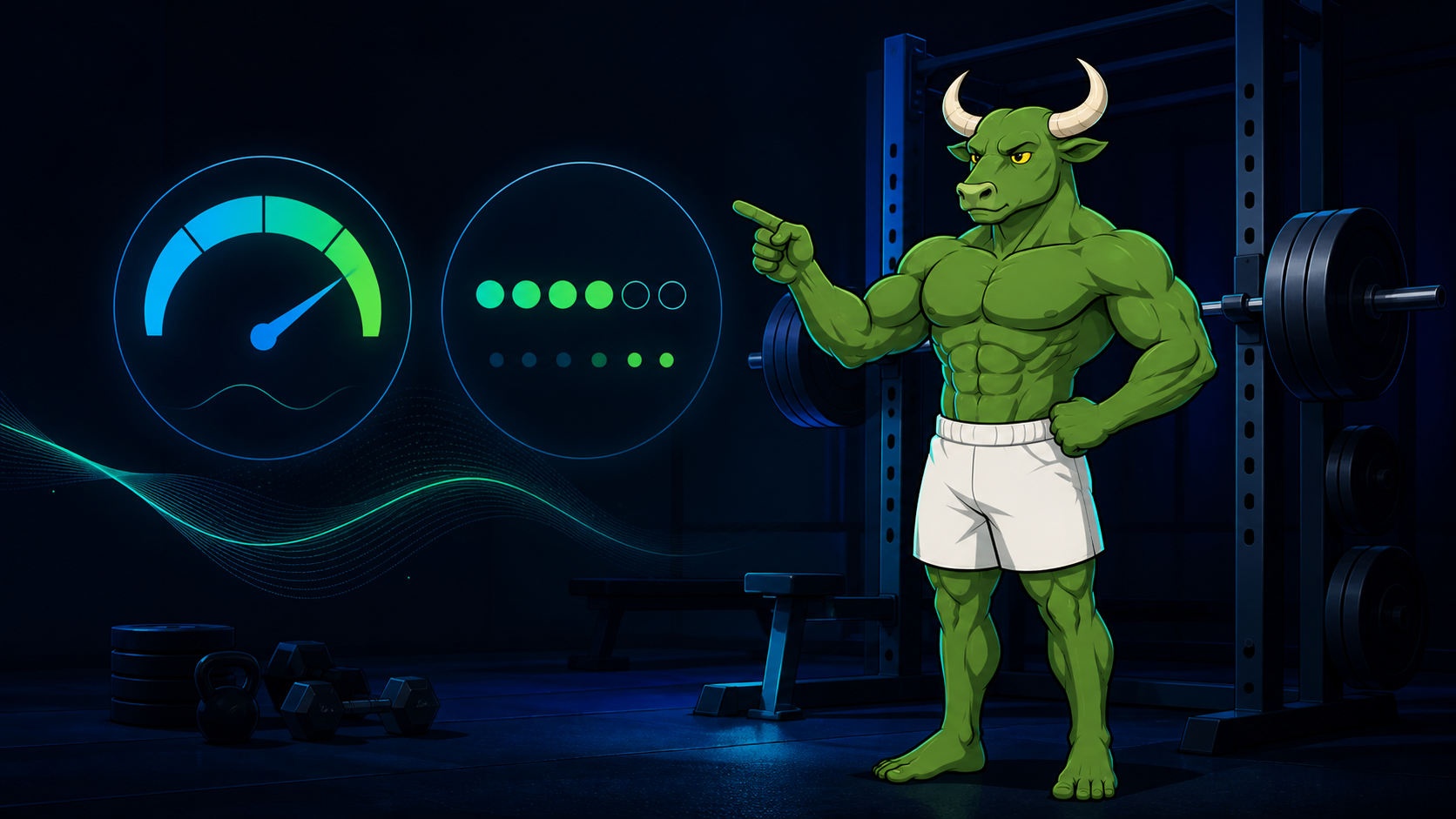
Short answer: RPE asks how hard a set felt on a 1–10 effort scale. RIR asks how many good repetitions you could still have completed. They describe the same moment from different angles: use RPE when a quick overall rating is easiest, use RIR when you want a concrete proximity-to-failure cue, and choose one system you can record consistently.
01RPE and RIR measure the same decision from different angles
Training effort is not only about the weight on the bar. The same load can feel easy after a good night of sleep and difficult after a stressful day. RPE and RIR give you a way to describe that changing effort without pretending that a percentage-based plan can predict every session perfectly.
RPE means rating of perceived exertion. In strength training, it is commonly used as a 1–10 scale where a higher number means the set felt closer to your current limit.
RIR means reps in reserve. It asks a more concrete question: after the set ends, how many technically sound repetitions could you probably have performed before failing?
RPE is a rating. RIR is an estimate of remaining capacity. Neither one is a laboratory measurement, and both become more useful when you apply the same definition from week to week.
02Use a rough bridge, not a rigid conversion
Many lifters use a rough bridge between the two scales:
| Approximate RPE | Approximate RIR | What the set usually feels like |
|---|---|---|
| 10 | 0 | No clearly repeatable rep remains with good technique |
| 9 | 1 | One strong rep may remain |
| 8 | 2 | Two good reps may remain |
| 7 | 3 | Several reps remain; the set is challenging but controlled |
| 6 or below | 4 or more | The set is relatively comfortable or still far from a limit |
This is a coaching shorthand, not a promise that every RPE 8 set contains exactly two reps. A technically limited movement, a high-repetition set, and a new exercise can all make the conversion less precise. Use the bridge to communicate, then use your actual log to calibrate it.
03RPE is useful when you need a fast whole-set rating
RPE works well when you want to record the general difficulty of a set without counting a precise number of possible reps left. It can be especially practical for mixed training, circuits, conditioning, or a session where fatigue varies across movements.
Ask yourself:
- How demanding was the set compared with my current capacity?
- Could I repeat the set with the same quality right now?
- Did technique remain stable, or did the last reps become compensations?
A simple RPE note can make a training log more informative than weight and repetitions alone. If the same exercise moves from RPE 7 to RPE 9 at the same load, that is a reason to review recovery, exercise order, range of motion, or the progression target.
04RIR is useful when you need a concrete proximity cue
RIR is often easier to explain during a set because it points to a specific question: how many more clean reps could I do? That makes it useful for choosing whether to stop, add a little load, or keep the next set at the same difficulty.
RIR can also protect technique. “One rep in reserve” should mean one rep that still meets your movement standard, not one forced half-repetition after form has broken down. Define the rep before you start:
- Use the same range of motion you planned.
- Keep the key positions and tempo within a reasonable standard.
- Stop counting a rep as available if pain, instability, or unsafe technique changes the movement.
The goal is not to prove how close you can get to failure on every set. The goal is to make effort visible enough to guide the next decision.
05Choose RPE or RIR by the decision you need to make
There is no prize for tracking both scales if doing so makes your log slower or less consistent. Choose the language that matches the job:
| Your main need | Better starting point | Why |
|---|---|---|
| Record the overall difficulty of a varied session | RPE | A single rating is fast and works across different exercise types |
| Decide whether another rep is available | RIR | The remaining-reps question is concrete and actionable |
| Autoregulate a structured strength plan | Either, chosen in advance | Consistency matters more than the label |
| Teach a beginner what hard-but-controlled means | RIR with examples | It connects the number to a physical decision |
| Compare effort across different sessions | RPE plus a short note | The note explains unusual fatigue or exercise changes |
If your program already uses one scale, keep that scale unless you have a clear reason to change. Switching terms every week creates more noise than insight.
06Use RIR to guide the next set
A useful effort metric should change what you do next. Before the next set, compare the target with what actually happened.
- Target met: keep the planned load or progress according to the program.
- Closer than planned: reduce load, reduce repetitions, extend rest, or stop the exercise earlier if technique is deteriorating.
- Farther than planned: check setup and range of motion, then add a small amount of load or repetitions only if the movement remains controlled.
- Unclear: keep the next set conservative and record why the estimate was difficult.
For example, if the plan calls for about two RIR and the first set feels like zero RIR, the answer is not automatically to push harder. It may be smarter to adjust the next set so the whole session remains recoverable.
07Use RPE when the session is more than one exercise
RPE is helpful for seeing the session as a whole. A workout can contain several sets that were individually manageable but still create more fatigue than expected because of short rest, high volume, or a demanding exercise order.
At the end of the session, note an overall rating and one sentence of context:
- “Session RPE 7; lower body felt normal, upper-body accessories were unusually slow.”
- “Session RPE 8; planned volume completed, but rest periods were longer than usual.”
- “Session RPE 6; technique was strong and the final set had room left.”
This kind of note helps you distinguish a genuinely productive hard session from a session that was made difficult by poor setup or avoidable friction.
08Calibrate the scale with repeated exercises
Effort estimates improve when you compare them with what happened afterward. Pick a few stable exercises and review three pieces of information together:
- The load, repetitions, and movement standard.
- Your RPE or RIR estimate at the end of the set.
- What happened on the next session with a similar setup.
If an “RIR 2” set repeatedly leads to a performance drop, you may be underestimating effort. If an “RIR 2” set consistently feels easy and performance improves, your estimate may be conservative. The point is not to find a perfect number; it is to make the number useful enough for progression and recovery decisions.
09Do not use effort metrics to ignore pain or poor recovery
RPE and RIR describe training effort. They do not diagnose an injury, measure medical readiness, or tell you to train through pain. A set can feel like RIR 3 while still being a poor choice because the movement causes pain, your technique is unstable, or recovery has been unusually poor.
Use a simple guardrail:
- Normal challenge: complete the planned set and record the effort.
- Unexpected fatigue: reduce the next demand and review sleep, stress, food, and recent volume.
- Pain, dizziness, or persistent symptoms: stop the exercise and seek appropriate professional guidance.
Effort tracking should make training more sustainable, not give a precise-looking reason to override important signals.
10Put one effort metric into your workout log
A log becomes useful when it is quick enough to complete after the final rep. Start with a small set of fields:
| Field | Example | Why it helps |
|---|---|---|
| Exercise | Goblet squat | Identifies the movement and setup |
| Work performed | 3 sets of 10 at 24 kg | Shows the external workload |
| Effort | RIR 2 or RPE 8 | Shows how close the work felt to capacity |
| Quality note | Last two reps slow; depth consistent | Explains the estimate and protects technique |
| Next action | Repeat load next time | Turns the log into a progression decision |
For a quick comparison of logging workflows, see the workout tracker apps guide. The best system is the one that lets you capture the effort signal without turning every set into a spreadsheet.
11Apply the metric across a training block
Effort metrics are most helpful when they sit inside a larger progression plan. A single RPE 9 does not tell you whether the block is working. Review the pattern across several weeks:
- Are similar loads producing a lower effort over time?
- Are you reaching the target effort with more repetitions or better technique?
- Are the final sets becoming much harder than the first sets?
- Does planned progression leave enough recovery for the next session?
If effort rises across several sessions while performance stalls, hold or reduce the progression rather than forcing the calendar. If effort falls while the work remains technically sound, a small progression may be reasonable. Your 90-day exercise programs comparison can help you think about progression as a framework rather than a fixed promise.
12RPE vs. RIR: the practical choice
Choose RPE if you want a fast summary of how demanding the set or session felt. Choose RIR if you want to ask how many technically sound repetitions remain. If a coach, program, or app already uses one language, match it and learn its definitions before changing systems.
For most people, the reliable choice is not the more sophisticated scale. It is the scale they can apply honestly, record quickly, and use to make the next training decision. Start with one metric for four weeks, review the pattern, and change only when the current signal is not helping you train with better progression or recovery.
13Frequently asked questions
Is RPE the same as RIR?
They are related but not identical. RPE is a perceived-effort rating, while RIR estimates the number of good repetitions left. They often point in the same direction, but the relationship is approximate.
Is RPE 8 always exactly two RIR?
No. The common RPE-to-RIR bridge is a useful shorthand, not a precise conversion. Exercise type, repetition range, technique, fatigue, and experience can change the estimate.
Should beginners use RPE or RIR?
Either can work. RIR can be intuitive when a coach gives clear examples of what a technically sound rep means. RPE can be simpler when the session contains different movements. Choose the explanation the beginner can apply consistently.
Should every set be taken to RPE 10?
No. Training close to failure is only one option and may not fit every exercise, goal, or recovery level. Use the target effort for the plan, and stop if technique or safety changes.
Can an app calculate my true RIR?
An app can help you record and review your estimate, but it cannot know your exact remaining capacity from a number alone. Treat RIR as a decision aid that becomes more useful through repeated, consistent logging.
14Make effort visible, then keep training
RPE and RIR are two practical languages for the same training question: how hard was that set, and what should happen next? Use the one that makes your next decision clearer, keep the definition stable, and review the pattern across the whole block.
Good training data does not need to be complicated. A load, a rep count, one effort metric, and a short quality note can be enough to turn a workout into feedback.
The Reset90 system
Useful ideas for building a body you can keep.
Training notes, product updates, and practical ways to make your next 90 days count.
Start your next 90 days
Get your daily training, nutrition, and check-in priorities in one adaptive system.


Keep reading
Related articles

Ideal Body Measurements for Women
There is no single ideal body measurement set for women. Learn how averages, waist-to-height, body shape and repeatable tracking fit together without chasing a fixed beauty standard.
Read article
Bulk, Cut, or Recomp? A Practical Decision Guide
A practical way to choose a bulk, cut, recomp, or maintenance phase using your goal, training age, recovery, and repeatable progress signals.
Read article
How Often Should You Take Progress Photos?
How often should you take progress photos? Use this goal-based guide to choose weekly, biweekly, or monthly check-ins and make every comparison more consistent.
Read article