

90-Day Exercise Programs Compared: Strength, Fat Loss, and Adaptive Options
Compare 90-day exercise program types by goal, progression, recovery, and flexibility so you can choose the right framework before building your weekly schedule.
By Reset90 AI Editorial Team
Short answer: The best 90-day exercise program depends on the result you want and the amount of training your real life can support. Strength and hypertrophy programs prioritize progressive resistance, fat-loss programs combine training with a sustainable energy strategy, beginner programs make consistency the first win, and adaptive programs change the route when your schedule changes. Choose the framework first, then choose the weekly schedule you can repeat.
0190-day exercise program examples at a glance
If you are looking for a 90-day exercise program, start with the outcome, the weekly shape, the constraints, and the smallest version you can repeat. These examples are planning frameworks, not a prescription for every person.
| Primary goal | Typical weekly shape | Equipment | 90-day progression | Minimum viable week |
|---|---|---|---|---|
| Strength and muscle | 3–4 resistance sessions | Weights, machines, or a planned bodyweight progression | Add reps or load gradually, then review fatigue | 2 full-body resistance sessions |
| Fat loss and recomposition | 2–4 strength sessions plus easy conditioning | Flexible; home or gym options are useful | Keep training repeatable while reviewing energy and body trends | 2 strength sessions plus regular walking |
| Beginner or restart | 2–3 full-body sessions | Bodyweight or minimal equipment | Repeat movement patterns before adding complexity | 2 short, manageable sessions |
| Conditioning and general fitness | 3–5 mixed strength, cardio, and recovery sessions | Depends on the activity; substitutions should be clear | Increase time or work gradually while protecting easy days | 2 focused sessions plus a walk |
| Changing schedule | 2–4 weekly priorities with flexible daily options | Home, gym, travel, or mixed equipment | Keep the goal stable while changing the route | 2 priority sessions or 3 short blocks |
The right row is the one you can repeat for 90 days. A more demanding plan is not better if missed sessions make its progression impossible to read.
02What should you compare before choosing a 90-day program?
| Decision field | What to check | Why it matters |
|---|---|---|
| Goal | Strength, muscle, fat loss, conditioning, general fitness, or restarting | A program cannot be judged without knowing what it is supposed to improve. |
| Weekly frequency | How many training days and how many genuine recovery windows | The schedule must fit your calendar and leave enough recovery to repeat it. |
| Session length | Typical duration and whether a shorter version exists | A 60-minute plan is not a realistic two-day fallback if every session requires 60 minutes. |
| Equipment | Bodyweight, bands, dumbbells, machines, gym, or mixed settings | Equipment changes can turn a good plan into a missed session unless substitutions are clear. |
| Progression | What changes: load, reps, volume, time, skill, or consistency | Progression is what makes a program different from a list of unrelated workouts. |
| Minimum week | What you do during travel, stress, illness recovery, or a busy week | A fallback keeps one interruption from erasing the whole 90-day experiment. |
| Review signal | Performance, body trends, adherence, energy, recovery, or photos | One scale reading or one before-and-after photo cannot explain every result. |
Use this table to compare a free daily program, a detailed gym schedule, a body-composition blueprint, or an adaptive plan on the same terms. “More workouts” is not a useful quality score by itself.
A 90-day exercise program is long enough to build a routine and review a meaningful trend, but short enough to give the goal a clear finish line. It is not a promise that every body will change at the same speed. It is a container for making the same useful decisions long enough to learn what works.
This guide compares program types, not individual apps. If you want to compare the software that can support a 90-day block, see 90-day fitness apps compared. If you already know your program type and need a calendar, see the 90-day workout schedule templates.
03What makes a 90-day exercise program different?
A random collection of workouts gives you sessions. A program gives those sessions a relationship. It answers four questions:
- What is the goal? Strength, muscle gain, fat loss, conditioning, general fitness, or a return to training.
- What is the progression? What changes across the block: load, reps, volume, time, skill, or consistency?
- What is the minimum? What can you still do during a busy, stressful, or travel week?
- What is the review signal? Which combination of performance, body measurements, energy, and adherence tells you whether to continue or adjust?
The number 90 is useful because it gives you enough runway to see patterns without turning the plan into an indefinite promise. The program should still be divided into smaller review points so you can make decisions before day 90.
0490-day exercise programs compared
| Program type | Best for | Typical workload | Equipment fit | Main risk |
|---|---|---|---|---|
| Strength and hypertrophy | Building strength or muscle | 3–4 resistance sessions with planned progression | Weights, machines, or a deliberate bodyweight progression | Adding too much volume too quickly |
| Fat loss and recomposition | Reducing body fat while preserving performance | 2–4 strength sessions plus sustainable conditioning | Home or gym, as long as the plan supports substitutions | Turning every session into punishment |
| Beginner consistency | People starting or restarting training | 2–3 short full-body sessions | Bodyweight or minimal equipment | Choosing an advanced plan that cannot be repeated |
| Conditioning and fitness | Improving work capacity or general athleticism | Cardio, intervals, strength, and recovery in balance | Activity-specific, with clear easy-day alternatives | Ignoring recovery because every session feels productive |
| Adaptive reset | People with changing schedules or inconsistent weeks | 2–4 weekly priorities with flexible daily options | Mixed settings and equipment substitutions | Changing so often that progression becomes invisible |
05Option one: strength and hypertrophy programs
Choose a strength or hypertrophy program when the clearest outcome is lifting more, building muscle, or improving a small set of key movements. The program should repeat important patterns often enough for you to practice them and track progress.
A 90-day block usually works best when it starts with manageable training, builds gradually, and includes a lighter period or review when fatigue accumulates. The exact split can be full body, upper/lower, or another structure; the important part is that the plan explains what progression means.
Track more than personal records. Useful signals include completed sessions, working sets, technique quality, recovery, and measurements taken under similar conditions. A heavier lift is useful evidence, but it is not the only definition of progress.
Choose this type if: you enjoy resistance training, have reasonably stable access to equipment, and want progression in strength or muscle to be the main decision.
06Option two: fat-loss and recomposition programs
A fat-loss or recomposition program combines resistance training with an energy strategy and enough recovery to keep the plan sustainable. The training should help you preserve or build useful strength; it should not simply maximize exhaustion.
Use a moderate, repeatable approach. Keep the main strength movements visible, add conditioning that fits your recovery, and review body-weight averages rather than reacting to one day. Nutrition and sleep are part of the program even when the page is labeled “exercise.”
The most common mistake is treating every workout as a calorie-burning test. That can make adherence worse and can hide whether your strength is stable. A better 90-day block gives you a small number of priorities and a fallback for lower-energy days.
Choose this type if: reducing body fat is the main goal and you are willing to measure training, food, recovery, and body trends together.
07Option three: beginner and consistency programs
A beginner program is not an advanced program with fewer exercises. It is a program that makes the first few weeks repeatable. The initial win is showing up, learning the movements, and leaving enough energy to return.
Full-body sessions two or three days per week are often easier to organize than a complex split. Start with a small menu of movement patterns, use conservative difficulty, and build a habit of recording what you did. As the routine becomes normal, progression can become more specific.
Design the minimum version before you need it. A short session, a walk, or a mobility block can keep the identity of the habit alive during a difficult week. That is not the same as pretending a short session equals a full session; it is a way to avoid turning one disruption into a complete restart.
Choose this type if: you are new to structured exercise, returning after a long break, or repeatedly starting plans that are too demanding to maintain.
08Option four: conditioning and general fitness programs
Conditioning programs are useful when the goal is to move better, improve stamina, prepare for a sport, or feel more capable in daily life. They usually combine strength, steady cardio, intervals, mobility, and recovery rather than making one lift the only scoreboard.
A good 90-day conditioning block has a reason for each hard session. Easy work should stay easy enough to support the next priority. If every day is high intensity, the program may feel ambitious while producing inconsistent training and poor recovery.
Measure the task you actually care about: pace, distance, heart-rate response, repeatability, movement quality, or how quickly you recover between efforts. Keep one or two strength markers so improved conditioning does not come at the expense of basic strength.
Choose this type if: your primary result is better work capacity or general athleticism rather than a single body-composition or strength target.
09Option five: adaptive 90-day reset programs
An adaptive program keeps the goal and progression logic stable while changing the daily route. That is valuable when work, travel, family, equipment, or energy changes often enough to make a fixed calendar fail.
Adaptive does not mean random. A useful system still knows the priorities for the week, the minimum effective action, and what should happen after a missed session. It might shorten a workout, move it, substitute equipment, or protect recovery while keeping the larger block intact.
The main risk is changing too much. If every session is completely different, you lose the repeated signal needed to know whether you are improving. An adaptive program should flex around the priorities, not erase them.
Choose this type if: your schedule is unpredictable but you still want a 90-day direction instead of a series of disconnected workouts.
10What should you do after missing a week?
A 90-day program is only useful if it tells you what to do when real life interrupts. Do not automatically double the next workout or restart the entire block. Use the simplest safe fallback that preserves the goal:
| What changed? | Next action | What to avoid |
|---|---|---|
| One missed session | Move the session or use the shorter version; keep the next priority visible. | Trying to “make up” all missed work in one day. |
| Three to seven missed days | Repeat the last manageable week, reduce one variable, and reassess recovery. | Assuming old capacity is unchanged. |
| Travel or equipment change | Use the same movement priorities with a bodyweight, band, walking, or short-session substitute. | Skipping the week because the original equipment is unavailable. |
| Pain, illness, or medical restriction | Follow qualified professional guidance before returning; organize only activity that has been approved. | Letting an app decide whether you are medically ready. |
The minimum week is not a second-rate version of success. It is a decision rule that keeps one difficult week from destroying the information your 90-day block is meant to produce.
11How do you measure progress at days 0, 30, 60, and 90?
Choose a small set of signals before you begin. A useful review combines adherence with performance, body trends, energy, and recovery rather than relying on a single before-and-after metric.
| Review point | Ask | Useful evidence |
|---|---|---|
| Day 0 | What is the goal and what can I repeat now? | Starting exercises, schedule, equipment, baseline photos or measurements if useful, and a realistic minimum week. |
| Day 30 | Can I execute the plan without excessive friction? | Completed sessions, technique, energy, recovery, and whether the weekly shape fits real life. |
| Day 60 | Is the planned progression visible? | Reps, load, time, pace, measurements, body-weight trend, or adherence trend under comparable conditions. |
| Day 90 | What should continue, change, or stop? | Goal-specific performance, body trend, recovery, consistency, and a written next-block decision. |
There is no guaranteed amount of weight, muscle, or visual change after 90 days. The right result depends on the starting point, training, nutrition, recovery, health, and consistency. A 90-day container can make progress easier to review; it cannot guarantee a transformation.
12How do you choose the right program type?
Start with the outcome you would be most disappointed not to improve after 90 days. Then check whether your calendar can support the program’s demands.
| If your priority is | Start with | Ask before committing |
|---|---|---|
| More strength or muscle | Strength and hypertrophy | Can I repeat the main movements and recover from the volume? |
| Lower body fat | Fat loss and recomposition | Can I sustain the nutrition and recovery strategy without extremes? |
| Building the habit | Beginner consistency | Does the minimum version still count as a useful week? |
| Better stamina or athletic capacity | Conditioning and general fitness | Are hard and easy days balanced? |
| A changing schedule | Adaptive reset | Does the system preserve priorities after interruptions? |
Do not choose a program because it has the most sessions or the most advanced exercise names. Choose the one whose constraints match your current life. The right program should make the next decision clearer, not make you feel behind before week one begins.
13How should a 90-day block be organized?
Use three simple phases, but keep the weekly structure recognizable:
- Days 1–30: establish the routine, learn the exercises, and find the realistic minimum.
- Days 31–60: progress one or two variables while keeping recovery visible.
- Days 61–90: confirm the trend, remove what did not help, and prepare the next block.
Review the program weekly, but do not redesign it weekly. A missed session is a reason to use the fallback, not evidence that the entire framework is wrong. A real program needs enough unchanged structure for its results to become legible.
14Fixed program or adaptive plan?
Choose a fixed program when your schedule, equipment, and recovery are stable and you benefit from clear instructions. Choose an adaptive plan when the goal can stay stable but the available time, equipment, or energy changes often.
You can also combine them: keep a fixed set of weekly priorities and use adaptive versions of the sessions. The 90-day workout plan for busy people explains the broader framework, while the adaptive workout plan guide focuses on changing the route without losing the goal.
15How Reset90 fits into a 90-day program
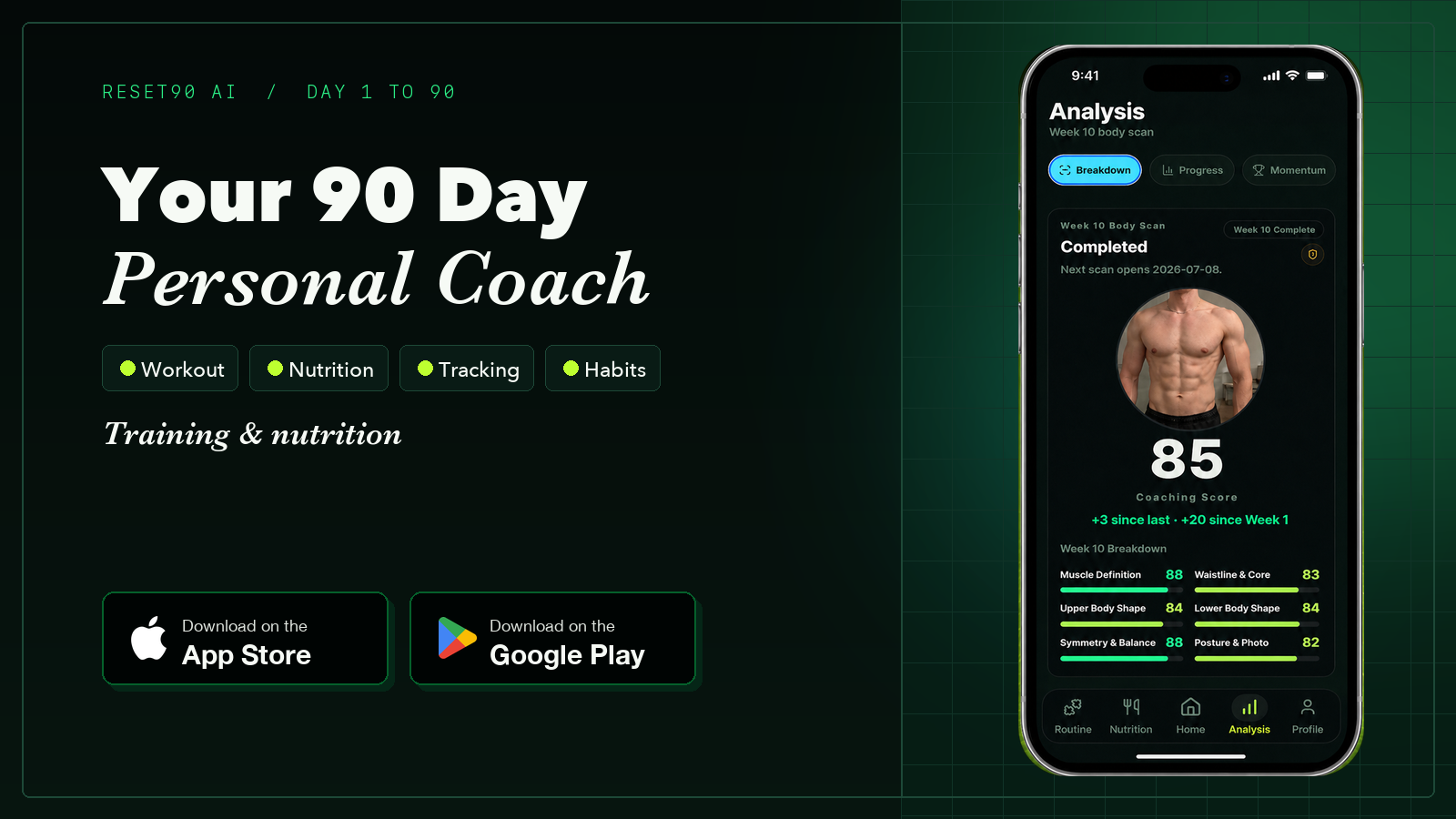
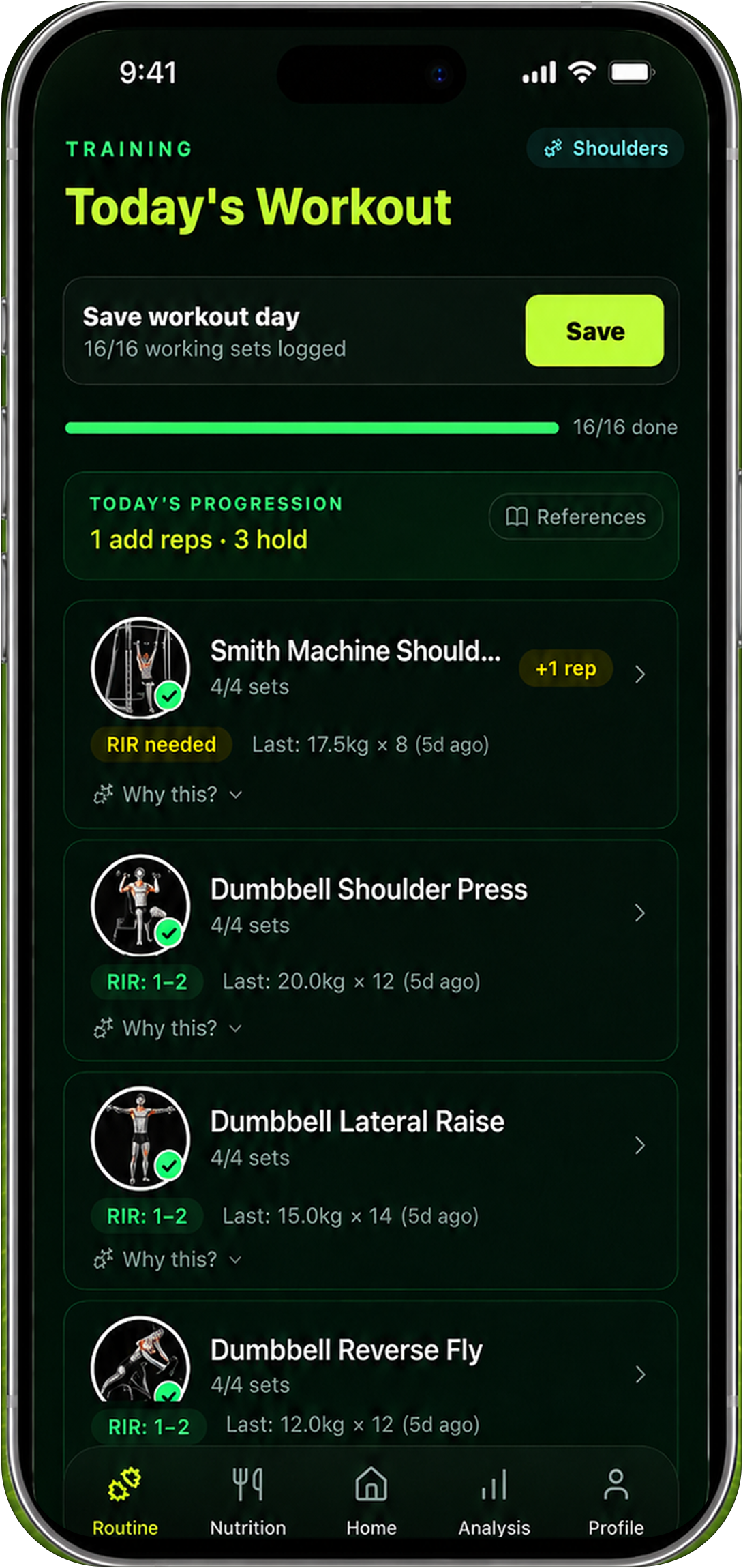
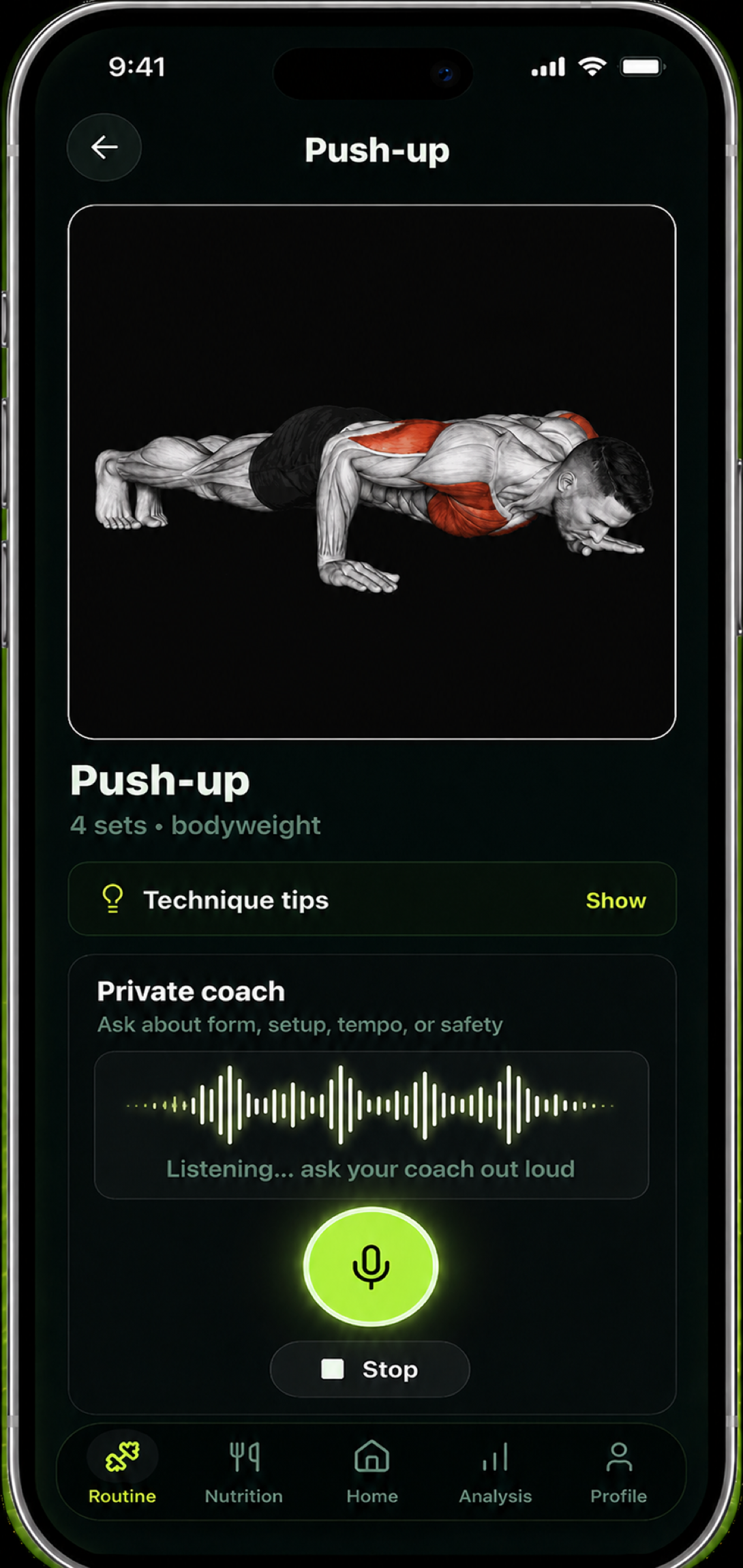
Reset90 AI uses the 90-day block as a way to connect training, nutrition, recovery, and weekly review. The value is not simply having another list of exercises. It is having a larger direction and a next action that can respond to real life.
It is a good fit for someone who wants help turning available time, equipment, and consistency into a next training action, then reviewing what happened before the next week. It is not a medical clearance, diagnosis, or guarantee of a body transformation. Use the free Reset90 Plan Fit Check to think through your constraints before choosing a framework.
1690-day exercise program FAQs
What is the best 90-day exercise program?
There is no universal best type. Strength and hypertrophy fits a muscle or strength goal, fat-loss and recomposition fits a body-composition goal, beginner consistency fits a restart, conditioning fits stamina, and adaptive programs fit changing schedules. Your goal and constraints should decide.
Can I transform my body in 90 days?
You can make meaningful progress in 90 days, especially when you begin with a realistic plan and repeat it. The amount and type of change varies with your starting point, training, nutrition, recovery, health, and consistency. Treat 90 days as a reviewable training block, not a promise of a fixed appearance.
Can a 90-day program work if I only train two days per week?
Yes, a two-day program can be a useful starting point when it covers the major movement patterns and you can repeat it. Frequency is only helpful when the schedule is sustainable and the sessions are recoverable.
Should I use a 90-day program to lose weight?
A 90-day block can help you organize training and review trends, but weight change also depends on nutrition, sleep, stress, and individual health factors. Use sustainable habits and seek professional guidance for individualized medical or dietary advice. No program can responsibly promise that everyone will lose a specific number of pounds.
How often should I change a 90-day exercise program?
Review it weekly, but make major changes only when the evidence says the framework is not working, your goal changed, or the program no longer fits your life. Keeping useful structure stable makes progress easier to interpret.
Are 90-day exercise programs better than workout apps?
They are different layers. A program describes the training logic; an app can deliver, track, compare, or adapt that logic. A good app should make the program easier to follow and review rather than substitute random workouts for a coherent goal.
17Final takeaway: choose the framework before the calendar
Compare 90-day exercise programs by their goal, progression, minimum version, equipment, weekly workload, and review signals. Pick the framework that matches your current life, then choose a weekly schedule that you can actually repeat.
The best 90-day program is not the most demanding one. It is the one that creates enough useful repetition for you to learn what to do next.
General educational information only. If you have an injury, medical condition, or unusual symptoms, seek advice from a qualified professional.
The Reset90 system
Useful ideas for building a body you can keep.
Training notes, product updates, and practical ways to make your next 90 days count.
Start your next 90 days
Get your daily training, nutrition, and check-in priorities in one adaptive system.


Keep reading
Related articles

Ideal Body Measurements for Women
There is no single ideal body measurement set for women. Learn how averages, waist-to-height, body shape and repeatable tracking fit together without chasing a fixed beauty standard.
Read article
Bulk, Cut, or Recomp? A Practical Decision Guide
A practical way to choose a bulk, cut, recomp, or maintenance phase using your goal, training age, recovery, and repeatable progress signals.
Read article
How Often Should You Take Progress Photos?
How often should you take progress photos? Use this goal-based guide to choose weekly, biweekly, or monthly check-ins and make every comparison more consistent.
Read article