

Best Workout Accountability Apps: Social, Coaching, and Habit Options
Compare workout accountability apps by the mechanism that keeps you consistent: social check-ins, coaching, commitment, gamification, or structured planning.
By Reset90 AI Editorial Team
Short answer: The best workout accountability app depends on why you miss sessions. Choose a social app if visibility to friends helps, a coaching app if you need feedback, a commitment-based app if consequences motivate you, a gamified app if progress points keep you engaged, or a structured planning app if the real problem is not knowing what to do next.
01What a workout accountability app actually does
A workout accountability app gives your intention somewhere to go after you make it. Instead of “I should exercise more” floating around in your head, the app creates a visible plan, a check-in, a reminder, a record, or a person who can see whether you followed through.
That distinction matters because inconsistency usually has a specific cause. You may want to train but forget the appointment. You may start a program but lose momentum after a missed workout. You may know the exercises but avoid deciding what to do. Or you may be more likely to show up when another person expects an update.
An accountability app is useful when its mechanism matches that bottleneck. More notifications are not automatically more accountability. The right question is: What happens in this app when I plan a workout, complete it, miss it, or need to adjust it?
02How the main types of accountability apps differ
“Accountability app” is a broad category. These are the main mechanisms you will find when comparing options.
| Accountability type | How it works | Best fit | Common weakness |
|---|---|---|---|
| Social accountability | Friends, groups, feeds, shared logs, or challenges make activity visible. | You enjoy encouragement or friendly competition. | A noisy community can become distracting or stressful. |
| Human coaching | A coach or trainer reviews progress, answers questions, or follows up. | You need feedback and an external check-in. | It can cost more and depends on coach quality and availability. |
| Commitment devices | A pledge, deadline, fee, or consequence raises the cost of skipping. | You respond to a clear external stake. | Pressure can backfire after illness, travel, or a difficult week. |
| Gamification | Streaks, points, levels, badges, and progress loops make repetition rewarding. | You like visible momentum and small wins. | A broken streak can make one missed workout feel like failure. |
| Structured planning | The app tells you what to do, when to do it, and how to adjust the plan. | Decision fatigue is the main reason you skip. | A rigid plan may not fit changing energy or schedule. |
The strongest systems often combine two or more mechanisms. A plan can tell you what to do, a check-in can make completion visible, and a progress view can show why the next session is worth doing. The combination should still feel easy enough to use on a busy day.
03How to compare workout accountability apps
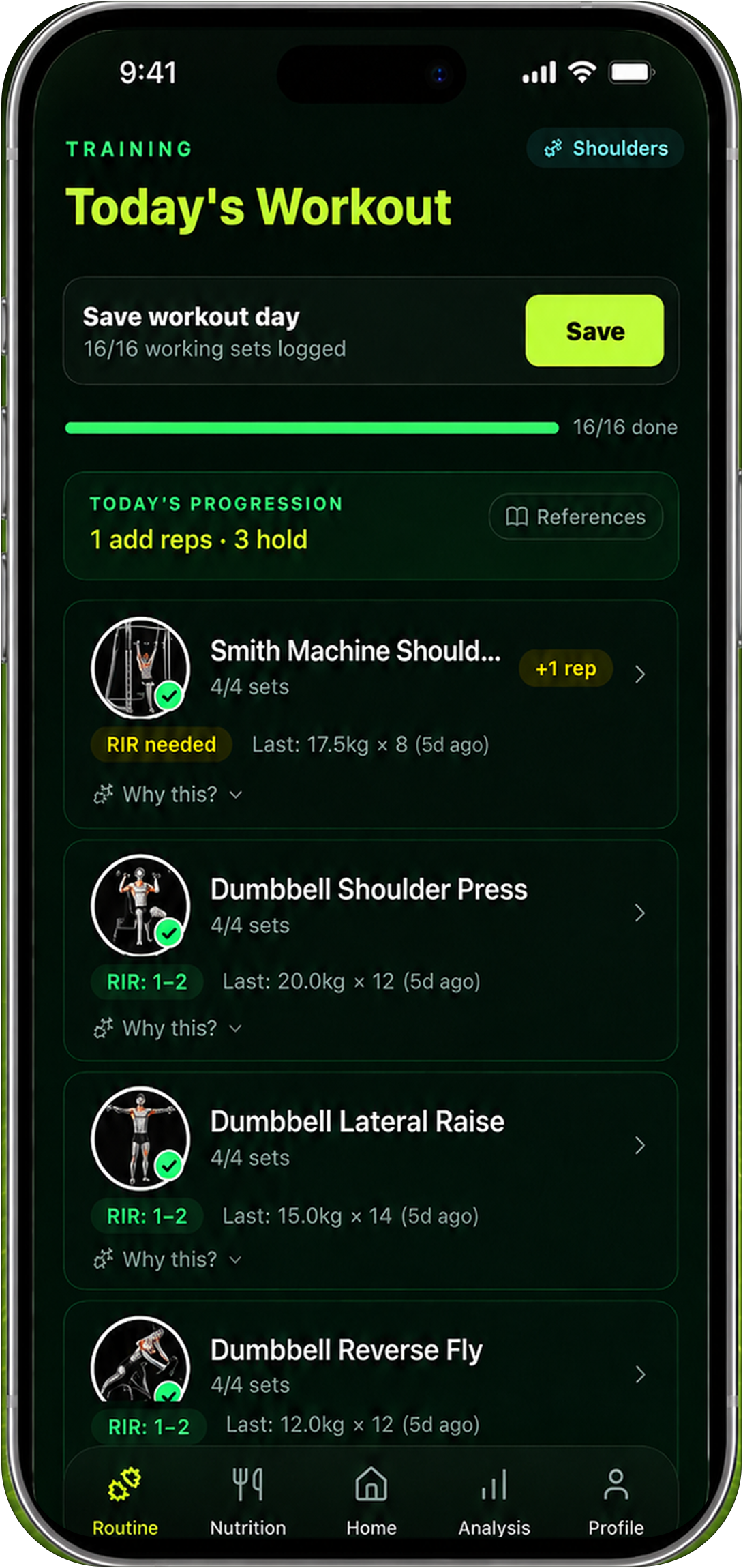
Use these questions before choosing an app. They reveal whether the product creates real accountability or simply sends another reminder.
- What is the accountability mechanism? Is it a friend, coach, group, commitment, streak, scheduled plan, or some combination?
- What happens after a missed workout? Does the app help you reschedule, reduce the session, explain the gap, or only mark the streak as broken?
- How much effort does a check-in require? A five-second completion tap is easier to repeat than a long daily form.
- Can you see meaningful progress? Look for completed sessions, plan consistency, strength or performance trends, and other measures that fit your goal.
- Can the plan adapt? A useful app should have a way to respond to time constraints, missed sessions, changing equipment, or lower readiness.
- Can you control privacy and pressure? You should be able to choose what friends see, mute noisy notifications, and opt out of comparison when needed.
- Does it fit your device and routine? Check platform support, wearable connections, notification behavior, and whether logging works where you actually train.
These questions are more useful than a simple “best app” ranking because the best accountability system is personal. A serious lifter, a beginner restarting exercise, and a runner training with friends may need completely different feedback loops.
04Which accountability app fits each consistency problem
Start with the failure pattern you want to change.
You forget to train
Choose an app with scheduled sessions, calendar visibility, and reminders that arrive at a useful time. The reminder should be connected to a specific workout, not a vague instruction to “be active.” If your schedule changes often, look for easy rescheduling rather than a rigid calendar.
You start strong and fade after a week
Choose a system with visible momentum, short-term milestones, and a plan that starts at a manageable level. A 90-day structure can help because it gives the next session context without requiring you to invent a new goal every morning. Avoid systems that make the first week so difficult that the only possible outcome is burnout.
You do not know what to do at the gym
Choose structured programming, exercise guidance, and a way to record the session. A friend can encourage you, but encouragement does not solve decision fatigue if you still have to build the workout from scratch. The best fit gives you a clear next action and enough flexibility to adjust it.
You need someone to notice whether you showed up
Choose a social or coaching model with real check-ins. A public feed can help some people, while a private buddy message or coach review works better for others. Test whether the interaction leads to useful support or merely creates pressure to perform for an audience.
You skip when a workout feels too hard
Choose an app that can scale the session. The accountability loop should not force an all-or-nothing choice between completing the full plan and doing nothing. A shorter session, lower volume, or easier variation can preserve the habit while respecting the day you are having.
05What to test during a seven-day trial
Do not judge an accountability app only by its onboarding screen. Use it for one ordinary week, including at least one busy day.
- Schedule three realistic sessions. Put them at times you can actually protect.
- Complete one full session. Notice how quickly you can understand and record the work.
- Shorten or move one session. This tests whether the app supports real life instead of an ideal week.
- Intentionally miss one planned session if needed. Observe whether the recovery path is constructive or punitive.
- Review the progress screen. Can you tell what you did, what is next, and whether you are building a repeatable routine?
At the end of the week, ask yourself three questions: Did the app make starting easier? Did it reduce decisions? Did it help me return after friction? If the answer is no, more features will probably not solve the underlying problem.
06Why streaks alone do not create consistency
Streaks are useful because they make repetition visible. They can also become fragile. If one missed day erases the meaning of the previous ten, the system can turn a normal interruption into a reason to quit.
A better accountability loop treats consistency as a return skill. It records completed work, shows the next step, and helps you restart after travel, illness, overtime, or a difficult week. You can still use a streak, but pair it with a rolling completion rate, a weekly target, or a “return” milestone.
Progress should also mean more than checking a box. Depending on the goal, it may include better technique, more controlled reps, improved range of motion, higher training tolerance, better nutrition consistency, or simply completing the planned week. The app should help you see the behavior that supports the result.
07How Reset90 fits into the accountability stack
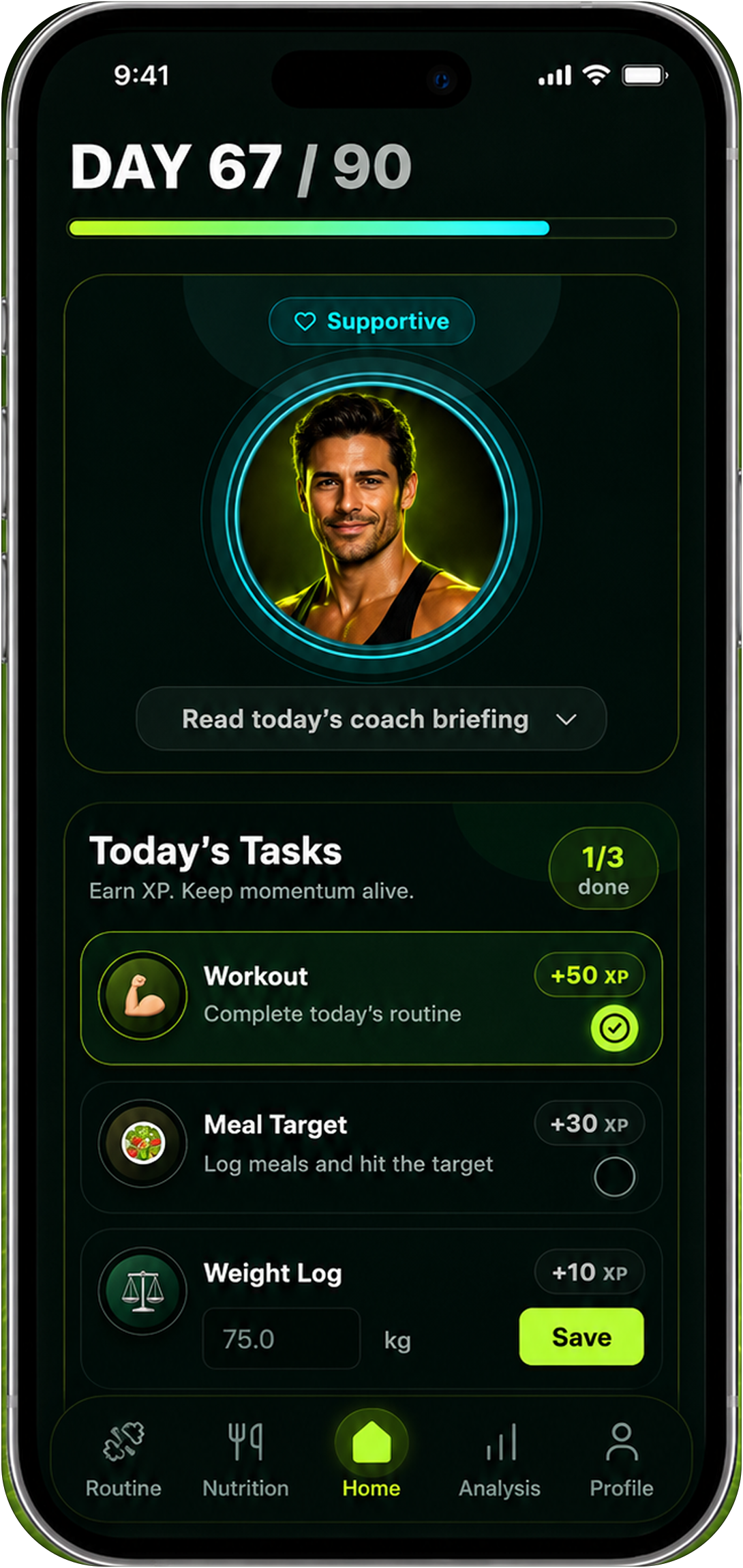
Reset90 is built for the planning problem behind many consistency failures: you want to improve, but the next action is not always obvious. Its 90-day structure connects workouts, nutrition, progress check-ins, and momentum into one routine so each completed session has context.
That makes Reset90 different from a pure social feed. It is not designed to replace a coach, a training partner, or medical care. It is designed to help you keep a plan visible, make progress easier to review, and return to the routine when a perfect week is not possible.
If your main problem is broad fitness consistency, start with our guide to fitness apps for staying consistent. If you want a structured plan and daily progress context, explore Reset90 or use the Android download page to get started.
08How to use an accountability app without creating pressure
Accountability should increase the chance that you train, not make exercise feel like a public exam. Set a minimum version of the habit: a short walk, a warm-up, one main movement, or a reduced session. The minimum keeps the return path open while the full plan remains available when you have the time and energy.
Choose private defaults if public comparison makes you avoid the app. Ask friends for encouragement rather than constant performance updates. Mute notifications that arrive at the wrong time. And if an app repeatedly increases guilt, anxiety, or unsafe exercise behavior, it is not a good accountability tool for you.
Fitness apps are behavior-support tools, not medical advice. Stop and seek appropriate professional guidance for acute pain, illness symptoms, or concerns about compulsive exercise.
09Frequently asked questions
What is the best workout accountability app?
The best app is the one whose accountability mechanism matches your problem. Choose social accountability for friend visibility, coaching for feedback, commitment tools for external stakes, gamification for momentum, or structured planning for decision fatigue.
Are workout accountability apps worth it?
They can be worth it when they change a specific behavior: scheduling, starting, completing, recording, or returning after a missed workout. Test the app for a normal week and measure whether it makes those actions easier, not whether it has the most features.
How can I stay accountable without a workout partner?
Use a scheduled plan, a daily check-in, a short minimum workout, and a weekly review. A coach, group, or app can provide external structure, but the system should still help you continue when nobody else is available.
Are fitness accountability apps safe?
Most are fitness tools, but safety depends on how you use them. Do not let streaks, rankings, or financial penalties override pain, illness, recovery needs, or professional advice. Choose an app that supports adjustments instead of demanding all-or-nothing effort.
The Reset90 system
Useful ideas for building a body you can keep.
Training notes, product updates, and practical ways to make your next 90 days count.
Start your next 90 days
Get your daily training, nutrition, and check-in priorities in one adaptive system.


Keep reading
Related articles

Ideal Body Measurements for Women
There is no single ideal body measurement set for women. Learn how averages, waist-to-height, body shape and repeatable tracking fit together without chasing a fixed beauty standard.
Read article
Bulk, Cut, or Recomp? A Practical Decision Guide
A practical way to choose a bulk, cut, recomp, or maintenance phase using your goal, training age, recovery, and repeatable progress signals.
Read article
How Often Should You Take Progress Photos?
How often should you take progress photos? Use this goal-based guide to choose weekly, biweekly, or monthly check-ins and make every comparison more consistent.
Read article