
Best Workout Apps to Use With Friends: Shared Challenges, Logs, and Accountability
Find the right workout app to use with friends, from shared logs and group challenges to private check-ins that make consistency easier without unhealthy pressure.
By Reset90 AI Editorial Team
Short answer: The best workout app to use with friends is the one that makes shared activity easy without forcing everyone into the same program. Look for the feature your group will actually use: shared workout logs, group challenges, a friend feed, partner check-ins, or a simple weekly goal.
01What a workout app with friends should let you do
A social workout app is not just a normal tracker with a “share” button. Its value comes from reducing the distance between deciding to train and showing up with another person involved.
Depending on your group, that could mean seeing that a friend completed a session, joining the same challenge, comparing a weekly count, sending a quick encouragement, or logging the same workout from different locations. The best setup gives you connection without requiring identical schedules, equipment, fitness levels, or goals.
Before choosing an app, agree on the behavior you want to support. “We should work out together” is vague. “We each complete three sessions this week and check in by Sunday” is a useful social routine an app can reinforce.
02Types of social workout apps
| Social format | What friends share | Works well for | Watch out for |
|---|---|---|---|
| Shared workout logs | Completed exercises, sets, distance, duration, or weekly totals. | Lifting partners and friends who train separately. | Different goals can make raw numbers misleading. |
| Group challenges | A time-bound target such as sessions, steps, miles, or active days. | Friends who enjoy a clear start, finish, and shared goal. | All-or-nothing scoring can punish travel, illness, or different schedules. |
| Friend feeds | Activity updates, reactions, comments, and encouragement. | People motivated by visibility and low-friction support. | Constant updates can become noise or comparison. |
| Partner check-ins | A simple “done,” “rest day,” or “need a push” message. | Two people who want personal accountability without public ranking. | The system depends on both people responding consistently. |
| Club or community apps | Group events, discussion, shared milestones, and team identity. | Runners, cyclists, clubs, and people who like a larger community. | A large community may not match your actual friends or training plan. |
There is no requirement to choose the most competitive format. A private partner check-in can create more useful consistency than a public leaderboard if your group mainly needs a reason to return after a busy day.
03How to choose a social workout app by workout type
The right feature depends partly on the activity you want to share.
Strength training and lifting
Look for shared exercise logs, set and rep history, notes, and a way to compare progress without pretending that everyone should lift the same weight. A useful lifting app lets each person follow an appropriate plan while still sharing completion or celebrating a new personal best.
Relative progress is usually more helpful than absolute numbers. One person may be learning movement technique while another is adding load. The group goal can be showing up, completing planned work, or improving a personal metric rather than winning a single ranking.
Running, cycling, and outdoor training
Route sharing, distance, time, pace, and group events can work well for endurance activities. Check whether the app supports privacy zones, private activities, and different training paces. A social app should let friends encourage one another without making the slower person feel like they are holding the group back.
Walking, steps, and general movement
Step or active-day challenges are easy to understand and can create a low-friction reason to move. Use a target that is challenging but realistic for everyone. If one person has a physically demanding job or a health limitation, a fixed leaderboard may measure circumstances more than effort.
Home workouts and mixed routines
Choose an app that supports different workout lengths and equipment. You may want to complete the same theme—such as a lower-body session or mobility work—without doing the same exact exercises. Shared completion, reactions, and weekly check-ins are often more valuable than synchronized video.
04What to check before inviting friends
Social features only help when the app fits the group’s real setup. Check these details before everyone invests time in a new account.
- Platform compatibility: Can people on different phones or operating systems join the same group?
- Metric compatibility: Does the app support the activities and measurements each person cares about?
- Privacy controls: Can users hide routes, body metrics, location, or individual workouts while still participating?
- Notification controls: Can each person choose how often they receive updates, reminders, and challenge alerts?
- Flexible goals: Can the group use weekly targets instead of a single daily streak?
- Missed-session behavior: Does the app allow a rest day, catch-up, or reset without shaming the person who missed?
- Account exit: Can a member leave or pause the group without losing personal data or creating awkward pressure?
Agree on these rules before the challenge begins. Decide whether the goal is encouragement, competition, or simply making workouts visible. If nobody can explain the group’s purpose in one sentence, the app will not create that purpose for you.
05How to build a one-week friend challenge
A one-week experiment is long enough to test the social loop and short enough to avoid turning a missed day into a major failure.
- Pick one behavior. Choose completed workouts, active days, walks, or check-ins—not every metric at once.
- Set a flexible target. Three workouts or four active days usually gives people room to handle normal life.
- Define the check-in. Use a completion tap, a short message, or a shared log. Keep it under a minute.
- Choose a support rule. For example: encourage first, compare second; no teasing for missed sessions; no posting private metrics without permission.
- Review the week together. Ask what made starting easier, what created pressure, and what should change next week.
The review is the part many groups skip. Without it, the challenge may create a temporary burst of activity but teach you nothing about the routine that could last.
06Why shared accountability can work better than shared workouts
Friends do not need to train at the same time to support one another. Shared accountability is often more practical than shared scheduling because it survives different jobs, locations, equipment, and fitness levels.
One friend might lift before work, another might walk at lunch, and another might train at home in the evening. They can still share the same weekly intention and celebrate completed work. This makes the social layer additive instead of becoming another calendar problem.
It also changes the conversation from “Who trained the hardest?” to “How did we each make room for the habit?” That is a healthier basis for a long-term group routine.
07How to avoid turning the group into a pressure machine
Competition is motivating for some people and counterproductive for others. Build an exit ramp into the challenge from the beginning.
- Use personal goals alongside any group score.
- Celebrate returns after a missed session, not only perfect streaks.
- Allow rest days and substitutions.
- Keep body weight, appearance, and medical information private unless someone chooses to share.
- Do not reward dangerous volume, extreme restriction, or training through injury.
- Mute or pause the group when social updates stop being helpful.
Fitness apps are behavior tools, not medical advice. If exercise causes acute pain or you have symptoms that concern you, stop and seek appropriate professional guidance instead of trying to win the challenge.
08How Reset90 fits into a shared fitness routine
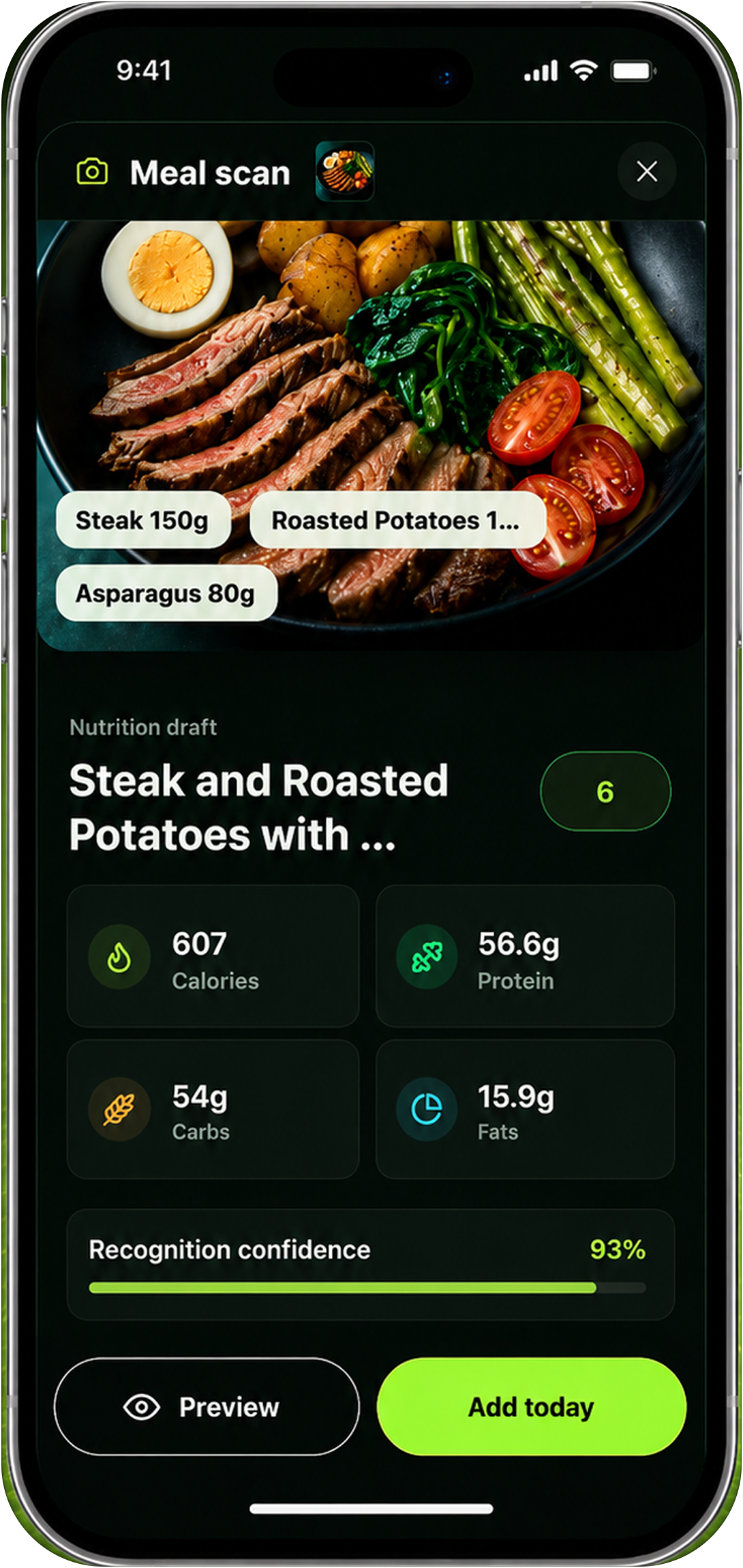
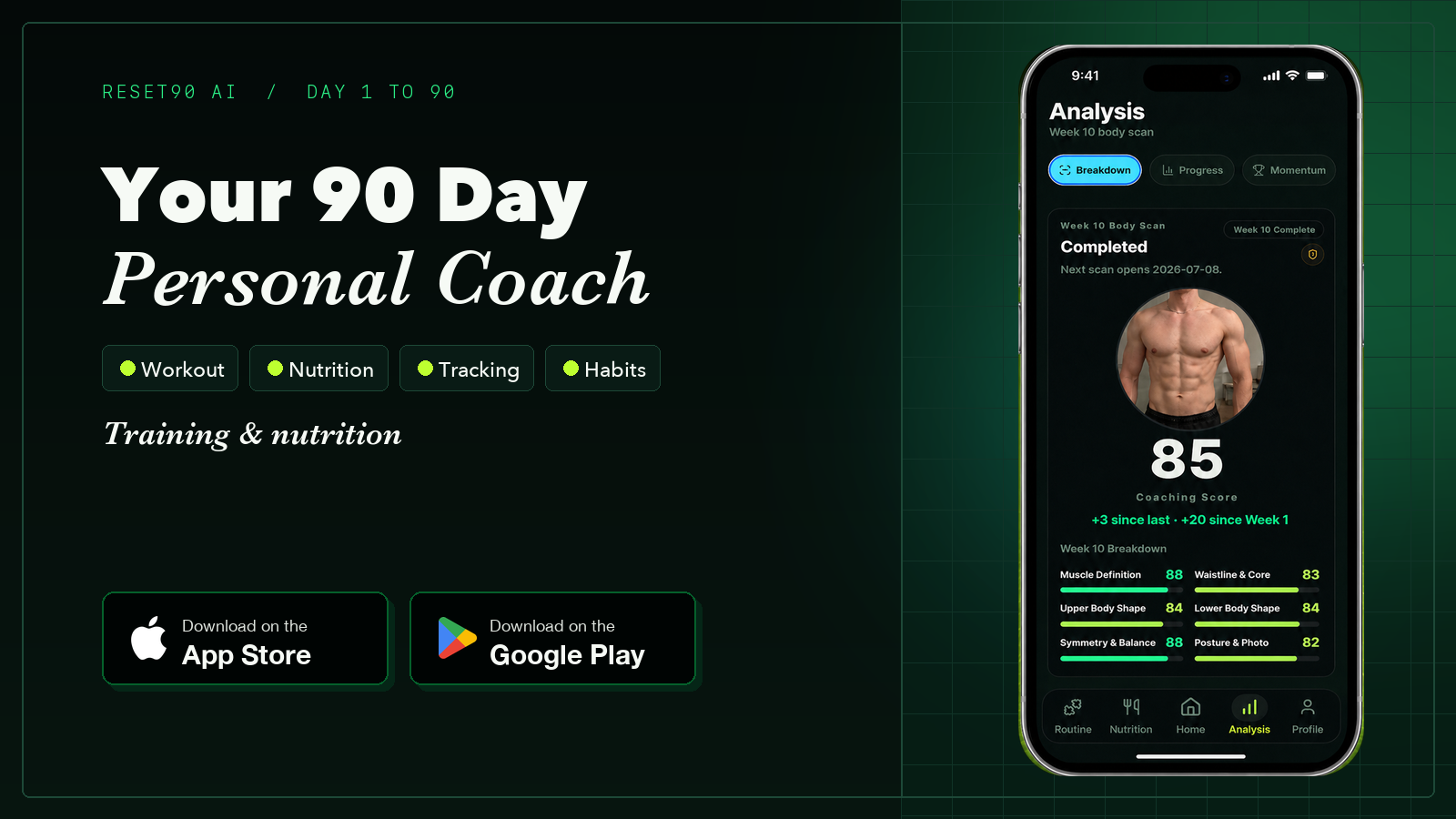
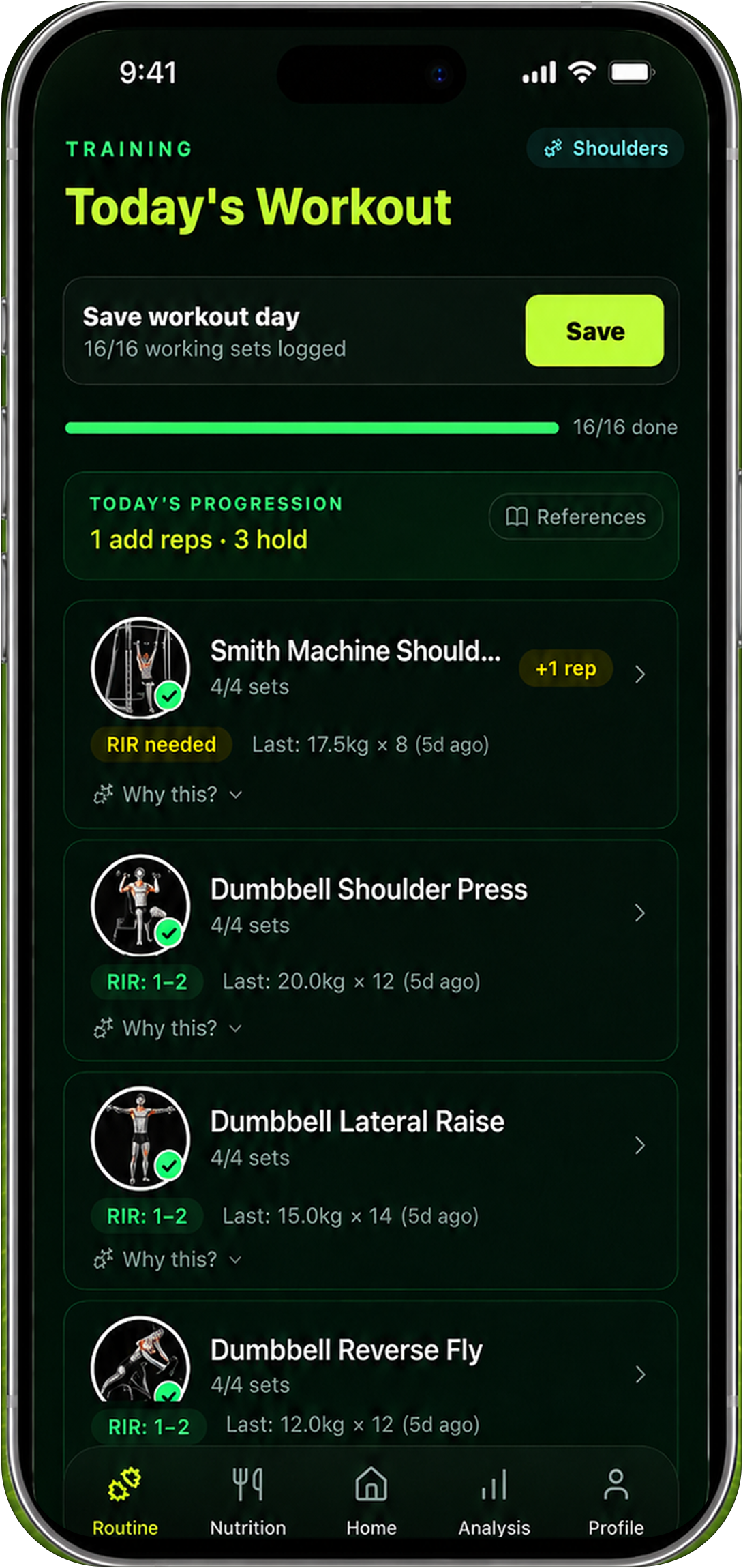
Reset90 is not a social leaderboard, and it does not require friends to follow the same workout. Its role is to give each person a structured 90-day plan with daily training, nutrition, and progress context.
That can pair well with a friend-based app or a simple private check-in. Each person can follow an appropriate plan, then share the behavior that matters—such as completing the planned session, reviewing progress, or returning after a missed day—without comparing every exercise or body metric.
If you want a personal system that gives the group conversation something concrete to support, explore Reset90. You can also use the Android download page to start a plan. For broader consistency guidance, read our guide to fitness apps for staying consistent.
09How to know whether the app is helping
After two or three weeks, measure the behavior rather than the excitement. Are you starting more planned sessions? Are you returning faster after a missed workout? Are messages helping you act, or are they becoming another feed to manage?
Keep the app if it reduces friction and improves follow-through. Change the format if the group only checks the leaderboard, if notifications create avoidance, or if members feel they must hide normal rest. A successful social fitness system should make the next workout easier to begin, not make the group responsible for your entire motivation.
10Frequently asked questions
What is the best fitness app to use with friends?
The best app depends on what you want to share. Choose shared logs for lifting, group challenges for a time-bound goal, a friend feed for encouragement, or private check-ins for a small accountability partnership.
Can friends use different phones or fitness goals?
Often, yes, but check platform support and how the app handles different activities. A flexible group should share a behavior or weekly goal rather than requiring identical workouts, devices, or performance numbers.
Are group workout challenges effective?
They can be effective when the goal is specific, flexible, and easy to check in. A challenge is less useful when it rewards unsafe volume, ignores rest, or makes one missed day feel like the entire effort is lost.
How do I use a workout app with friends without comparing my body?
Share completion, time, distance, or personal milestones instead of body measurements. Use privacy controls, set personal goals, and agree that rest and substitutions are valid parts of the plan.
The Reset90 system
Useful ideas for building a body you can keep.
Training notes, product updates, and practical ways to make your next 90 days count.
Start your next 90 days
Get your daily training, nutrition, and check-in priorities in one adaptive system.


Keep reading
Related articles

Ideal Body Measurements for Women
There is no single ideal body measurement set for women. Learn how averages, waist-to-height, body shape and repeatable tracking fit together without chasing a fixed beauty standard.
Read article
Bulk, Cut, or Recomp? A Practical Decision Guide
A practical way to choose a bulk, cut, recomp, or maintenance phase using your goal, training age, recovery, and repeatable progress signals.
Read article
How Often Should You Take Progress Photos?
How often should you take progress photos? Use this goal-based guide to choose weekly, biweekly, or monthly check-ins and make every comparison more consistent.
Read article