
Best AI Body Transformation Apps in 2026 (Analysis Is Not Enough)
AI photo analysis tells you what changed. The best transformation app tells you what to do next — and keeps the loop running for 90 days.
By Reset90 AI Editorial Team
Short answer: “AI transformation app” can mean two very different things. A creative photo app generates a new look, while a fitness transformation app helps you measure repeatable progress and decide what to do next. This guide focuses on fitness transformation: consistent Body Skin check-ins, AI analysis, weekly trends, and a plan that can adapt for 90 days.
01Do you mean an AI photo transformation app or a fitness transformation app?
Broad AI transformation searches often return photo editors, anime filters, face-swap tools, and future-body visualizers. Those apps can help you imagine a style or create a motivating image, but a generated image is not evidence that your body changed. Choose the type of app based on the job you actually need done:
| If you want to... | Look for... | What it can and cannot answer |
|---|---|---|
| Imagine a different look or create a shareable image | AI photo transformation, body editor, style or face-swap app | Useful for visualization and creativity; it does not prove real body-composition progress. |
| Compare your real body over time | Fitness transformation tracker with repeatable photos, measurements, or trend views | Useful for consistent progress evidence; it still depends on measurement conditions and cannot diagnose health. |
| Turn progress signals into the next action | A fitness system that connects check-ins with training, nutrition, and adherence | Useful when analysis needs to change the plan instead of ending as a report. |
This article covers the second and third jobs. It does not rank entertainment photo editors as if they were fitness trackers. If your goal is a real 90-day transformation, prioritize repeatability, trend interpretation, and what happens after the analysis.
02Best AI body transformation apps at a glance
Choose a body transformation app by the job you need it to do. A photo journal, a measurement tracker, an adaptive nutrition app, and a full AI transformation loop solve different problems.
| App | Primary job | Best for |
|---|---|---|
| Reset90 | Guided Body Skin check-ins plus an adaptive 90-day plan | People who want analysis to change what they do next |
| Progress by Lasmit | Aligned progress-photo timeline | Keeping photos consistent and easy to compare |
| Shapez | Body-measurement charts with photos | Tracking waist, hips, chest, arms, and thighs |
| MacroFactor | Adaptive nutrition tracking with supplementary photos | Lifters whose main problem is calorie and weight-trend management |
| BodyJourney | Simple before-and-after photo journal | Low-friction visual logging |
| Body Measurement Tracker | Raw circumference tracking | People who only need simple measurement charts |
Take a photo. Get an analysis. Feel motivated for an hour. Take another photo six weeks later, and the lighting is different, the pose is off, the plan is the same as day one—and the analysis is just a report card nobody reads. That is the difference between an AI analysis app and an AI transformation app. Analysis is a grade. Transformation is a loop.
03What is an AI body transformation tracker, really?
A body transformation tracker is a different category from a workout logger—and from an AI photo editor. A workout logger records what you lifted; a transformation tracker records what your body looks like over time. A photo editor creates a visual possibility; a tracker helps you compare real check-ins. The full job has four parts—capture consistently, analyze the change, show the trend, and change the plan from it. Almost every app on this list does one or two of those. Only one does all four.
04Why does Reset90 rank first?
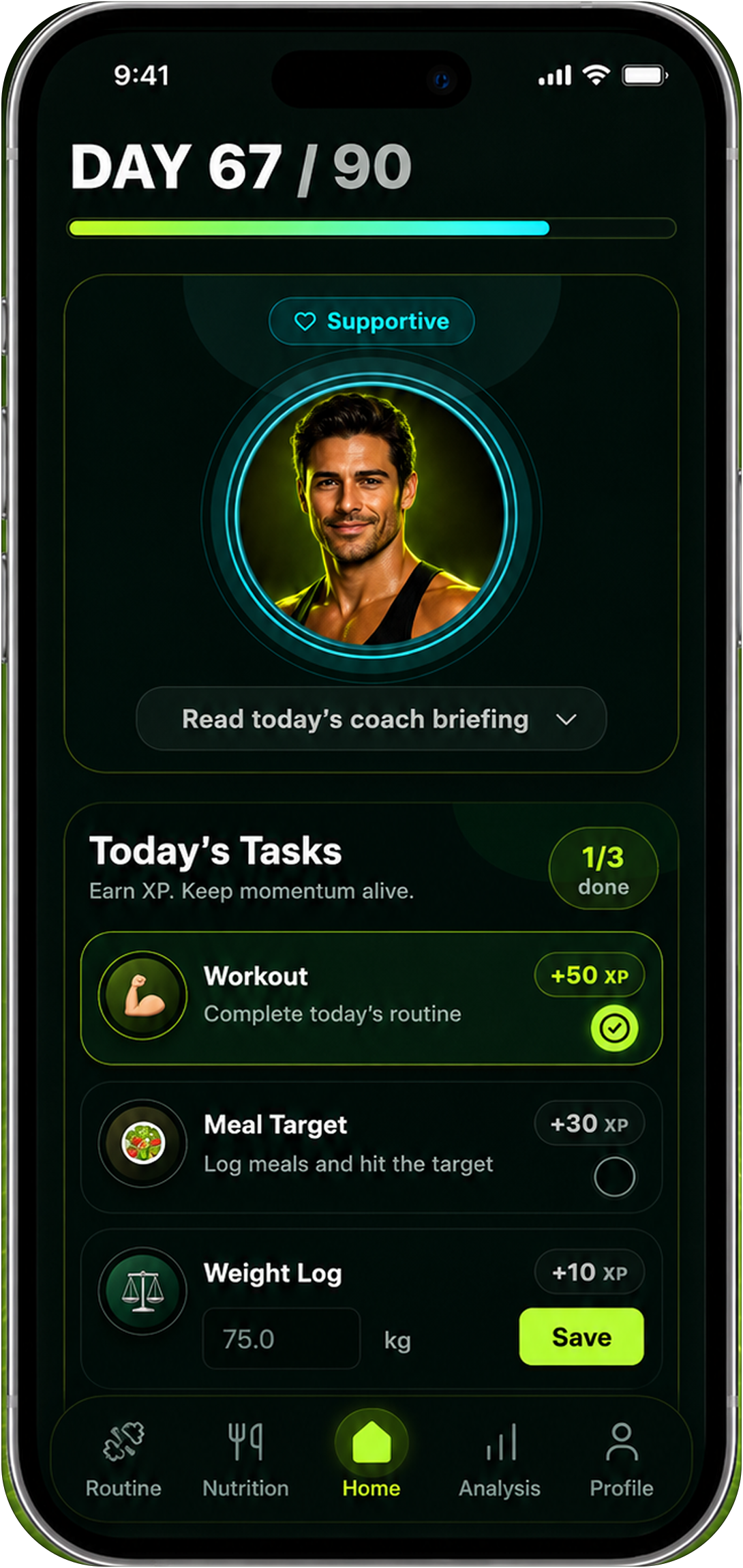
Reset90 ranks first for the fitness-transformation job because its AI is not a report card—it is the engine of the plan. Your biometrics—age, sex, height, weight, goals, and schedule—shape a personalized 90-day plan. Then the loop starts: every weekly check-in feeds the engine, and the engine decides what to adjust and explains why.
- Biometrics-driven plan: your 90 days are built from your data, not a generic template—training, nutrition, and check-in cadence fit your body and your schedule.
- The best AI model behind the scenes: the reasoning layer watches your progress and decides what to change—next target, carbohydrate target, training load—with an explanation for every adjustment.
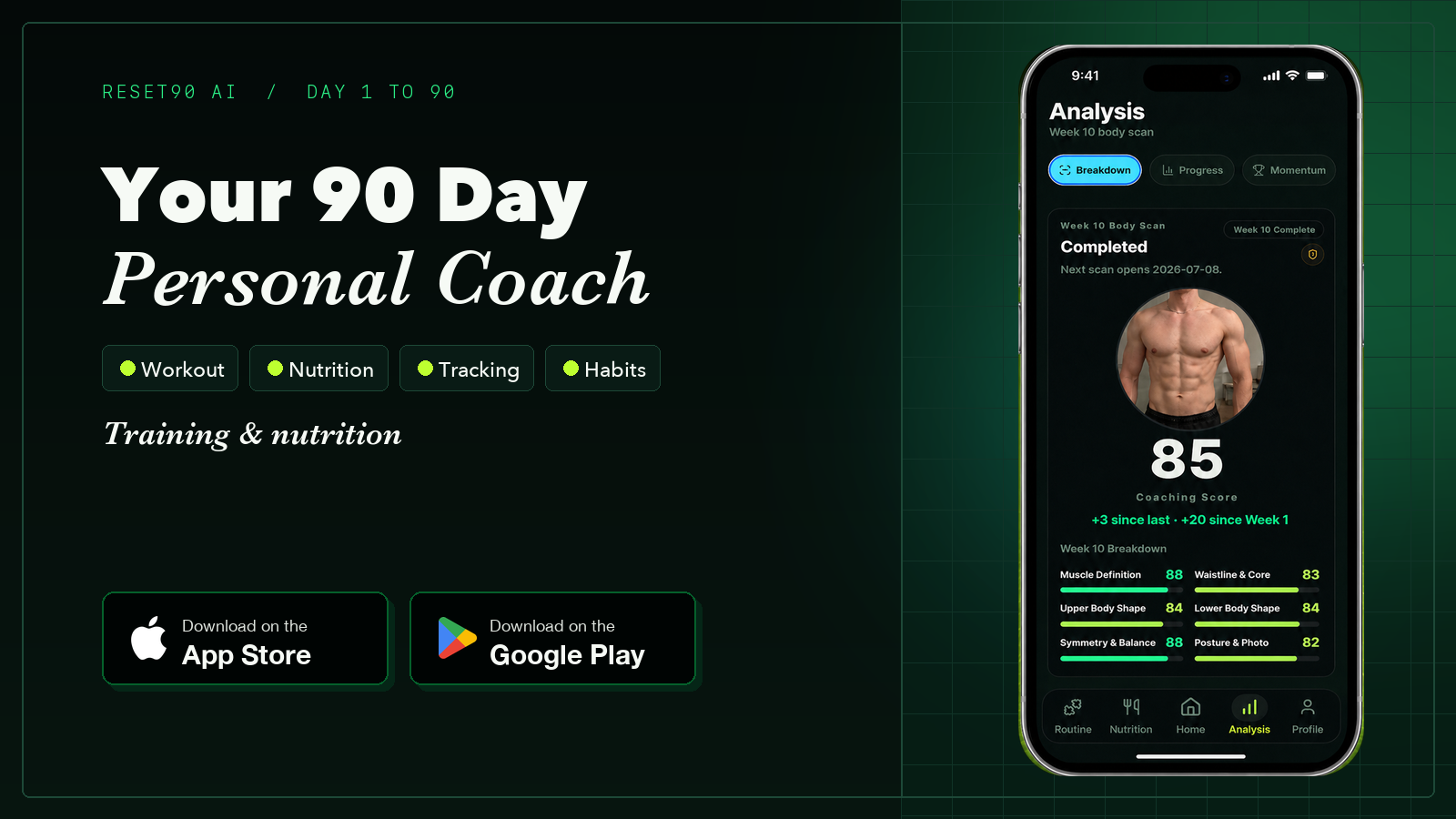
- Guided Body Skin protocol: before every weekly check-in, the app walks you through consistent lighting, camera position, and poses, so every photo is high quality and comparable—the foundation the whole analysis depends on.
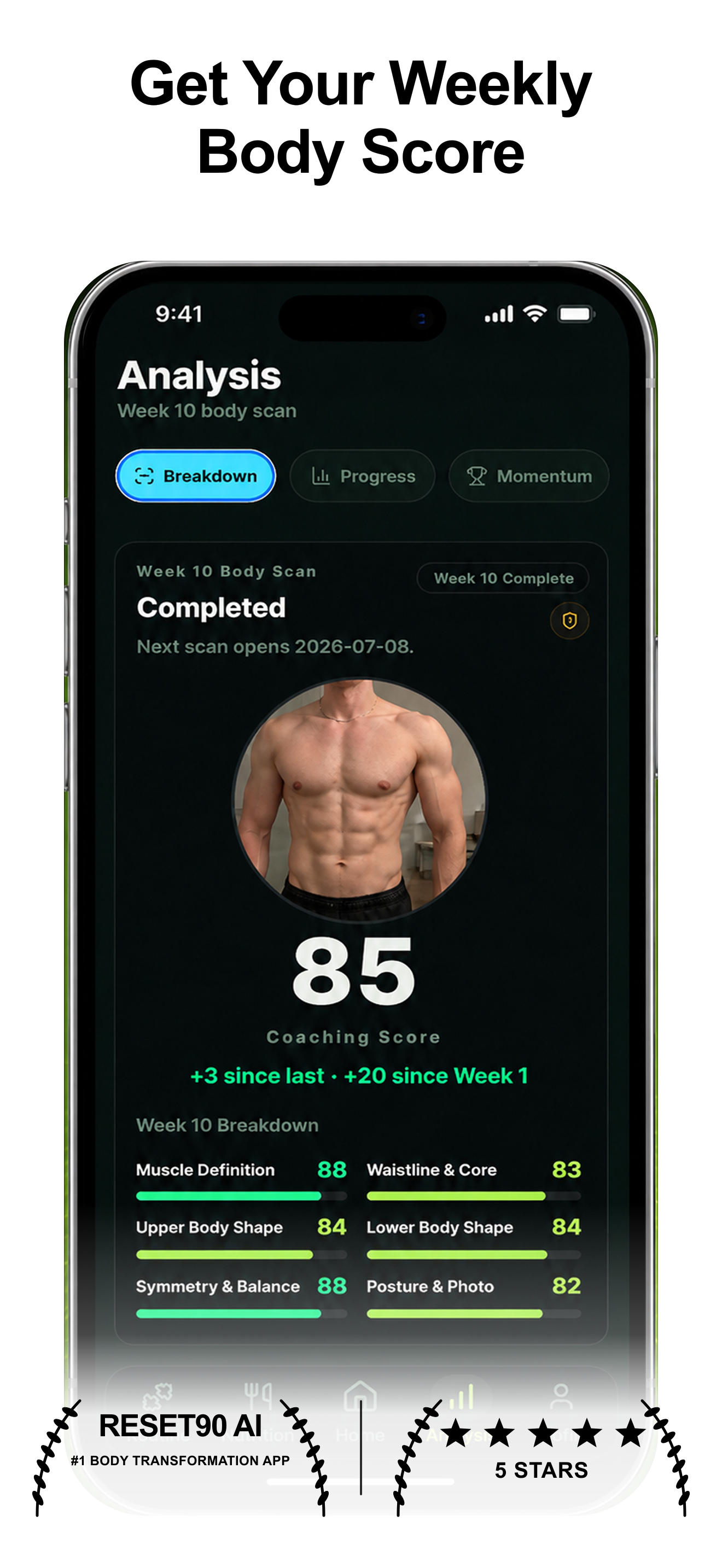
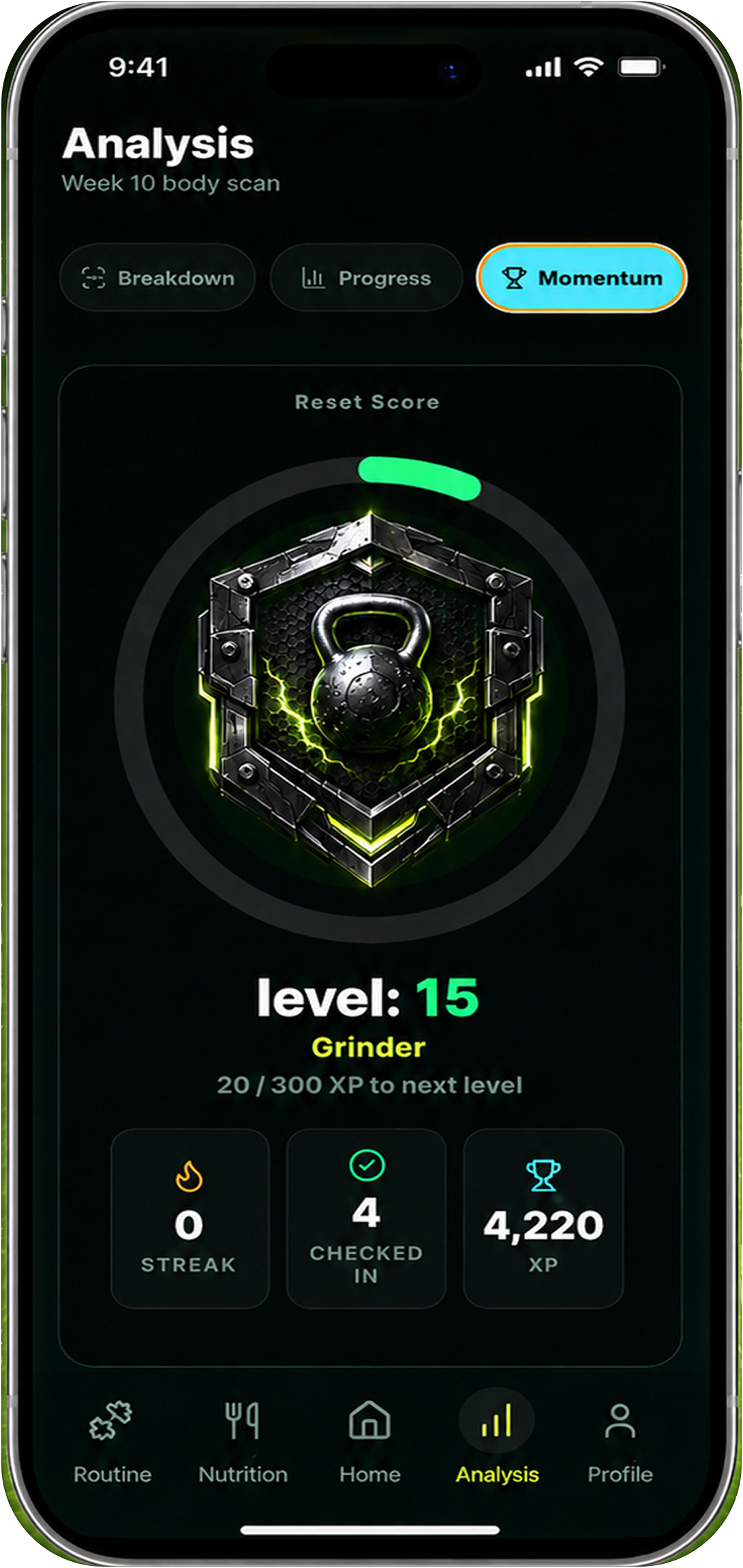
The analysis is still there—AI-powered scores drawn from visible change, consistency, training load, adherence, and trajectory. The difference is what happens next. A photo analysis app files the result away. Reset90 changes tomorrow: the plan adapts, the adjustment is explained, and you can always override it. That is the loop, and the loop is what makes the transformation happen instead of just documenting it.
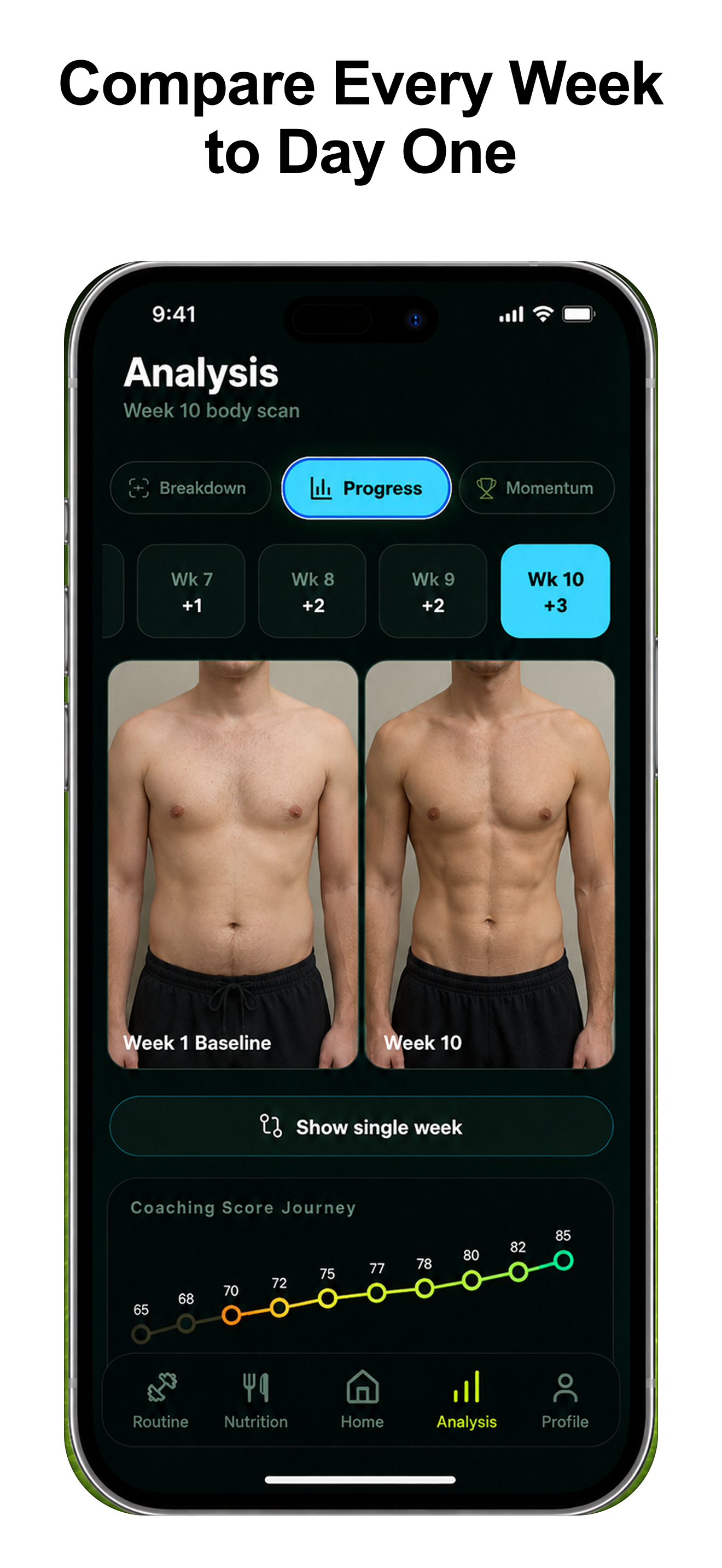
Strengths: a personalized 90-day plan built from your biometrics; AI that decides and explains every adjustment; guided Body Skin protocol for high-quality comparable photos; weekly cadence built into the plan; iOS and Android.
Weaknesses: one honest trade-off—if you want per-muscle AI scoring or lab-grade numbers, pair Reset90 with a dedicated analyzer or a quarterly DEXA scan. Reset90 is the system that makes those measurements matter.
Best for: anyone who has taken progress photos, looked at the analysis, and then trained exactly the same as before. See how the loop works: know whether your fitness plan is working, and how the same system handles body recomposition.
05What should a transformation tracker actually do?
Hold any app against these four jobs before you commit. Most apps win one and quietly drop the rest:
| Job | What it looks like | Why it matters |
|---|---|---|
| Guided capture | The app tells you lighting, camera position, and poses | Inconsistent photos make comparisons meaningless |
| Analysis | Something measurable comes out of the photo | A photo album is not a tracker |
| Trend | Change is visible across weeks, not side-by-side guesswork | Slow change is easy to dismiss without a timeline |
| Plan change | The result changes what you do tomorrow | Without this, tracking is documentation, not transformation |
06Is Progress by Lasmit the best dedicated photo organizer?
Platform: iOS · Price: Free with Pro subscription
Progress by Lasmit organizes photos chronologically with alignment guides and a ghost overlay to match your pose between sessions.
Strengths: clean timeline; alignment tools genuinely reduce angle variation; reminders keep you consistent.
Weaknesses: no analysis, no scoring, no measurements—you compare two images and decide for yourself, which is exactly where subtle changes get missed.
Best for: a well-organized photo timeline when manual comparison is enough.
07Is Shapez the best measurement tracker?
Platform: iOS + Android · Price: Free with Premium
Shapez charts waist, chest, hips, arms, and thighs over time and lets you attach a photo to each measurement entry.
Strengths: useful for recomp where the scale stays flat; photos and tape data in one timeline.
Weaknesses: circumference data is ambiguous—a growing waist could be fat or core muscle; no AI analysis; the chart cannot tell you why.
Best for: trackers who already take regular tape measurements.
08Is MacroFactor a transformation tracker?
Platform: iOS + Android · Price: around $12 per month
MacroFactor is the leading nutrition tracker for lifters, with an adaptive calorie model based on your weight trend. Photos exist as a supplementary feature attached to weigh-ins.
Strengths: excellent adaptive nutrition; a photo beside the calorie data of that week is genuinely useful.
Weaknesses: not photo-first; minimal comparison tools; no AI analysis of images—it is nutrition software that lets you attach photos.
Best for: lifters already committed to MacroFactor who want photos tied to intake.
09Is BodyJourney worth it as a lightweight journal?
Platform: iOS + Android · Price: Free with in-app purchases
BodyJourney is a simple before-and-after photo journal with notes, optional measurements, and easy side-by-side exports.
Strengths: low friction; easy shareable before-and-after images; good habit builder.
Weaknesses: no analysis, no scoring, no structured comparison; fine for a journal, not enough for a transformation you can measure.
Best for: a visual journal with occasional before-and-after sharing.
10Are Body Measurement Tracker apps enough?
Platform: iOS + Android · Price: Free with Premium
Several measurement-first apps log waist, chest, hips, thighs, calves, arms, and neck, with charts over time and optional photos per entry.
Strengths: reliable for raw circumference trends; cheap; easy to start.
Weaknesses: measurements only—no AI, no analysis of why numbers move, no plan; the data is a record, not a decision.
Best for: people who want simple measurement charts and nothing else.
11Which AI body transformation app should you use in 2026?
If you want a generated image for a style experiment or social post, an AI photo transformation app may be the right tool. If you already run your own fitness plan and only need a photo timeline, Progress or BodyJourney is enough. If you live in tape measurements, Shapez or a measurement tracker is fine. If you are already deep in MacroFactor, keep it for nutrition.
But if the goal is a real transformation—not a folder of generated photos—the app has to close the loop. Reset90 is the only one in this category that captures with a guided protocol, analyzes the change, shows the weekly trend, and changes the plan from it. The analysis is a grade. The loop is the coach. If you want one system that connects training, food, and recovery, our roundup of all-in-one fitness apps is the companion piece.
| App | Guided capture | AI analysis | Weekly trend | Changes the plan | Platform |
|---|---|---|---|---|---|
| Reset90 AI | Yes—lighting, position, poses | Multi-signal scores | Weekly | Yes | iOS + Android |
| Progress by Lasmit | Alignment guides | No | Timeline | No | iOS |
| Shapez | No | No | Measurements | No | iOS + Android |
| MacroFactor | No | No | Weight trend | Nutrition only | iOS + Android |
| BodyJourney | No | No | Photo journal | No | iOS + Android |
| Body Measurement Tracker | No | No | Measurements | No | iOS + Android |
12Frequently asked questions
How is Reset90 different from AI photo transformation apps?
Photo transformation apps generate a visual possibility and photo analysis apps grade an image. Reset90 runs the fitness loop: your biometrics shape a personalized 90-day plan, guided weekly Body Skin check-ins produce AI-powered scores, and the engine decides what to adjust—with an explanation—so the analysis changes tomorrow instead of ending at a report card.
Can an AI-generated body transformation image prove progress?
No. A generated image can help you visualize a goal, but it is not a repeatable measurement of your real body. To track actual change, use consistent photos, measurements, strength, nutrition, and adherence signals under comparable conditions.
Can AI accurately track body transformation from real photos?
AI photo estimates are approximations, not clinical measurements—the value is in the relative trend across consistent check-ins. That is why the guided protocol matters: same lighting, same position, and same poses make the trend more useful.
Do I need an AI analysis app at all?
If you want to objectively answer “is this working?” without staring at the mirror, yes—but analysis alone is not enough. The app also needs to change the plan from what it sees, which is the step most analysis apps never take.
How often should you check in with a transformation tracker?
Weekly, under the same conditions. Daily photos amplify noise; monthly checks miss early changes. Weekly is the cadence that makes slow transformation visible—and it is the cadence Reset90’s plan is built around.
Is Reset90 medical advice?
No. Reset90 is a fitness and nutrition planning tool and does not diagnose or treat medical conditions. It is the system that keeps training, nutrition, and progress honest—decisions about your health stay with you and your clinician.
The Reset90 system
Useful ideas for building a body you can keep.
Training notes, product updates, and practical ways to make your next 90 days count.
Start your next 90 days
Get your daily training, nutrition, and check-in priorities in one adaptive system.


Keep reading
Related articles
Ideal Body Measurements for Women
There is no single ideal body measurement set for women. Learn how averages, waist-to-height, body shape and repeatable tracking fit together without chasing a fixed beauty standard.
Read article
Bulk, Cut, or Recomp? A Practical Decision Guide
A practical way to choose a bulk, cut, recomp, or maintenance phase using your goal, training age, recovery, and repeatable progress signals.
Read article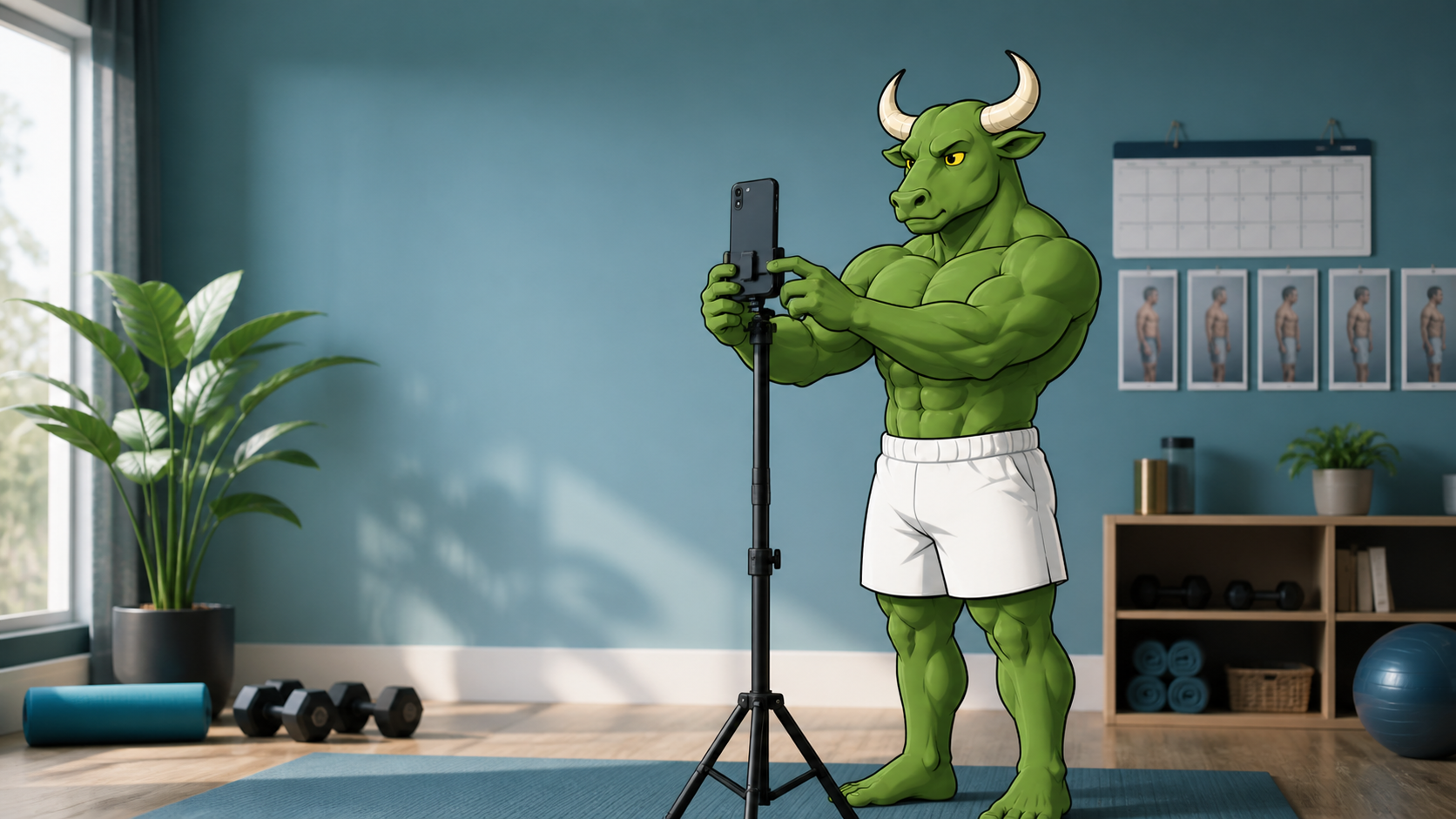
How Often Should You Take Progress Photos?
How often should you take progress photos? Use this goal-based guide to choose weekly, biweekly, or monthly check-ins and make every comparison more consistent.
Read article