

How to Know Whether Your Fitness Plan Is Working
A useful fitness plan should create measurable progress, but the signal is larger than a single scale reading or one good workout.
By Reset90 AI Editorial Team
Short answer: A fitness plan is working when your actions are becoming more consistent and at least one meaningful outcome is moving in the direction you chose. Track the process signals first—completed sessions, useful effort, nutrition consistency, recovery, and measurements—then adjust only after enough data has accumulated to show a trend.
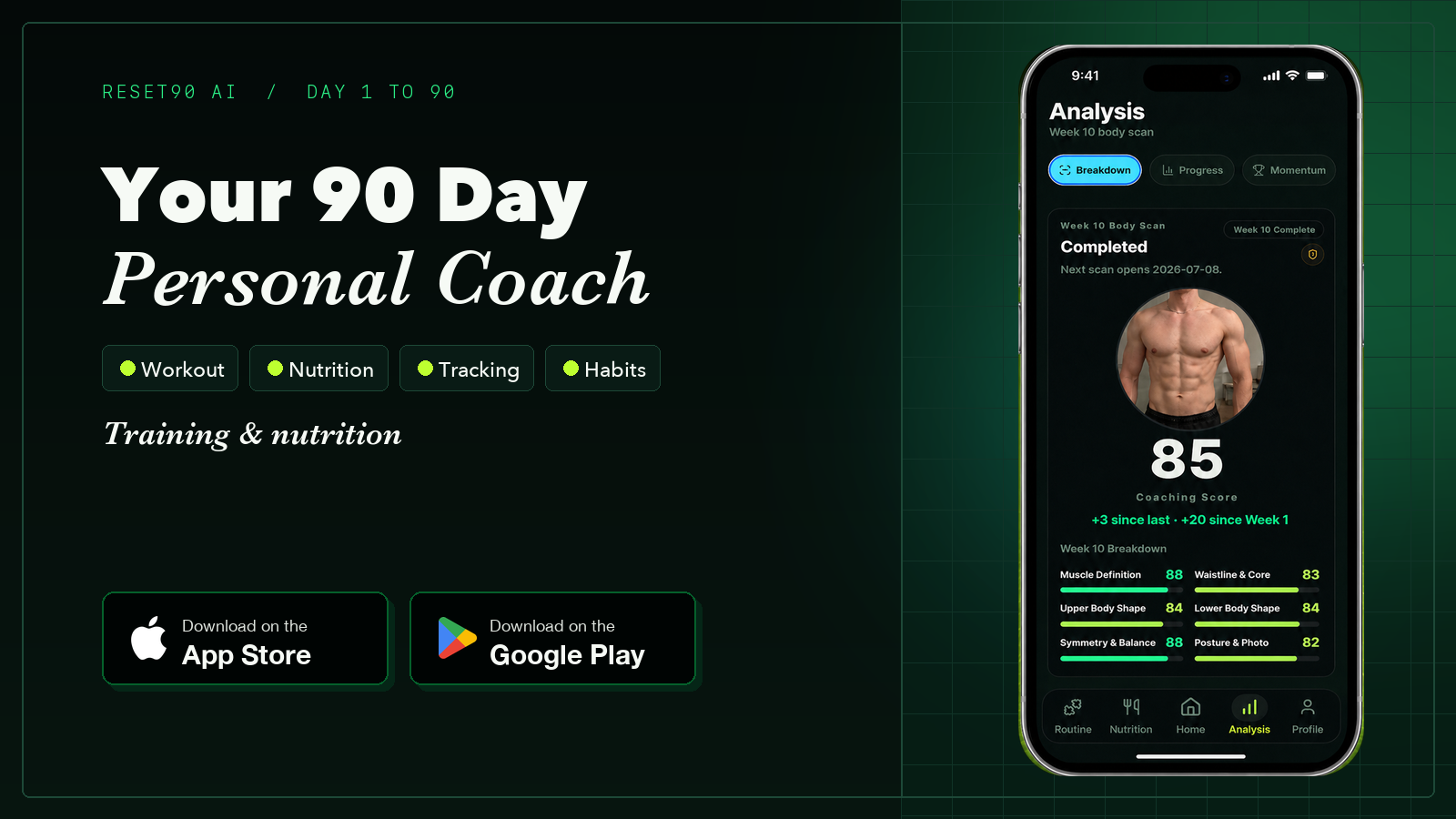
One workout can feel amazing and still tell you very little. One scale reading can move for reasons unrelated to fat loss or muscle gain. A good review looks for patterns across several weeks.
01Define the result before you judge the plan
“Get fit” is too vague to audit. Choose one primary outcome and two supporting behaviors. For example: improve strength in three key movements, complete three training sessions per week, and hit a protein target on most days. The plan is easier to adjust when the scorecard is clear.
02Use a simple progress scorecard
| Signal | What to look for | When to adjust |
|---|---|---|
| Training | Sessions completed and quality of effort | Repeatedly missing or stalling for several weeks |
| Nutrition | Meal consistency and a sustainable target | Target is impossible to maintain or recovery worsens |
| Recovery | Sleep, soreness, energy, and technique | Fatigue stays high or performance drops |
| Outcome | Strength, measurements, photos, or performance | Trend is flat after a fair review window |
03Compare trends, not isolated days
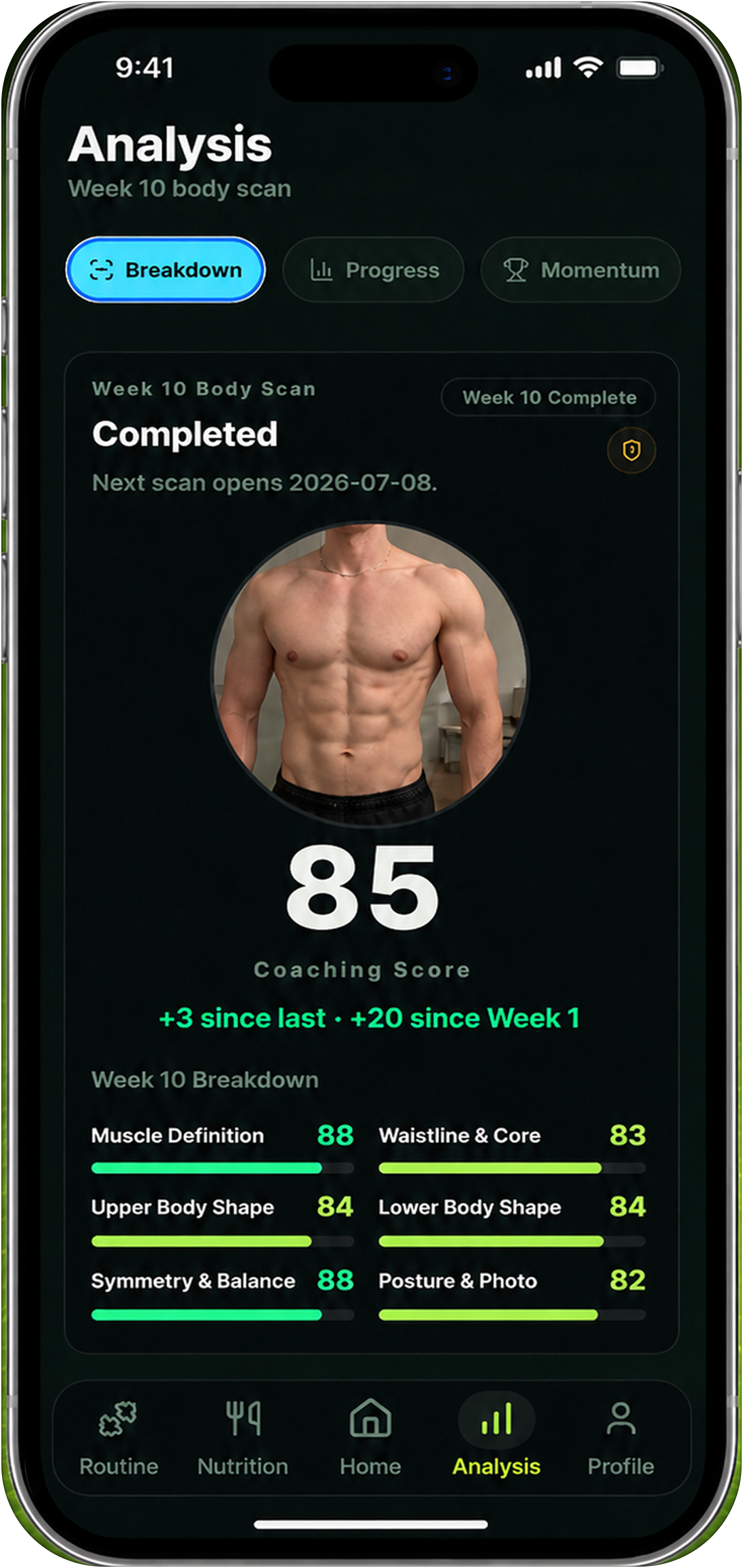
Take progress photos under similar lighting and posture. Compare the same exercises or performance tests. Review weekly averages rather than a single weight. The goal is not to manufacture a perfect chart; it is to remove enough noise that you can make a reasonable next decision.
04Use the Reset90 Plan Fit Check before changing everything
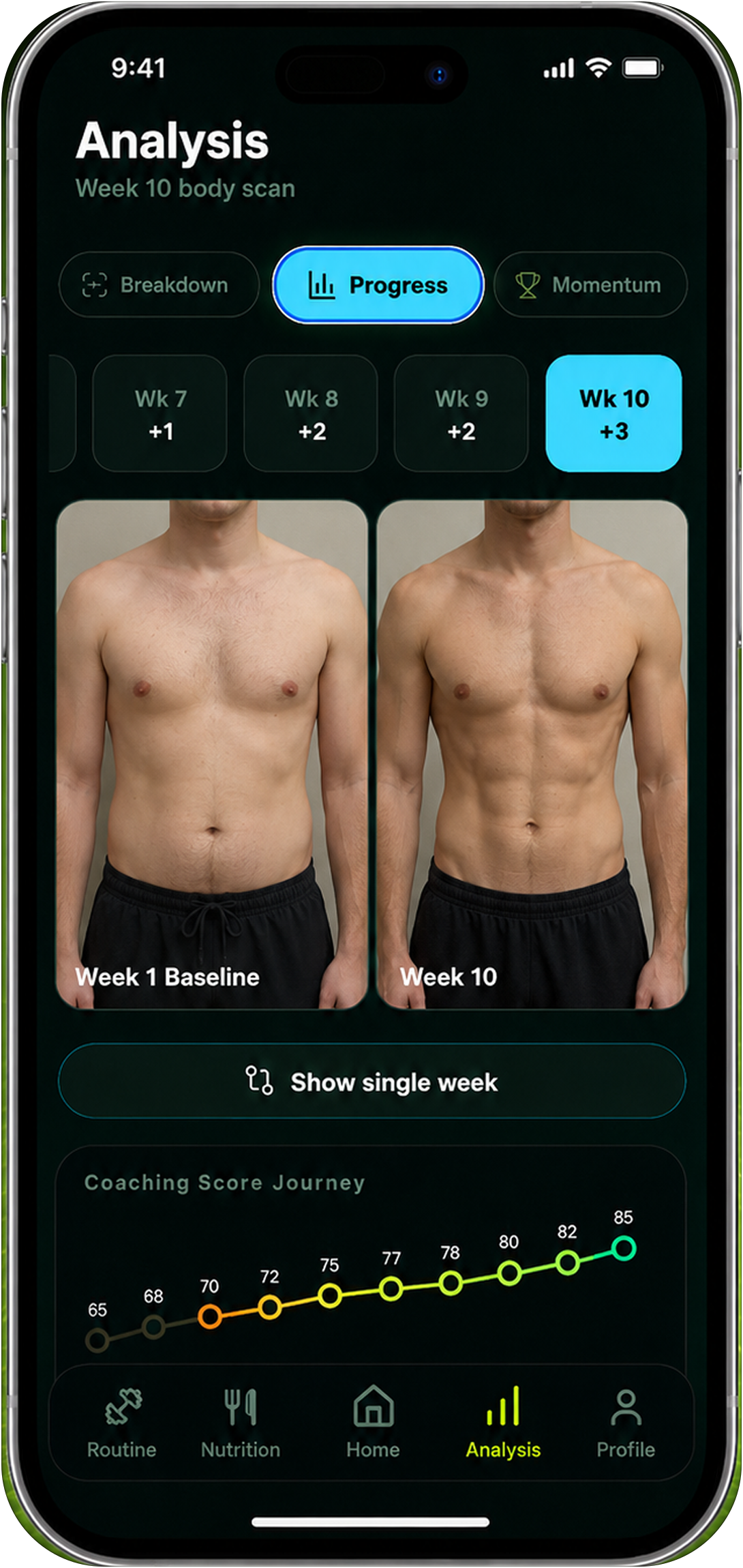
When progress feels unclear, use the Reset90 Plan Fit Check to review the basic constraints before adding more volume or cutting more food. Many stalled plans do not need a dramatic new method; they need a realistic schedule, clearer minimums, or a recovery adjustment.
05Honest signs the plan needs work
- You keep missing the same sessions because they do not fit your schedule.
- Your plan depends on motivation instead of a clear minimum action.
- Your training volume rises while sleep, technique, or mood deteriorates.
- You cannot explain what changed or what the next step should be.
- You are chasing a short-term number while ignoring the behavior that creates it.
06When to keep going
Keep a plan steady when your process is becoming more repeatable, your recovery is acceptable, and the outcome trend is slowly moving. Frequent changes make it difficult to learn what worked. A 90-day horizon is long enough to collect useful evidence, but short enough to review deliberately.
07Related Reset90 reads
- How to build a 90-day workout plan for busy people
- How sleep affects your training progress
- How to track nutrition without overcomplicating it
Want the daily version of this scorecard? Download Reset90 AI on the App Store or get it on Google Play.
General educational information only. Body composition and performance changes vary by person. Seek qualified guidance for medical or nutrition concerns.
The Reset90 system
Useful ideas for building a body you can keep.
Training notes, product updates, and practical ways to make your next 90 days count.
Start your next 90 days
Get your daily training, nutrition, and check-in priorities in one adaptive system.


Keep reading
Related articles

Ideal Body Measurements for Women
There is no single ideal body measurement set for women. Learn how averages, waist-to-height, body shape and repeatable tracking fit together without chasing a fixed beauty standard.
Read article
Bulk, Cut, or Recomp? A Practical Decision Guide
A practical way to choose a bulk, cut, recomp, or maintenance phase using your goal, training age, recovery, and repeatable progress signals.
Read article
How Often Should You Take Progress Photos?
How often should you take progress photos? Use this goal-based guide to choose weekly, biweekly, or monthly check-ins and make every comparison more consistent.
Read article