

Best Fitness Apps for Getting Back on Track
A no-shame guide to choosing a fitness app after a break, missed week, stressful season, or abandoned plan.
By Reset90 AI Editorial Team
Short answer: The best fitness app after a long break is the one that gives you a manageable first session, adjusts to your current time and energy, and tells you what to do after the next missed workout. Choose a fixed challenge if you want a clear calendar, a workout logger if you already know your routine, coaching if you need feedback, or an adaptive planner if your capacity changes from week to week. Avoid any app that treats a break as failure and sends you back to an unrealistic Day 1.
01Which fitness app type is best for getting back on track?
| App type | Best for | What a good restart flow should do | Main trade-off |
|---|---|---|---|
| Fixed challenge | You want a clear calendar and a finish line. | Offer a defined starting point, manageable early sessions, and a way to move a session when life interrupts. | Less flexible when your schedule or capacity changes. |
| Workout logger | You already know your exercises and mainly need records. | Make it easy to resume a lighter version of your previous routine and see the next workout. | Usually will not redesign the plan when your situation changes. |
| Coaching program | You need feedback, accountability, or help choosing exercises. | Give you a person or review loop that can adjust volume, exercise choice, and timing. | May cost more and may depend on a coach’s response time. |
| Adaptive planner | Your time, energy, equipment, or confidence changes often. | Use your current context to create a smaller session, then build the next week from what you completed. | It still needs honest check-ins; no app can make a plan realistic if the inputs are not. |
If your only goal is to start moving again, do not compare apps by the size of their workout library. Compare them by the quality of their next decision: can the app help you choose a useful session today and a realistic follow-up session?
02Which app is best for getting back in shape after a long break?
For a long break, an adaptive planner or a gentle guided program is usually the best starting point. It should let you begin with a short, manageable session, remember your context, and build the next week from what you actually completed. If you prefer a fixed calendar, a structured 90-day challenge can also work, as long as it lets you adjust the starting load instead of punishing you for being out of rhythm.
Use this quick filter before you download or subscribe:
| Your situation | Best starting point | Evidence to look for |
|---|---|---|
| You missed a few days but know your old routine. | Familiar workout logger or lighter version of the same plan. | You can reduce the first session, see your previous history, and schedule the next workout without rebuilding everything. |
| You have been away for weeks or months. | Adaptive planner or beginner-friendly guided program. | It asks about current time, equipment, and readiness instead of assuming your old capacity is still available. |
| You keep restarting after stressful seasons. | Plan-and-check-in system. | It gives you a minimum session, a next-week view, and a way to learn from missed sessions instead of resetting your identity. |
| Your break was caused by pain, illness, or medical advice. | Clinician-guided activity plan. | Professional clearance comes first. The app should organize approved activity, not decide when you are ready to return. |
The important feature is not a dramatic “restart” badge. It is a realistic first workout and a clear next decision after it. That is what makes getting back in shape repeatable.
Starting again is not a special personality type. It is a normal part of training. The right app makes the return ordinary instead of dramatic.
03When an app is not the right first step
If your break involved an injury, illness, unexplained pain, surgery, or instructions to restrict activity, follow qualified medical guidance before using an app to plan exercise. An app can organize activity that has already been approved; it cannot clear you to train or diagnose the reason you stopped.
For everyone else, “start slowly” should be specific. Choose a session you can finish without testing your maximum, leave room to notice how you feel later, and do not use early soreness as proof that the plan is working.
04Why most restart attempts fail
People often return with a plan built for the person they hope to be after the break: long sessions, strict nutrition, and a full calendar. The first missed day then feels like proof that nothing has changed.
A better app starts from the present. It asks how much time and energy you have now, then creates a session that is useful without pretending the last month did not happen.
There is also a measurement problem. Your first week back may feel harder because your routine, sleep, stress, or confidence changed—not because you need a more aggressive program. The app should help you record that context so the next choice is better informed.
05Use a simple tool to choose the next step
Try the free Reset90 Plan Fit Check: answer a few questions about time, equipment, and consistency to turn this article into a realistic starting point. The result should be a next action you can actually complete, not another perfect plan to abandon.
06Features to look for in a restart-friendly app
- A gentle re-entry: the first session should rebuild confidence, not test your maximum.
- Flexible scheduling: you should be able to move a session when the day changes instead of losing the whole plan.
- Short options: a 10–20 minute version can reduce the barrier without turning every session into a punishment.
- Context-aware planning: the app should account for available equipment, time, energy, and the fact that you are returning after a pause.
- Progress without guilt: history should be useful information, not a scoreboard that labels a missed day as failure.
- A next-week view: one successful session is encouraging; a realistic next week is what creates momentum.
- A clear pause or resume path: you should know what happens after one missed workout, three missed workouts, or a full week away.

07Which app type is best for your restart?
For a short break: use a familiar logger
If you missed a few days and still understand your old routine, you may not need a new system. Use a lighter version of the plan you already know. The useful feature is a quick way to see your history, record what you completed, and schedule the next session.
For a long break: use a guided or adaptive plan
After weeks or months away, memory can make your old plan look easier than it feels today. A guided program can remove exercise-selection friction. An adaptive planner can be more useful when your schedule, equipment, or energy changes. In both cases, look for a modest first session and progression based on current completion rather than old ambition.
For a stressful season: use minimum sessions and check-ins
Your problem may not be exercise knowledge. It may be that the plan left no room for the season you were in. Choose a system that lets you define the smallest useful session, then review whether the schedule is realistic before adding more volume.
For repeated restarts: use a longer reset horizon
Choose a system that connects the daily action to a longer horizon and helps you review why the pattern repeats. Repeating a restart without changing the plan is not a character flaw. It is product feedback: the schedule, accountability, recovery, or decision path needs to change.
08What to check before you commit to an app
Before subscribing, check the details that broad app roundups often separate from the main recommendation:
- Free access: identify which workouts, plans, tracking features, and check-ins are actually available without a subscription.
- Platform and equipment: confirm that the app works on your device and supports the equipment or no-equipment setting you will use this week.
- Time flexibility: look for short sessions, schedule changes, rest days, and a clear way to resume after a missed workout.
- Progress tracking: decide whether you need sets and reps, body measurements, photos, check-ins, or simply a reliable record of completed sessions.
- Accountability: choose between self-guided reminders, community, coach feedback, or a combination that will not create more pressure than support.
- Limits: note what the app cannot do. A workout app is not a diagnosis, a medical clearance, or a guarantee of a transformation.
09The first-week restart plan
- Choose a session you can finish while still feeling capable. Make the first action small enough that you do not need a second burst of motivation to begin.
- Schedule the next session before the first one becomes a memory. The goal is not a perfect week; it is a visible next decision.
- Record what felt easy, hard, or unrealistic. Use that information to adjust the next session instead of judging the whole restart.
- Keep one recovery habit visible. Sleep, a walk, hydration, or a consistent wind-down can support the return without turning the week into a second full-time job.
- Review the week without scoring it as pass or fail. Ask what made showing up easier and what caused friction. Then change one part of the next week.
This is the same logic behind a calm response to a missed workout: make the next decision useful instead of trying to erase the past.
10Why Reset90 AI can fit a restart
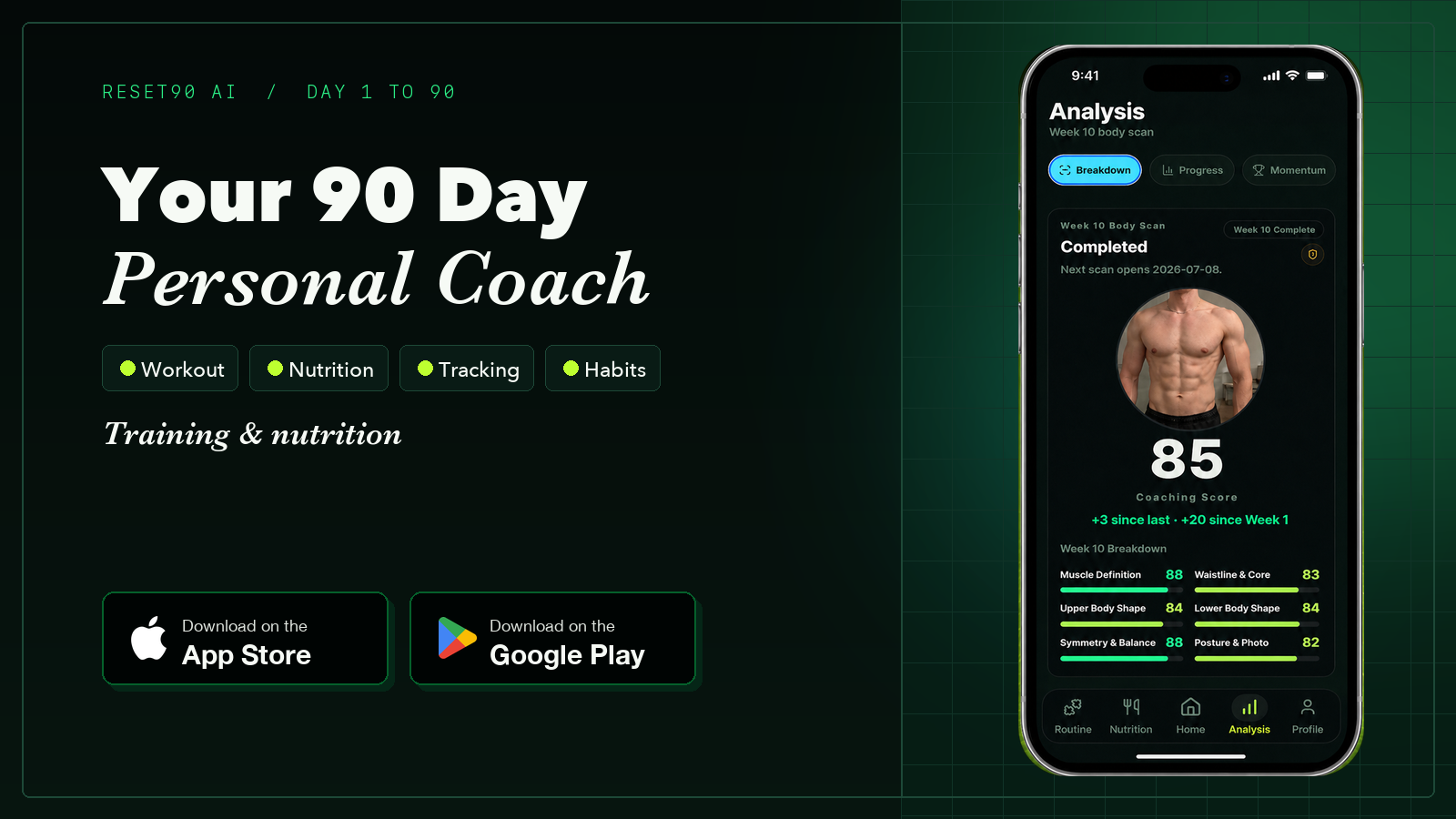
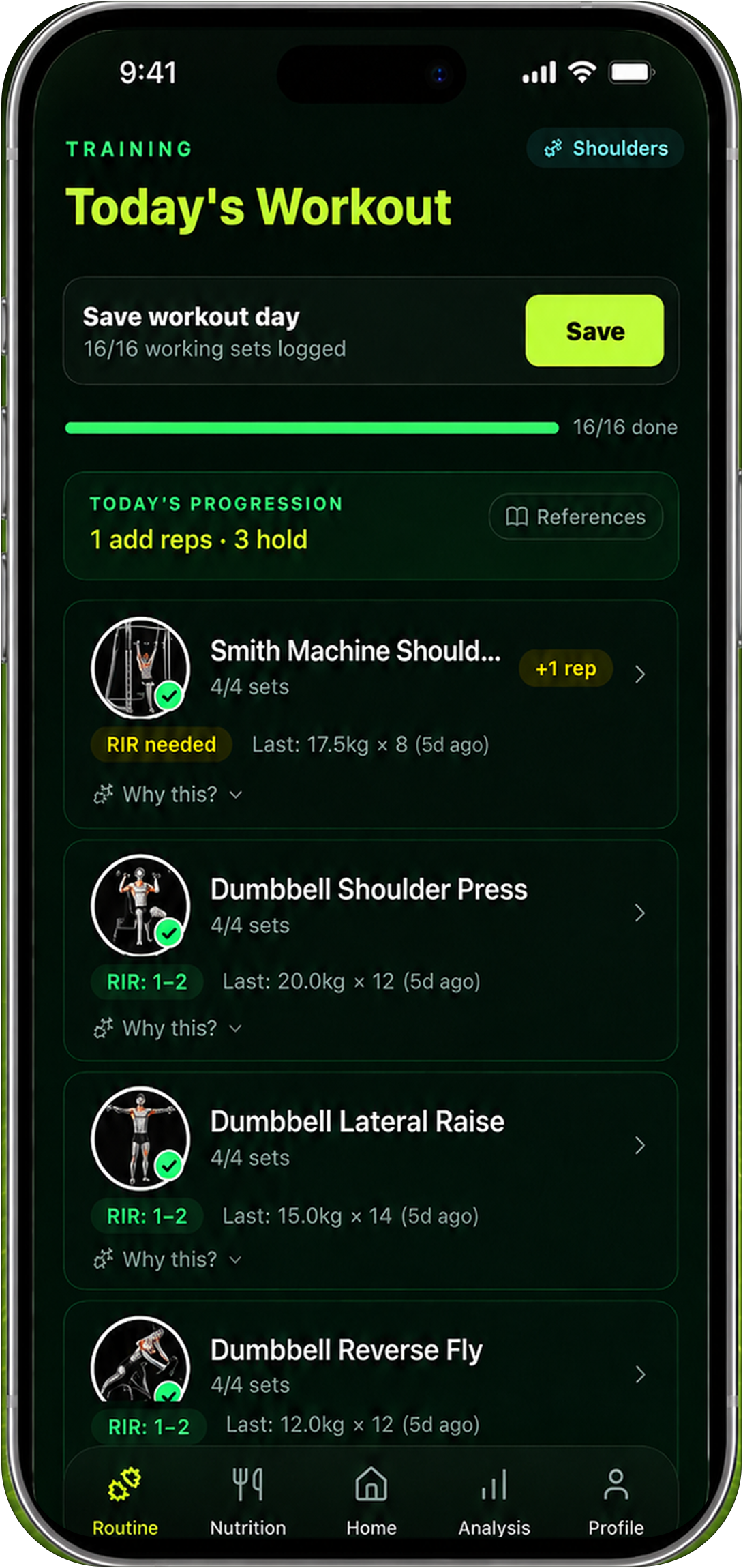
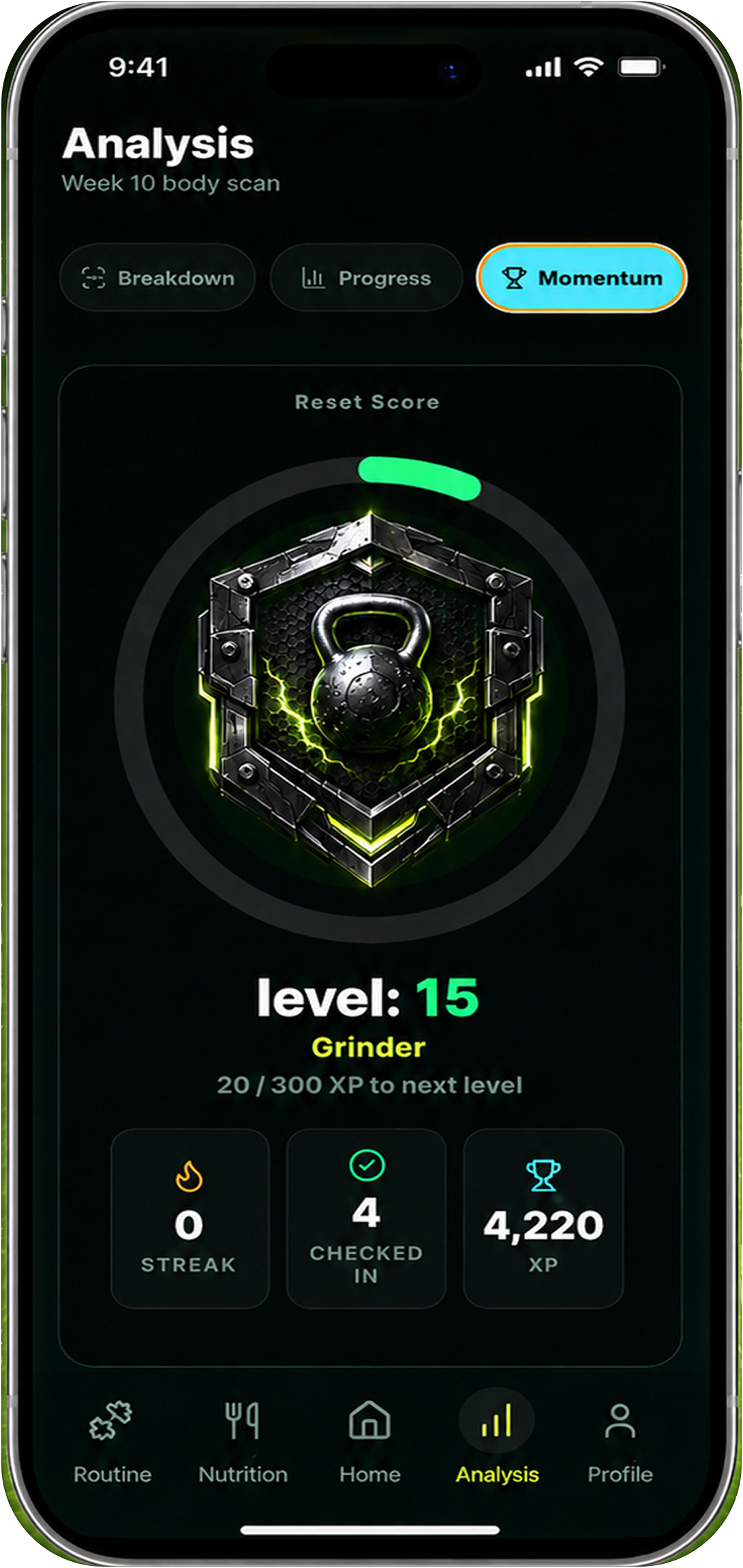
Reset90 AI is built around a 90-day reset rather than a permanent promise. That gives you enough time to rebuild a routine while keeping the target close. It can fit people who want a structured path, regular check-ins, and a plan that starts smaller before asking for more consistency.
The product fit is specific: use it when you want help turning your current time, equipment, and consistency into a next training action. It is not the right tool for deciding whether an injury is safe to train, and it cannot replace honest feedback about your capacity. The value is a practical system for converting that information into the next session and the next review.
11Founder case study: the first reset was mine
The first person who had to get back on track with Reset90 was me. During the first month, there were days when almost nobody was using the product and I questioned whether to keep going. I also saw that the next product work was not “build more features.” It was reduce friction, see where people left, and ask for feedback at the right moment.
That is the lens behind this article. A restart should not begin with punishment or a giant backlog. It should begin with one honest session and one piece of information about what made the last attempt fail. My early numbers—32 generated plans but 5 completed workouts—are a signal to investigate, not a conclusion about users. I documented that first-month reset here.
Reset90 AI is not a magic reset button. You still need to show up and be honest about your capacity. The value is having a system that turns that honesty into a next action.
General educational information only. If you have been injured, unwell, or told to restrict activity, follow qualified medical guidance.
12Related Reset90 reads
- How to compare AI workout planners
- How to create an adaptive workout plan
- Fitness apps for staying consistent
Ready to test the plan? Start with a manageable session, then use the next check-in to decide what comes after it.
The Reset90 system
Useful ideas for building a body you can keep.
Training notes, product updates, and practical ways to make your next 90 days count.
Start your next 90 days
Get your daily training, nutrition, and check-in priorities in one adaptive system.


Keep reading
Related articles

Ideal Body Measurements for Women
There is no single ideal body measurement set for women. Learn how averages, waist-to-height, body shape and repeatable tracking fit together without chasing a fixed beauty standard.
Read article
Bulk, Cut, or Recomp? A Practical Decision Guide
A practical way to choose a bulk, cut, recomp, or maintenance phase using your goal, training age, recovery, and repeatable progress signals.
Read article
How Often Should You Take Progress Photos?
How often should you take progress photos? Use this goal-based guide to choose weekly, biweekly, or monthly check-ins and make every comparison more consistent.
Read article