

Best Visceral Fat Tracking Apps in 2026 (What They Actually Measure)
No app can directly measure visceral fat — only CT and MRI can. Here's what actually tracks it, and the one system that makes the proxy move.
By Reset90 AI Editorial Team
Short answer: No app can directly measure visceral fat — only CT and MRI can, and both require medical equipment. The best practical approach is a consistent waist trend plus a system that keeps you showing up. That is why Reset90 ranks first: its weekly Body Skin check-ins track the visible proxy, and its adaptive 90-day plan drives the calorie deficit and training that actually reduce visceral fat.
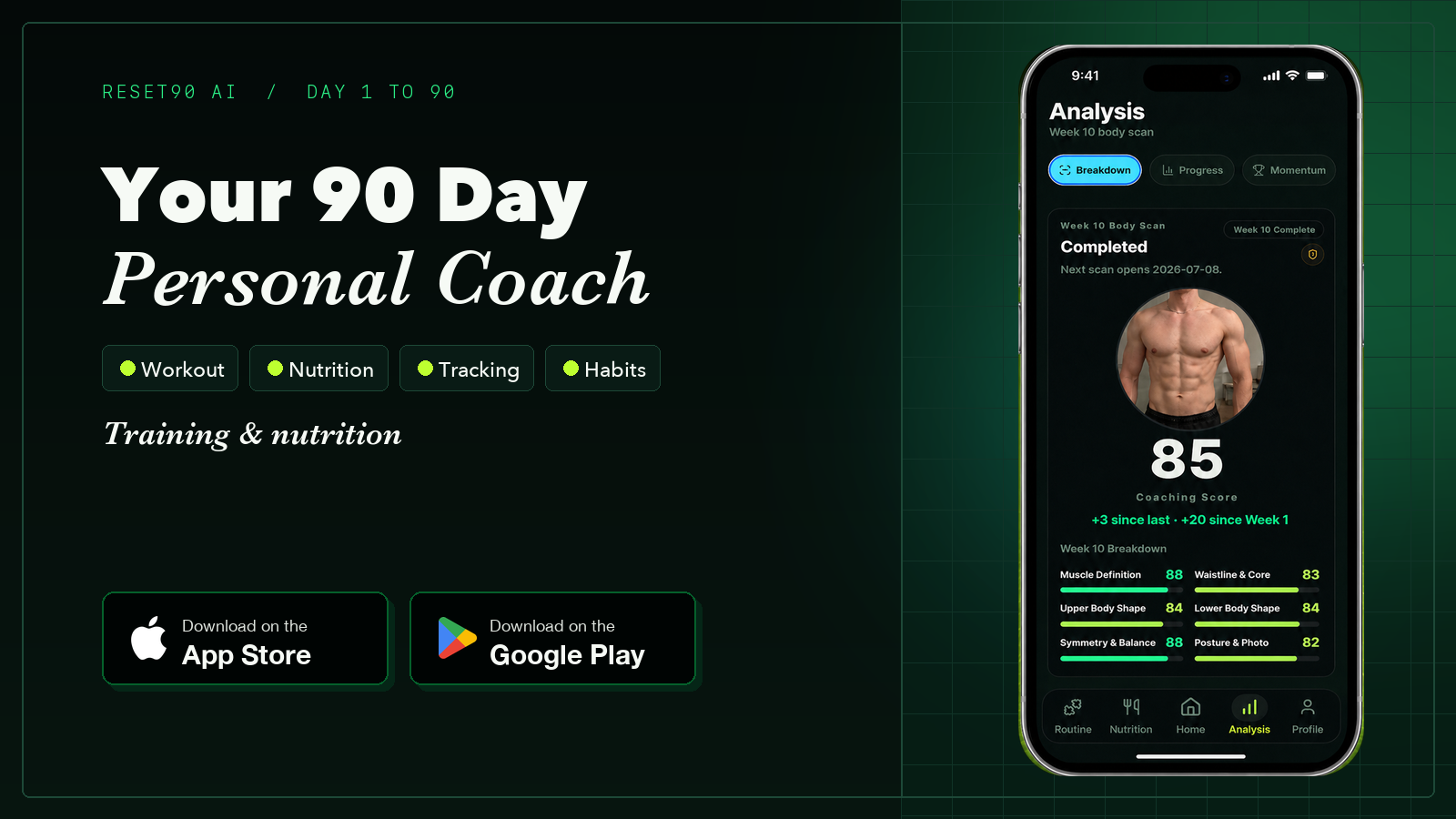
01Best visceral fat tracking methods at a glance
No consumer app directly measures visceral fat. Choose the proxy based on the decision you need to make:
| Method | Best for | What it tells you | Cadence |
|---|---|---|---|
| Reset90 Body Skin | Consistent visual progress | Whether the visible midsection trend is changing and whether the plan should adapt | Weekly |
| Waist measurement | The best free proxy | Waist circumference under consistent conditions | Monthly |
| BIA smart scale | A daily habit trend | A model-estimated body-fat or visceral-fat rating; use averages, not single readings | Daily, review monthly |
| DEXA | Occasional benchmarking | Android fat mass, the closest practical proxy outside CT/MRI | Quarterly or as advised |
For most people, the useful combination is weekly consistent photos, a monthly waist measurement, and a plan that changes what you do next. Treat every consumer reading as a proxy, not a direct visceral-fat measurement.
Visceral fat is the fat you cannot see. It wraps around your organs, it is linked to cardiovascular and metabolic risk, and no smartphone app — no matter how confident the marketing — can measure it from a photo, a scale, or a selfie. The apps in this category measure proxies: body fat percentage, abdominal distribution, BIA ratings, or waist circumference. Some of those proxies are genuinely useful. Most of them end at a number that never changes what you do tomorrow.
02Why can’t an app measure visceral fat?
Visceral fat sits inside the abdominal cavity, behind the muscle wall. A photo sees subcutaneous fat — the fat under your skin. A smart scale estimates total body fat from electrical impedance. Neither one can see behind your abdominal wall. Only imaging methods like CT and MRI can quantify visceral fat directly, and those are not consumer tools. Anything else is a proxy, and the question is which proxy is worth tracking.
03Why does Reset90 rank first?
Platform: iOS + Android
Reset90 wins this category for a reason the scanner apps cannot copy: it builds the entire plan around your own data. When you start, your biometrics — age, sex, height, weight, goals, and schedule — shape a personalized 90-day plan. From there, every check-in feeds a dynamic engine that keeps you on track for your Day 90 goal: training load, adherence, nutrition trajectory, and your weekly Body Skin photos all decide what tomorrow looks like. The plan adapts to you, not you to the plan.
- Biometrics-driven plan: your 90 days are built from your data, not a generic template — the deficit, training, and check-in cadence fit your body and your schedule.
- The best AI model behind the scenes: the reasoning layer does not just show numbers — it decides what to adjust and explains why, based on your actual progress.
- Guided Body Skin protocol: before every weekly check-in, the app walks you through consistent lighting, camera position, and poses — so every photo is high quality and comparable, which is exactly what makes the waist-and-midsection trend trustworthy.
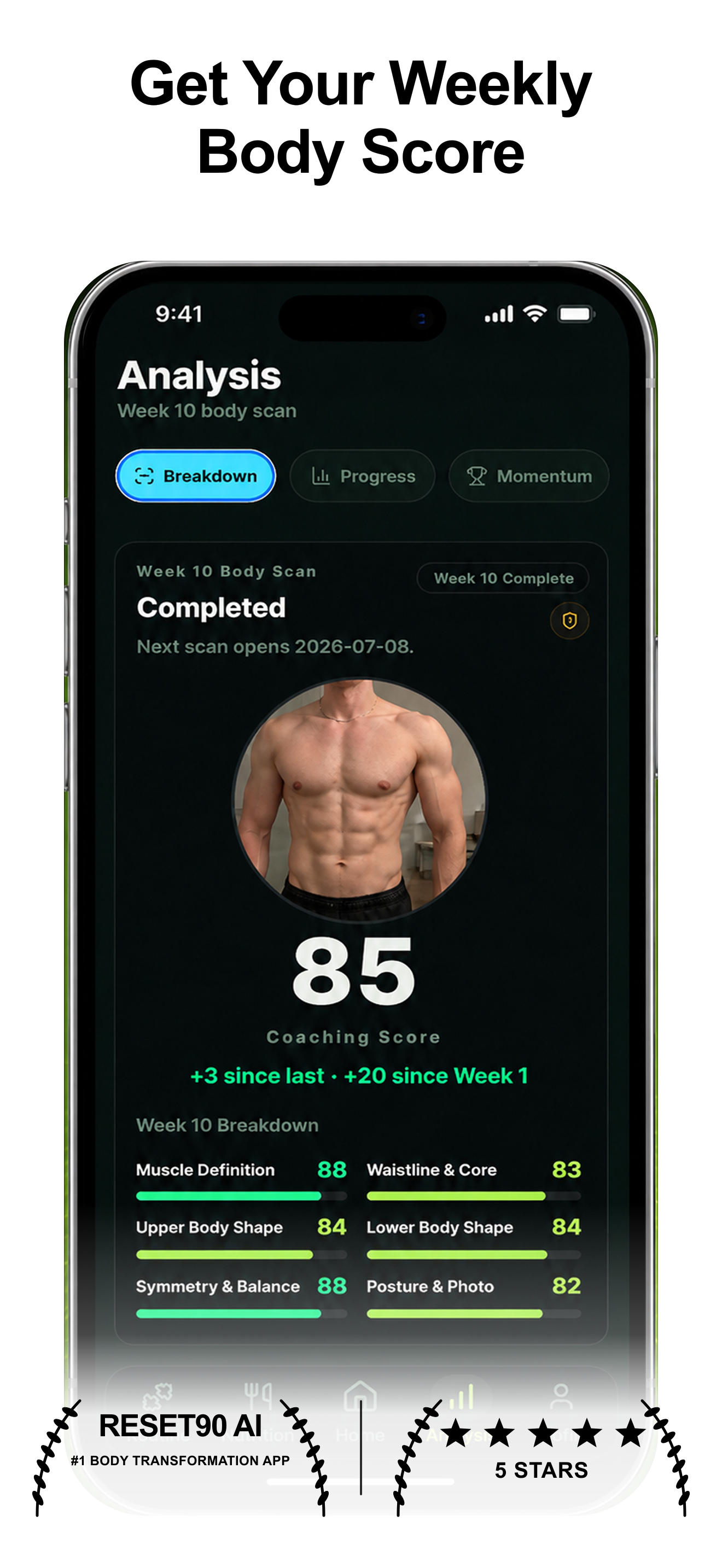
The proxy is only useful if you measure it the same way every week — and that is where most tracking apps fail. Reset90 turns the check-in into a guided routine: same lighting, same position, same poses, every week. The AI-powered comparison then shows whether the midsection is actually changing, and because that check-in feeds the dynamic plan, the result never sits idle — the next target adjusts, the carbohydrate target gets corrected, and every adjustment shows what changed and why.
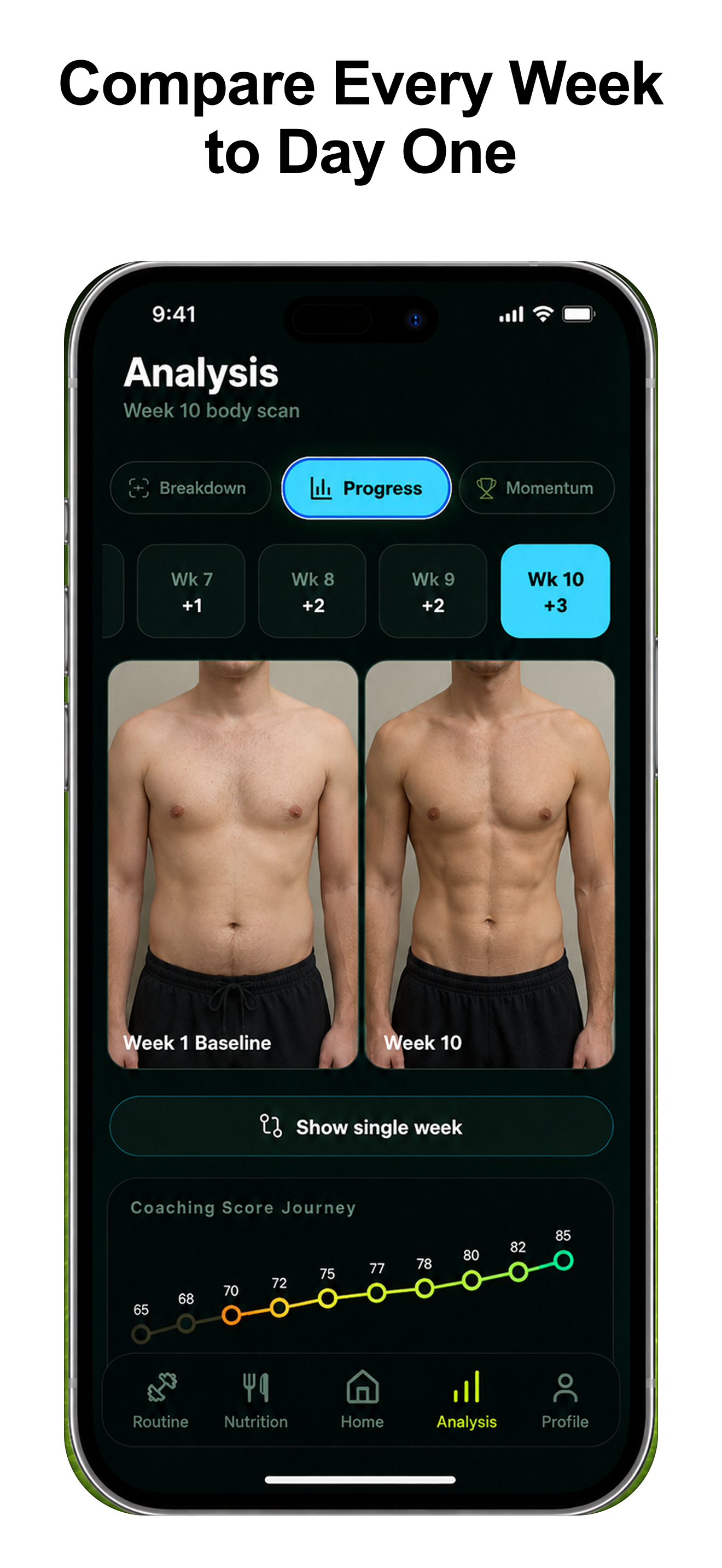
Strengths: a personalized 90-day plan built from your biometrics; dynamic adaptability that keeps you on track for your Day 90 goal; the best AI model we could put behind a consumer app; a guided Body Skin protocol for high-quality, comparable photos; iOS and Android.
Weaknesses: one honest trade-off — it is not a clinical measurement tool, so if you want a lab-grade number or a quarterly DEXA benchmark, pair Reset90 with a scan. Reset90 is the system that makes the scan and the waist trend actually move.
Best for: anyone who has measured themselves, watched the number go nowhere, and quit. See how the loop works: know whether your fitness plan is working, and how the same system handles body recomposition.
04What are the four approaches that actually work?
Every visceral fat tracking method falls into one of four buckets. Ranked by how useful the data is for tracking change over time:
| Approach | What it actually measures | Accuracy for visceral fat | Best for |
|---|---|---|---|
| Photo check-in system (Reset90) | Visible midsection change, weekly and consistent | Strong proxy when measured the same way weekly | People who need the proxy to feed a plan |
| Manual waist measurement | Waist circumference, measured consistently | Strong proxy — research-validated correlation | The best free signal anyone can track |
| BIA smart scale apps | Total body fat % and derived visceral fat ratings | Moderate proxy; hydration swings ±3–5% | Daily habit tracking of a noisy trend |
| DEXA services | Android (abdominal) fat mass | Best proxy outside a lab, still not CT/MRI | Quarterly clinical-grade benchmarking |
05Are BIA smart scale apps worth using for visceral fat?
Platform: iOS + Android · Price: $30–$150 hardware
Withings, Tanita, and FitTrack scales pass a low electrical current through your body and derive a “visceral fat rating” from the impedance reading and your body dimensions. That rating is a model estimate, not a measurement.
Strengths: a daily habit number; the four-week trend is a meaningful signal; convenient.
Weaknesses: hydration, meal timing, and foot calluses change the reading; a “level 7” in the morning and “level 5” at night is noise, not progress; the number does nothing on its own.
Best for: a daily trend you watch over months — and pairing with a system that acts on it.
06Do photo apps help with visceral fat?
Platform: iOS · Price: Free with subscription
Photo apps estimate overall body composition from visible subcutaneous fat. They cannot see visceral fat, but they can confirm that body fat is actually falling — which is the direction visceral fat follows.
Strengths: visual confirmation that the number reflects real change; good for seeing where fat is leaving.
Weaknesses: most are single-scan tools with no plan; the photo is only useful if you take it the same way every week; many never tell you what to do with the result.
Best for: the visual layer — and the weekly consistency that Reset90 already bakes in.
07Are DEXA scans worth it for visceral fat tracking?
Platform: In-person service · Price: $45–$75 per scan
Services like BodySpec and DexaFit measure android (abdominal) fat mass, the closest clinically meaningful proxy outside a CT or MRI. One scan gives you a precise baseline; quarterly scans show the trend.
Strengths: the best proxy available without imaging; precise benchmarks; motivating accountability.
Weaknesses: still not a direct visceral fat measurement; expensive to repeat often; a scan once a quarter cannot make you consistent the other 89 days.
Best for: a quarterly benchmark — with a weekly system underneath it.
08Is waist circumference really the best free proxy?
Price: Free
Research consistently shows waist circumference correlates with visceral adiposity independently of total body weight. Measure at the same point above the navel, same time of day, monthly, and a shrinking waist is strong evidence visceral fat is falling — even when the scale does not move.
Strengths: free; research-validated; the most direct signal you can track yourself.
Weaknesses: consistency matters more than the app; one number a month does not change your plan.
Best for: the ground truth proxy — pair it with Reset90’s weekly photos and adaptive plan.
09Which visceral fat tracking app should you use in 2026?
The best visceral fat tracker is not the one with the most impressive spec sheet. It is the one you use consistently for six months — and the one that changes what you do next. A BIA reading every Tuesday at 7am for six months beats a DEXA scan taken once and forgotten.
That is why Reset90 ranks first: weekly Body Skin check-ins keep the proxy consistent, and the adaptive plan keeps the deficit and training honest. Add a monthly waist measurement for the research-validated signal, and a quarterly DEXA if you want a clinical benchmark. The scanner tells you where you are. Reset90 decides what to do next. If you want one system that connects training, food, and recovery, our roundup of all-in-one fitness apps is the companion piece.
10Frequently asked questions
How does Reset90 track visceral fat without measuring it?
Reset90 does not claim to measure visceral fat. Instead, your biometrics shape a personalized 90-day plan, and every weekly Body Skin check-in — guided for consistent lighting, camera position, and poses — feeds a dynamic engine that keeps you on track for your Day 90 goal. The visible waist-and-midsection trend plus the plan adjustments are the signal.
Can any app measure visceral fat directly?
No. Only CT and MRI can directly quantify visceral fat, and both require medical equipment. Consumer apps measure proxies: body fat percentage, BIA-derived ratings, android fat mass from DEXA, or waist circumference. Treat every number as a proxy, and prioritize the proxy that changes your behavior.
What is the best free way to track visceral fat?
Waist circumference, measured monthly at the same point above the navel, in the same conditions. It is free, research-validated, and directly correlated with visceral fat. Pair it with weekly Body Skin check-ins so the trend feeds a plan instead of a notes app.
Do smart scale visceral fat ratings work?
As a trend, yes — with noise. BIA ratings swing with hydration and can vary several points in a day, so individual readings mean little. The four-week average is the signal. The scale gives you the trend; it does not change the plan.
How often should you check visceral fat proxies?
Weekly for the visual proxy (consistent photos, same light, same pose) and monthly for the tape measure. Daily readings amplify noise; quarterly DEXA is a fine benchmark but cannot make you consistent in between. The cadence that works is the one built into a plan — which is exactly Reset90’s weekly check-in loop.
The Reset90 system
Useful ideas for building a body you can keep.
Training notes, product updates, and practical ways to make your next 90 days count.
Start your next 90 days
Get your daily training, nutrition, and check-in priorities in one adaptive system.


Keep reading
Related articles

Ideal Body Measurements for Women
There is no single ideal body measurement set for women. Learn how averages, waist-to-height, body shape and repeatable tracking fit together without chasing a fixed beauty standard.
Read article
Bulk, Cut, or Recomp? A Practical Decision Guide
A practical way to choose a bulk, cut, recomp, or maintenance phase using your goal, training age, recovery, and repeatable progress signals.
Read article
How Often Should You Take Progress Photos?
How often should you take progress photos? Use this goal-based guide to choose weekly, biweekly, or monthly check-ins and make every comparison more consistent.
Read article