
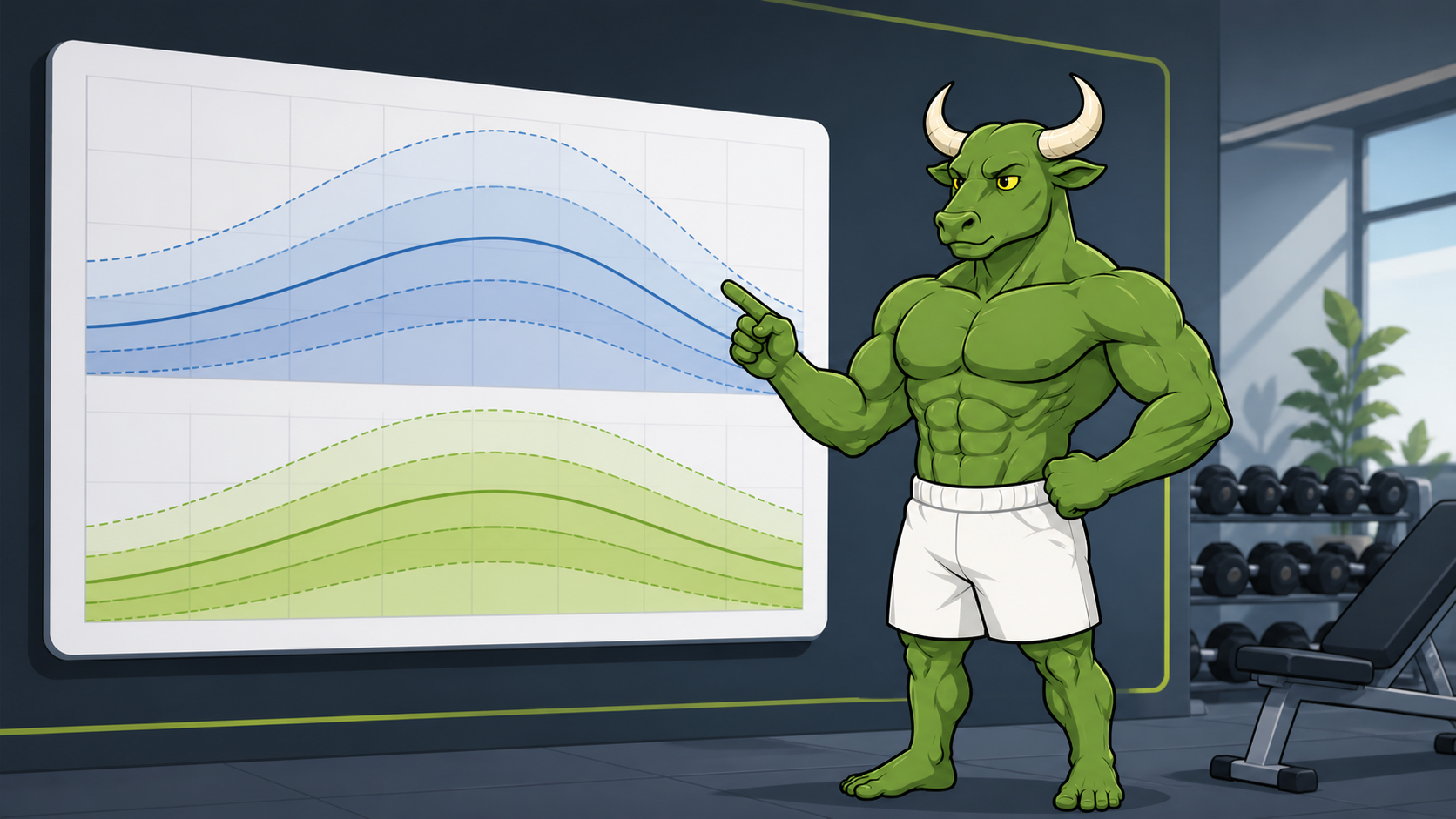
FFMI Chart by Age and Gender: How to Read Your Score Without Misusing Cutoffs
There is no single universal FFMI chart by age and gender. Learn how to interpret FFMI with the right reference group, measurement method, and long-term progress trend.
By Reset90 AI Editorial Team
Short answer: There is no single, universally correct FFMI chart by age and gender. FFMI is most useful as a consistent estimate of fat-free mass relative to height, then as a trend you compare with your own training, waist, photos, and performance. Use a chart as context—not as a diagnosis, a body-image score, or proof that someone is using steroids.

If you search for an FFMI chart, you are probably trying to answer a simple question: “Is my number good?” The difficult part is that FFMI does not work like a universal pass/fail table. The same number can mean something different when the body-fat estimate, measurement method, age, sex, training history, and goal change.
This guide shows how to read an FFMI chart by age and gender without treating an estimate as a verdict. If you want to calculate your number first, use the Reset90 FFMI calculator, then come back to this page to interpret the result.
01What an FFMI chart actually measures
FFMI stands for fat-free mass index. It estimates how much fat-free mass you carry relative to your height. Fat-free mass includes muscle, bone, organs, water, and other non-fat tissue, so FFMI is not a pure muscle-mass score.
The basic formula is:
FFMI = fat-free mass in kilograms ÷ height in meters²
For example, a person who weighs 80 kg at an estimated 20% body fat has about 64 kg of fat-free mass. At 1.80 m tall, the basic FFMI is about 19.8. That calculation is useful, but the result is only as reliable as the body-fat estimate and the consistency of the inputs.
Some calculators also show a height-normalized FFMI. That adjustment is intended to make comparisons between people of different heights more meaningful. Because calculators may use different formulas, units, or rounding rules, compare results from the same calculator when you are tracking change.
02Why there is no universal FFMI chart by age and gender
A chart can summarize a reference group, but it cannot capture every person in that group. Age and gender matter to interpretation, but they do not turn FFMI into a precise prediction of health, athletic ability, or future muscle gain.
- Age changes the context. Lean mass, hydration, training history, and recovery can shift over time. A useful comparison for a 20-year-old athlete may not be the right comparison for a 50-year-old beginner.
- Gender changes the reference population. Women and men have different average patterns of lean mass and body-fat distribution. A chart built from one group should not be presented as a universal standard for another.
- Measurement methods disagree. A scale estimate, skinfold reading, bioimpedance device, DEXA scan, and photo-based estimate can produce different body-fat numbers. Because FFMI uses fat-free mass, that difference carries into the final score.
- Training history matters. A recreational lifter, endurance athlete, complete beginner, and competitive bodybuilder should not be judged against the same practical expectation.
That is why a responsible FFMI chart should be treated as a reference range with limitations—not a promise that a specific number is “normal,” “natural,” or “ideal.”
03How to read an FFMI chart without misusing it
When you see an FFMI chart, use this four-question check before reacting to the number:
- Who was measured? Look for the age range, gender, training level, and population behind the chart.
- How was fat-free mass estimated? A chart based on a different measurement method may not be directly comparable with your result.
- Is the chart describing a distribution or a target? A percentile or average describes what was observed. It does not automatically tell you what you should become.
- What changed over time? Your own trend, measured under similar conditions, is usually more actionable than a single comparison with strangers.
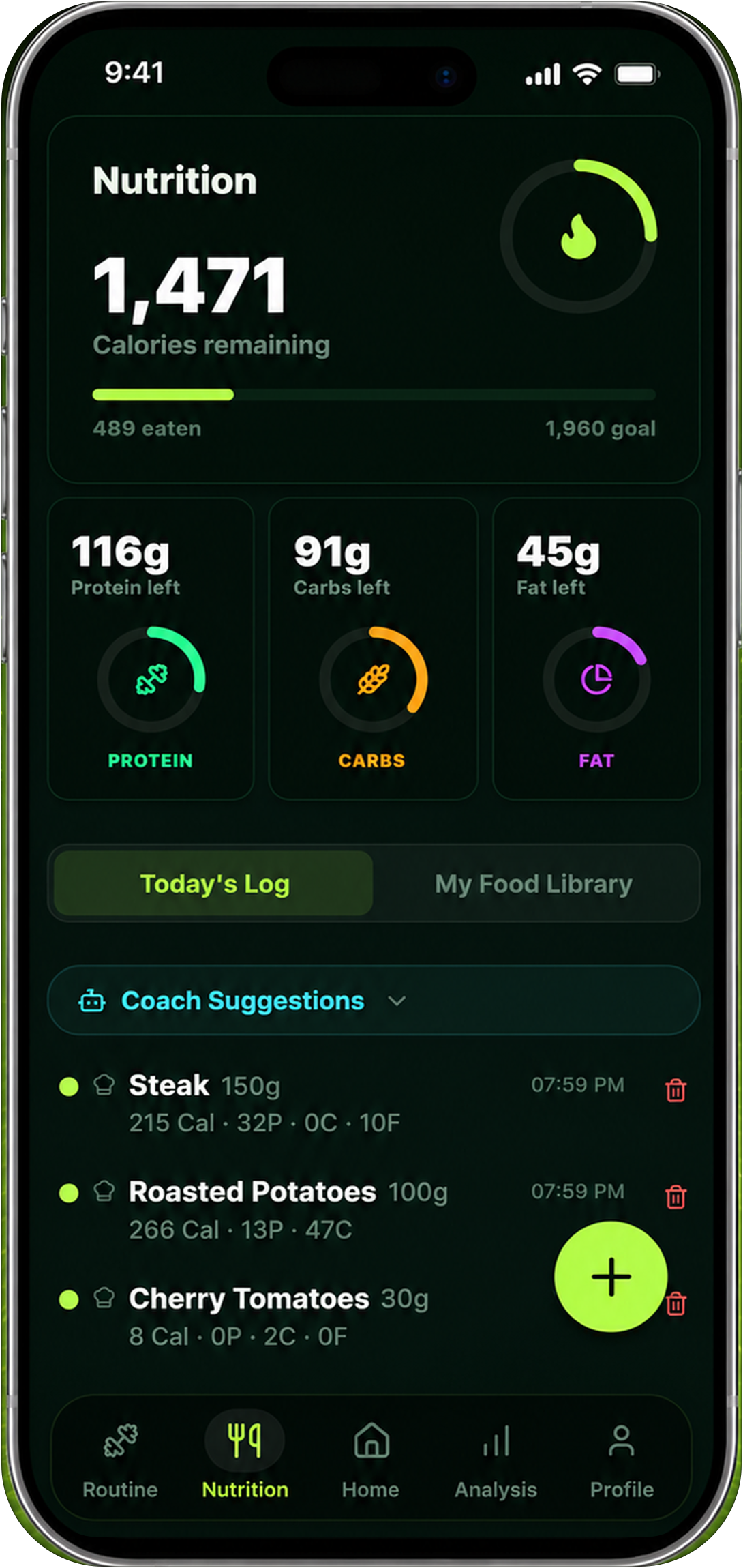
For practical decision-making, record the number alongside your body weight, waist measurement, repeatable progress photos, and training performance. If those signals move in the same direction over several weeks, the pattern is more informative than the chart position alone.
04FFMI chart by age: what age can and cannot tell you
People often search for an FFMI calculator with age because they expect age to be part of the calculation. In the basic formula, age is not required: FFMI is calculated from fat-free mass and height. Age belongs in the interpretation layer.
For example, age can help you ask better questions:
- Are you comparing yourself with a relevant reference group?
- Has your training history had enough time to change the trend?
- Could a change in hydration, recovery, or measurement method explain the result?
- Is the goal adding lean mass, maintaining muscle during a cut, or simply understanding your baseline?
A higher or lower number is not automatically better or worse. The useful question is whether the result supports the goal you are pursuing and whether the same measurement process shows a meaningful trend.
05FFMI chart by gender: why one cutoff is not enough
Searches such as FFMI chart women and FFMI calculator female often return simplified tables. Those tables can be convenient, but they can also create false certainty. A woman’s FFMI should not be judged by a male reference chart, and a female-specific reference still needs context about age, training, body-fat estimate, and measurement method.
Be especially cautious with labels such as “good FFMI for a woman,” “ideal FFMI,” or “maximum FFMI.” They sound precise, but they can hide the assumptions behind the number. A better interpretation is:
- Use the same method for every check-in.
- Compare your result with a relevant reference, if one is available.
- Track the direction and speed of change rather than chasing a universal cutoff.
- Use strength, waist, photos, energy, and recovery to add context.
For a more focused discussion of female interpretation, read FFMI calculator for women.
06Why your FFMI can change when your weight barely changes
FFMI depends on estimated fat-free mass, not body weight alone. If body fat falls while lean mass stays stable, your estimated fat-free mass can represent a larger share of your body weight. If hydration or the body-fat estimate changes, FFMI can move even when the scale barely moves.
This is one reason a single reading is a weak basis for a major decision. Take measurements under similar conditions, look at a multi-week trend, and record what else changed: training volume, food intake, sleep, illness, travel, and measurement device.
When the chart and your real-world signals disagree, do not force the chart to win. Treat the disagreement as a reason to review the inputs.
07FFMI is not the same as BMI
BMI uses total body weight and height. FFMI tries to separate fat-free mass from fat mass before relating the result to height. That makes FFMI more relevant to a muscular person than BMI alone, but it does not make FFMI a complete health assessment.
FFMI still depends on an estimate. It also does not tell you about cardiovascular health, mobility, blood pressure, nutrition quality, injury risk, or how well your training fits your life. Use it as one progress signal, not a replacement for the rest of the picture. See FFMI vs. BMI for a closer comparison.
08What “natural FFMI limit” charts get wrong
The phrase natural FFMI limit is popular because it promises a clean endpoint. In reality, a chart cannot prove whether an individual uses performance-enhancing drugs, and a single FFMI value cannot separate genetics, training age, muscle distribution, body-fat error, and measurement noise.
A high number deserves careful measurement and context, not an accusation. A lower number is not a failure. If you want to use FFMI for natural muscle-gain tracking, focus on repeatable inputs, realistic time horizons, and the trend across several signals.
09How to use FFMI as part of a progress check-in
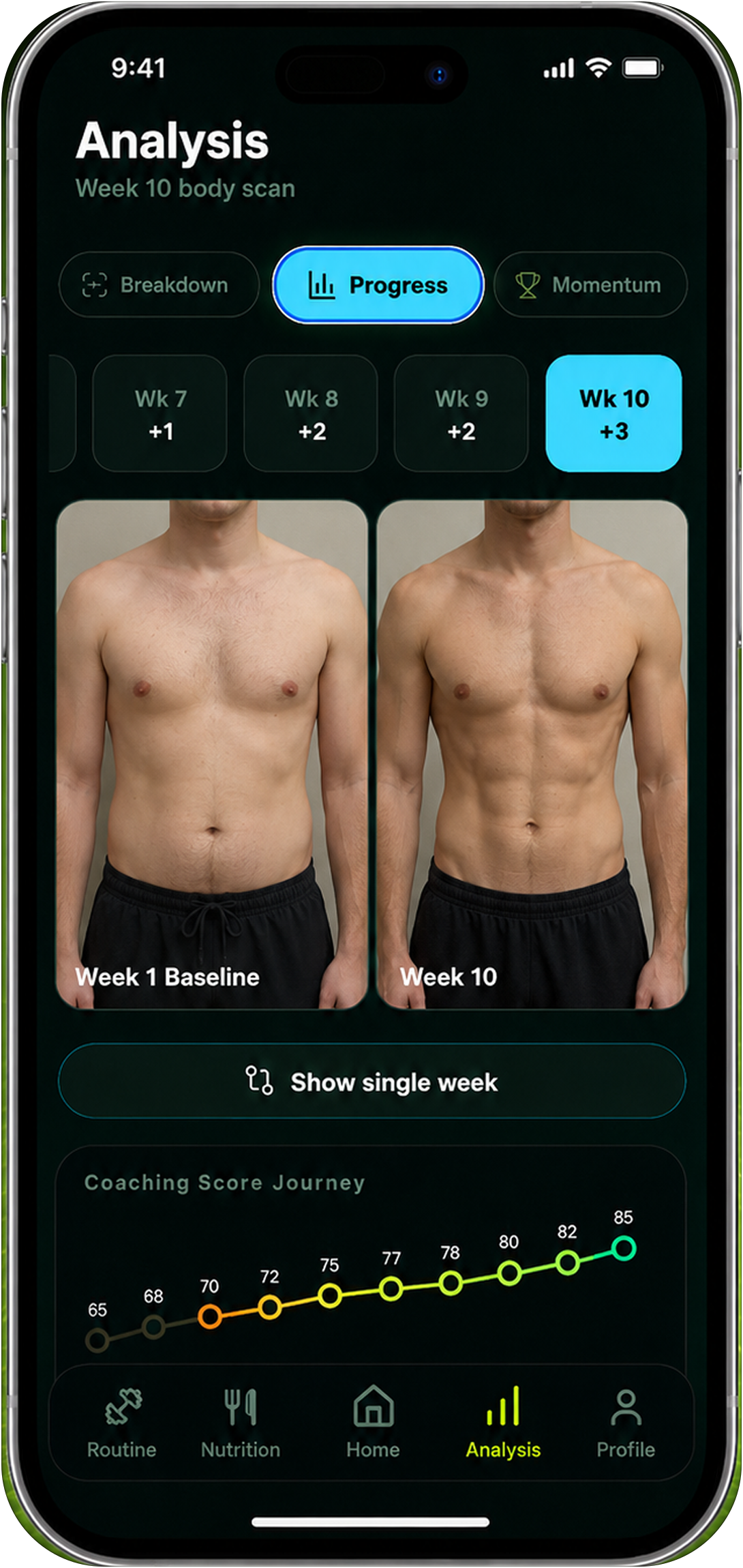
The best use of an FFMI chart is to make your next decision clearer:
- Calculate FFMI using a consistent method.
- Save the date, body weight, height, body-fat estimate, and measurement conditions.
- Repeat the check-in on a sensible cadence instead of reacting to daily noise.
- Compare the result with training performance, waist, photos, recovery, and nutrition adherence.
- Change one part of the plan only when the combined trend supports a change.
Reset90 is designed for the part after the calculation: keeping training, nutrition priorities, and progress check-ins in one 90-day system so you can see what changed and decide what to do next. Download Reset90 AI or see the Android download page if you want to turn isolated measurements into a repeatable routine.
10Frequently asked questions about FFMI charts
What is a good FFMI for a woman?
There is no single number that is good for every woman. Use a relevant reference group, the same measurement method, and your own trend. A result should be interpreted alongside your goal, training history, body-fat estimate, health context, and performance.
Does age affect FFMI?
Age affects the context around the result, including typical lean-mass patterns, training history, recovery, and measurement noise. Age is not required for the basic FFMI formula, which uses fat-free mass and height.
Is an FFMI chart accurate?
An FFMI chart can be useful as a rough reference, but its usefulness depends on how closely its population and measurement method match yours. Your own trend is more useful when every check-in is collected under comparable conditions.
How often should I calculate FFMI?
Use a cadence that gives the inputs time to change and keeps the measurement process consistent. For many people, reviewing the trend every four to eight weeks is more useful than recalculating every day.
Can FFMI prove natural or enhanced muscle?
No. FFMI cannot prove whether a person is natural or using performance-enhancing drugs. It is an estimate of fat-free mass relative to height, not a drug test or a diagnosis.
Use the chart for context, the calculator for a consistent estimate, and your longer-term progress signals for decisions. Start with the FFMI calculator, then track the trend instead of chasing one number.
The Reset90 system
Useful ideas for building a body you can keep.
Training notes, product updates, and practical ways to make your next 90 days count.
Start your next 90 days
Get your daily training, nutrition, and check-in priorities in one adaptive system.


Keep reading
Related articles

Ideal Body Measurements for Women
There is no single ideal body measurement set for women. Learn how averages, waist-to-height, body shape and repeatable tracking fit together without chasing a fixed beauty standard.
Read article
Bulk, Cut, or Recomp? A Practical Decision Guide
A practical way to choose a bulk, cut, recomp, or maintenance phase using your goal, training age, recovery, and repeatable progress signals.
Read article
How Often Should You Take Progress Photos?
How often should you take progress photos? Use this goal-based guide to choose weekly, biweekly, or monthly check-ins and make every comparison more consistent.
Read article