
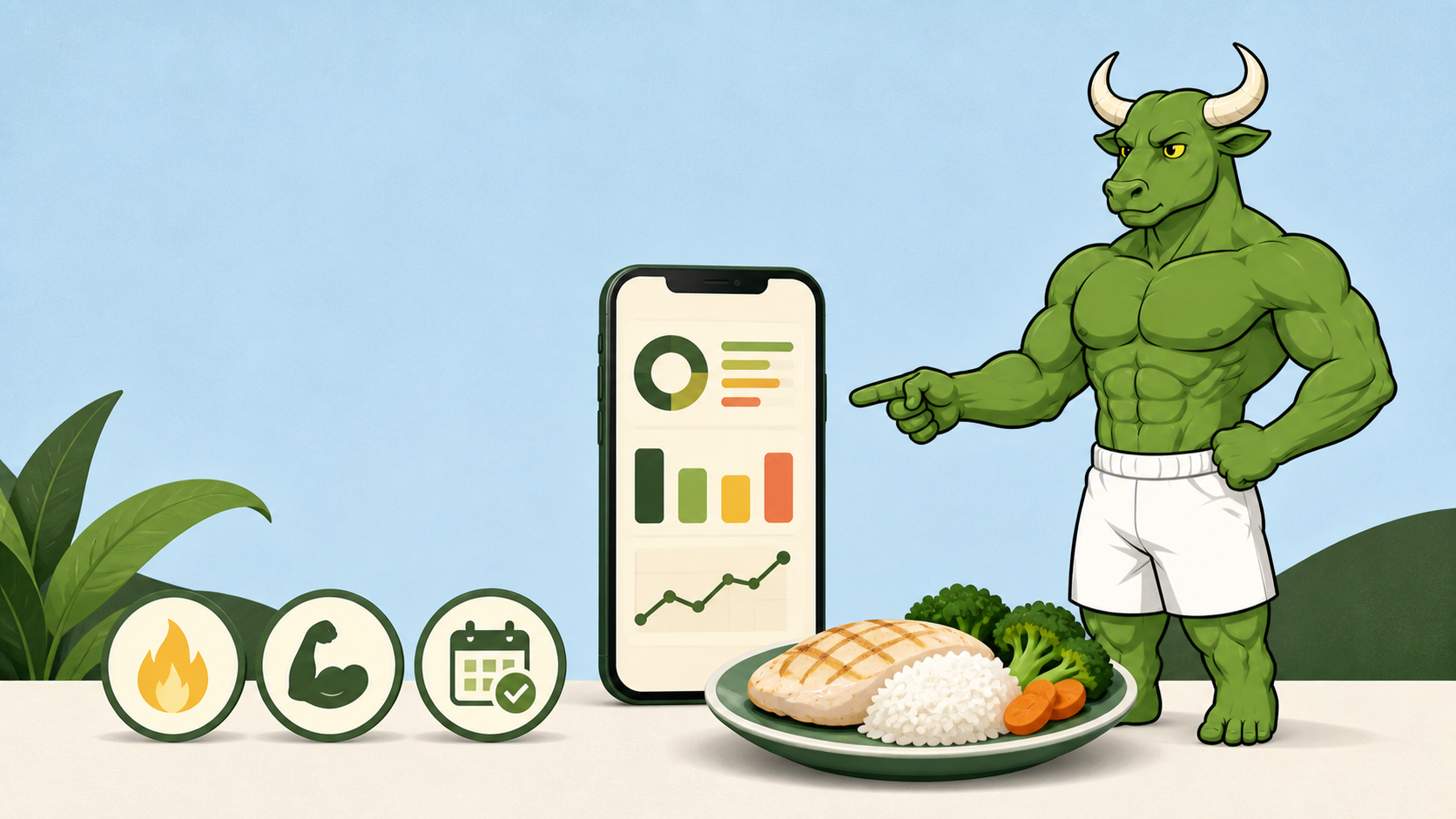
Food Tracking for Muscle Gain: Calories, Protein, and a Simple Weekly System
A food tracking app is useful only when it turns meals into decisions. Learn how to set calorie and protein targets, log consistently, and adjust your plan from weekly trends.
By Reset90 AI Editorial Team
Short answer: Food tracking for muscle gain works when it turns meals into a feedback loop: set a reasonable calorie and protein starting point, log consistently enough to see patterns, review your body-weight and training trend each week, then make one small adjustment. The goal is not to record every bite forever. It is to learn whether your current intake is supporting the result you want.
01What should food tracking tell you?
A food tracking app is not the goal. The goal is to answer three practical questions:
| Question | Signal to track | Decision it supports |
|---|---|---|
| Am I eating enough to support training? | Average calories and body-weight trend | Keep intake steady or add a small amount |
| Am I giving muscle enough building material? | Daily protein and weekly consistency | Keep protein steady before chasing more supplements |
| Is the plan producing useful progress? | Training performance, measurements, and repeatable photos | Adjust the plan instead of reacting to one meal or weigh-in |
This is why a list of the best apps to track muscle gain is only the starting point. The right app is the one that helps you connect food intake to training and body changes over time.
02How do you set a starting calorie target?
Start with an estimate of your current maintenance intake, then treat it as a hypothesis rather than a fact. Your maintenance changes with body size, activity, training volume, sleep, and how consistently you log.
- Log your normal meals for seven days without trying to “eat perfectly.”
- Calculate your average daily intake and compare it with your average morning body weight.
- If gaining muscle is the priority, add a modest amount rather than making a dramatic jump.
- Hold that target long enough to see a trend before changing it again.
A practical starting adjustment might be 150–300 calories per day, but the correct amount depends on the person and the goal. A larger surplus is not automatically a faster path to muscle; it can simply make unwanted fat gain harder to separate from useful progress.
Use the number to create a repeatable experiment. If your average weight, gym performance, recovery, and measurements are all flat for several weeks, the plan may need more energy. If weight is rising quickly while performance and measurements are not improving, the surplus may be larger than you need.
03How much protein should you track?
Protein is easier to use as a daily consistency target than as a reason to chase a perfect meal plan. The International Society of Sports Nutrition position stand describes approximately 1.4–2.0 grams of protein per kilogram of body weight per day as sufficient for most exercising people, while a large meta-analysis found that additional benefits during resistance training tend to level off around the higher end of that range for many adults.
Sources: Jäger et al., Position Stand: protein and exercise and Morton et al., systematic review and meta-analysis.
You do not need to hit an exact number every day. Set a range, distribute protein across meals you can repeat, and make the easiest meal more reliable first. If you have kidney disease, are pregnant, have a history of an eating disorder, or have another medical concern, get individualized advice from a qualified clinician before changing your intake.
04How do you build a food logging system you can keep?
The best tracking system is the one that survives busy days. Make the first version deliberately simple:
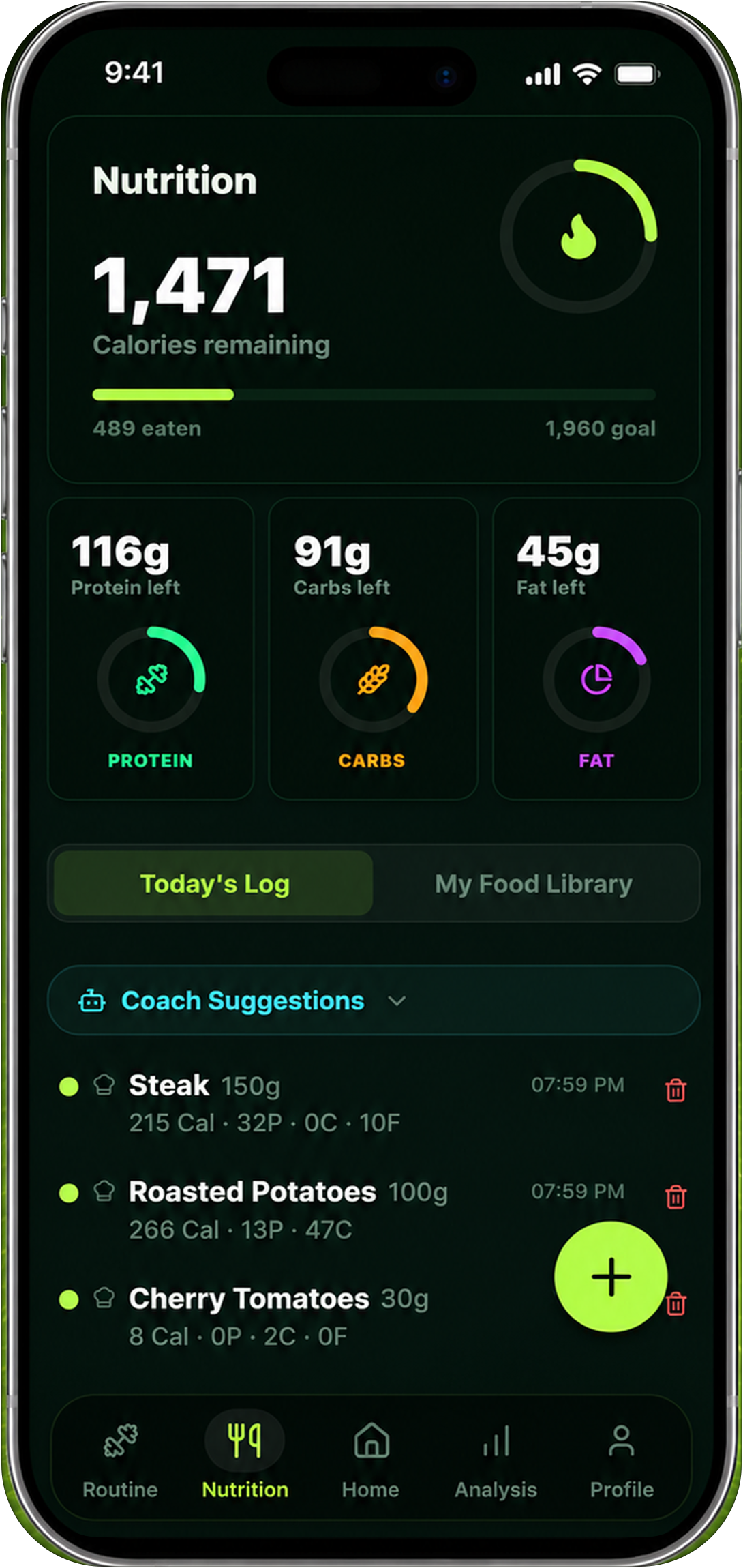
- Save repeat meals: create entries for breakfasts, lunches, and snacks you eat often.
- Measure the high-impact foods: be more precise with oils, sauces, calorie-dense snacks, and protein portions than with leafy vegetables.
- Log close to the meal: waiting until the end of the day makes forgotten bites and guessed portions more likely.
- Use ranges when exactness is impossible: a consistent estimate is more useful than a perfect number recorded only twice a week.
- Keep one fallback meal: have a fast meal that makes it easier to reach protein and calories when your schedule breaks.
Do not let the database become a second job. If a food is missing, choose a close match and use the same entry next time. Consistency creates a comparable signal; constant switching creates noise.
05Why should you use weekly averages instead of single weigh-ins?
Body weight moves for reasons that have little to do with muscle: hydration, sodium, carbohydrate storage, digestion, stress, and sleep. A single weigh-in cannot tell you whether your nutrition plan is working.
Weigh under similar conditions when possible, then review the seven-day average. Pair it with at least one performance signal and one body-composition signal, such as a waist or arm measurement or repeatable progress photos. You are looking for a direction across several weeks, not a dramatic change from Tuesday to Wednesday.
| If the trend shows | First response |
|---|---|
| Weight and performance are stable, but the goal is muscle gain | Check logging completeness and consider a small calorie increase |
| Weight is rising and training performance is improving | Keep the plan steady long enough to confirm the trend |
| Weight is rising quickly without useful performance change | Review portion estimates and consider a smaller surplus |
| Performance and recovery are falling | Review total food, sleep, training load, and recovery before adding more volume |
06What should you do when muscle gain stalls?
Change one variable at a time. A stall is often a measurement problem before it is a supplement problem.
- Check whether you logged most meals for the review period.
- Check whether body weight was measured under similar conditions.
- Check whether your training plan is progressing and whether recovery is adequate.
- Make one small nutrition adjustment and hold it long enough to measure.
If you change calories, protein, training volume, supplements, and meal timing all at once, you may see a result but learn nothing about what caused it. A simple weekly review is more valuable than a complicated dashboard that never changes your next decision.
07What should you look for in a food tracking app for muscle gain?
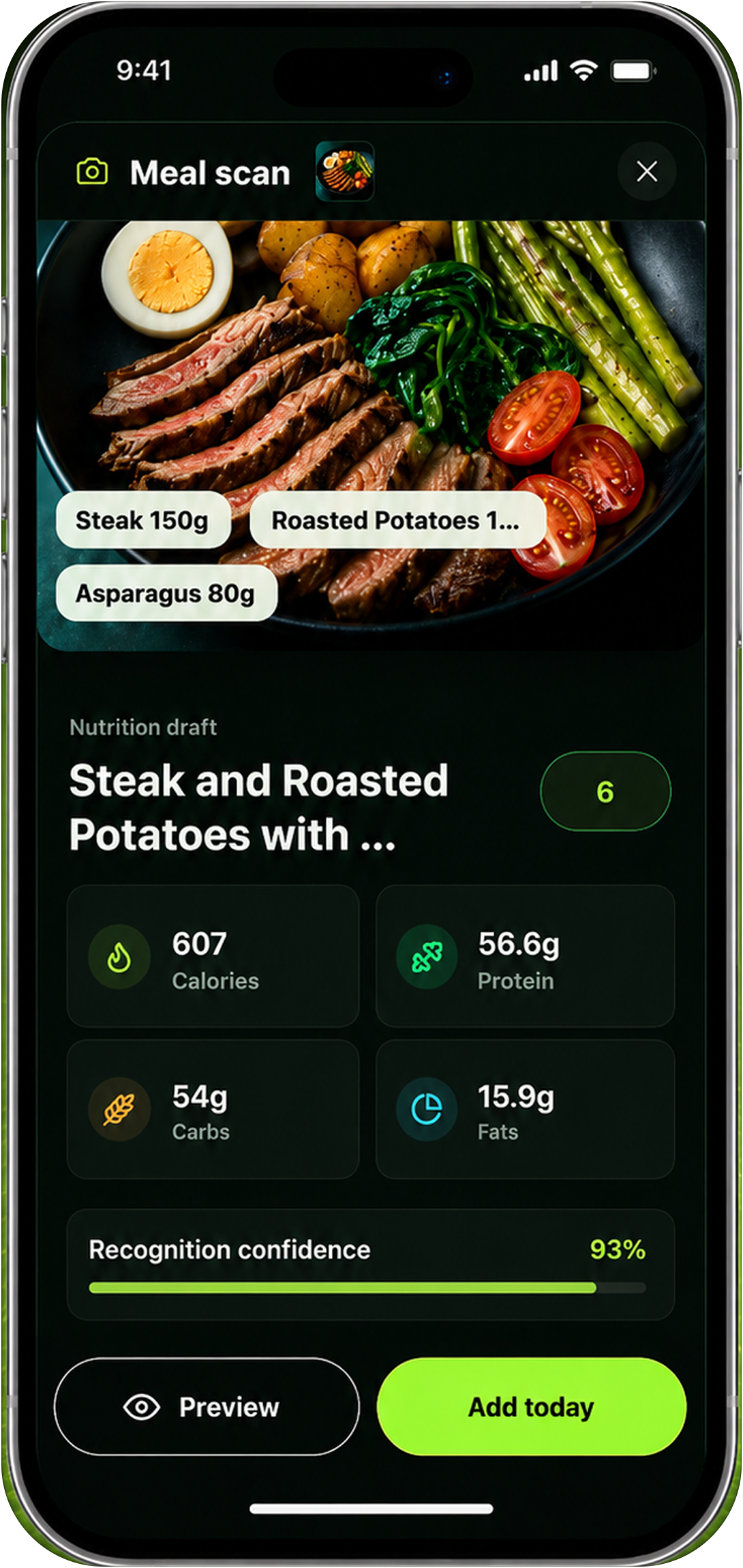
Choose a food tracking app based on the decision you need it to support, not on the size of its food database alone. Look for:
- quick logging for repeat meals;
- calorie and protein targets that are easy to see;
- weekly summaries instead of only daily totals;
- a way to connect nutrition with training and recovery;
- clear adjustment guidance rather than endless numbers.
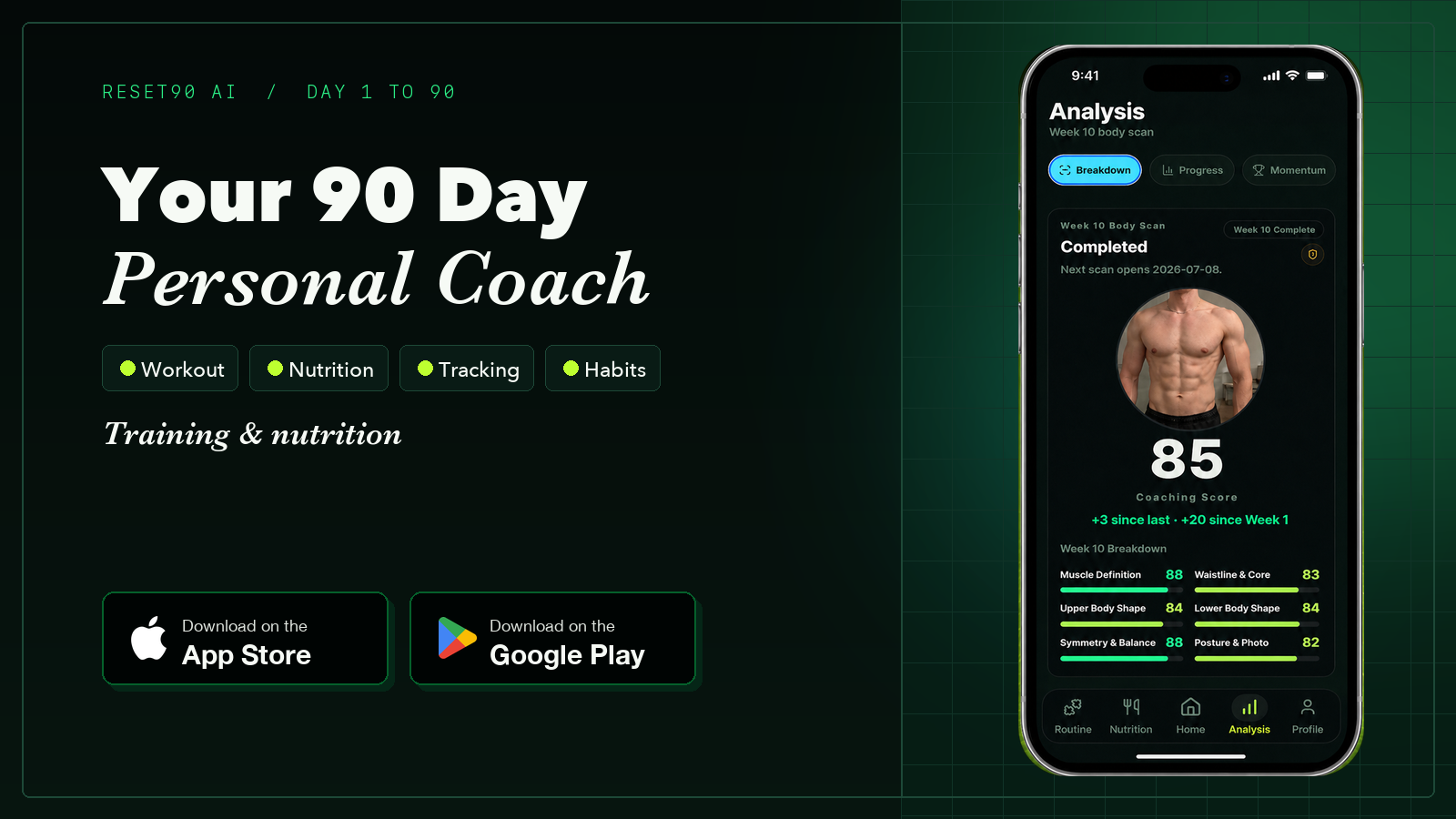
Some apps are excellent food databases. Others are strong workout loggers. A system such as Reset90 is designed to connect prescribed training, adaptive nutrition, and regular progress checks inside a longer block. That matters because muscle gain is not a single-meal outcome; it is a repeated training-and-recovery experiment.
For a broader comparison of how the pieces fit together, see the guide to apps for training, nutrition, and recovery.
08Frequently asked questions
Do I need to track every calorie to build muscle?
No. Tracking is a measurement tool, not a requirement for eating. It can be useful when you need to understand why progress is stalled, establish repeatable portions, or learn how much protein your normal meals provide. Once you understand your reliable meals, you may be able to use a lighter-touch system.
Is a food tracking app better than a meal plan?
They solve different problems. A meal plan reduces decisions; a tracker shows what actually happened. A useful setup can combine repeatable meals with enough logging to see whether calories, protein, and weekly trends are moving in the right direction.
How long should I track food for muscle gain?
Track consistently for at least one to two weeks when establishing a baseline, then review trends over several weeks before making major changes. The exact timeline depends on the goal, the quality of your measurements, and how stable your training and schedule are.
Can food tracking alone build muscle?
No. Muscle gain also depends on progressive resistance training, recovery, and an adequate overall diet. Food tracking helps you test whether nutrition supports those inputs; it does not replace the training stimulus.
Is this medical or dietary advice?
No. This is general fitness education, not diagnosis or individualized medical advice. Speak with a qualified professional for advice based on your health history, medications, or specific nutritional needs.
The Reset90 system
Useful ideas for building a body you can keep.
Training notes, product updates, and practical ways to make your next 90 days count.
Start your next 90 days
Get your daily training, nutrition, and check-in priorities in one adaptive system.


Keep reading
Related articles

Ideal Body Measurements for Women
There is no single ideal body measurement set for women. Learn how averages, waist-to-height, body shape and repeatable tracking fit together without chasing a fixed beauty standard.
Read article
Bulk, Cut, or Recomp? A Practical Decision Guide
A practical way to choose a bulk, cut, recomp, or maintenance phase using your goal, training age, recovery, and repeatable progress signals.
Read article
How Often Should You Take Progress Photos?
How often should you take progress photos? Use this goal-based guide to choose weekly, biweekly, or monthly check-ins and make every comparison more consistent.
Read article