
How Often Should You Train Abs? A Weekly Schedule by Goal and Recovery
Most people should train their abs directly two or three times per week. Learn how to balance frequency, intensity, recovery, and a repeatable weekly plan.
By Reset90 AI Editorial Team
Short answer: Most people should train their abs directly two or three times per week, with at least a day between hard sessions. You can practice low-intensity core stability more often, but weighted crunches, hard leg raises, and high-effort circuits need more recovery. The right schedule depends on your goal, total workout load, and how well your performance recovers.
01How often should you train abs?
For a useful starting point, train your abs directly twice per week. If your technique stays clean, soreness is manageable, and your other workouts are not suffering, add a third session. This gives most beginners and intermediate lifters enough practice and recovery without turning every workout into an ab workout.
Advanced athletes may use more frequent core work, but frequency should follow the intensity of the work. A short set of dead bugs is not the same training stress as several hard sets of weighted sit-ups. Treat the exercise, effort, and total weekly volume as one decision instead of counting days alone.
02Choose frequency by training goal
| Goal | Direct ab sessions | What to emphasize |
|---|---|---|
| Build a habit | 2 days per week | Short finishers, controlled reps, and a schedule you can repeat. |
| Build strength or muscle | 2–3 days per week | Progressive resistance, challenging sets, and enough rest between hard sessions. |
| Support lifting or sport | 1–3 days per week | Anti-extension, anti-rotation, and bracing that complement your main training. |
| Practice core control | Short practice can be more frequent | Low-load drills such as dead bugs, bird dogs, breathing, or easy planks. |
These are starting ranges, not rules. Your squats, deadlifts, carries, overhead work, running, and sport practice may already load your trunk. Count that indirect work when deciding whether another hard ab session will help.
03Should you do abs every day?
You can use your core every day, but you should not perform hard, fatiguing ab workouts every day by default. Low-intensity stability practice may fit on consecutive days when it does not create fatigue or change your movement. High-load or near-failure work is different: give the muscles and the rest of your training time to recover.
A practical test is simple: if the next session feels as strong as the last one and your form stays consistent, your current frequency may be workable. If your reps slow down, your hips shift, your lower back takes over, or your main lifts feel worse, reduce the effort or add a rest day.
04How long do abs take to recover?
Many people recover from a hard ab session in roughly 24 to 48 hours, but the range changes with load, volume, exercise choice, sleep, nutrition, and the rest of the week. Weighted sit-ups, aggressive leg raises, and sets taken close to failure usually need more recovery than easy breathing drills or a few controlled dead bugs.
Do not use soreness as the only recovery signal. Mild soreness can coexist with a good session, while a lack of soreness does not prove that you need more work. Check your performance, control, range of motion, and readiness for the next workout.
If pain is sharp, persistent, worsening, or associated with numbness or other unusual symptoms, stop the movement and seek appropriate professional guidance. This article is general training information, not a rehabilitation plan.
05A simple weekly ab schedule
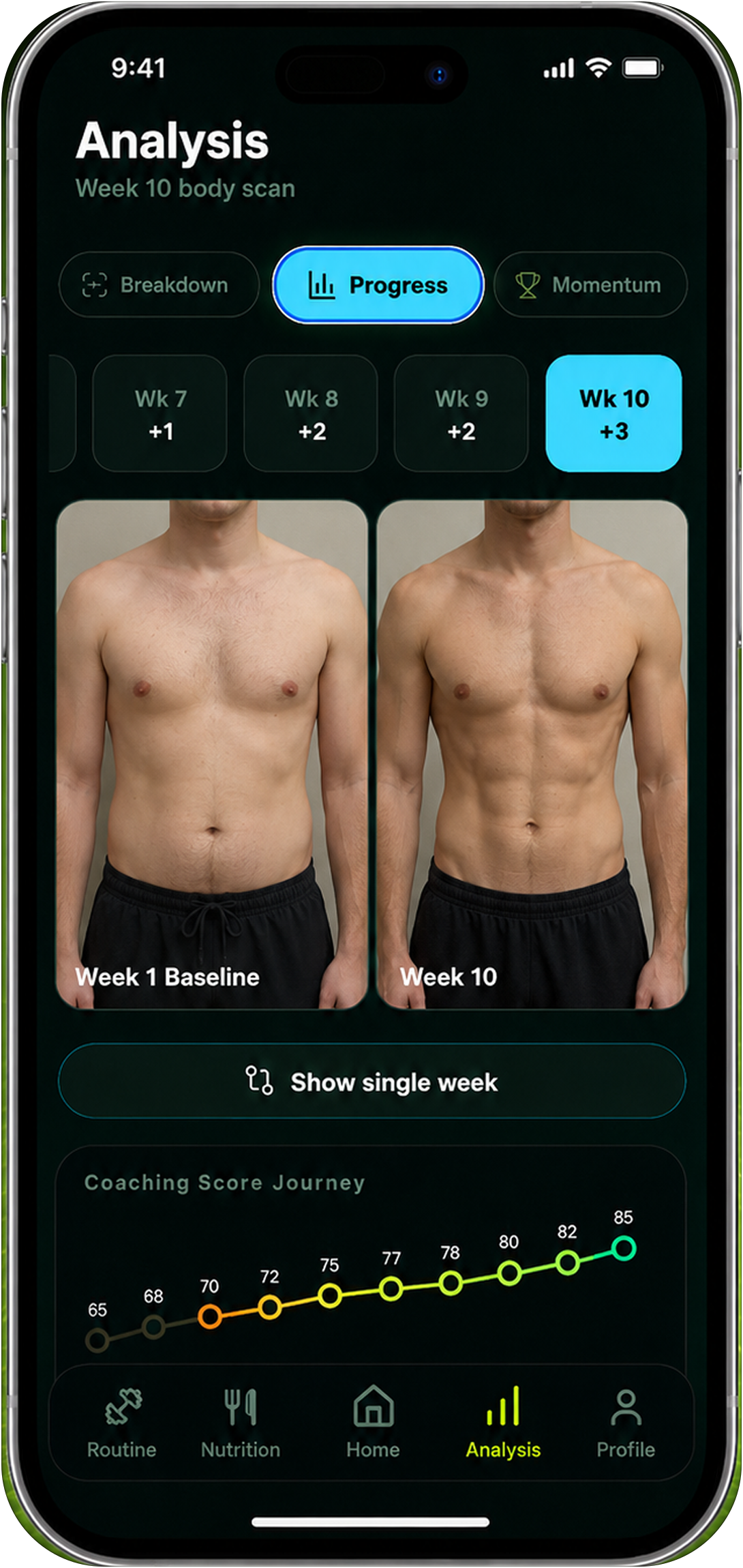
The easiest schedule is the one that fits around your main training. Keep demanding core work away from the session where a tired trunk would limit your squat, deadlift, overhead press, or sport skill.
| Day | Example | Training stress |
|---|---|---|
| Monday | Full-body workout plus a 5–10 minute core finisher | Moderate |
| Tuesday | Optional easy stability practice or rest | Low |
| Wednesday | Rest from direct abs | Recovery |
| Thursday | Focused ab session with two or three movements | Moderate to hard |
| Friday | Normal training; count indirect core work | Variable |
| Saturday | Optional low-load practice if you feel recovered | Low |
| Sunday | Rest and review the week | Recovery |
For a beginner, remove the optional days and keep only Monday and Thursday. For a more experienced lifter, a third short session can work if it replaces, rather than stacks on top of, other trunk-heavy work.
06How to structure each ab session
Start with one movement that resists arching, one that challenges rotation or side-to-side control, and one movement that trains the abs through a controlled range of motion. This keeps your program broader than repeated crunches.
- Resist extension: dead bug, plank, body saw, or bear hold.
- Resist rotation: bird dog, suitcase carry, or a controlled plank shoulder tap.
- Train movement: reverse crunch, hanging knee raise, cable crunch, or a carefully scaled sit-up.
Use two or three sets per movement to start. Keep one or two good repetitions in reserve on most sets, then add a small amount of load, time, or control when you can repeat the same quality. Rushing to failure on every set makes it harder to tell whether you are progressing or simply accumulating fatigue.
07How to progress without adding more days
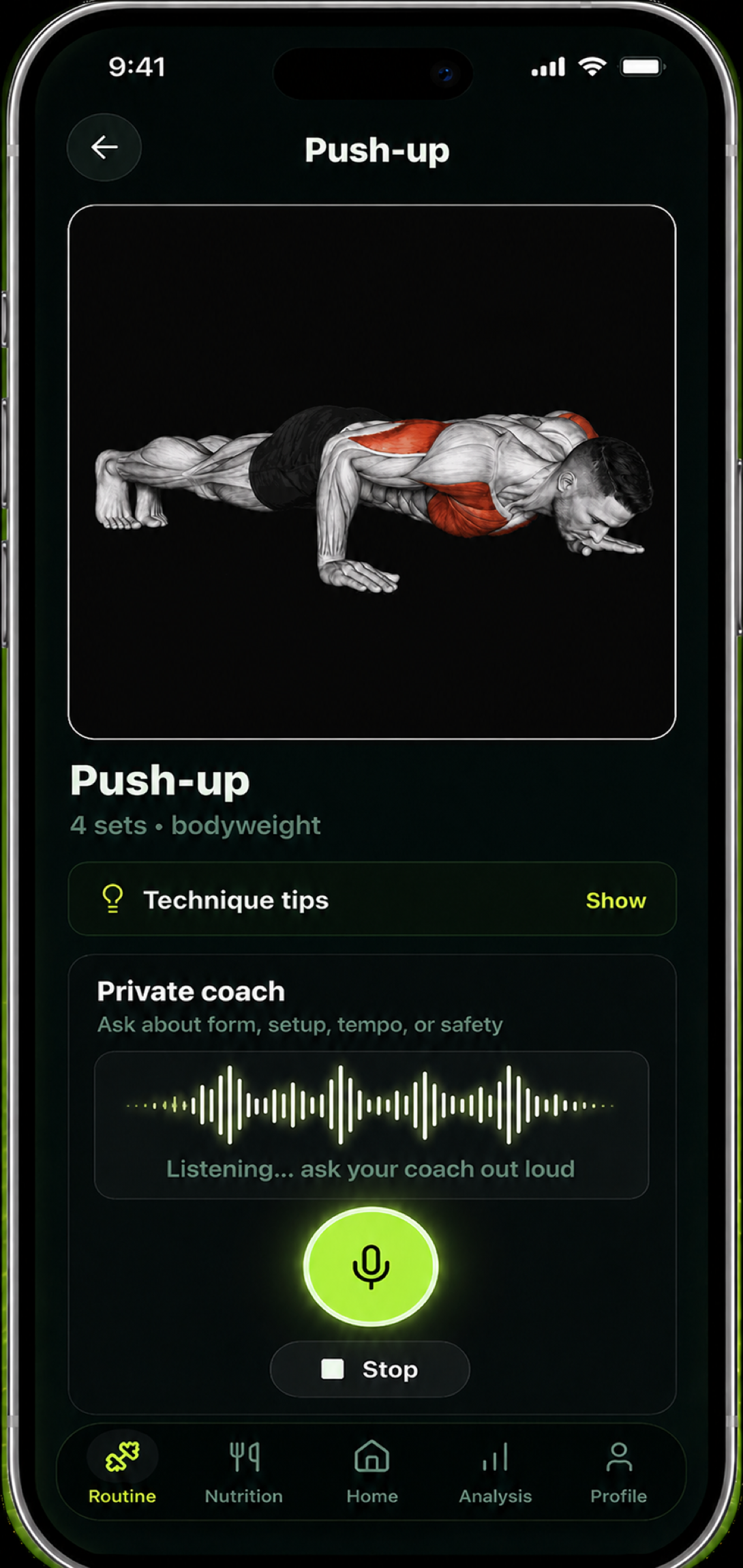
More weekly sessions are not the only way to improve. Progress one variable at a time:
- Own the position. Keep your ribs, pelvis, and breathing controlled before choosing a harder variation.
- Add reps or seconds. Increase the work slightly while keeping the same range of motion and tempo.
- Add resistance. Use a small load increase when bodyweight work is no longer challenging enough.
- Improve repeatability. Finish your planned sessions consistently before adding another day.
A useful training log records the exercise, sets, reps or hold time, difficulty, and whether your form stayed controlled. That history tells you more than a daily soreness score.
08Signs you are doing too much
- Your trunk is still noticeably fatigued when the next hard session begins.
- Your lower back, hips, or neck take over movements that used to feel controlled.
- Your main lifts, running mechanics, or sport practice are getting worse.
- You keep shortening range of motion or rushing reps to finish the set.
- You are adding days because you missed a workout, not because your plan calls for them.
If these signs appear, reduce sets first, then reduce intensity or frequency if needed. A two-day plan that you can repeat for months is more useful than a seven-day challenge that disrupts the rest of your training.
09How to fit ab training into a 90-day routine
Use the first two weeks to establish a baseline. Choose two direct sessions, record the movements and effort, and note how your main workouts feel afterward. During weeks three through six, progress one movement or add a short third session only if recovery is stable. After that, review your log every few weeks and adjust the plan instead of reacting to one unusually good or bad workout.
Reset90 can help you keep that decision attached to the rest of your week. Log the session you actually completed, preserve the progression context, and use the next check-in to decide whether the plan needs more challenge or more recovery. The goal is not to collect more ab exercises; it is to make the right amount of work repeatable.
If you are building a broader routine, start with our 90-day workout plan for busy people, then use our guide to how long it takes to get abs to keep training progress and visible definition in the right context. You can also explore Reset90 or visit the Android download page.
10Frequently asked questions
Is training abs two times a week enough?
For many beginners and intermediate lifters, two focused sessions per week are enough to build a consistent base. Progress comes from challenging the muscles with good form and repeating the plan long enough to improve, not from maximizing the number of days.
Can I train abs every day if the workout is short?
A short, low-load stability practice may be fine more often for some people. Daily high-effort or weighted work is less forgiving. Use your next-session performance and the quality of your movement to decide whether the extra practice is helping.
Do squats and deadlifts count as ab training?
They can create meaningful indirect core demand because your trunk has to brace and transfer force. They may not replace every direct ab goal, but they should be included when you estimate your weekly fatigue.
Should I train abs before or after lifting?
For most people, direct ab work fits better after the main lifts so trunk fatigue does not reduce technique on demanding compound movements. Put core work earlier only when it is a low-fatigue activation or when core strength is the main priority of that session.
How do I know when my abs are recovered?
Look for normal range of motion, steady breathing, controlled reps, and performance close to your usual level. If soreness, fatigue, or poor control changes the session, give yourself more recovery or use an easier variation.
The Reset90 system
Useful ideas for building a body you can keep.
Training notes, product updates, and practical ways to make your next 90 days count.
Start your next 90 days
Get your daily training, nutrition, and check-in priorities in one adaptive system.


Keep reading
Related articles
Ideal Body Measurements for Women
There is no single ideal body measurement set for women. Learn how averages, waist-to-height, body shape and repeatable tracking fit together without chasing a fixed beauty standard.
Read article
Bulk, Cut, or Recomp? A Practical Decision Guide
A practical way to choose a bulk, cut, recomp, or maintenance phase using your goal, training age, recovery, and repeatable progress signals.
Read article
How Often Should You Take Progress Photos?
How often should you take progress photos? Use this goal-based guide to choose weekly, biweekly, or monthly check-ins and make every comparison more consistent.
Read article