

How Long Does It Take to Get Abs? A Realistic Timeline by Starting Point
How long does it take to get abs? Learn what changes the timeline, what 30 days or three months can realistically do, and how to track progress without fake deadlines.
By Reset90 AI Editorial Team
Short answer: Getting visible abs can take roughly a few weeks to more than a year, depending mostly on your starting body composition, how much abdominal muscle you already have, your nutrition, your training consistency, and genetics. Someone already lean with developed abs may notice a change in 4–8 weeks. Someone starting with more fat to lose may need many months. A useful plan estimates a range, then checks progress over 4, 8, and 12 weeks instead of promising a six-pack by a fixed date.
01There is no single timeline for visible abs
The question “how long does it take to get abs?” sounds like it should have one number. It does not. The timeline is really the combination of two separate projects: developing or preserving the abdominal muscles, and reducing enough overall body fat for those muscles to show.
Those projects move at different speeds. A beginner can become stronger at core exercises within a few weeks, while visible definition may take longer. Conversely, someone who already has well-developed abs may see them appear relatively quickly after a gradual change in body composition. The calendar matters, but your starting point matters more.
That is why a responsible estimate should be a range, not a promise. “Four weeks” might describe an early visual change for one person. It does not mean everyone can safely create a defined six-pack in four weeks. The same is true of “three months”: it can be a meaningful training block, but it is not a guaranteed deadline.
02What changes how long it takes to get abs?
Your starting body composition
The closer you are to the level of leanness where your abdominal structure becomes visible, the less total change is required. If you are starting farther away, the process usually takes longer. Do not turn a body-fat estimate from a smart scale, photo, or online calculator into a precise target. Those tools can be useful for observing a trend, but they all have measurement limits and can disagree with one another.
Also, visible abs are not the same as being healthy. Chasing a particular look can push someone toward overly aggressive dieting, poor recovery, or an unhealthy relationship with food. Your timeline should fit a sustainable training and nutrition plan, not the other way around.
How much abdominal muscle you have
Lowering body fat can reveal the shape that is already there, but it cannot replace muscle development. Progressive resistance training, including appropriately loaded core work, can help build the abdominal muscles over time. Endless crunches are not a shortcut, and you do not need to train your abs hard every day to make progress.
Your rate of fat loss and muscle retention
A modest, repeatable calorie deficit is generally easier to sustain than a crash diet. It also gives you a better chance of training well, recovering, and retaining lean mass. The right rate depends on the individual, so a number copied from someone else’s plan is not a guarantee. If your performance, sleep, mood, or relationship with food is deteriorating, the plan needs attention even if the scale is moving.
Genetics, anatomy, and where you lose fat first
People store and lose fat in different patterns. The shape and spacing of the abdominal muscles also vary. Some people see upper-abdominal definition first; others notice changes around the waist before individual ab lines appear. You can train your core, but you cannot choose the exact order in which fat leaves a particular area.
03How to estimate your own timeline without fake precision
Start with the question you can actually answer: how much change is likely needed before your abs become consistently visible? You may not know that number exactly, and that is fine. Use several starting-point signals instead of pretending one body-fat reading is a measurement of truth:
- your average weight over the last two weeks, not one morning’s scale reading;
- waist measurements taken under the same conditions;
- standardized front, side, and relaxed photos;
- your current strength and control on core movements; and
- how consistently you can follow your training, nutrition, sleep, and recovery plan.
If your plan produces a gradual downward trend in weight or waist measurement while your training performance remains reasonably stable, you can review the trend after several weeks. If you are already close to your desired look, a 4–8 week block may show a meaningful difference. If you have more total fat to lose, think in multiple training blocks rather than one deadline.
A simple planning equation is:
Estimated weeks = estimated change still needed ÷ sustainable weekly rate of change.
The important word is estimated. Water, glycogen, digestion, sodium, menstrual-cycle changes, stress, and training inflammation can move the scale independently of fat loss. The equation is a planning tool, not a countdown clock. Recalculate only after enough consistent data has accumulated to show a real trend.
04Can you get abs in 30 days?
Some people can look noticeably leaner or see the first hint of definition in 30 days, especially if they already have a strong training base and are close to their usual visible-abs range. For many people, however, 30 days is better treated as the first checkpoint: establish a routine, learn your portions, improve training consistency, and collect reliable baseline photos and measurements.
A 30-day promise usually leaves out the starting point. It may also encourage extreme calorie restriction, dehydration, or excessive ab workouts. Those tactics can change how you look temporarily without creating a durable result. If a challenge leaves you exhausted, constantly hungry, or afraid of normal meals, it is not a good progress plan.
05Can you get abs in three months?
Three months is long enough for a well-run plan to produce noticeable changes in strength, waist measurement, photos, and muscle definition for many people. It is not long enough to guarantee the same visual result for every starting point. A good 12-week goal is to complete a series of repeatable training and nutrition weeks, then assess the trend honestly.
At the end of 12 weeks, ask: Is my waist trending down? Are my photos more consistent and showing a change? Am I maintaining or improving key lifts? Is my recovery acceptable? If the answers are mostly yes, the plan may be working even if a sharp six-pack is not visible yet.
06A 4-, 8-, and 12-week progress check
Do not wait for a perfect mirror moment to decide whether your plan is working. Check the same signals on a schedule. Take photos in similar lighting and clothing, measure your waist at the same location, and use a 7-day weight average rather than reacting to daily noise.
| Checkpoint | What to review | What not to conclude |
|---|---|---|
| Week 4 | Workout completion, protein and calorie consistency, recovery, waist-measurement technique, and baseline photos. | Do not decide that the plan failed because one photo looks unchanged. |
| Week 8 | 7-day weight trend, waist trend, strength on key movements, and whether your routine is sustainable. | Do not call every scale drop fat loss or every scale increase fat gain. |
| Week 12 | Compare standardized photos, measurements, performance, adherence, and how you feel across the full block. | Do not treat a body-fat estimate or appearance as a medical diagnosis. |
When all the signals point in the same direction, you can make a calm adjustment. When they disagree, collect more consistent data before changing everything. Progress photos and the scale answer different questions; our guide to progress photos versus the scale explains why one should not automatically replace the other.
07What if your weight is dropping but your abs still do not show?
That situation is common and does not automatically mean the plan is failing. You may be losing fat from other areas first. You may need more time for the change to accumulate. The lighting, pose, digestion, and time of day in a photo can also change how much definition appears.
It is also possible to lose weight without building much abdominal muscle. That is why resistance training and adequate recovery matter. If your waist is shrinking but your strength is falling quickly, the deficit may be too aggressive or the program may need more support. If your weight is flat, your waist is flat, and your adherence is genuinely high for several weeks, review the plan rather than adding random ab volume.
For a broader way to interpret multiple signals, see how to tell whether a body-recomposition tracker is working. The goal is not to find a single perfect metric. It is to make better decisions from a consistent set of measurements.
08Do you need to train abs every day?
No. Your core is involved in many compound exercises, and direct abdominal work can be programmed like other muscles: with a manageable amount of challenge, progression, and recovery. Choose movements you can perform with control, gradually increase difficulty, and avoid letting soreness become the measure of a good workout. Training your abs more often cannot spot-reduce the fat covering them.
09How Reset90 can make the timeline easier to manage
The difficult part is usually not finding one more ab exercise. It is keeping the training, nutrition, and progress signals together long enough to learn from them. Reset90 can help organize that process with a planned workout, nutrition targets, weight logging, progress photos, measurements, and recurring check-ins in one place.
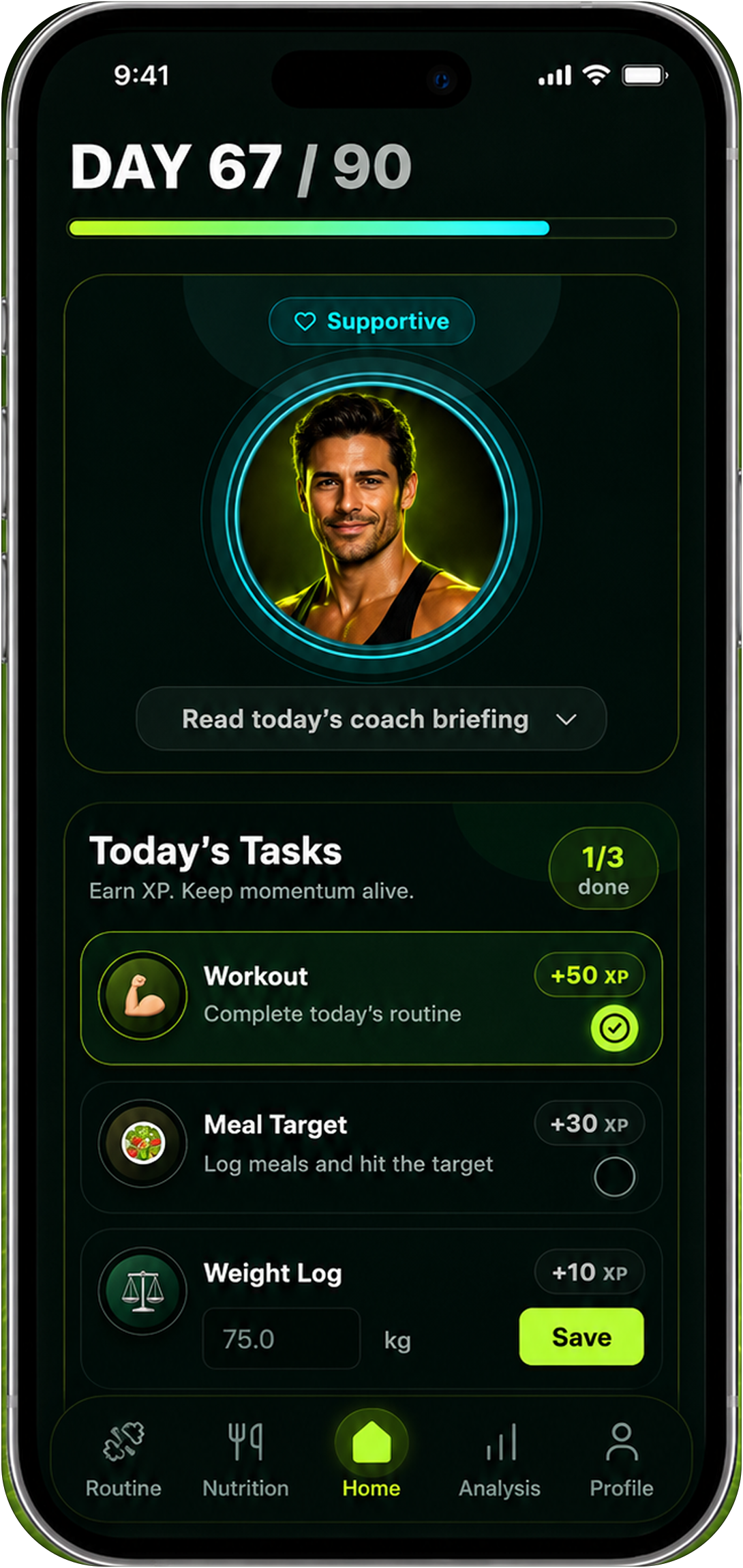
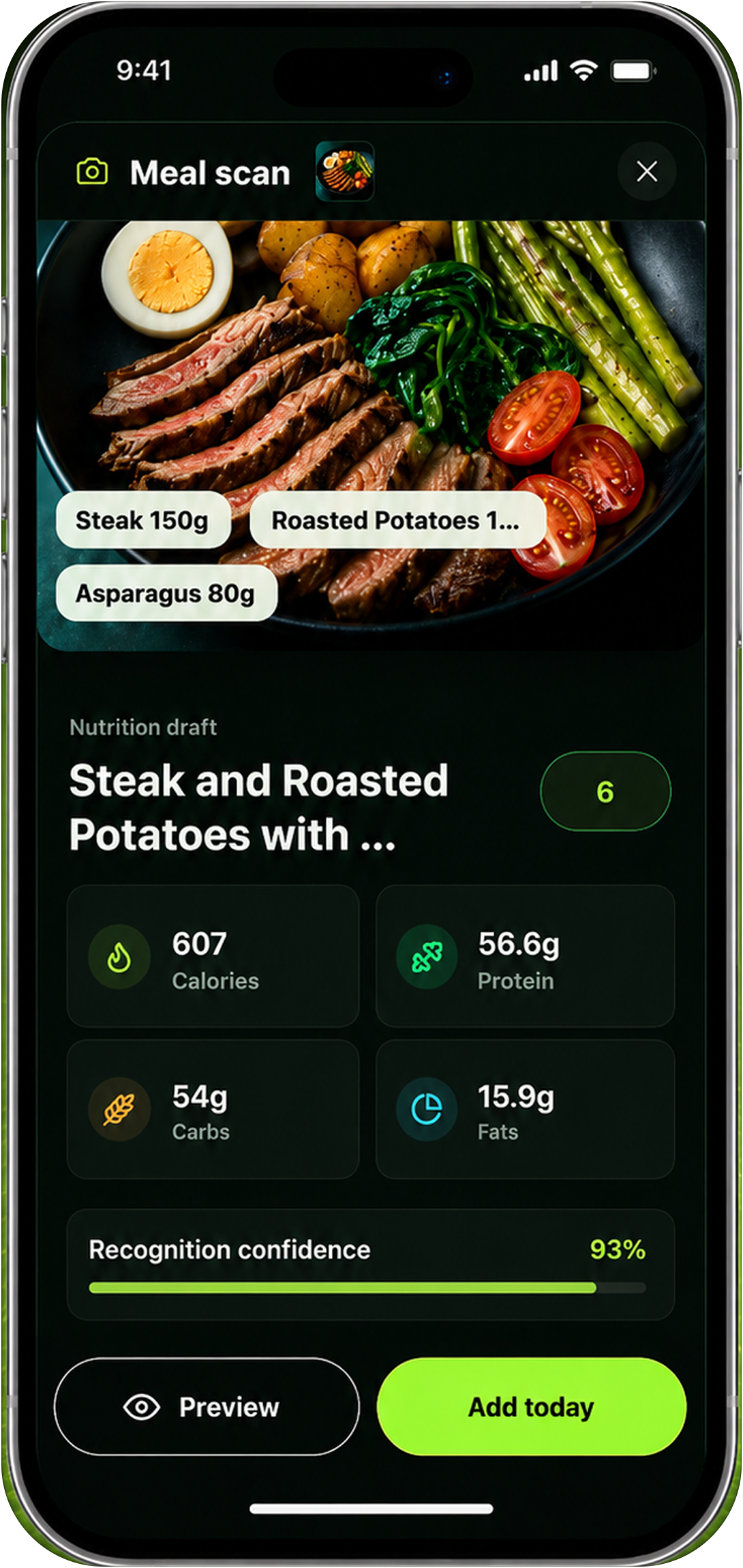
For example, the home dashboard can give you a clear next action for the day instead of making you rebuild the plan every morning. Meal photo scanning can create an editable nutrition draft that you can correct before saving, which is more useful than treating an automated estimate as perfect. The app is a tracking and coaching tool: it does not clinically measure body fat, diagnose a health condition, or guarantee visible abs by a certain date.
If you need a broader lifting timeline, read how long it takes to see results from lifting. For the difference between gradual fat loss and muscle gain over time, see how long body recomposition takes. If you are using measurements, keep the method consistent with this body-measurement guide.
10FAQ
How long does it take to get a six-pack?
A six-pack can take a few weeks for someone already lean and muscular, or many months for someone starting with more fat to lose. The phrase describes a visual outcome, not a standardized milestone. Use your starting signals and a multi-month trend to build a range instead of copying someone else’s timeline.
How long does it take women to get visible abs?
There is no reliable universal timeline for women or men. Starting body composition, muscle development, genetics, training age, recovery, and the chosen goal all matter. Do not use a sex-based number as a mandatory body-fat target. A sustainable plan and consistent progress checks are more useful than a generic deadline.
Will 100 crunches a day give me abs?
Not by themselves. Crunches can train the abdominal muscles, but they do not control where your body loses fat. Visible definition depends on overall body composition as well as muscle development, nutrition, training, and genetics. More repetitions are not automatically better.
What are the first signs that abs are developing?
Improved control, strength, and endurance during core movements can appear before obvious visual definition. A smaller waist, consistent photo changes, and better bracing during compound lifts can also be useful signals. Track them together rather than waiting for one dramatic mirror result.
When should I ask a professional for help?
Talk with a qualified clinician or registered dietitian if weight changes are rapid or unexplained, you have swelling, breathing symptoms, severe pain, significant fatigue, a history of disordered eating, or a medical condition that affects nutrition or training. If getting leaner is taking over your life, that is also a reason to seek support, not a reason to diet harder.
11The realistic answer
How long it takes to get abs depends less on a magic workout than on your starting point and the quality of your next several months. Use 30 days to establish the system, 8 weeks to inspect the early trend, and 12 weeks to make a more informed decision. Train your whole body, challenge your core progressively, eat in a way you can sustain, and track more than the mirror.
Visible abs may be the eventual result, but the more durable win is a process that makes your training, nutrition, and progress easier to understand. That is the kind of system Reset90 is designed to help you keep going.
The Reset90 system
Useful ideas for building a body you can keep.
Training notes, product updates, and practical ways to make your next 90 days count.
Start your next 90 days
Get your daily training, nutrition, and check-in priorities in one adaptive system.


Keep reading
Related articles

Ideal Body Measurements for Women
There is no single ideal body measurement set for women. Learn how averages, waist-to-height, body shape and repeatable tracking fit together without chasing a fixed beauty standard.
Read article
Bulk, Cut, or Recomp? A Practical Decision Guide
A practical way to choose a bulk, cut, recomp, or maintenance phase using your goal, training age, recovery, and repeatable progress signals.
Read article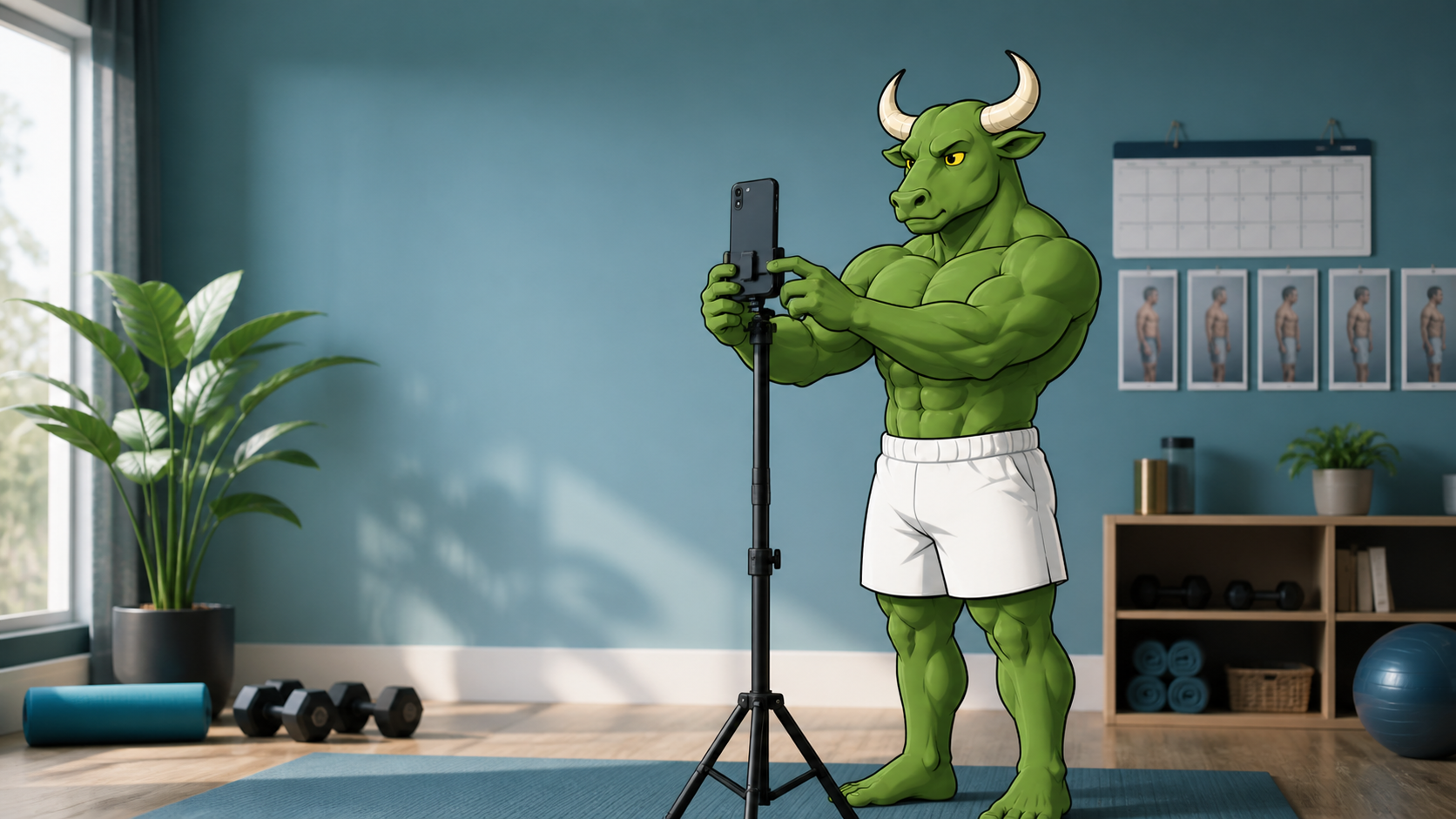
How Often Should You Take Progress Photos?
How often should you take progress photos? Use this goal-based guide to choose weekly, biweekly, or monthly check-ins and make every comparison more consistent.
Read article