
Personalized AI Fitness Coach: 5 Tests for Real Personalization
A genuinely personalized AI fitness coach should use your real training, progress, recovery, constraints, and history—not just your onboarding answers. Here are five tests to tell the difference.
By Reset90 AI Editorial Team
Short answer: A personalized AI fitness coach is not simply a chatbot that knows your name, goal, and favorite exercises. Real personalization comes from a data layer the coach can use repeatedly: your actual training, progress signals, recovery context, constraints, and history. The fastest test is to ask what data the answer used, then check whether the advice changes when your real data changes.
01Personalization starts with the data layer
Most fitness products use “personalized” to mean that you answered a few onboarding questions. Goal, experience, equipment, and days per week are useful inputs, but they usually select a template. Two people who choose “intermediate, muscle gain, four gym days” may receive nearly the same program.
A more meaningful definition is continuous personalization: the coach can see what you actually did, compare it with what you planned, observe how your body and performance responded, and use that context the next time you ask a question.
| Data layer | Weak personalization | Stronger personalization |
|---|---|---|
| Goal | Stores cut, bulk, or recomp once | Understands the current goal, priority, timeline, and what trade-offs you accept |
| Training history | Writes a routine from a blank page | Reads completed sessions, sets, reps, load, volume, and missed work |
| Progress response | Assumes the plan worked because it was delivered | Compares training and nutrition with strength, photos, measurements, or weight trends |
| Recovery and lifestyle | Suggests “sleep more” as a generic disclaimer | Uses schedule, sleep, stress, soreness, and available time to adjust the next action |
| Memory and transparency | Makes you re-paste constraints every session | Remembers useful facts, shows what it used, and lets you correct or delete them |
GainFrame’s personalized AI fitness coach guide uses a similar five-layer framework. It is a founder-written product guide, not an independent standard, but it identifies the important distinction: personalization lives in the data the system can repeatedly access, not in the chat bubble itself.
02Test the goal context
A good coach knows more than whether you selected “muscle gain.” It should understand what success looks like for you and what limitations shape the plan.
- Outcome: Are you prioritizing strength, size, body composition, consistency, conditioning, or a combination?
- Timeline: Is this a twelve-week block, a long-term habit, a return after a break, or preparation for a specific event?
- Constraints: How many days and minutes do you have, what equipment is available, and which movements are uncomfortable or unavailable?
- Trade-offs: Are you willing to gain scale weight, accept slower progress, train at home, or repeat simple meals?
Ask the coach to summarize your current goal and the constraints it is using. If the summary is wrong, personalization is already failing. If the summary is right but never changes when your goal or schedule changes, it is only a stored profile.
03Test whether it knows what you actually did
Plans are easy to generate. Coaching starts after the plan meets a real week.
A personalized coach should be able to distinguish between a workout it prescribed and a workout you completed. It should know whether you hit the planned sets, reduced the load, substituted an exercise, skipped the session, or added unplanned volume. The difference matters because the next recommendation should respond to the training that happened, not the training that was supposed to happen.
Try a simple test: after several sessions, ask, “What did I actually train this week, and where did the plan change?” A useful answer cites your recorded work or clearly says it cannot see it. A weak answer gives you a generic weekly summary that would fit any lifter.
This is also where a coach becomes more honest about adherence. Missing a workout is not a character flaw. It is a planning input. The system should help you choose the next minimum action rather than pretending the missed session happened.
04Test whether it compares the plan with your response
The most valuable coaching question is rarely “What workout should I do?” It is “Is what I am doing producing the result I want?” Answering that requires a response layer.
Depending on the product, the response layer might include weight averages, waist measurements, progress photos, body-composition estimates, strength trends, nutrition logs, or check-in notes. No single input is perfect. The important property is that the coach can compare inputs across time and explain uncertainty.
Ask, “What changed in the last four weeks, and which parts of that conclusion are high confidence?” A strong answer separates observed data from interpretation. It might say that your logged pressing volume increased, your average weight was stable, and your photos were taken under different lighting, so the visual conclusion is provisional.
A scoping review of personalization in mobile physical-activity coaching concluded that the idea has promise but remains far from fully realized. That is a useful reality check. Connecting data is not the same as understanding it, and an automated recommendation is not proof that the recommendation caused an outcome.
05Test the recovery and lifestyle context
Training does not happen in a vacuum. The same program can be manageable during a calm week and unrealistic during travel, poor sleep, high work stress, or a return from illness.
A coach that claims personalization should ask or read enough context to avoid treating every problem as a programming problem. Useful context can include sleep duration and regularity, soreness, perceived effort, stress, schedule, nutrition consistency, and whether the user is recovering from a break.
Do not expect the coach to turn a wearable score into a diagnosis. Recovery data is a supporting signal. The product should tell you what it knows, what it does not know, and when a symptom needs a clinician rather than another plan adjustment.
Test the system with a scenario: “I slept badly, have limited time, and my warm-up feels heavy. What changes, and why?” A personalized response should reduce the session to the highest-value work or recommend an appropriate recovery action. It should not blindly repeat the original plan or claim certainty about your physiology.
06Test persistent memory and transparency
Memory is useful only when it is inspectable and correctable. A coach that remembers an old injury, equipment limitation, or schedule constraint forever without letting you update it can become less personalized over time.
Look for three controls:
- Visibility: Can you see the facts, metrics, and history the coach is using?
- Correction: Can you change an outdated goal, constraint, or preference without starting over?
- Deletion: Can you remove a note, photo, workout record, or account data when you want to?
Then ask, “What data did you use to answer that?” The answer should name actual sources or state that it is general guidance. Transparency is not a cosmetic feature; it is how you tell the difference between a data-informed recommendation and a confident paragraph.
07How to test a coach in five minutes
You do not need a long trial to identify weak personalization. Run the same five tests before trusting the product with a long training block.
- Ask for a data inventory. What does the coach know about your goal, training, body, recovery, and constraints right now?
- Ask for a specific recap. What did you complete last week, and what changed from the plan?
- Change one input. Tell it that you now have two days instead of four, then see whether the next plan changes in a coherent way.
- Ask for evidence. Which numbers or records support the recommendation, and which parts are assumptions?
- Test a missed day. Ask what to do after skipping a session. A useful coach adapts without punishing you or pretending the session occurred.
Repeat the test after a week. Real personalization should become more useful as data accumulates. If the answers are identical despite meaningful changes in your logs, the system is probably selecting from templates rather than learning from your trajectory.
08One-off chatbot or dedicated fitness coach?
A general chatbot and a dedicated AI fitness coach solve different jobs. A chatbot is often excellent at the cold start: drafting a routine, explaining an exercise, suggesting substitutions, or helping you think through a nutrition question from the information you provide.
A dedicated coach is valuable when the job is continuity. It can maintain structured workouts, check-ins, photos, measurements, nutrition records, or recovery inputs in a place designed for repeated review. The difference is not automatically that one model is smarter. It is what data the system can reliably see and how that data is organized.
| Use case | General chatbot | Dedicated fitness coach |
|---|---|---|
| Starting a plan | Fast, flexible, low setup | May use onboarding and product-specific templates |
| Reviewing completed training | Requires you to provide the history unless an integration exists | Can be strong when logs are structured and current |
| Tracking a physique over months | Depends on what you upload or re-enter | Can compare stored check-ins, photos, and trends if the product supports them |
| Privacy control | Depends on the chatbot’s account, memory, and data settings | Depends on the fitness app’s permissions, retention, sharing, and deletion controls |
| Best question | “What could I do?” | “What happened, and what should change next?” |
GainFrame’s AI fitness coach versus ChatGPT comparison makes this same distinction from a competitor’s perspective. Treat its product capabilities as vendor claims that can change, but keep the underlying evaluation question: does the coach own a usable data layer, or does the user have to recreate the context every time?
09Ask privacy questions before connecting health data
Personalization often requires more sensitive data than a basic workout planner. Sleep, heart-rate metrics, nutrition, body photos, injury notes, and location-adjacent routines can reveal a lot about a person.
Before connecting an account or importing photos, ask:
- What exact data does the app collect, and which permissions are optional?
- Where is the data stored, and is it processed on-device or on a server?
- Is data used to train models or shared with advertisers, analytics providers, or other partners?
- Can you export and delete individual records, photos, memories, and the full account?
- What happens when you disconnect Apple Health, Google Fit, or another integration?
- Can you see when an answer is based on stale or missing data?
The FTC consumer guidance for health apps is a useful reminder that health and fitness data deserves a more careful privacy review than an ordinary note-taking app. A personalized coach should make its data boundaries legible, not hide them behind the word “smart.”
10What Reset90's personalization should mean
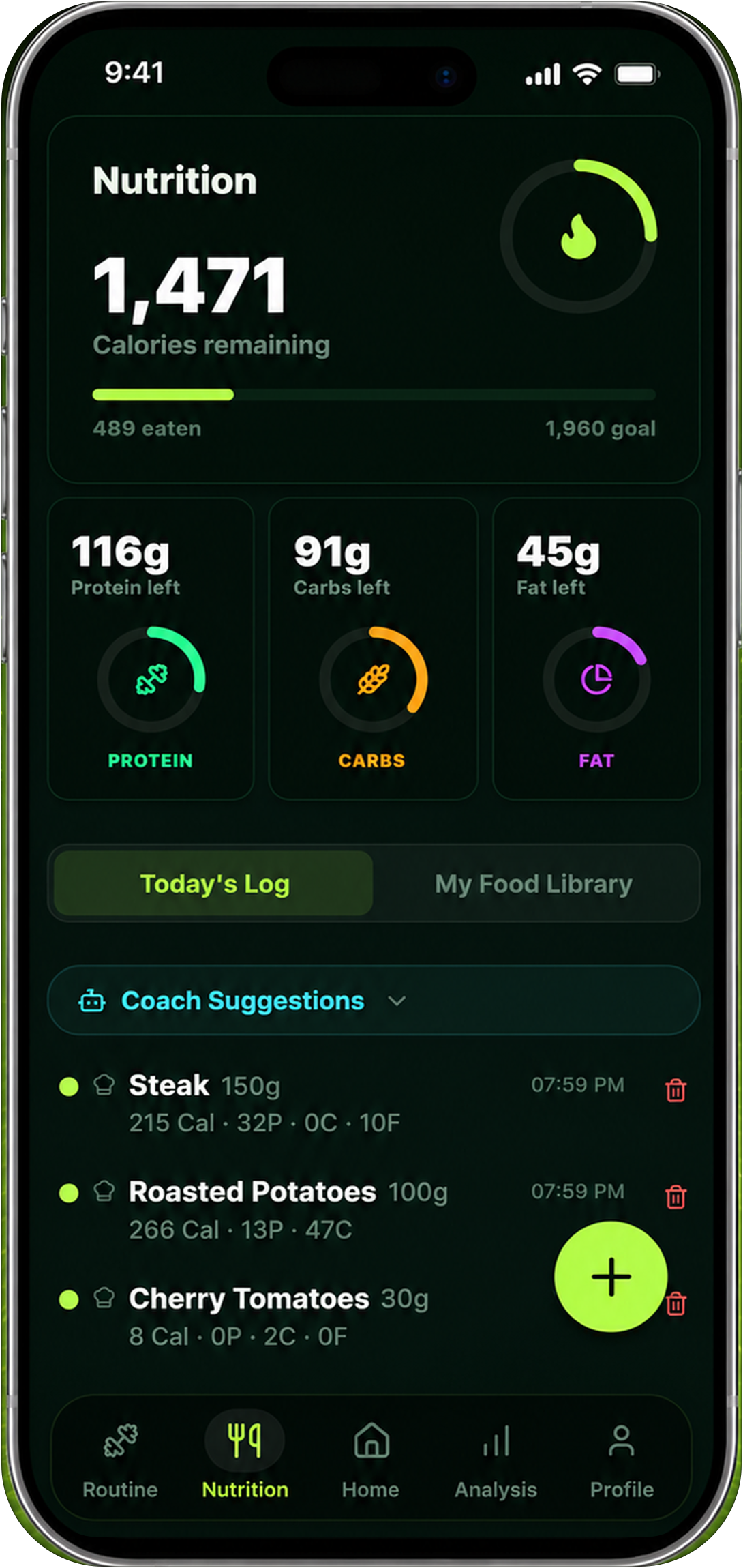
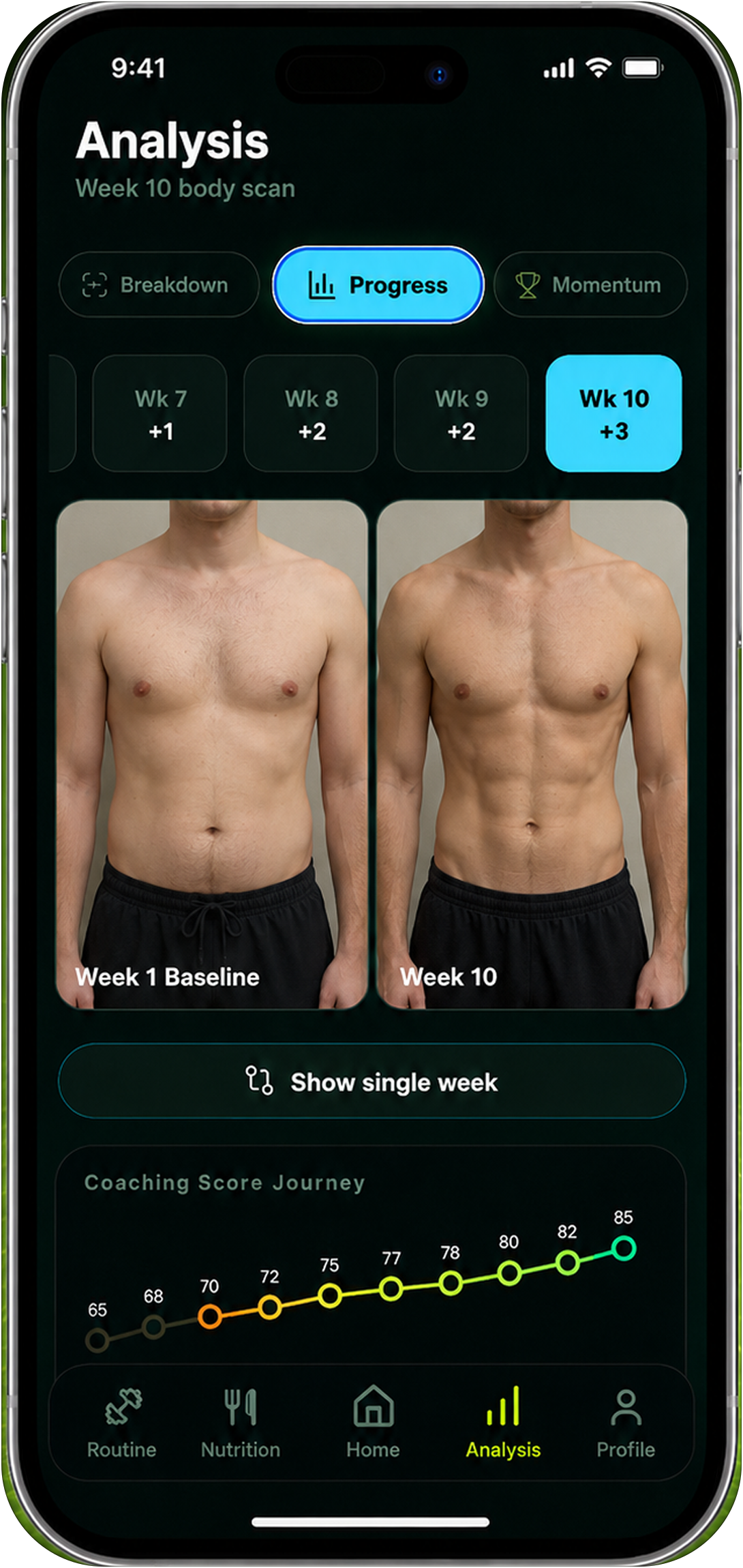
Reset90 should be judged by the workflow it can actually support: a daily training and nutrition loop, visual or body-progress check-ins, adherence context, and a longer 90-day review. It should not claim integrations or data access that are not present in the product.
The practical promise is not “the AI knows everything about you.” It is that your plan, your check-ins, and your next action belong to the same loop. If a missed workout, inconsistent nutrition week, or progress check-in changes the next recommendation, that is meaningful personalization. If the product only changes the wording of a generic plan, it is not.
Use our guide to AI workout planner apps for the broader product map. If your actual bottleneck is returning after missed sessions, see what a fitness app should do when motivation drops. Reset90 is also available through the Android experience, but platform access and features should always be checked against the current product.
11Personalization is not medical coaching
A coach can personalize training and nutrition choices without being qualified to diagnose a condition. Do not use an AI fitness app to interpret persistent symptoms, decide whether an injury is safe to train through, manage medication, or replace a clinician.
If the data suggests a serious concern, the right next step is professional care, not a more detailed prompt. A responsible product should make that boundary clear and avoid turning health data into false certainty.
12Frequently asked questions
What does a personalized AI fitness coach actually know?
It should know more than onboarding preferences. Look for access to your current goal, completed training, progress signals, recovery or lifestyle context, and useful memory of constraints. The product should tell you which data it is using.
Is a chatbot automatically a personalized fitness coach?
No. A chatbot can write a personalized answer from the context you provide, but ongoing coaching requires reliable history and structured data. The distinction is continuity, not the presence of a chat interface.
What is the fastest way to test an AI fitness coach?
Ask what data it can see, request a recap of your actual week, change one constraint, ask for evidence, and test how it responds to a missed session. Repeat the test after more data accumulates.
Should an AI fitness coach use sleep and heart-rate data?
Those signals can provide context, but they are not a diagnosis or a complete measure of recovery. A good coach explains uncertainty, combines them with training and well-being, and never overrides concerning symptoms.
Can Reset90 guarantee personalized results?
No. Reset90 can connect training, nutrition, and progress check-ins into a 90-day workflow, but it cannot guarantee a specific body-composition or performance outcome.
13The practical answer
Do not judge an AI fitness coach by how personalized the first answer sounds. Judge it by what changes after four weeks of real behavior.
Can it see what you completed? Can it compare the plan with your response? Does it remember constraints, expose the data behind an answer, and let you correct or delete that context? If yes, the coach may have a real personalization layer. If not, you are probably looking at a generic planner wearing a conversational interface.
The most useful AI coach is not the one that talks the most. It is the one that sees enough of your actual training life to make the next decision more specific, more transparent, and more appropriate to your current goal.
The Reset90 system
Useful ideas for building a body you can keep.
Training notes, product updates, and practical ways to make your next 90 days count.
Start your next 90 days
Get your daily training, nutrition, and check-in priorities in one adaptive system.


Keep reading
Related articles

Ideal Body Measurements for Women
There is no single ideal body measurement set for women. Learn how averages, waist-to-height, body shape and repeatable tracking fit together without chasing a fixed beauty standard.
Read article
Bulk, Cut, or Recomp? A Practical Decision Guide
A practical way to choose a bulk, cut, recomp, or maintenance phase using your goal, training age, recovery, and repeatable progress signals.
Read article
How Often Should You Take Progress Photos?
How often should you take progress photos? Use this goal-based guide to choose weekly, biweekly, or monthly check-ins and make every comparison more consistent.
Read article