

Reset90 vs Traditional Workout Trackers
A straightforward comparison between Reset90 AI and traditional workout trackers, focused on planning, adaptation, accountability, and the user each approach serves.
By Reset90 AI Editorial Team
Short answer: Traditional workout trackers are best when you already know your program and mainly want a record. Reset90 AI is designed for people who want a longer direction, a daily next step, and help adapting when the original plan no longer fits the day.
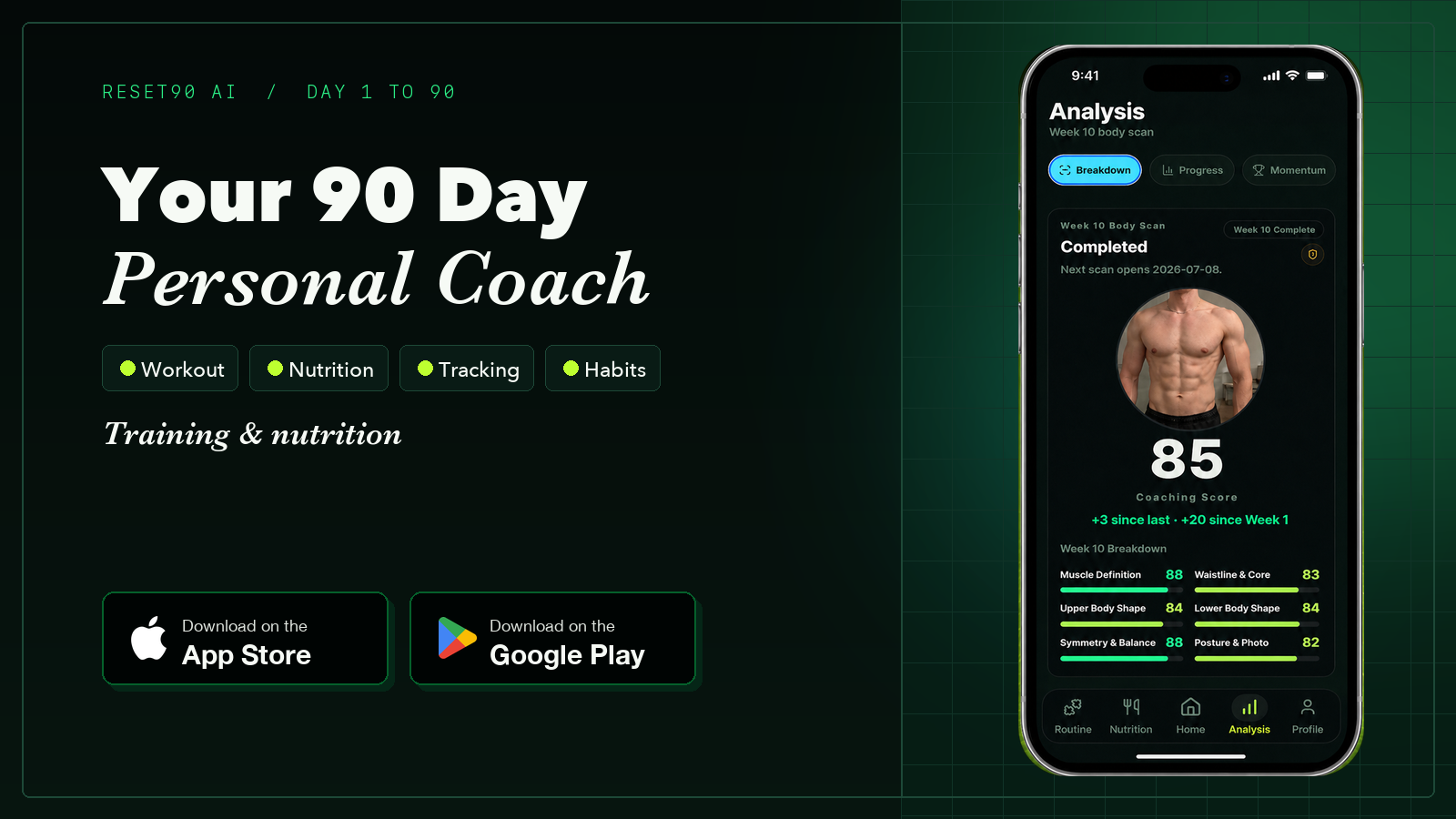
Every workout tracker answers one question: what did I do? It is a rearview mirror—perfect for the work behind you, useless for the road ahead.
Reset90 answers a different question: what should I do next, given my goal and my reality? This comparison is about the difference between recording the past and deciding the future—and the early numbers that convinced the founder the gap was real.
01The rearview mirror
A traditional tracker is usually a digital notebook. You select a workout, record exercises, and look back at your numbers. That is valuable when the program is already clear and your main job is execution—which is why the category is dominated by excellent, well-reviewed apps: Strong at 4.86 stars across 108,000+ ratings, Hevy at 4.92 stars and 10+ million users, Jefit with one of the biggest exercise databases. Recording is a solved problem, and the mirrors are polished.
- Strong for recording sets, reps, loads, and completed sessions
- Useful for repeating a known routine
- Good for people who enjoy controlling every training detail
- Often fast once your templates are set up
The limitation is structural: the tracker faithfully records the plan, even when the plan is no longer realistic. It shows the gap; it does not close it.
02What the numbers say about the gap
The data around fitness apps keeps pointing at the same place: people do not quit because recording was hard.
- Industry benchmarks put health and fitness week-1 retention in the high teens to mid-20s—three of every four installs are gone within a week.
- Strava named the second Friday of January “Quitter’s Day” after its user data showed about 80% of New Year’s fitness resolutions are abandoned by the second week of January.
- The founder’s own first-month numbers from Reset90: 38 accounts, 32 generated plans, 7 logged meals, 5 completed workouts, and 0 feedback. The gap was never recording—it was making the session happen.
A faster or more polished log does not fix that. It just records the failure more efficiently. The missing piece is not a better mirror; it is a windshield.
03The windshield
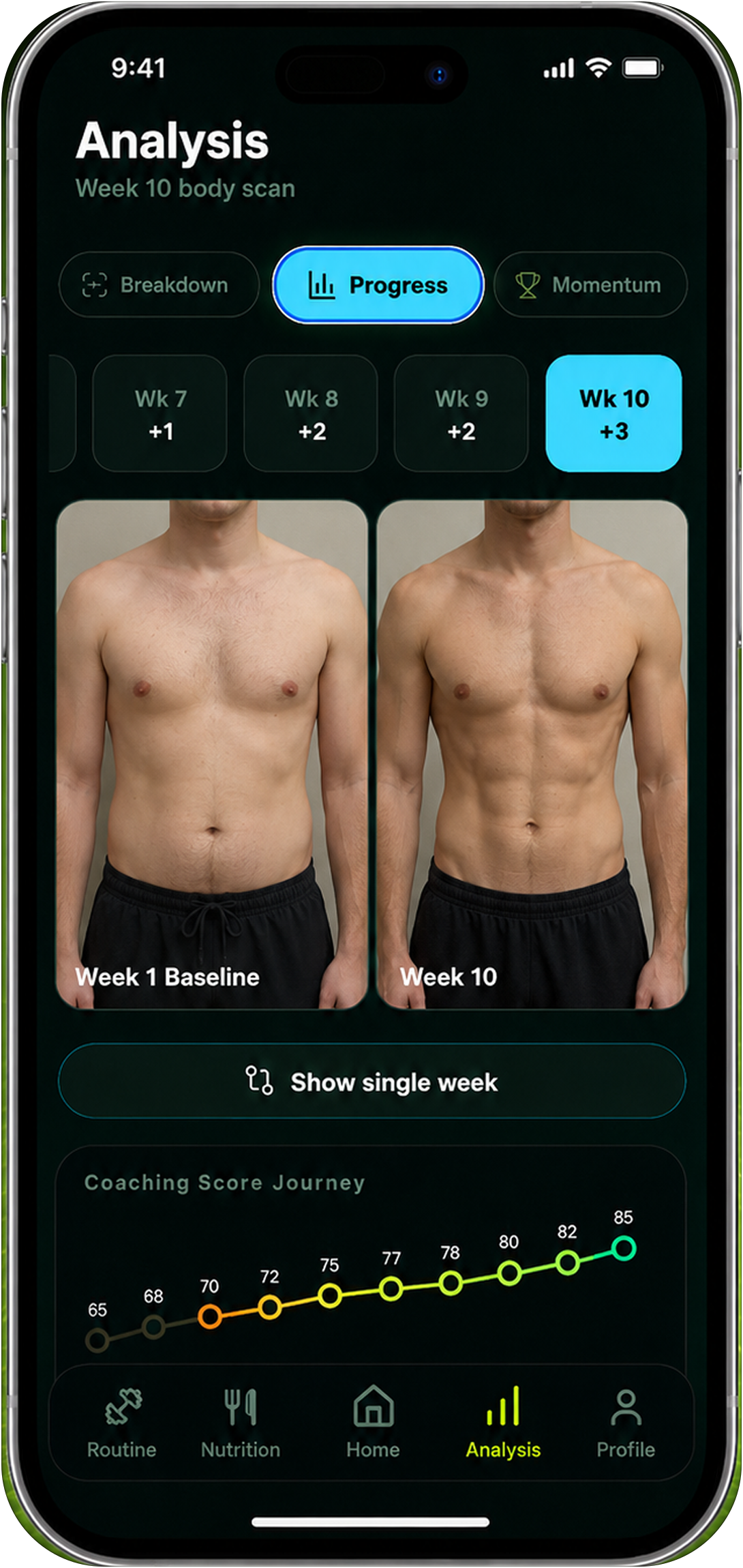
Reset90 AI starts with a 90-day frame. The purpose is to give daily choices a relationship to a longer goal without asking you to create a perfect twelve-week program on day one. A Home dashboard shows what matters today; the Training screen carries progression; meal targets, check-ins, streaks, recovery days, and weekly body-photo reviews keep the direction visible.
That does not mean the app should make every decision for you. A good system leaves room for judgment and professional guidance. It means the app carries more of the planning burden than a blank logbook—and it answers the question a tracker cannot: what should I do next?
04Tracker + system: the two-question stack

The strongest setup is not either-or. A tracker records the work; a 90-day system decides how the work fits together. Use both if you want a higher-level direction plus detailed logging. The tracker answers “what did I do?” and the system answers “what should I do next?”—two questions, two tools, one complete loop.
05Rearview mirror vs windshield, side by side
| Traditional tracker | Reset90 AI | |
|---|---|---|
| The question | What did I do? | What should I do next, given my goal and reality? |
| What it records | Sets, reps, loads, history | Plans, actions, check-ins, progress |
| What it decides | Nothing | Today’s next action |
| After a missed session | Shows the gap | Move, shorten, or continue |
| Nutrition / recovery | Not included | Meal targets, check-ins, recovery days |
| Price | Free tiers; subscriptions for extras | Free |
| Track record | Strong 4.86★, Hevy 4.92★, decade-old category | New (launched June 2026) |
The honest read: the category’s best trackers are excellent at recording, and Reset90 is new with no review base. The reason to consider it is not that it logs better—it does not—but that it works on the side of the problem trackers deliberately leave alone: what to do next.
06Which one should you choose?
Choose a traditional tracker if you already have a program from a coach or your own experience, you want detailed lifting records, and your schedule is stable enough to follow the plan. Choose Reset90 if you keep restarting, you need a clear daily priority, you want to connect training with nutrition and recovery, or you need the plan to survive imperfect weeks. Use both if you want direction plus detail.
Try the free Reset90 Plan Fit Check: answer a few questions about time, equipment, and consistency to turn this article into a realistic starting point.
07Frequently asked questions
What is the difference between a workout tracker and Reset90?
A tracker starts with “What did I do?”—it records sets, reps, and completed sessions. Reset90 starts with “What should I do next, given my goal and reality?”—it plans, guides, and helps you adapt when the plan no longer fits the day.
Why do people quit tracking apps?
Industry benchmarks put health and fitness week-1 retention in the high teens to mid-20s, and Strava’s data shows about 80% of New Year’s fitness resolutions abandoned by the second week of January. The common thread is not hard recording—it is plans that do not survive real life.
Can Reset90 replace a logbook?
It is not designed to replace detailed logging for people who want full control. It carries more of the planning burden so the session happens; a tracker can still record the work, and Reset90 includes manual logging for people who want it.
What does Reset90 do after a missed workout?
It helps you decide whether to move it, shorten it, or continue with the next priority, instead of just showing that the workout is missing.
Is Reset90 free?
Yes. Reset90 is currently free to download and use on iOS and Android, with no paywall, and it works even with AI features turned off.
How honest are Reset90’s early numbers?
The founder publishes the raw first-month snapshot: 38 accounts, 32 generated plans, 7 logged meals, 5 completed workouts, and 0 feedback. It is a small, honest dataset—and it is exactly why Reset90 focuses on the step before the logbook.
08Related Reset90 reads
- How to compare AI workout planners
- How to create an adaptive workout plan
- Fitness apps for staying consistent
Ready to test the plan? Download Reset90 AI on the App Store or get it on Google Play.
The Reset90 system
Useful ideas for building a body you can keep.
Training notes, product updates, and practical ways to make your next 90 days count.
Start your next 90 days
Get your daily training, nutrition, and check-in priorities in one adaptive system.


Keep reading
Related articles

Ideal Body Measurements for Women
There is no single ideal body measurement set for women. Learn how averages, waist-to-height, body shape and repeatable tracking fit together without chasing a fixed beauty standard.
Read article
Bulk, Cut, or Recomp? A Practical Decision Guide
A practical way to choose a bulk, cut, recomp, or maintenance phase using your goal, training age, recovery, and repeatable progress signals.
Read article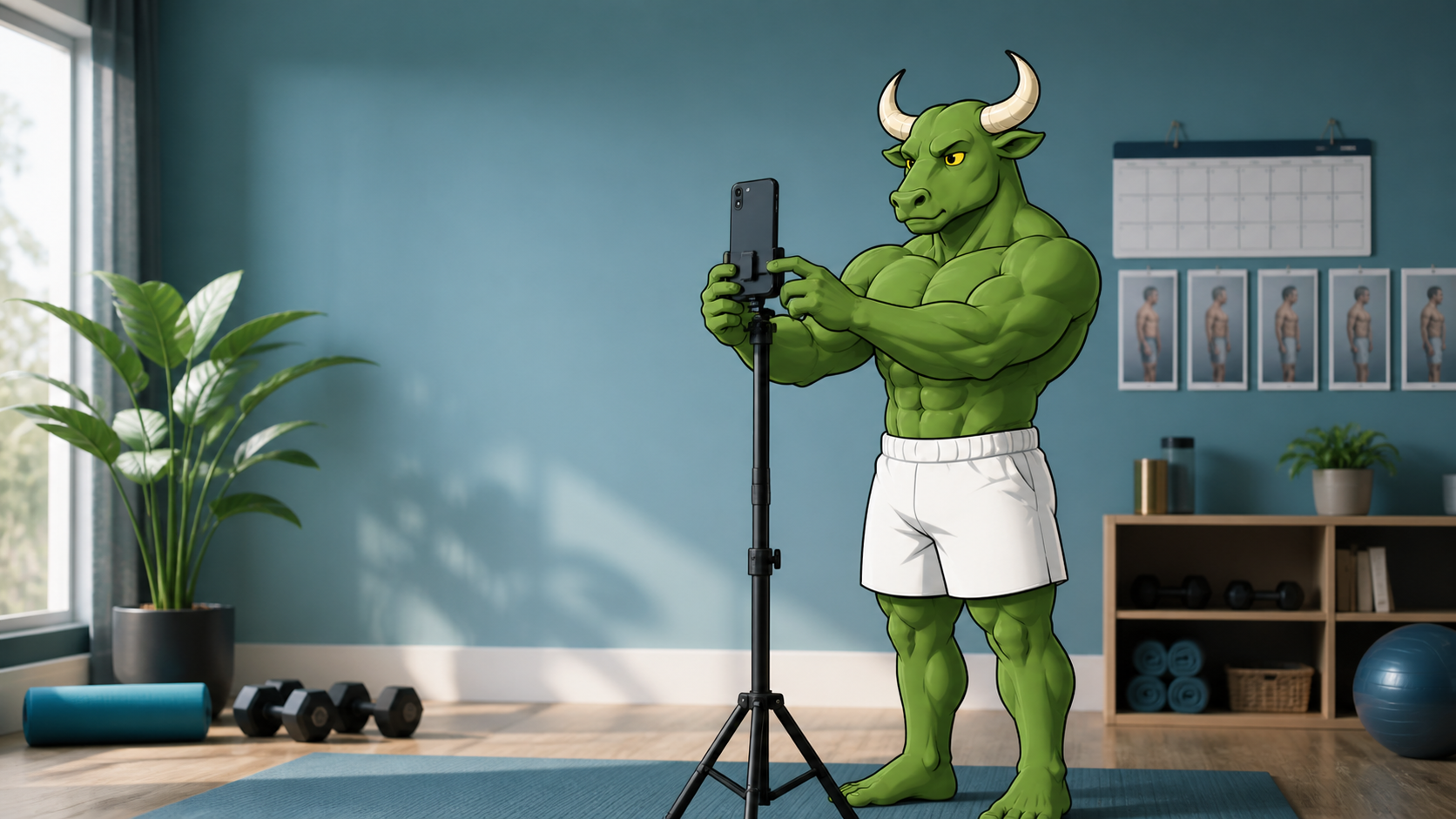
How Often Should You Take Progress Photos?
How often should you take progress photos? Use this goal-based guide to choose weekly, biweekly, or monthly check-ins and make every comparison more consistent.
Read article