

Workout Planner vs Personal Trainer: Which One Is Right for You?
A clear comparison of workout planning apps and personal trainers, including cost, accountability, flexibility, expertise, and the situations where each wins.
By Reset90 AI Editorial Team
Short answer: Choose a workout planner when you want affordable structure and can make most decisions yourself. Choose a personal trainer when you need expert observation, accountability, technical coaching, or a plan built around a complex goal. Many people use both: an app for daily structure and a trainer for periodic review.
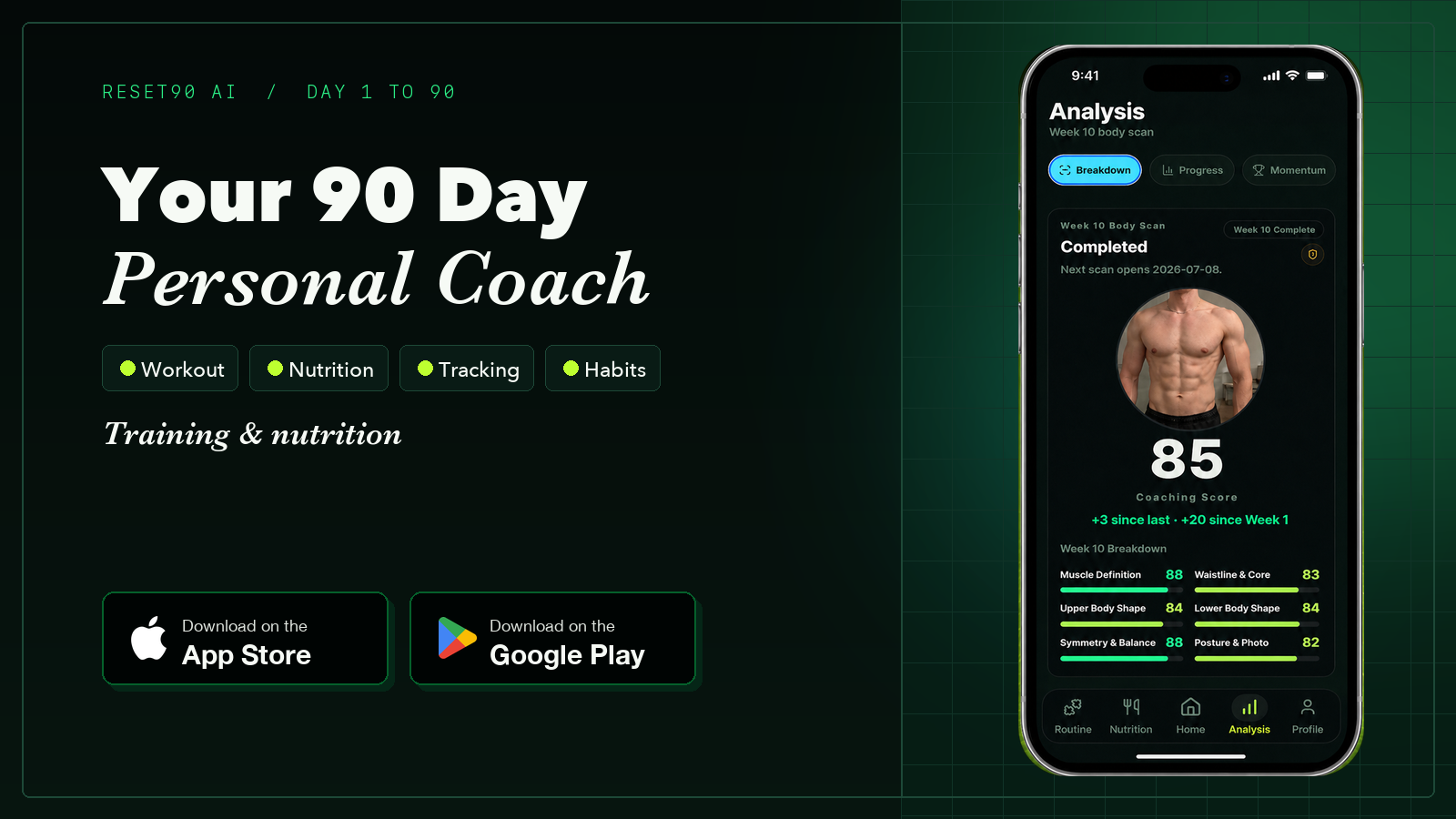
The question is not “Which is better?” It is “Where is the bottleneck in my training?” If the bottleneck is knowing what to do, both options can help. If it is confidence, technique, or follow-through, the right choice may be different.
This guide walks through the four bottlenecks—clarity, technique, accountability, and schedule—and which option actually removes each one.
01What does a workout planner do well?
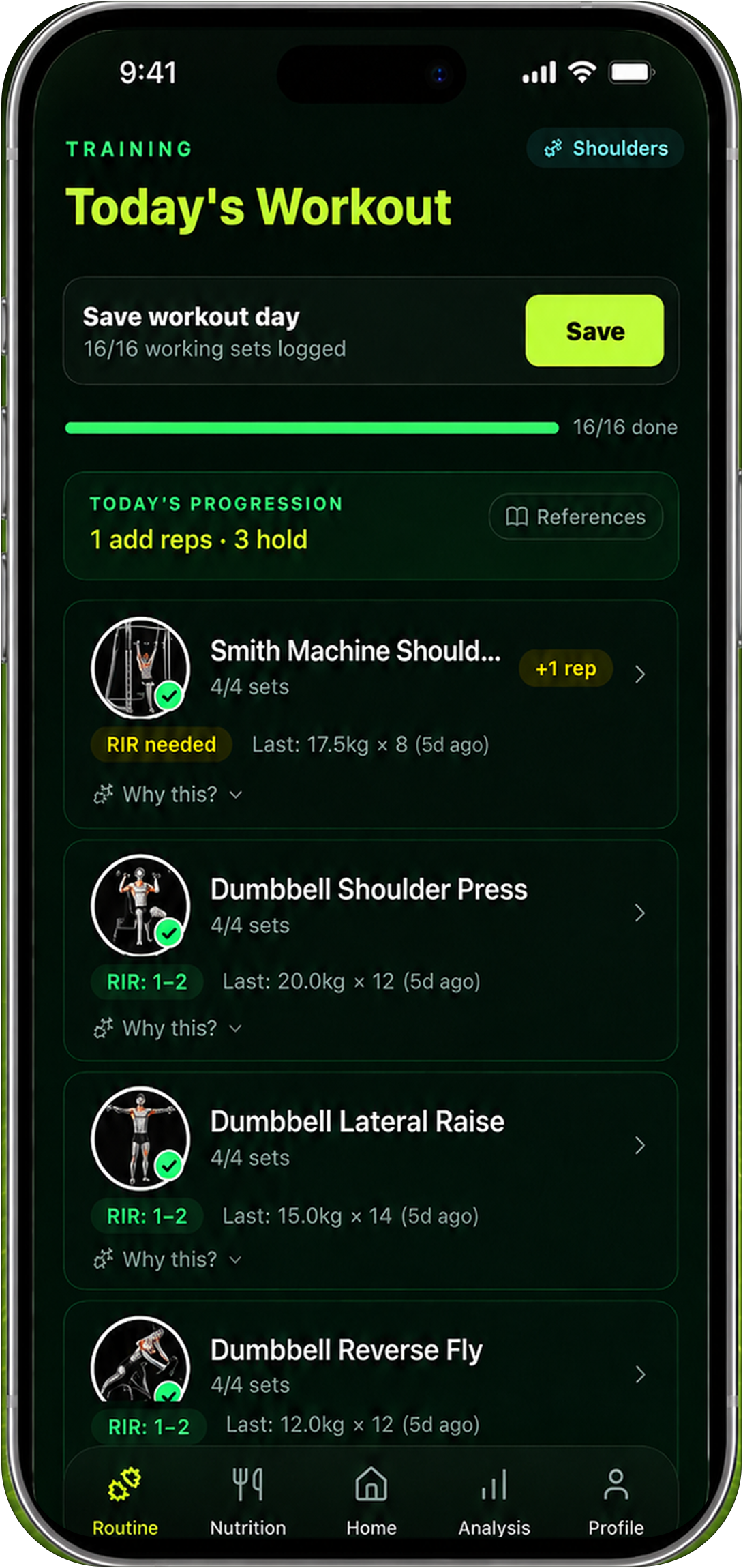
A planner gives you a repeatable system. It can organize workouts, track history, offer substitutions, and keep the next action visible. It is available at the moment you decide to train, which makes it convenient for busy schedules.
- Usually lower commitment and lower ongoing cost
- Easy to use at home, in a gym, or while traveling
- Useful for people who enjoy autonomy
- Good for turning a broad goal into a daily checklist
02What does a personal trainer do well?
A good trainer brings observation and judgment. They can notice technique, adjust a movement in the moment, and help you understand why a change is useful. A trainer can also make the appointment itself an accountability device.

- Useful when technique, injury history, or a specific performance goal needs close attention
- Helpful when external accountability is the main missing ingredient
- Can adapt the session through conversation and observation
- Can provide education that carries into future training
03What is the bottleneck in your training?
Choose a planner if your problem is clarity
If you have enough exercise experience but keep changing programs, a planner can reduce the noise. You may not need more advice. You may need one coherent direction and a simple next step.
Choose a trainer if your problem is technique
If you are unsure whether you are moving safely or effectively, an in-person professional can be worth the investment. Apps can explain a movement, but explanation is not the same as seeing your movement.
Choose a trainer if your goal is unusually specific
Preparing for a competition, returning from an injury, or working around a complicated medical history may require a level of expertise that a general app is not designed to provide.
Choose a planner if your problem is a changing calendar
If you can train only when an unexpected window opens, a flexible app may be more useful than a fixed appointment.
| Bottleneck | Workout planner | Personal trainer |
|---|---|---|
| Clarity | Yes | Yes, but more expensive |
| Technique | Explains, cannot see | Sees and corrects |
| Accountability | Structure-based | Personal |
| Changing schedule | Flexible | Fixed appointments |
| Cost | Low | High |
04Can you use a planner and a trainer together?
You do not have to choose forever. Some people book a few sessions with a trainer to learn form and build a foundation, then use an app to maintain a plan. Others use a trainer for a monthly review and a planner for day-to-day execution. Reset90 AI is designed for the self-directed middle: enough structure to reduce daily planning, enough flexibility to adapt, and a 90-day horizon that makes a single workout part of a bigger direction.
05When should a planner admit it is not enough?
For pain, injury, or a complex health history, start with qualified professional guidance. A planner should know when it is not enough—Reset90’s Health & Safety page is intentionally direct about that boundary.
Try the free Reset90 Plan Fit Check: answer a few questions about time, equipment, and consistency to turn this article into a realistic starting point.
06Frequently asked questions
Is a workout planner or a personal trainer better?
It depends on where the bottleneck is. A planner is better when the problem is clarity or a changing calendar; a trainer is better when the problem is technique, accountability, or a specific performance goal.
Can I use a planner and a trainer together?
Yes. Many people book a few sessions with a trainer to learn form and build a foundation, then use an app to maintain the plan—or use a trainer for monthly review and a planner for day-to-day execution.
When is an app not enough?
For pain, injury, or a complex health history, start with qualified professional guidance. An app can explain a movement, but explanation is not the same as seeing your movement.
What does Reset90 offer in this decision?
Reset90 is designed for the self-directed middle: enough structure to reduce daily planning, enough flexibility to adapt, and a 90-day horizon that makes a single workout part of a bigger direction.
07Related Reset90 reads
- How to compare AI workout planners
- How to create an adaptive workout plan
- Fitness apps for staying consistent
Ready to test the plan? Download Reset90 AI on the App Store or get it on Google Play.
The Reset90 system
Useful ideas for building a body you can keep.
Training notes, product updates, and practical ways to make your next 90 days count.
Start your next 90 days
Get your daily training, nutrition, and check-in priorities in one adaptive system.


Keep reading
Related articles

Ideal Body Measurements for Women
There is no single ideal body measurement set for women. Learn how averages, waist-to-height, body shape and repeatable tracking fit together without chasing a fixed beauty standard.
Read article
Bulk, Cut, or Recomp? A Practical Decision Guide
A practical way to choose a bulk, cut, recomp, or maintenance phase using your goal, training age, recovery, and repeatable progress signals.
Read article
How Often Should You Take Progress Photos?
How often should you take progress photos? Use this goal-based guide to choose weekly, biweekly, or monthly check-ins and make every comparison more consistent.
Read article