

90-Day Fitness App: Program, Schedule, or Habit System?
Compare 90-day fitness apps by program structure, schedule flexibility, habit support, progression, recovery, and what happens after a missed week.
By Reset90 AI Editorial Team
Short answer: A 90-day fitness app can be a fixed program, a flexible schedule, or a habit system. A fixed program tells you exactly what to do; a schedule helps you fit training into a changing week; a habit system helps you resume when life interrupts. Choose the model that matches your biggest constraint, then review the plan every week instead of treating day 90 as a promise.
01Why “90-day fitness app” can mean three different things
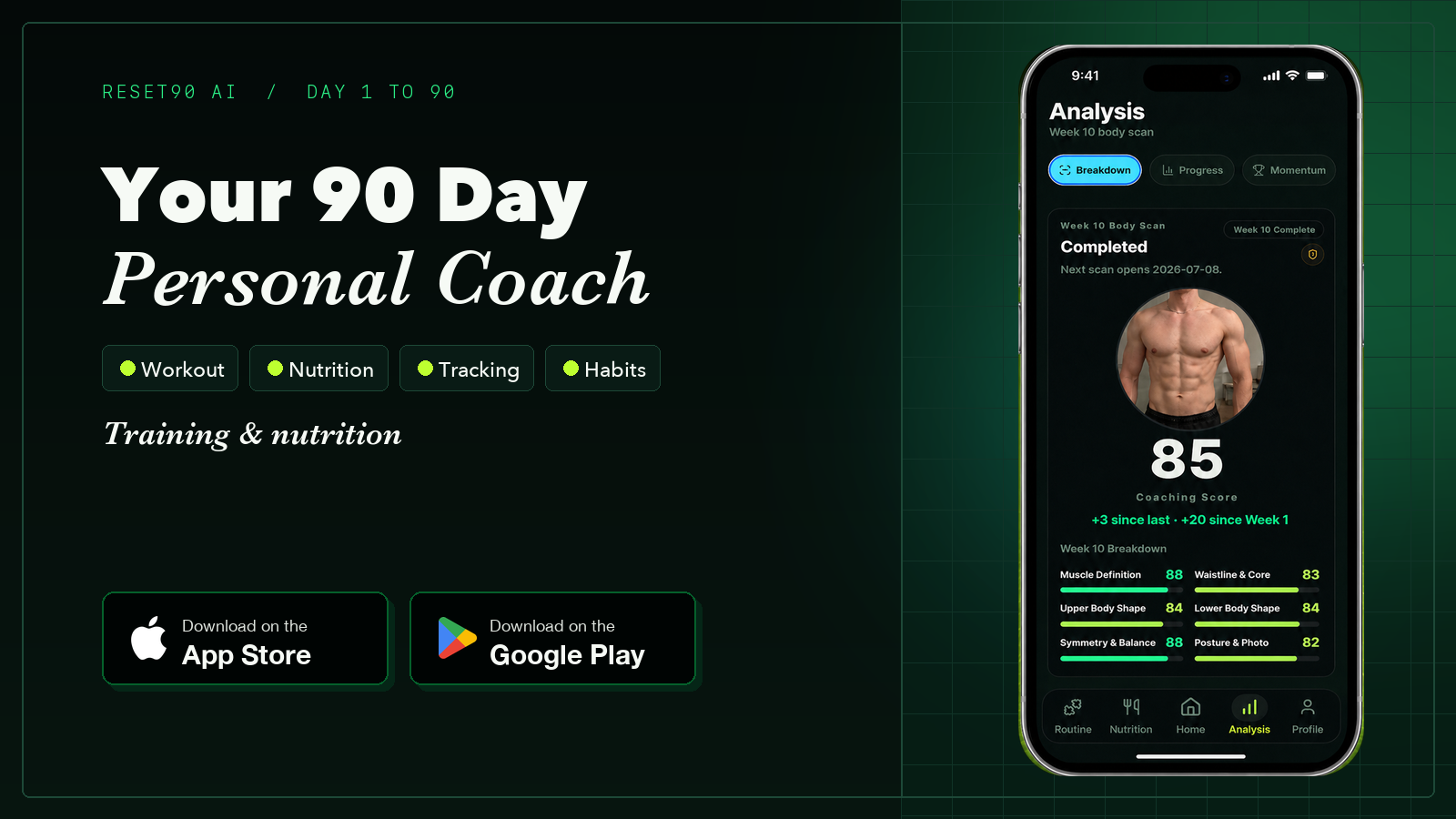
Ninety days sounds specific, but the label alone does not tell you how the app works. Some apps package a fixed challenge. Some provide a calendar of workouts. Others are built around check-ins, streaks, and the ability to adapt when you miss a day.
Those are different products serving different jobs:
- Program: a planned sequence of sessions designed to move from a starting point toward a defined outcome.
- Schedule: a way to place workouts into real weeks, with shorter and longer options when time changes.
- Habit system: a repeatable loop for showing up, logging, recovering from missed sessions, and continuing.
The best option is not automatically the most intense one. It is the one that solves the reason your previous plan stopped working.
02Choose the model that matches your constraint
| If your main problem is… | Start with… | Look for… |
|---|---|---|
| Not knowing what to train | A structured program | Progression, exercise substitutions, recovery guidance, and a clear starting level |
| Not finding time in a changing week | An adaptive schedule | Two-, three-, and four-day options, short sessions, rescheduling, and travel fallbacks |
| Stopping after one missed workout | A habit system | Minimum sessions, resume logic, low-friction logging, and progress signals that do not punish a reset |
| Wanting all three | A connected 90-day system | Program direction plus schedule flexibility and a recovery path after interruptions |
Start with one constraint. An app that tries to solve everything can still be useful, but you need to know which feature should make the biggest difference to your next week.
03A 90-day program should have a progression logic
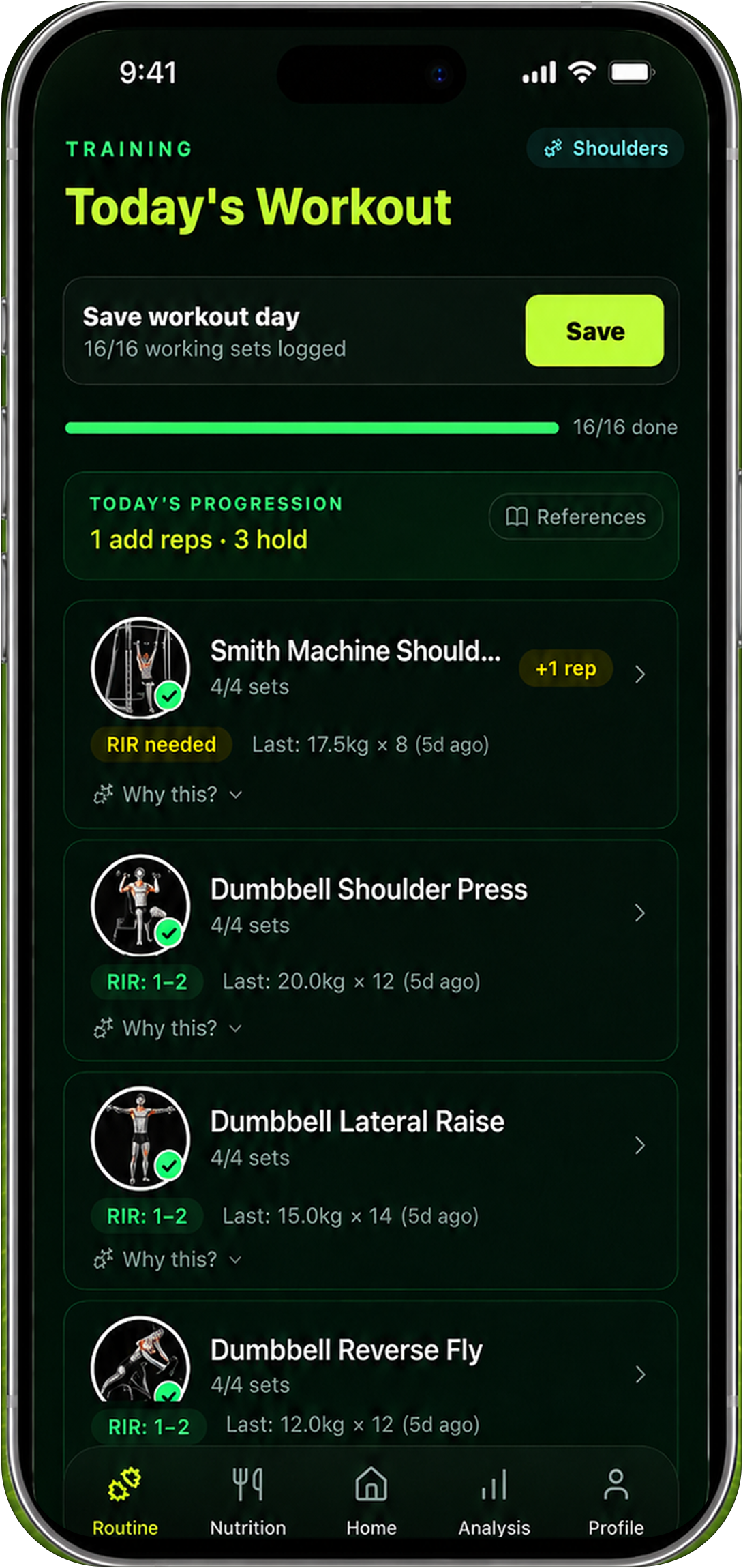
A list of ninety workouts is not automatically a program. A program should explain how the training changes over time and how the next session depends on the previous one.
Look for four types of logic:
- Starting point: a way to choose an appropriate entry level instead of assuming every user is ready for the same volume.
- Progression: a method for adding repetitions, load, range of motion, difficulty, or training density.
- Recovery: easier sessions, rest days, deload options, or volume reductions when fatigue accumulates.
- Review: a checkpoint where the next phase changes based on execution and performance rather than the calendar alone.
Without progression and review, the app may be a content library with a countdown. That can still help a beginner start, but it is not the same as a plan that responds to what the user actually did.
04A 90-day schedule should survive a busy week
A schedule is useful when it helps you make a decision on the day you have less time than expected. A rigid calendar can look organized while making one missed session feel like the entire plan has failed.
Compare whether the app supports:
- A full session when you have normal time.
- A short version that preserves the day’s main training priority.
- A minimum version that keeps the habit connected to the plan.
- Moving a session without creating two hard days back to back.
- Travel or equipment substitutions that preserve the movement goal.
The right fallback is not “do everything later.” It is a smaller version that protects the next decision. A plan that bends can stay alive through a week that would break a perfect calendar.
05A 90-day habit system should make restarting normal
Consistency is not the absence of interruptions. It is the ability to return without spending another week negotiating with yourself.
A habit-focused app should answer three questions:
- What is the smallest action that counts today?
- What should happen if I miss the planned session?
- How do I resume without trying to “make up” every missed workout?
Streaks can be motivating, but a streak should not be the entire definition of progress. Look for check-ins, completed sessions, recovery notes, and a clear next action. A useful system treats a missed day as information about the plan, not as a character judgment.
06Compare the three models by user experience
| Capability | Fixed program | Flexible schedule | Habit system |
|---|---|---|---|
| Decides what to do | Strong | Moderate to strong | Usually lighter; focuses on showing up |
| Handles a changing calendar | Depends on the app | Strong | Strong for minimum and resume actions |
| Shows training progression | Should be strong | Should preserve priorities | May be limited unless connected to a program |
| Helps after a missed week | Often weak unless it has reset logic | Moderate to strong | Should be a core feature |
| Best success signal | Progress in planned training | Completed sessions despite schedule changes | Repeated returns and low-friction adherence |
Do not ask a habit system to replace coaching or programming if you need detailed progression. Do not ask a rigid program to solve a calendar problem it was never designed to handle.
07Break the ninety days into useful phases
A three-month plan becomes easier to review when the horizon is divided into smaller blocks. The exact phase names can change, but each phase should have a job.
| Phase | Primary job | Review question |
|---|---|---|
| Weeks 1–2: Setup | Learn the movements, schedule, logging flow, and minimum version | Can I complete the plan under normal and busy conditions? |
| Weeks 3–6: Build | Establish volume, progression, and repeatable recovery | Is the workload challenging but recoverable? |
| Weeks 7–10: Progress | Apply the main progression while protecting adherence | What evidence shows that the training is moving forward? |
| Weeks 11–13: Consolidate | Review the block, reduce unnecessary friction, and choose the next focus | What should continue, change, or be paused after day 90? |
The calendar gives you a container. The weekly review tells you whether the container is helping.
08Test whether the app adapts or only counts down
Many 90-day experiences look adaptive because they show a progress bar. A countdown is not the same as adaptation.
Test the app with realistic disruptions:
- Shorten one session because of a late meeting.
- Move a workout to the next available day.
- Replace an exercise because equipment is unavailable.
- Take an easier session after poor sleep or unusual fatigue.
- Miss several days and see whether the app gives a sensible resume path.
After each test, ask whether the app protects the goal or merely records the failure. A useful adaptation changes the next action while keeping the long-term direction clear.
09Choose the minimum session before you need it
The minimum session is the smallest version of the plan that keeps the habit and the priority alive. It should be defined before a busy day, not invented while you are already exhausted.
For example, a full strength session might become:
- One warm-up and two main movements.
- Two sets per movement with controlled effort.
- A short walk or mobility sequence when strength training is not realistic.
The minimum is not supposed to create the same training stimulus as the full session. Its job is to reduce the cost of returning and prevent the “missed one day, abandoned the week” pattern.
10Connect the schedule to recovery
A 90-day plan should not assume that every week has the same sleep, stress, travel, and recovery capacity. The schedule can stay consistent while the day’s version changes.
Use a simple readiness check:
- Green: complete the planned session.
- Yellow: keep the main movement but reduce volume or effort.
- Red: choose recovery or a minimum action and reassess.
This is not a medical readiness score. It is a planning guardrail that helps prevent a rigid calendar from turning a low-recovery day into a missed week. If fatigue is persistent, painful, or affecting daily life, use qualified professional guidance.
11How to compare a 90-day fitness app
Use a simple rubric instead of counting features. Score each category based on the job you need the app to perform.
| Category | Question to ask | Strong evidence |
|---|---|---|
| Program quality | Does the plan explain progression and recovery? | Phases, exercise substitutions, effort guidance, and review checkpoints |
| Schedule flexibility | Can it fit a changing week? | Short sessions, rescheduling, alternate days, and travel options |
| Habit support | What happens after a missed session? | Minimum actions, resume flow, notes, and non-punitive progress signals |
| Feedback | Does the app use what I actually did? | Completed-session history, training notes, and next-step adjustments |
| Friction | Will I use it on a difficult day? | Fast logging, clear next action, simple navigation, and useful defaults |
If the app scores well only when your week is perfect, it is not solving the constraint that matters most.
12How Reset90 can function as the habit layer
Reset90 is most useful when a 90-day goal needs to connect training, nutrition, progress check-ins, and daily adherence. A plan can define the direction, while the habit layer helps you choose the next action when the original schedule is no longer realistic.
Start with the 90-day workout plan for busy people if schedule constraints are your main problem. Review the 90-day fitness apps comparison for the broader category, then use the 90-day exercise programs guide when the main decision is program type.
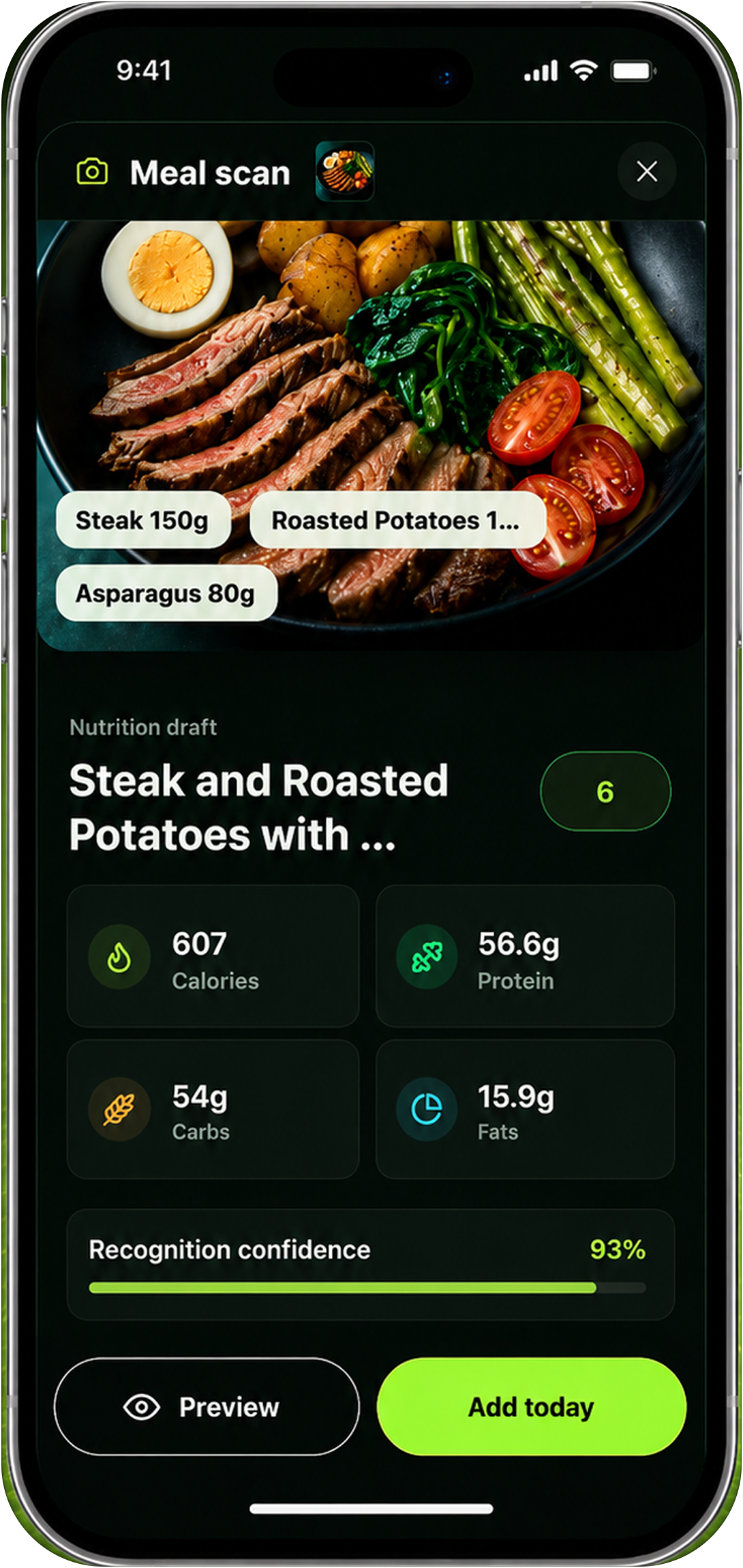
For daily execution, a connected check-in can show whether the plan was completed, shortened, moved, or replaced. That history makes day 90 more useful: you can see not just whether the calendar ended, but which version of the system survived real life.
13Build a system that survives a missed week
One missed week should trigger a reset decision, not an automatic restart from zero.
- Record the interruption. Travel, illness, stress, pain, and schedule overload require different responses.
- Choose a re-entry level. Resume with a lighter version if capacity has changed.
- Protect the next seven days. Put the minimum sessions on the calendar before adding extra work.
- Rebuild before progressing. Earn the next increase through repeatable sessions rather than trying to make up missed volume.
The best 90-day system is not the one that never needs a reset. It is the one that makes a reset small enough to complete.
14Review the plan every seven days
A weekly review keeps the 90-day horizon connected to what is happening now. Keep it short enough that you will do it even when the week was messy.
| Review area | Question | Possible adjustment |
|---|---|---|
| Sessions | How many planned, shortened, moved, or missed? | Change schedule density or define a better minimum |
| Progression | Did performance, technique, or tolerance improve? | Hold, progress, or reduce the next step |
| Recovery | Did sleep, soreness, or stress change the plan? | Use a lighter session or add recovery space |
| Nutrition | Did meals support the training demand? | Review protein, calories, and meal timing |
| Friction | Where did the system make execution harder? | Remove one decision or create a fallback |
A plan that improves after each review is more valuable than a plan that looked perfect on the first day.
15Do not confuse a challenge with a health guarantee
A ninety-day challenge can create structure and momentum, but the calendar does not guarantee a body-composition result, a specific amount of weight loss, or a particular performance outcome.
Use training, nutrition, sleep, and progress signals to decide whether the plan is working. Avoid extreme promises, aggressive volume, and “all-or-nothing” rules. A 90-day system should be a repeatable framework, not a reason to ignore pain or recovery.
16Frequently asked questions
What is the difference between a 90-day program and a 90-day schedule?
A program describes what training should progress over time. A schedule describes when the sessions happen in your actual week. A useful app may include both, but they solve different problems.
Is a 90-day fitness app better than a regular workout app?
Not automatically. The 90-day format is useful when you want a defined review horizon and a progression path. A regular workout app may be better if you need open-ended training or more specialized programming.
What should happen if I miss a week?
Record why the week was missed, choose an appropriate re-entry level, and rebuild with minimum sessions before progressing. Do not try to complete every missed workout at once.
How many days per week should a 90-day plan use?
There is no universal number. Choose the frequency you can recover from and repeat through busy weeks. The best plan often includes a full version and a shorter fallback version.
Can a 90-day app replace a coach?
It can provide structure, reminders, and feedback, but it cannot replace individualized coaching or medical guidance when you have pain, illness, complex goals, or persistent recovery problems.
17The practical answer
Choose a 90-day fitness app by deciding whether you need a program, a schedule, or a habit system first. Then test what happens on a busy day, a low-recovery day, and after a missed week.
The calendar is only the container. The real product is the feedback loop: choose the next session, complete the appropriate version, record what happened, and adjust without abandoning the direction. That is what turns ninety days into a system you can keep using.
The Reset90 system
Useful ideas for building a body you can keep.
Training notes, product updates, and practical ways to make your next 90 days count.
Start your next 90 days
Get your daily training, nutrition, and check-in priorities in one adaptive system.


Keep reading
Related articles

Ideal Body Measurements for Women
There is no single ideal body measurement set for women. Learn how averages, waist-to-height, body shape and repeatable tracking fit together without chasing a fixed beauty standard.
Read article
Bulk, Cut, or Recomp? A Practical Decision Guide
A practical way to choose a bulk, cut, recomp, or maintenance phase using your goal, training age, recovery, and repeatable progress signals.
Read article
How Often Should You Take Progress Photos?
How often should you take progress photos? Use this goal-based guide to choose weekly, biweekly, or monthly check-ins and make every comparison more consistent.
Read article