
AI Body Fat Estimator Accuracy vs. DEXA: What We Actually Know
AI body-fat estimates can be useful, but they are not DEXA. Here is what validation studies and real-world tests show, where photo estimates can miss, and how to use them for trend tracking.
By Reset90 AI Editorial Team
Short answer: AI body-fat estimators can be useful, but “accurate” needs a qualifier. A well-validated photo model can show strong agreement with DEXA across a group, while an individual estimate can still be several percentage points away. DEXA is a useful reference for body composition, not an infallible truth machine. The most defensible use of a photo estimator is repeatable trend tracking under the same conditions—not diagnosis, clinical decision-making, or false precision from one snapshot.
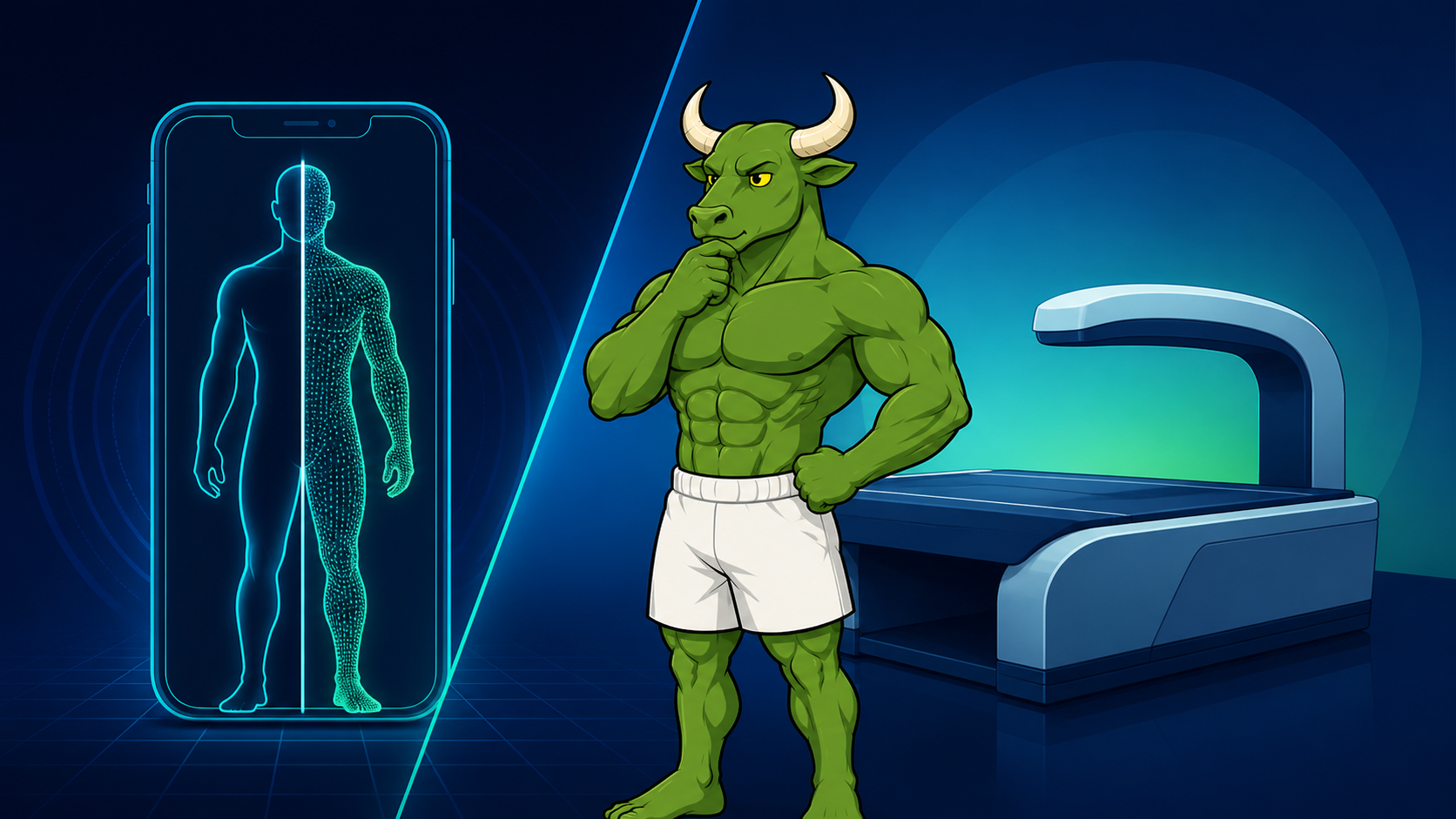
When an app turns a progress photo into a body-fat percentage, it is tempting to treat the number like a measurement from a lab. That is the wrong mental model. A camera sees shape, shadows, posture, clothing, and visible fat distribution. DEXA—also written DXA—uses low-dose X-rays and a body-composition model to estimate fat, lean soft tissue, and bone mineral. The two methods are answering related questions with very different evidence.
The useful question is not whether an AI estimate is “the same as DEXA.” It is whether the estimate is accurate enough for the decision you want to make, how often it is wrong, and whether it behaves consistently when the person and the photo setup stay the same.
01What the research actually says about AI body-fat accuracy
The strongest evidence so far is encouraging, but it is evidence about specific computer-vision systems and study populations—not a blanket certification for every body-fat app.
A 2025 study in npj Digital Medicine evaluated an AI two-dimensional photo method against DXA in 1,273 adults. The authors reported substantial agreement, with Lin’s concordance correlation coefficient at or above 0.96 for the AI photo method across the investigated groups. An earlier 2022 validation study of a smartphone-camera visual body-composition system also reported no significant bias versus DXA in its sample of 134 healthy adults.
Those results matter because they show that a photograph can contain enough visual information for a trained model to estimate total body fat at a population level. They do not mean that every output is within one percentage point of a scan. Correlation or concordance describes how measurements move together across people; it does not erase individual error.
| Evidence type | What it can support | What it cannot support |
|---|---|---|
| Peer-reviewed validation study | A specific model performed well against DXA in a defined sample and protocol. | Every commercial app will perform the same way for every person. |
| App-maker benchmark | The maker’s configuration and test set produced a reported error profile. | Independent, generalizable accuracy across untested populations. |
| One personal estimate | A starting point for a conversation or a rough tracking signal. | A diagnosis, exact body composition, or proof of change since yesterday. |
| Repeated estimates with a fixed protocol | A better signal for direction and consistency over time. | Visibility into internal fat, bone density, or precise tissue compartments. |
02What a recent real-world test tells us—and what it does not
GainFrame recently published a vendor-run comparison of its AI body-fat estimator with DEXA-labeled photos. The article reports 36 clean front-view photo states, three runs per image, an average miss of 3.77 body-fat percentage points, and 29 of 36 estimates within five points of DEXA. It also reports that a higher-analysis configuration averaged a 3.54-point miss.
That is more informative than showing one flattering success story. Repeating every image, keeping the DEXA labels hidden, and retaining difficult cases are good testing choices. If the reported protocol was followed as described, it suggests that a clear photo can produce a useful estimate for many people.
It is still a self-published benchmark, not an independent clinical trial. The set is small, the clean-still sample described in the article is women-only, and the test evaluates GainFrame’s model and prompt rather than the entire category of AI body-fat estimators. The result is a data point, not a universal error bar you can paste onto another app.
That distinction is the center of the answer. “An AI photo method can agree strongly with DXA in a validation study” and “my app’s estimate is exactly right” are different claims. The first is supported by published research. The second requires app-specific validation and should still be treated as an estimate.
03Why DEXA is a useful reference, but not a perfect truth machine
DEXA is widely used for body-composition assessment because it estimates bone mineral, fat mass, and lean soft tissue in a single scan. It is also the standard reference used in many validation studies. That makes it a sensible comparator when researchers want to evaluate a new method.
But “reference method” does not mean “directly observes every gram of fat.” DEXA results depend on the scanner, software, operator, positioning, body thickness, hydration, and analysis assumptions. Reviews of body-composition methods also note practical limits such as cost, access, technical expertise, and the fact that repeated scans are not a casual daily measurement.
DEXA can provide regional information, but it does not give a photograph-independent, perfectly direct view of every tissue compartment. MRI and CT answer some distribution questions differently, while also bringing their own tradeoffs. So the honest comparison is not “AI versus an unquestionable gold standard.” It is “a low-friction visual estimate versus a more detailed, controlled reference method, with error on both sides.”
If you are comparing a home reading with a scan, keep the methods separate. A smart scale, a skinfold equation, a visual estimator, and DEXA should not be plotted as though they were one calibrated ruler. Our guide to smart-scale accuracy explains why hydration and protocol can move a BIA result even when your body has not meaningfully changed.
04What makes an AI body-fat estimate change?
A photo estimator is not only evaluating the person. It is evaluating the image it received. Small changes that do not represent real fat gain or loss can change the visual evidence available to the model.
- Lighting and shadows: harsh overhead light can deepen some contours and erase others. Soft, even light is easier to compare.
- Pose and muscle tension: bracing, flexing, twisting, or changing hip position can alter apparent waist and torso shape.
- Camera distance and lens perspective: a close wide-angle phone photo can make the nearest body parts look larger than they do in a more distant, level shot.
- Clothing and occlusion: loose fabric, a waistband, crossed arms, or a cropped frame can hide the areas the model needs to inspect.
- Visible versus total distribution: a front view cannot reveal all posterior or internal fat. People with different fat-distribution patterns can look similar from one angle.
- Model calibration: an app trained on one mix of ages, sexes, body shapes, and camera conditions may behave differently outside that mix.
This is why a clean test can look better than a casual camera-roll upload. It also explains why a model can be statistically strong across a cohort and still be wrong for a particular person on a particular day.
05How to use an AI estimator for progress tracking
Use a photo estimator as a repeated signal only if you make the input repeatable. The aim is not to make one number look authoritative; it is to reduce avoidable noise so that a multi-week pattern becomes easier to interpret.
- Pick one app and one view. Do not switch between products and call the difference a body-composition change.
- Keep the camera setup stable. Use a similar distance, height, orientation, background, and lighting. Mark a spot on the floor if that makes the routine easier.
- Stand naturally. Use the same relaxed posture instead of flexing on one check-in and relaxing on the next.
- Keep timing reasonably consistent. Large differences in meals, hydration, training pump, or daily conditions can affect appearance.
- Review a trend, not a single result. Compare several check-ins over two to four weeks and look for agreement with waist measurements, body weight averages, training performance, and how clothes fit.
- Keep the estimate in its lane. If the result would change a medical decision, a medication plan, or a response to unexplained weight change, use a qualified clinician and an appropriate assessment instead.
For the measurement side of this routine, see how to take body measurements. For context rather than a verdict, our body-fat percentage chart explains why ranges vary by age, sex, population, and method.
06How to compare a photo estimate with your DEXA result
If you already have a DEXA result, the fairest comparison is not to upload one random photo and demand an exact match. Treat the comparison as a small personal calibration exercise:
- Take a photo under the app’s recommended conditions as close as practical to the scan date.
- Record the app output, the DEXA date, the scan method, and any relevant conditions such as a hard workout, unusual hydration, or a different pose.
- Repeat the same photo protocol several times over the following weeks.
- Compare the direction and the size of the gap, not only whether the two numbers are identical.
- Do not “correct” every future app result by adding or subtracting the first gap. A bias can change across body-fat ranges, poses, and populations.
A single paired result can tell you whether the app is obviously unsuitable for your use. It cannot establish the app’s true accuracy for you. If the photo estimate and DEXA disagree, that disagreement is information about method boundaries—not proof that one number must be the exact truth.
07Where Reset90 fits in the measurement workflow
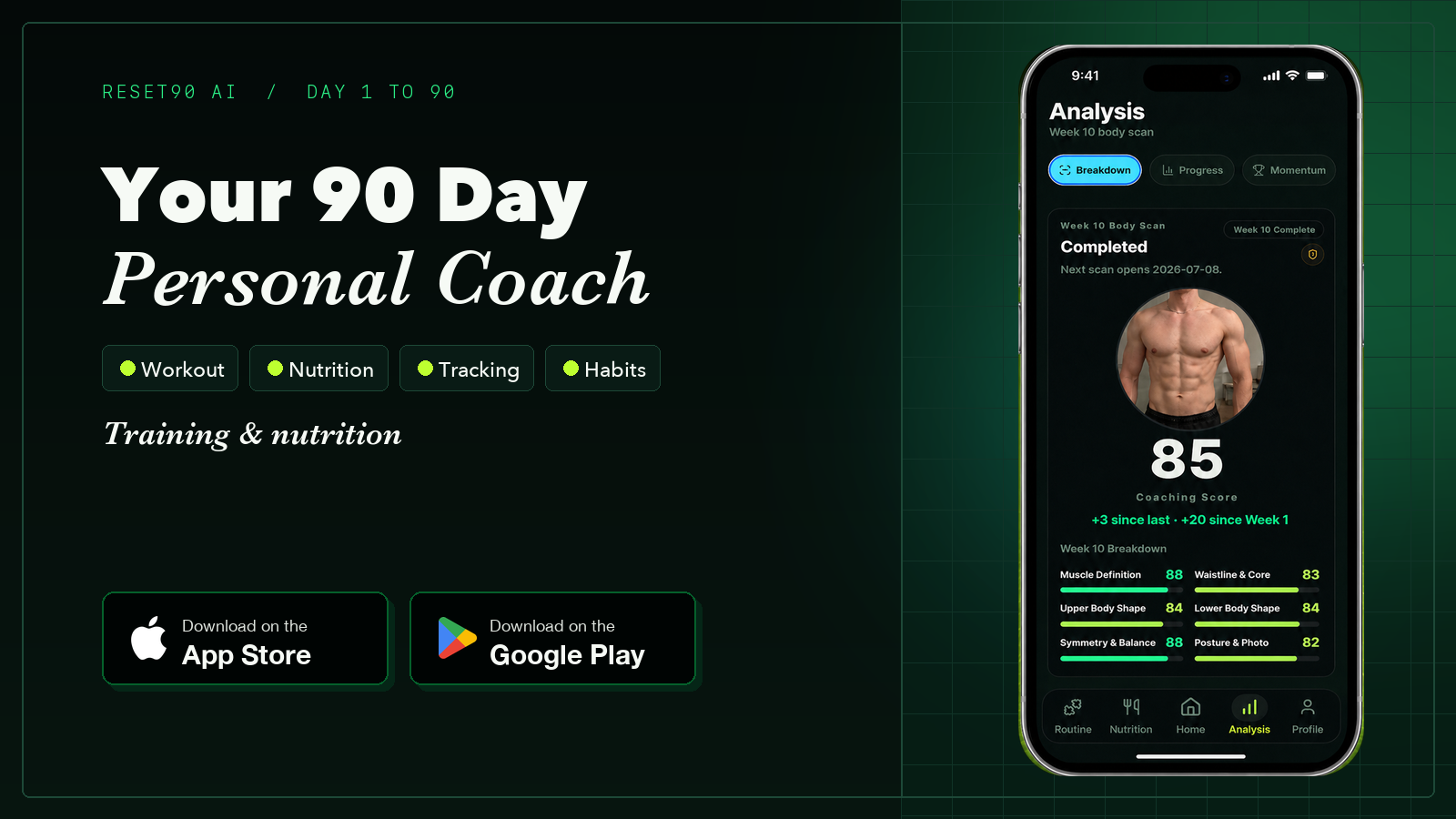
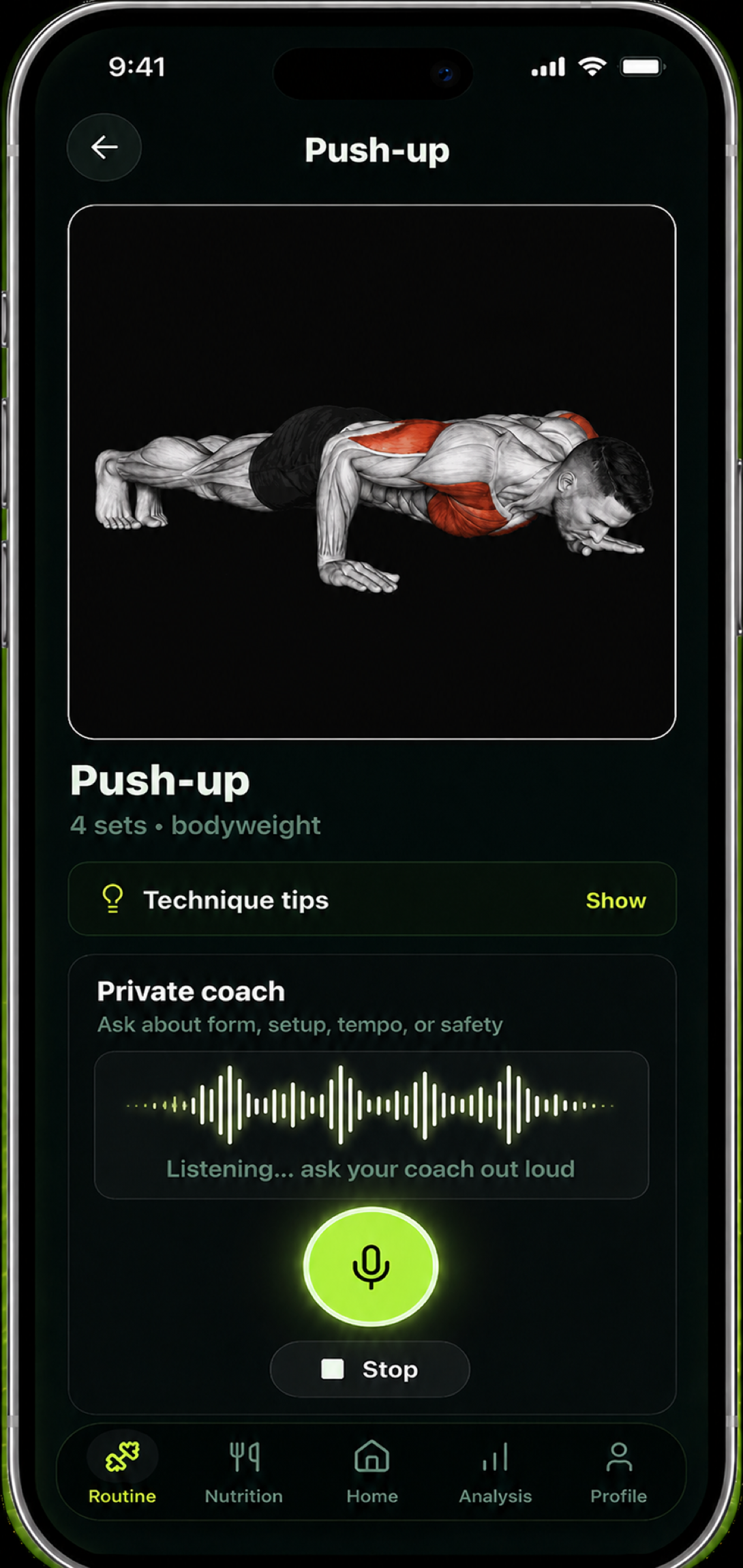
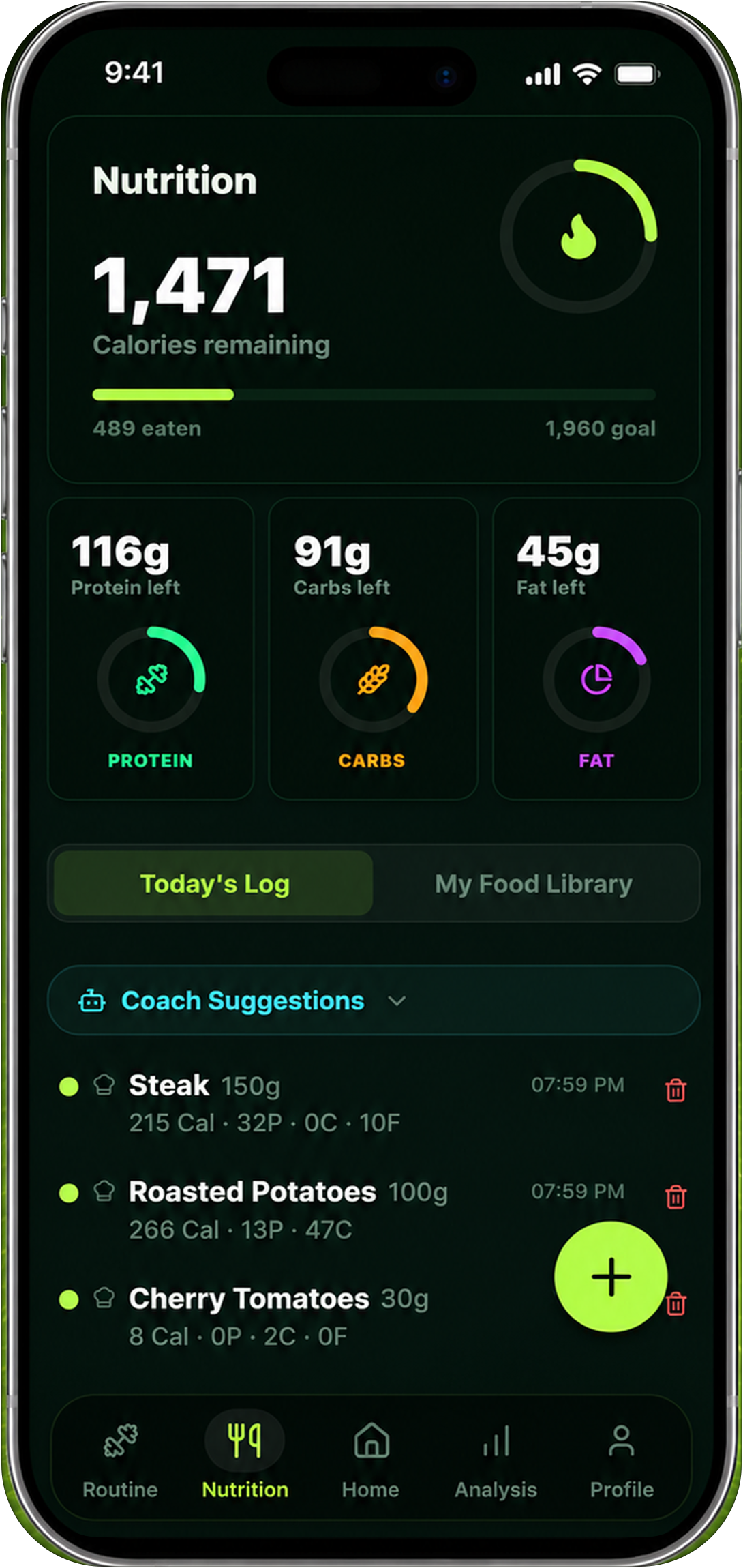
Reset90 is designed to help you act on a trend, not to turn an estimate into a diagnosis. The app can keep the surrounding behaviors visible: workouts, nutrition targets, check-ins, weight, measurements, and progress photos. That context is valuable because body composition changes are easier to interpret when you can see training consistency, food adherence, recovery, and time together.
You can also use the body-fat estimator and body-fat visualizer as educational tools for understanding ranges and visual context. They are not replacements for DEXA, a clinician, or a validated diagnostic test. If you want to track progress, pair a consistent visual routine with the other signals you already control instead of chasing a more dramatic number.
That is the practical advantage of a tracking system: it helps you ask whether your plan is working over time. The answer should come from a pattern across weeks—not from one app output, one scan, or one day in the mirror.
08Frequently asked questions
How accurate is an AI body-fat estimator compared with DEXA?
Some validated AI photo methods have shown strong agreement with DXA in research studies, and some app makers report average errors of several percentage points in their own tests. That does not give every individual estimate the same accuracy. Expect a useful estimate or trend signal, not a guaranteed exact match.
Is AI body-fat estimation better than a smart scale?
Neither method wins for every person or every goal. A smart scale is sensitive to hydration and its prediction equation; a photo estimate is sensitive to image quality, pose, clothing, and visible fat distribution. The better method for tracking is usually the one you can repeat consistently and interpret alongside other signals.
Can an AI photo estimator see visceral fat?
No. A normal photo does not directly show internal visceral fat or provide a clinical measurement of tissue distribution. A model may infer body shape from visual cues, but that is not the same as measuring internal fat compartments.
Should I use an AI estimate to decide whether I am healthy?
No. Body-fat percentage is only one piece of health context, and a photo estimate carries uncertainty. If you have symptoms, unexplained weight change, a relevant medical condition, pregnancy, or concerns about eating or exercise, speak with a qualified healthcare professional.
What is the best way to make an AI estimate more consistent?
Use the same app, camera distance, lighting, background, relaxed pose, clothing level, and timing as much as practical. Review several readings over a few weeks. Consistency cannot make the estimate clinically exact, but it can reduce avoidable image-to-image noise.
09The bottom line
AI body-fat estimation is no longer just a gimmick. Peer-reviewed studies show that specific 2D-photo systems can agree strongly with DXA across defined groups, and real-world app tests suggest that clean, repeatable photos can produce useful results. The honest limit is individual precision: a model can be directionally helpful while still missing by several percentage points.
Use DEXA when you need a more detailed reference and have a reason to obtain one. Use an AI estimator when convenience and repeatable trend tracking matter. Keep the protocol stable, compare multiple signals, and treat the output as an estimate. That is the difference between using body-composition technology thoughtfully and letting one uncertain number run your decisions.
The Reset90 system
Useful ideas for building a body you can keep.
Training notes, product updates, and practical ways to make your next 90 days count.
Start your next 90 days
Get your daily training, nutrition, and check-in priorities in one adaptive system.


Keep reading
Related articles
Ideal Body Measurements for Women
There is no single ideal body measurement set for women. Learn how averages, waist-to-height, body shape and repeatable tracking fit together without chasing a fixed beauty standard.
Read article
Bulk, Cut, or Recomp? A Practical Decision Guide
A practical way to choose a bulk, cut, recomp, or maintenance phase using your goal, training age, recovery, and repeatable progress signals.
Read article
How Often Should You Take Progress Photos?
How often should you take progress photos? Use this goal-based guide to choose weekly, biweekly, or monthly check-ins and make every comparison more consistent.
Read article