

Are Smart Scales Accurate for Body Fat?
Smart scales are useful for weight and cautious trend tracking, but body-fat estimates are noisy. Learn what to trust and how to measure consistently.
By Reset90 AI Editorial Team
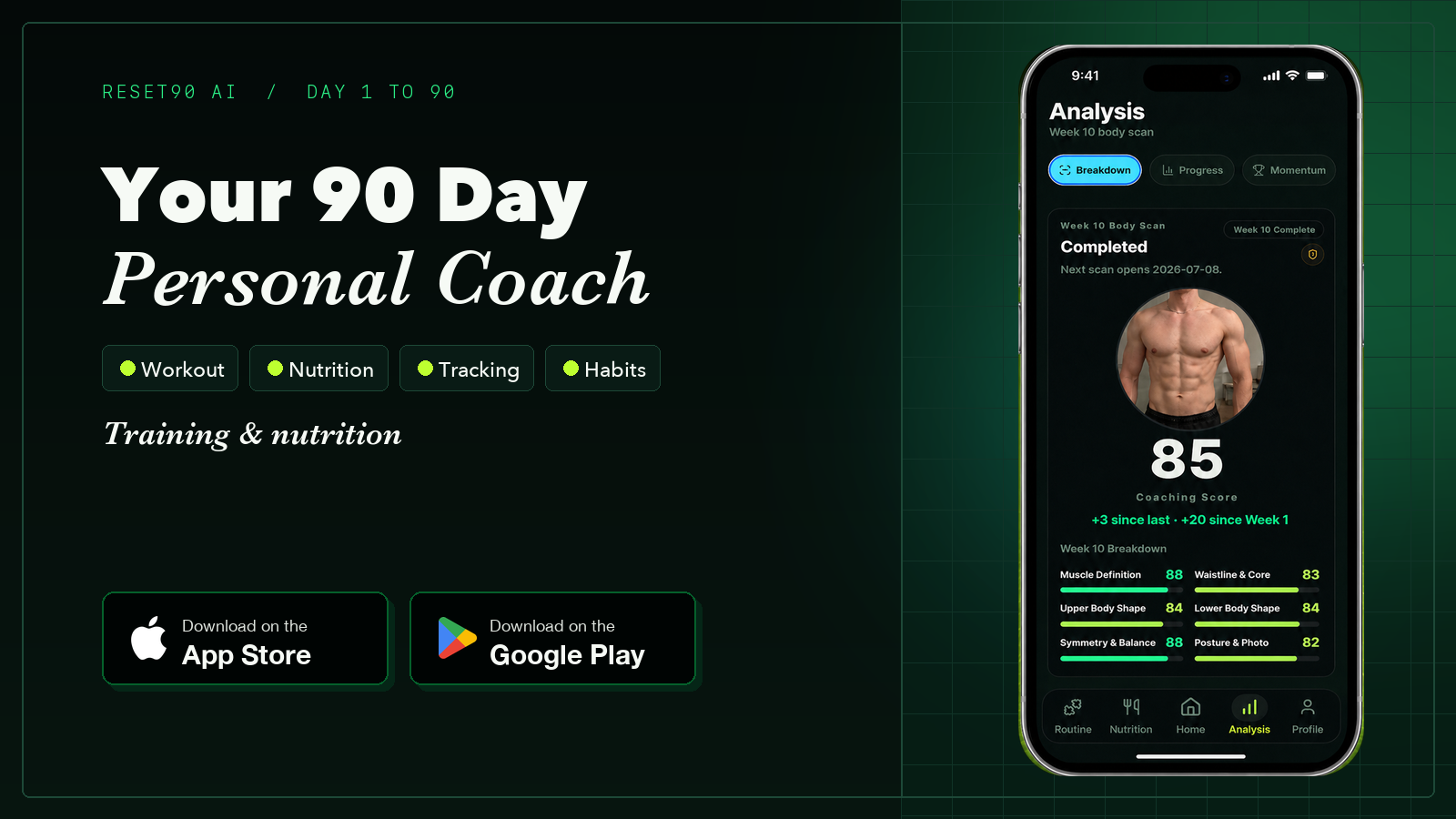
Are smart scales accurate for body fat? Smart scales are usually dependable for body weight, but their body-fat, muscle, water, and visceral-fat numbers are estimates produced by bioelectrical impedance analysis (BIA). Use those readings as a trend under consistent conditions, not as an exact verdict about your body. A better progress check combines the scale with your waist, photos, strength, and weekly weight average. Reset90 can help keep those signals in one repeatable check-in loop.
The answer gets confusing because a “smart scale” is doing two different jobs. Its load cells measure weight directly. The body-composition section sends a small electrical signal through your body, measures resistance, and uses an algorithm to estimate several other numbers. Those two jobs do not have the same level of accuracy.
So the useful question is not only “Is my smart scale right?” It is: Which number am I looking at, how much noise does it contain, and can I use it consistently enough to make a better decision?
01What does a smart scale actually measure?
A regular digital scale uses load cells to measure force and convert it into body weight. That is a mature, relatively simple measurement. A smart scale adds electrodes and software. When you stand barefoot on the sensors, a very small current travels through part of your body. The device measures impedance, or resistance to that current, then combines it with inputs such as height, age, sex, and weight.
Muscle and water conduct electricity differently from fat, so the algorithm uses the signal to estimate fat mass, lean mass, body water, and sometimes other metrics. It does not directly see your fat tissue, count your muscle fibers, or scan your body the way an imaging method does. The result is a model-based estimate.
That distinction matters. BIA is a legitimate measurement method used in more advanced settings, but a foot-to-foot home scale has limited information about the full body. The quality of the estimate also depends on the device, its electrode arrangement, its algorithm, the population used to build that algorithm, and the conditions of the reading.
02Is the weight number on a smart scale accurate?
Usually, the weight number is the most trustworthy number on the display. A smart scale does not become less useful at weighing you just because its body-fat estimate is noisy. Put it on a hard, level surface, use it in the same location, and avoid comparing readings from different devices as if they were one continuous measurement.
Even weight has short-term variation. Food, fluids, sodium, glycogen, digestion, clothing, and the time of day can move the number. That is normal body weight variation, not necessarily scale error. A weekly average is more useful than deciding that one unusually high morning means your plan failed. Our guide to progress photos versus the scale shows how to keep that single number in context.
Think of the scale as giving you a useful mass trend. It cannot tell you how much of a change came from fat, muscle, water, or food in your digestive system without additional context.
03Is the body-fat number accurate?
It can be useful, but it should not be treated as an exact body-fat measurement. A small observational comparison of consumer smart scales with DEXA found that the devices measured total body weight much more closely than fat mass and lean mass. The study’s conclusion was cautious: consumer smart scales should not replace DEXA for clinical body-composition assessment.
That does not mean every reading is meaningless. It means the number has two different questions attached to it:
- Validity: How close is this displayed percentage to your actual body-fat percentage?
- Usefulness: If you measure the same way over time, does the direction of the readings help you understand your progress?
A device can have limited validity as an absolute number and still provide a useful personal trend. The reverse is also possible: a reading can look precise while being too inconsistent to guide a decision. Do not confuse decimal places with certainty.
04Why can smart-scale readings change overnight?
Body fat does not meaningfully appear or disappear between bedtime and breakfast. BIA readings can change quickly because the electrical signal is sensitive to water distribution and contact conditions. Common sources of variation include:
- Hydration: being unusually dehydrated or unusually hydrated can change impedance.
- Food and drink: a large meal, a late drink, or a salty dinner changes body mass and fluid distribution.
- Training: a hard workout shifts fluids and can make a post-training reading difficult to compare with a resting reading.
- Alcohol and caffeine: these can alter hydration and the context around the reading.
- Time of day: morning and evening numbers answer different questions because your body has eaten, moved, and accumulated fluids.
- Foot contact: wet, very dry, calloused, or differently positioned feet can change how the current enters the body.
- Surface: carpet or an uneven floor can affect the scale’s weight reading and stability.
- Device and profile settings: changing scales, units, user profiles, or algorithm versions can create a break in the trend.
If your smart scale says your body fat moved several points in one day, start with the measurement conditions before assuming your tissue changed. The faster the displayed number moves, the more likely it is that water and measurement context are contributing to the result.
05Which smart-scale numbers should you trust?
| Number | How to use it | Main limitation |
|---|---|---|
| Weight | Use it for a consistent trend and weekly averages. | Daily changes include water, food, glycogen, and digestion. |
| BMI | It is arithmetic based on height and weight, useful only within its known limits. | It does not separate fat from muscle or show fat distribution. |
| Body-fat percentage | Use directionally when the device and conditions stay the same. | Absolute accuracy varies; hydration and the algorithm matter. |
| Muscle or lean mass | Look for slow, broad direction over months and compare with strength and measurements. | It is modeled from the same noisy signal; lean mass is not the same as muscle. |
| Body water | Use it as context for why other BIA estimates may have moved. | It is also an estimate and should not be used to diagnose hydration status. |
| Visceral fat rating | Treat it as a rough device-specific flag, not a clinical result. | Different brands use different scales and formulas. |
| Bone mass or metabolic age | Do not use a home-scale number to make a medical decision. | These are highly model-dependent; clinical questions require appropriate care. |
The practical rule is simple: trust the weight trend more than the composition estimate, and trust a repeated pattern more than one reading. If a number does not change what you do, it does not need to become the headline metric in your progress review.
06How to use a smart scale consistently
You cannot remove all measurement error at home, but you can reduce avoidable noise. Use this protocol for a cleaner personal trend:
- Choose one device. Do not alternate between a home scale, gym analyzer, and another person’s scale and expect the percentages to line up.
- Use a hard, level surface. Keep the scale in the same spot if possible. Avoid carpet.
- Measure at a repeatable time. Morning, after using the bathroom and before food, drink, or training is a common low-variation routine.
- Keep contact consistent. Use bare feet, the same stance, and the same profile settings. Follow the device instructions without shifting while it reads.
- Record context when a reading is unusual. A late meal, hard session, travel day, alcohol, illness, or poor sleep can explain a surprising result.
- Review averages, not isolated points. Use a seven-day or longer view when the data allows it. Compare several weeks rather than reacting to Tuesday versus Monday.
Consistency does not make an estimate clinically exact. It makes the estimate more comparable with your own previous readings. That is the level of confidence a home smart scale can usually support.
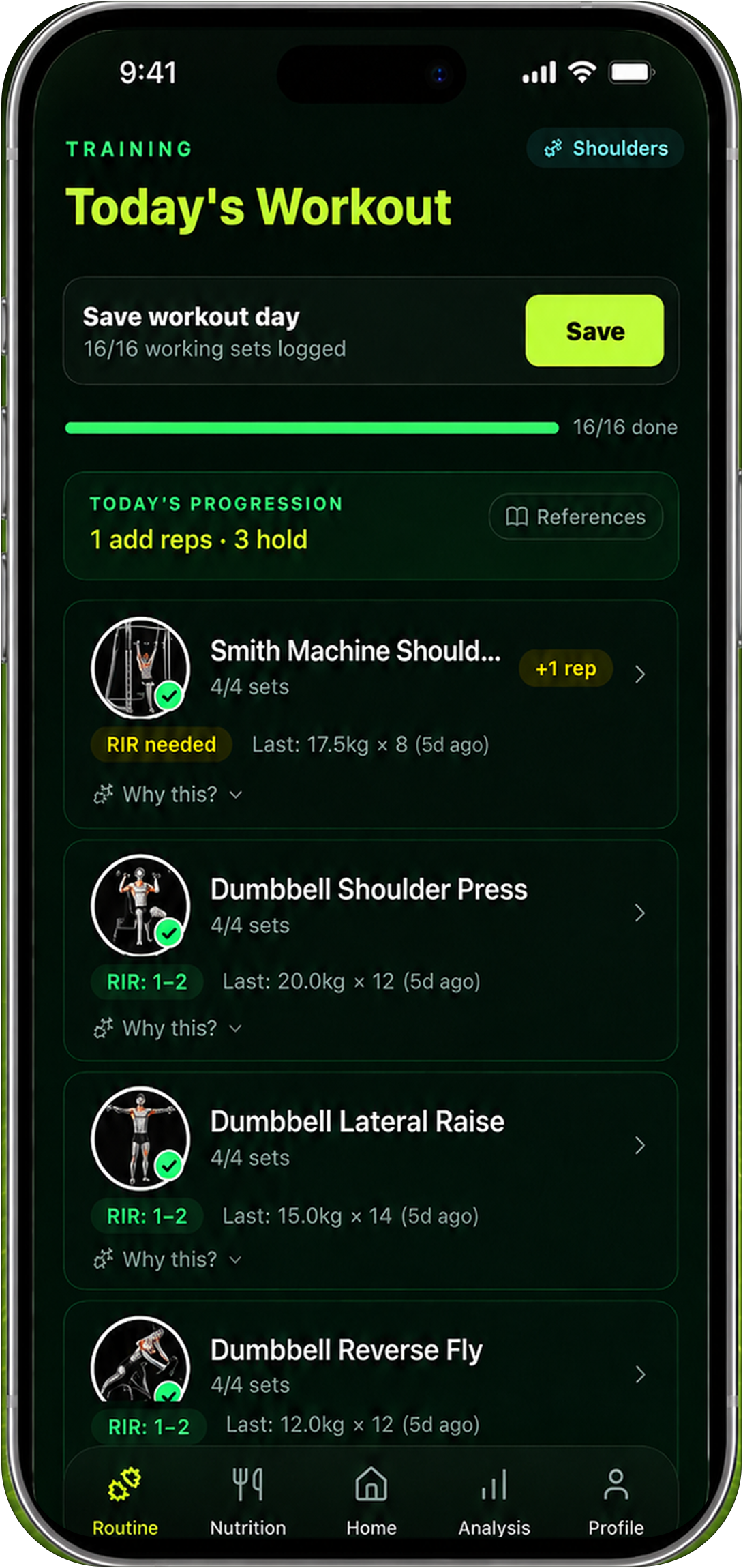
Reset90 can make this routine easier to maintain by putting check-ins, weight trends, progress photos, measurements, workouts, and nutrition context in one place. The app is useful here because it helps you review a pattern instead of treating the body-fat figure as a standalone verdict. It does not turn a BIA estimate into a medical measurement. For a broader four-signal review, see our body-recomposition tracking guide.
07What should you track alongside a smart scale?
Use each signal for the question it can actually answer. This is more reliable than asking one device to explain every change:
- Weekly weight average: Is total body mass trending up, down, or steady?
- Waist and other measurements: Are dimensions changing in the direction your goal requires?
- Progress photos: Does your visible shape look different when camera distance, lighting, pose, and clothing are comparable?
- Strength and reps: Are you producing more repeatable work, maintaining performance, or recovering poorly?
- Training and nutrition logs: Did your actual week match the plan you are evaluating?
None of these signals is perfect. Their value comes from using them together. For example, a stable scale weight with a gradually smaller waist and improving strength can be a favorable recomposition pattern even if the smart-scale body-fat number bounces around. A falling scale weight with sharply declining performance may call for a recovery and nutrition review rather than automatic celebration.
08What to do when a reading conflicts with your progress
First, do not change your training or nutrition because of one body-fat percentage. Check the conditions: Was the measurement taken at the same time, on the same surface, before food and training, with similar hydration and contact? If not, mark it as noisy and continue the routine.
Next, review a longer window. Compare the last three to four weeks of scale readings with your waist, photos, strength markers, and adherence. The goal is not for every signal to move in the same direction every week. The goal is to find a pattern that is stable enough to inform one next decision.
| Pattern | Reasonable interpretation | Next step |
|---|---|---|
| Weight average down, waist down, strength stable | A clearer fat-loss pattern than the smart-scale percentage alone. | Keep the routine steady and continue reviewing the trend. |
| Weight stable, waist down, strength up | Potentially favorable recomposition; the scale headline is hiding the change. | Collect another review period before making a major adjustment. |
| Body-fat estimate jumps, all other signals are stable | Measurement noise is more likely than a sudden tissue change. | Check conditions and compare weekly averages. |
| Weight down quickly, waist down quickly, strength falling | The plan may be too aggressive or recovery may be insufficient. | Review the full plan and seek qualified guidance when needed. |
| Every signal is flat for several weeks | There may be an adherence, stimulus, recovery, or time-horizon issue. | Audit the inputs and change one variable at a time. |
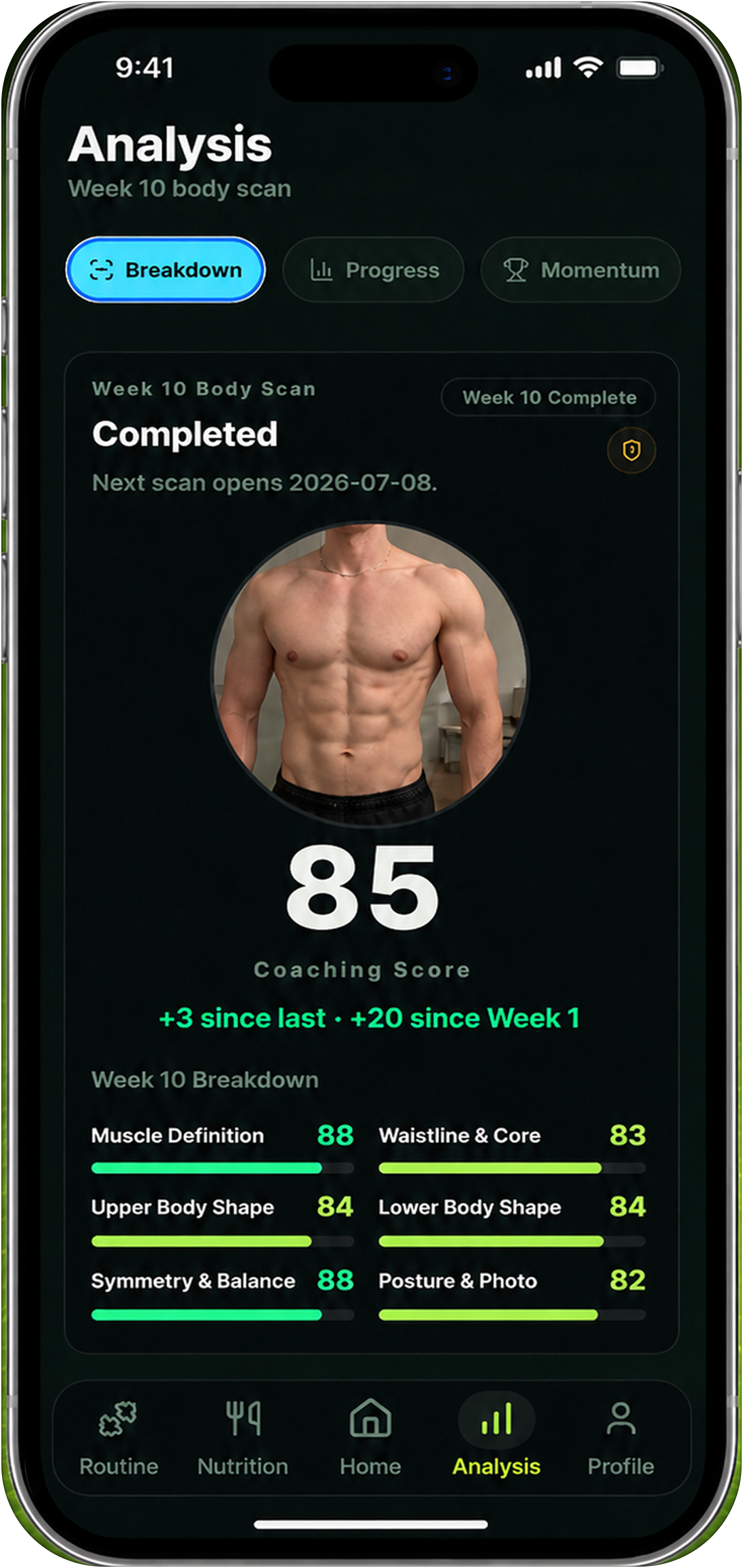
Reset90’s check-in workflow is designed for this kind of comparison: photos and measurements show context, workout records show performance, nutrition logs show adherence, and weight trends show the broader mass signal. The app can help organize the evidence and keep the review cadence; it cannot guarantee a body-composition outcome or diagnose a health condition.
09Are smart scales better than BMI?
They answer different questions. BMI is a calculation from height and weight. It does not measure body fat, and it may misclassify people with unusually high muscle mass or unusually low lean mass. A smart scale attempts to estimate body composition, but the estimate carries its own error and should not be treated as automatically superior.
If your question is “How has my total weight changed?” a scale and a consistent average are enough. If your question is “Is my body composition changing?” combine several signals. If your question involves a medical concern, do not let a consumer scale or BMI category substitute for qualified clinical assessment.
10When should you use a different method?
A smart scale may be a reasonable low-friction trend tool for a fitness plan. It is the wrong tool for proving an exact body-fat percentage, diagnosing visceral fat, assessing bone health, or making a clinical decision from one home reading.
Other methods have different strengths. A tape measure can add a repeatable waist trend; our guide to taking body measurements covers the setup. Progress photos can show visible change when captured under comparable conditions. Skinfolds, air displacement, underwater weighing, and DEXA each have their own protocols, costs, assumptions, and sources of error. If you are comparing devices rather than measurement methods, see the body-composition scale roundup. More expensive does not mean every method is perfect; it means the method is answering a different measurement problem.
For most fitness decisions, the best setup is not one “perfect” number. It is a consistent method plus enough context to tell a real trend from a noisy day.
11Frequently asked questions
Are smart scales accurate for weight?
They are generally much more dependable for weight than for body-fat percentage or muscle mass. Use a hard, level surface and compare readings under similar conditions. A weekly average is more informative than one daily number.
How accurate are BIA scales for body fat?
BIA scales provide estimates, not a guaranteed exact percentage. Accuracy depends on the device, algorithm, body characteristics, electrode arrangement, and measurement conditions. Use the same device consistently and treat the direction over time as more useful than the absolute number.
Why does my smart-scale body fat change overnight?
Hydration, food, sodium, exercise, alcohol, time of day, temperature, and foot contact can change the impedance signal. A large overnight move is usually a reason to check the context before assuming your actual body fat changed.
Are expensive smart scales more accurate?
Some premium devices collect more information, such as hand-to-foot measurements, which may improve the inputs to the model. They are still BIA devices and remain sensitive to hydration and conditions. Price and extra metrics do not make a home reading clinically definitive.
Should I trust the muscle-mass number?
Treat it as a cautious, slow-moving trend at best. Lean mass is not identical to muscle mass, and both are estimated from the same impedance signal. Compare it with strength, measurements, photos, and a longer time window.
Can a smart scale diagnose visceral fat or bone health?
No. A consumer device may display a visceral-fat rating or bone-mass estimate, but those numbers are not a diagnosis. Use appropriate professional assessment for medical or bone-health questions.
12The practical answer
Smart scales are accurate enough to be useful for body weight and potentially useful for personal trends, but they are not a precise body-fat truth machine. Trust the weight trend, treat body-composition numbers as estimates, standardize the way you measure, and review several weeks at a time.
Then add the signals a smart scale cannot interpret on its own: waist, photos, strength, training, nutrition, and adherence. Reset90 helps you keep that evidence together and turn a calmer review into the next training and nutrition decision. Download it if you want a repeatable progress system—not just another number on a screen.
The Reset90 system
Useful ideas for building a body you can keep.
Training notes, product updates, and practical ways to make your next 90 days count.
Start your next 90 days
Get your daily training, nutrition, and check-in priorities in one adaptive system.


Keep reading
Related articles

Ideal Body Measurements for Women
There is no single ideal body measurement set for women. Learn how averages, waist-to-height, body shape and repeatable tracking fit together without chasing a fixed beauty standard.
Read article
Bulk, Cut, or Recomp? A Practical Decision Guide
A practical way to choose a bulk, cut, recomp, or maintenance phase using your goal, training age, recovery, and repeatable progress signals.
Read article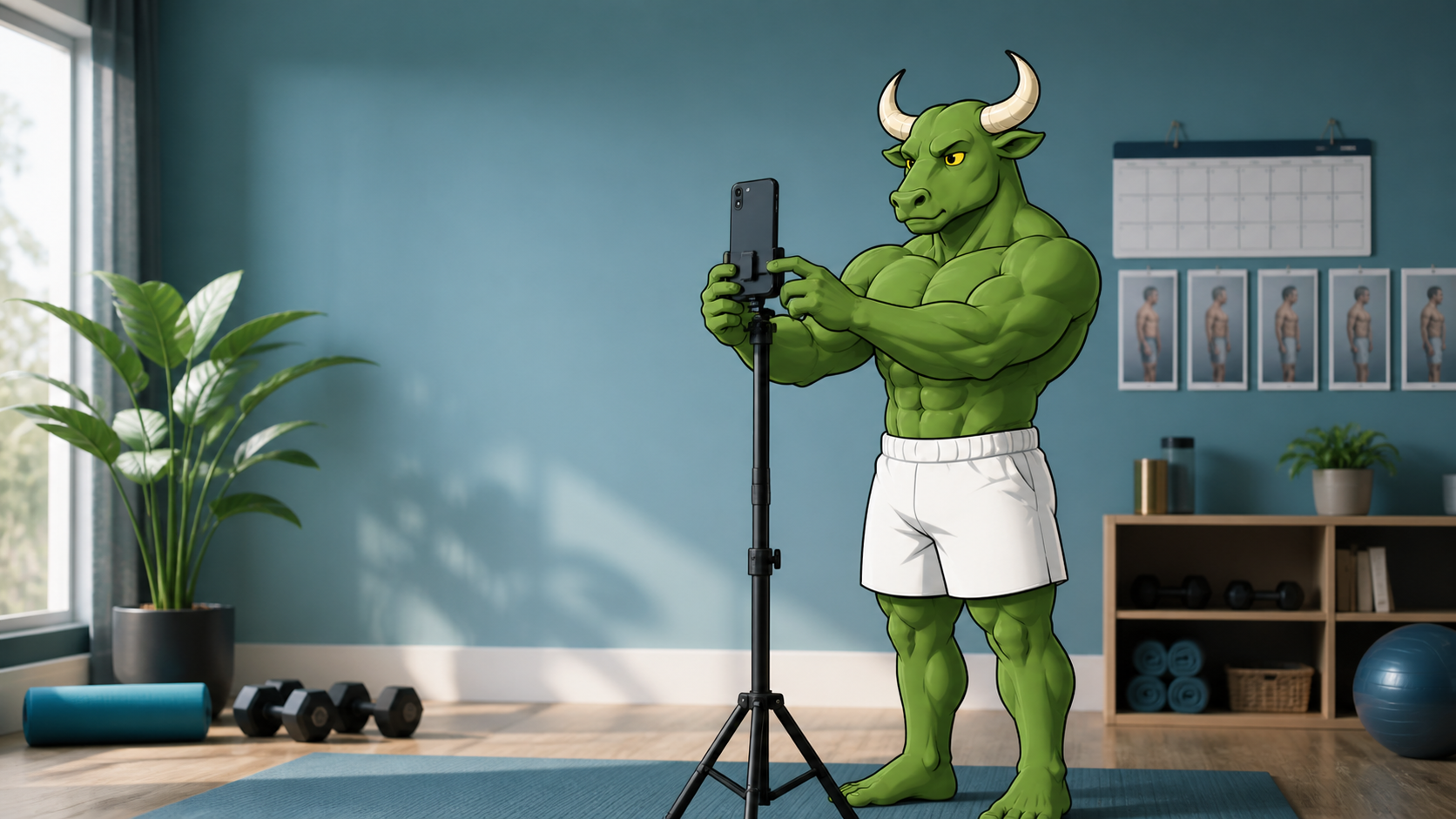
How Often Should You Take Progress Photos?
How often should you take progress photos? Use this goal-based guide to choose weekly, biweekly, or monthly check-ins and make every comparison more consistent.
Read article