

How to Track Progressive Overload When the Weight Stops Moving
When the weight stalls, use reps, sets, range of motion, effort, technique, and recovery to find the next useful progression instead of changing the entire program.
By Reset90 AI Editorial Team
Short answer: Progressive overload is not limited to adding weight. When the load stops moving, compare repetitions, sets, range of motion, effort, technique, and recovery across the same exercise. If one variable improves without lowering movement quality, you may still be progressing. Change one variable at a time, then review the next two or three comparable sessions before changing the whole plan.

01Progressive overload is more than adding weight
Many lifters treat the number on the bar as the only proof that training is working. That makes a normal plateau look like a dead end. A load can stay the same while you complete more repetitions, use a better range of motion, control the eccentric phase, reduce unnecessary rest, or perform the same work at a lower effort.
Progressive overload means gradually asking your body to handle a meaningful training demand while keeping the work recoverable. The demand can change through several variables:
- Load: use more weight with comparable technique.
- Repetitions: complete more quality reps at the same load.
- Sets: perform more work while preserving recovery.
- Range of motion: move through a more consistent or complete range.
- Technique: reduce momentum, improve control, or make the intended muscle do more of the work.
- Effort: complete the same work with more reps in reserve or a lower perceived effort.
The correct variable depends on the exercise, the goal, and the phase of the program. Adding weight is one tool, not the definition of progress.
02Confirm that the weight actually stopped moving
Before changing a plan, make sure the apparent plateau is real. A single repeated load can be caused by a different repetition target, a harder variation, a poor recovery week, or a change in technique.
Compare like with like:
| Check | Compare | Why it matters |
|---|---|---|
| Exercise | Same movement and meaningful setup | A variation change can make the same load a different task |
| Repetitions | Same target range or a recorded rep progression | Eight reps and twelve reps do not create the same comparison |
| Range of motion | Same depth, lockout, and start position | A shorter range can make a stable load look easier |
| Rest | Similar rest between sets | Shorter rest can change performance without a load change |
| Effort | RPE or RIR estimate | The same work at a lower effort may still be progress |
Do not use a heavier number as the only way to win the comparison. First make the comparison fair enough that the result means something.
03Track the full progression signal
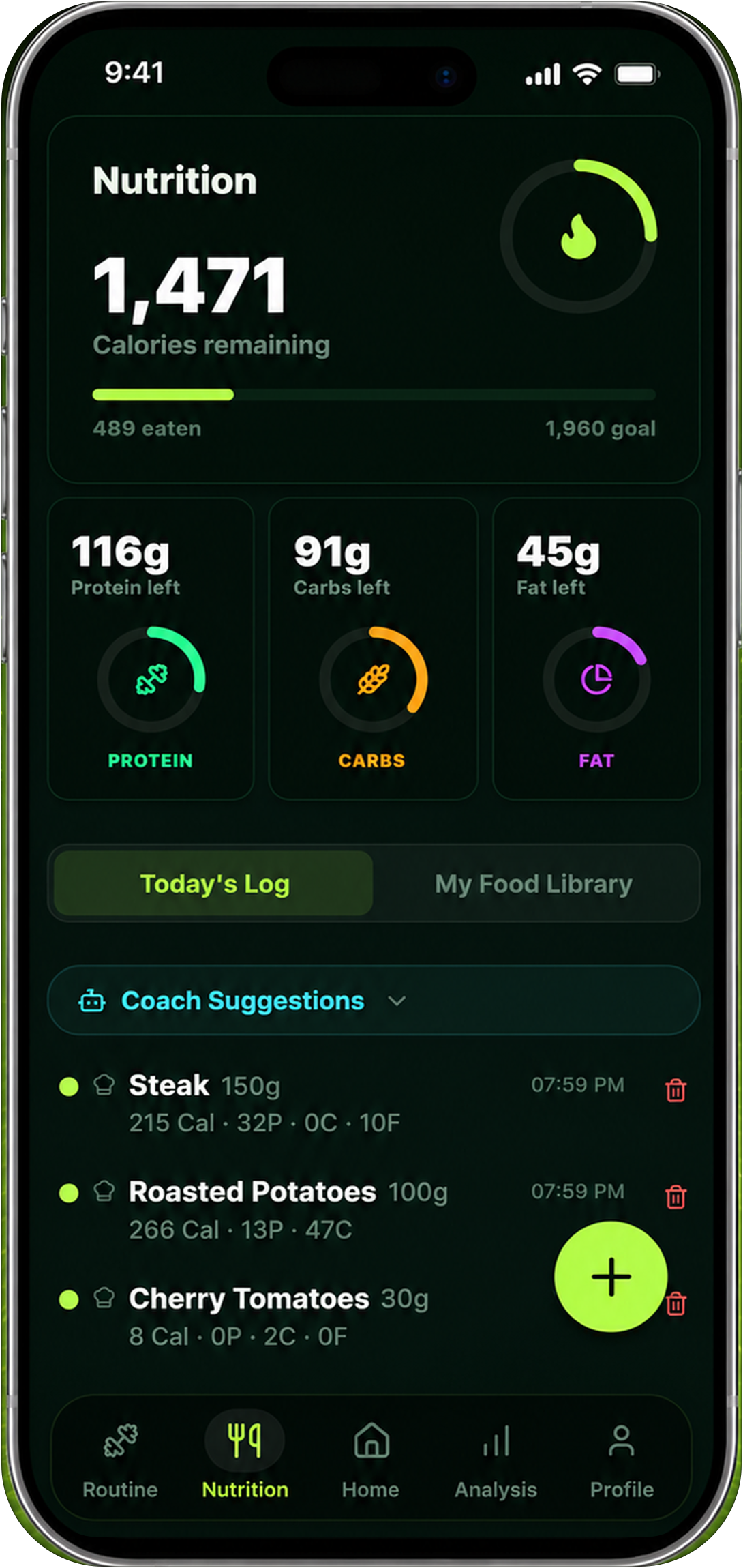
A useful training log captures enough context to explain why a set moved or stalled. You do not need a complicated dashboard. Start with the fields that let you compare the same exercise later:
- Load, repetitions, and number of sets.
- Range of motion or a brief technique standard.
- RPE or RIR at the end of the important sets.
- Rest time when it materially affects the movement.
- A short note about sleep, pain, equipment, or unusual fatigue.
Use the RPE vs. RIR guide if you need to choose an effort language. Pick one scale and apply it consistently rather than recording two numbers that mean the same thing to you.
04Use repetitions before forcing more load
Repetition progression is often the simplest response when the weight is stable. Choose a range, such as eight to twelve repetitions, and keep the load until you can complete the upper end with the planned effort and technique.
For example, a three-set movement might progress like this:
| Session | Work performed | Interpretation |
|---|---|---|
| 1 | 10, 9, 8 reps | Build a baseline at the current load |
| 2 | 10, 10, 9 reps | More total quality work; progress is visible |
| 3 | 11, 10, 10 reps | Continue until the target range is stable |
| 4 | 12, 12, 11 reps | Consider a small load increase if technique remains strong |
The exact numbers are examples, not a universal prescription. The principle is to earn a load increase with repeatable work instead of forcing a heavier set after one unusually good attempt.
05Use sets carefully when total work is the limiter
If each set is technically solid but the session does not provide enough repeatable work, adding a set may be more useful than adding weight. This can help when the goal is accumulating practice or volume, but it also increases fatigue.
Before adding a set, check:
- Did the existing sets stay within the planned effort range?
- Did the next session recover normally?
- Can you add the set without making the rest of the week harder to complete?
- Does the exercise deserve more work, or is another movement already covering the same pattern?
Add the smallest useful amount. One additional quality set is easier to evaluate than a sudden doubling of volume.
06Improve range of motion and technique without changing the load
A stable load can become a stronger stimulus when the movement standard improves. That does not mean forcing an extreme range or slowing every repetition arbitrarily. It means making the intended movement more repeatable and reducing shortcuts that hide the actual demand.
Record a simple technique cue:
- Squat to the same depth without losing balance.
- Press through a consistent range without turning the final reps into a different movement.
- Control the lowering phase enough to keep the target position.
- Use less momentum when momentum was not part of the exercise goal.
When technique improves, do not immediately assume the load should also increase. The better movement may be the progression you needed before the next load jump.
07Use effort to explain a stable load
Two sessions can use the same weight and repetitions while creating different demands. If the work moves from a very hard effort to a controlled effort, that is meaningful information.
Use the same effort scale for a few weeks and ask:
- Did the same load become easier without a technique change?
- Did you complete the same work with more reps in reserve?
- Did the last set stay closer to the first set instead of dropping sharply?
Effort is not a substitute for performance. It is context that helps you interpret performance. A lower RPE at the same work may support progression, while a high RPE with falling reps may indicate that recovery or volume needs attention.
08Review two or three comparable sessions
One workout is a snapshot. Use a short review window before declaring a plateau. Two or three comparable sessions are often enough to separate a bad day from a repeated problem, as long as the exercise and target are reasonably stable.
For each session, write one line:
- What was the planned work?
- What was completed?
- What changed in reps, sets, range, effort, or technique?
- What should remain the same next time?
If the answer keeps pointing to the same limitation, change that variable rather than replacing the entire program.
09Classify the plateau before changing the plan
Most plateaus fit one of a few patterns. Classifying the pattern keeps the next action proportionate.
| Pattern | Likely interpretation | First adjustment |
|---|---|---|
| Load stable, reps increasing | Progress is occurring through repetition capacity | Keep the load until the target range is stable |
| Load and reps stable, technique improving | Movement quality is improving | Keep practicing before adding a new variable |
| Reps falling across the week | Fatigue, volume, rest, or recovery may be limiting | Reduce one demand or add recovery space |
| Effort rising at the same work | The current workload is becoming less recoverable | Hold progression and review sleep, stress, and recent volume |
| Everything unchanged for several reviews | The stimulus or progression rule may be too small or too unclear | Change one variable and set a new review point |
10Make one change at a time
Changing load, repetitions, sets, exercise order, rest, and exercise variation at once makes the result hard to interpret. Use a small experiment:
- Choose the variable most likely to address the limitation.
- Keep the other important conditions stable.
- Apply the change for two or three comparable sessions.
- Record whether performance and recovery improved together.
If the target is more reps, do not also add a set and shorten rest on the same day unless the plan explicitly calls for it. Clear experiments produce better training decisions than dramatic resets.
11Know when to hold or reduce the demand
Progressive overload only works when the work can be recovered from. A plateau can be a sign that you need to hold the current workload, reduce it briefly, or use an easier variation before progressing again.
Consider holding or reducing the demand when:
- Technique is deteriorating before the planned effort target.
- Performance drops across several sessions, not just one.
- Soreness or fatigue changes normal movement quality.
- The same exercise is making the rest of the week harder to complete.
- Pain, dizziness, or persistent symptoms appear.
This is not failure. It is a way to keep the training signal useful. If symptoms are persistent or affect daily life, stop the exercise and seek appropriate professional guidance.
12Use a simple progressive-overload audit
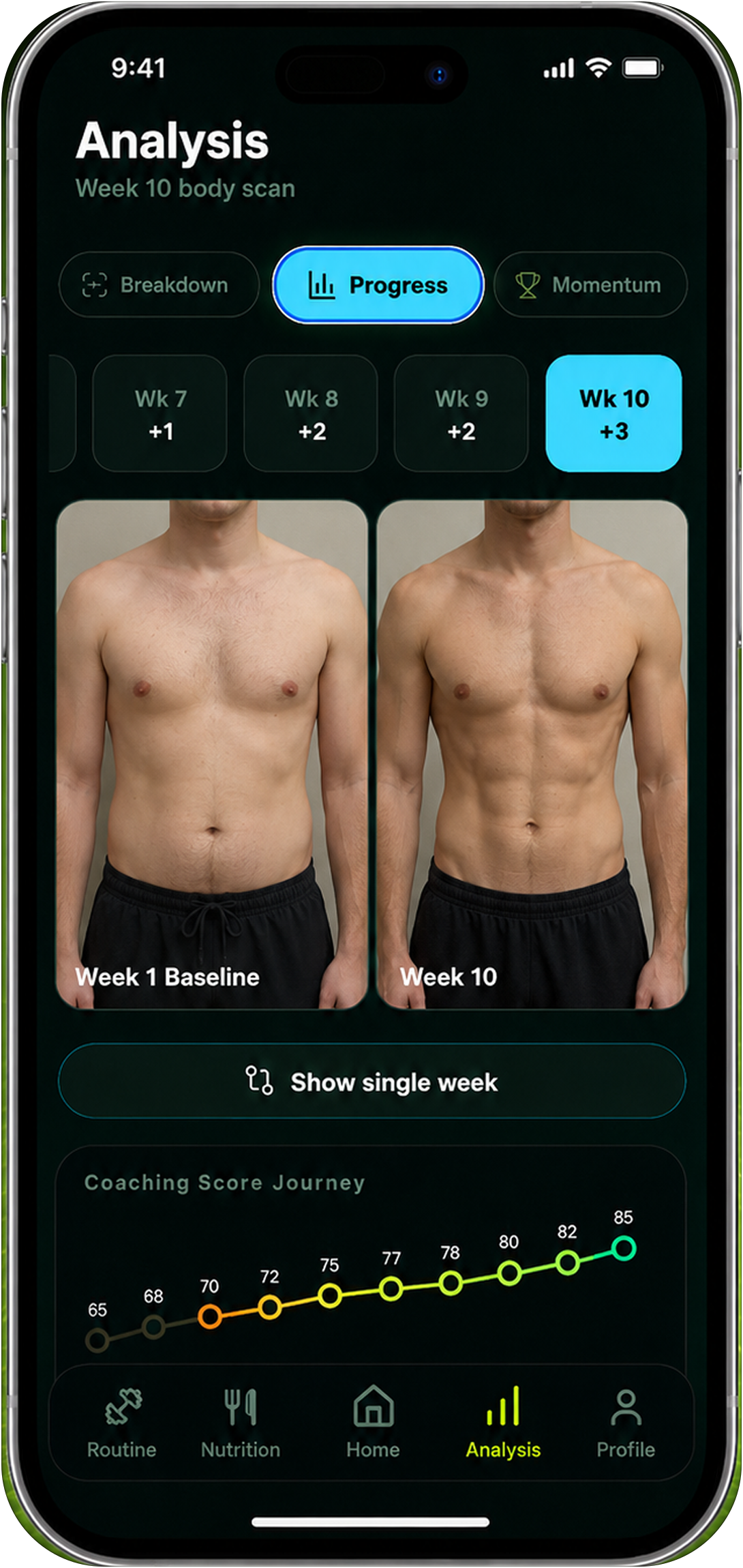
At the end of each training week, audit one or two priority movements instead of trying to score everything.
| Audit question | Yes | No | Next step |
|---|---|---|---|
| Did I perform comparable work? | Keep comparing | Standardize setup | Fix the comparison before changing the plan |
| Did one variable improve? | Record the gain | Review the target | Choose the smallest useful progression |
| Did technique remain acceptable? | Continue | Hold or reduce | Protect the movement standard |
| Did recovery support the next session? | Progress gradually | Create more space | Adjust volume, rest, or exercise order |
For a broader view of how planning and logging tools differ, see the workout planning guide. The audit itself should stay small enough to complete every week.
13Connect the audit to a longer block
A single session cannot prove that a training block is working. Review the direction across several weeks:
- Are you completing more quality work at the same effort?
- Are the same exercises becoming more repeatable?
- Is progression leaving enough recovery for the next session?
- Does the plan still match the goal and schedule?
If the answer is yes, a stable load may be completely acceptable. If the answer is no, change the smallest variable that explains the problem. A long-term plan should make this review easy; the 90-day exercise programs comparison is a useful reminder that progression frameworks can use more than one path.
14Frequently asked questions
Does progressive overload always require adding weight?
No. More quality repetitions, additional sets, better range of motion, cleaner technique, lower effort at the same work, or shorter necessary rest can all be meaningful progression.
How long should I wait before calling something a plateau?
Review at least two or three comparable sessions and check whether the target, technique, recovery, and exercise setup stayed similar. A single bad workout is not enough evidence.
Should I change my entire program when progress stalls?
Usually not as a first step. Classify the limitation, change one variable, and review the next comparable sessions. A full program change makes it harder to learn what was actually limiting progress.
What if my weight is stable but my technique is better?
Record the improved movement standard. Better control or range of motion can be a real progression even when the external load has not changed.
Can I use RPE or RIR to track a plateau?
Yes. Use one effort metric consistently, then compare it with load, repetitions, and technique. Effort helps explain whether stable work is becoming easier, harder, or less recoverable.
15Let the log find the next useful step
When the weight stops moving, do not assume the plan has stopped working. Compare the full signal: repetitions, sets, range of motion, effort, technique, and recovery.
Choose one variable, test it across comparable sessions, and keep the change only if performance and recovery improve together. Progressive overload is not a demand to add weight every workout. It is a method for making training more productive over time.
The Reset90 system
Useful ideas for building a body you can keep.
Training notes, product updates, and practical ways to make your next 90 days count.
Start your next 90 days
Get your daily training, nutrition, and check-in priorities in one adaptive system.


Keep reading
Related articles

Ideal Body Measurements for Women
There is no single ideal body measurement set for women. Learn how averages, waist-to-height, body shape and repeatable tracking fit together without chasing a fixed beauty standard.
Read article
Bulk, Cut, or Recomp? A Practical Decision Guide
A practical way to choose a bulk, cut, recomp, or maintenance phase using your goal, training age, recovery, and repeatable progress signals.
Read article
How Often Should You Take Progress Photos?
How often should you take progress photos? Use this goal-based guide to choose weekly, biweekly, or monthly check-ins and make every comparison more consistent.
Read article