

Protein Per Meal for Muscle Gain: A Practical Distribution Guide
A practical guide to turning a daily protein target into repeatable meals, without chasing a perfect per-meal number or making nutrition impossible to follow.
By Reset90 AI Editorial Team
Short answer: For muscle gain, your total daily protein target matters more than hitting a perfect number at every meal. Once the daily target is realistic, divide it across the meals you can repeat, give each meal a meaningful protein serving, and use your training schedule and appetite to make the plan easier to follow. Distribution is a practical tool, not a magic threshold.
01Start with the daily target
“How much protein should I eat per meal?” sounds like a meal question, but it starts with the whole day. If your daily intake is inconsistent, changing breakfast from one protein source to another will not solve the main problem. First choose a daily target you can reach without turning every meal into a calculation.
Your target depends on body size, training goal, total calories, food preferences, and how much precision you actually need. A person trying to build muscle while eating enough calories has a different planning problem from someone dieting aggressively, eating on a tight budget, or struggling to eat breakfast. Use a calculator or a professional starting point as an estimate, then judge the plan by adherence, training performance, body-weight trend, and how you feel.
Reset90’s guide to how much protein you need to build muscle covers the daily-target question. This article handles the next decision: how to turn that target into meals that fit your day.
02Why meal distribution can help
Protein distribution matters because muscle-building is not only a spreadsheet problem. A daily target that arrives almost entirely in one meal may be difficult to digest, difficult to repeat, or disconnected from the rest of your training and nutrition routine. Spreading protein across several meals creates more chances to eat a useful serving and makes the target less dependent on one oversized dinner.
That does not mean every meal needs to be identical. You can have a smaller breakfast, a larger post-training meal, and a simple evening snack while still meeting a useful daily total. The best distribution is the one that gives you enough protein across the day without creating so much friction that you stop logging or start skipping meals.
Research on protein distribution can inform the plan, but it does not establish one universal meal ceiling that applies to every person, food, body size, or goal. Treat per-meal guidance as a planning range. Do not throw away a complete meal because it is slightly above or below a number.
03Turn the target into meals
Start by dividing your daily target by the number of protein opportunities you can realistically repeat. The result is a useful anchor, not a pass/fail rule.
| Daily pattern | How to use it | Best fit |
|---|---|---|
| Three meals | Give each meal a substantial protein anchor and adjust the largest meal to your appetite | People who prefer simple meals and do not need frequent snacks |
| Three meals plus a snack | Use the snack to close a small gap instead of making dinner oversized | People whose breakfast or lunch is usually lighter |
| Four similar meals | Use roughly comparable servings and rotate the food sources | People who like predictable meal timing |
| Two meals plus shakes or small snacks | Build a reliable protein option into the lower-appetite part of the day | Busy schedules, late breakfasts, or limited cooking time |
For example, if your daily target is 140 grams and you usually eat four times, a starting anchor might be around 35 grams per eating occasion. You do not need to hit 35 grams exactly. A day with 30 grams at breakfast, 40 at lunch, 25 in a snack, and 45 at dinner can still be a practical distribution if the total and the routine work for you.
04Build every meal around a protein anchor
A protein anchor is the part of the meal you choose first because it makes the target easier to reach. The anchor can be animal-based, dairy-based, plant-based, or a combination. The goal is not to make every plate look the same. The goal is to reduce the number of meals where you reach the end and realize the target is impossible to catch.
- Breakfast: eggs, Greek-style yogurt, cottage cheese, tofu, a protein smoothie, or another option that you can prepare consistently.
- Lunch: chicken, fish, lean meat, tofu, tempeh, beans paired with another protein source, or a prepared option that travels well.
- Dinner: choose the main protein before deciding on the rest of the plate, then add vegetables and carbohydrates that fit the day.
- Snack: use a small, repeatable option when a full meal is not practical instead of depending on hunger to remind you.
Food quality and preference still matter. A protein anchor should be something you enjoy enough to repeat, can afford, and can prepare safely. Variety helps with micronutrients, appetite, and long-term adherence, so a successful plan does not need to rely on one food.
05Make breakfast easier to hit
Many people do not have a protein distribution problem at dinner. They have a breakfast gap that forces the final meal to carry too much of the daily target. If breakfast is consistently low, do not start by demanding a giant morning meal. Add one manageable anchor and repeat it for a week.
A simple breakfast system might be a yogurt bowl with a measured protein addition, eggs with a side that fits your calories, tofu with toast, or a shake when chewing early is difficult. The exact food is less important than its reliability. If you train early, choose an option that sits comfortably and move a larger serving to later in the day if needed.
Use the same principle for lunch. A meal that is easy to pack or order consistently often beats a theoretically perfect meal that requires a different recipe every day.
06Match protein planning to training
Protein distribution is not a replacement for a training plan. It supports the plan by making recovery nutrition more predictable. On training days, you may prefer a protein-containing meal before or after the session because it fits your schedule and helps you remember to eat. On rest days, you can keep protein similar while changing calories or carbohydrates according to your goal.
You do not need to panic if a workout happens between meals or if your post-workout meal is delayed. A useful daily pattern is more important than a narrow timing window. Plan the next meal, keep the target visible, and avoid turning one imperfect day into a reason to abandon the week.
If training volume increases, review the whole plan rather than adding protein automatically. More protein does not compensate for insufficient total calories, poor sleep, an unrealistic workout schedule, or a program that creates more fatigue than you can recover from.
07Use a weekly review instead of daily perfection
Protein tracking becomes more useful when you review patterns. One low day does not tell you whether the plan works. A week of missed breakfasts, unlogged snacks, or oversized dinners tells you where the system needs a smaller adjustment.
- Check the average: Look at the week rather than judging the plan from one meal.
- Find the weakest eating occasion: Is breakfast, lunch, or the evening snack where the target repeatedly breaks down?
- Reduce friction: Prepare one reliable option or keep a simple backup available.
- Review training: Confirm that the food plan supports the training goal instead of compensating for an excessive workload.
- Change one thing: Add a breakfast anchor, adjust the snack, or change meal timing before rebuilding the entire diet.
Reset90’s food-tracking guide for muscle gain uses the same systems principle: calories and protein become more useful when they are connected to a repeatable weekly routine.
08Choose the right logging level
You do not need to weigh every ingredient forever. Choose the level of tracking that answers the question you are trying to solve.
| If your problem is | Try this logging level |
|---|---|
| You do not know whether you are close to the target | Log protein anchors for a week and use rough portions |
| Your portions vary widely | Measure the main protein sources for a short calibration period |
| You hit the target but struggle with calories | Track protein and total calories together, not protein alone |
| You are consistent but not progressing | Review training quality, total energy, sleep, and trend data before adding more protein |
A food log should reduce uncertainty, not create a second full-time job. If you stop using the system because it takes too long, the system is too complicated for the current phase.
09Handle plant-based and mixed meals
Plant-based eating can fit a muscle-gain plan, but the meal design may need more attention because protein density and amino-acid profiles vary across foods. Build meals around foods you can eat in sufficient portions, combine sources when useful, and review total energy if high-fiber meals make it difficult to eat enough.
Mixed meals also require context. A bowl with beans, grains, vegetables, and a protein-rich topping can be a strong meal even if no single ingredient looks like a traditional “main protein.” Count the meal as a whole, and use your actual intake and progress trends to decide whether the pattern is working.
The same rule applies to supplements: a shake can make a target easier, but it is not automatically better than food. Use convenience where it helps adherence, not because the plan needs to look optimized on paper.
10Common mistakes with per-meal protein
- Chasing a perfect meal number: A small difference from the target does not erase the value of the meal.
- Ignoring total calories: Muscle gain requires more than protein math; the overall energy plan and training stimulus matter.
- Saving everything for dinner: This makes the plan harder to repeat and can create unnecessary appetite pressure.
- Changing foods too often: Variety is useful, but a rotating list of reliable anchors makes adherence easier.
- Adding protein when the real problem is recovery: If sleep, training load, or schedule is the bottleneck, more protein may not fix the outcome.
- Treating a calculator as a prescription: A formula gives a starting estimate. Your response and context determine whether the plan needs adjustment.
11How Reset90 can support the routine
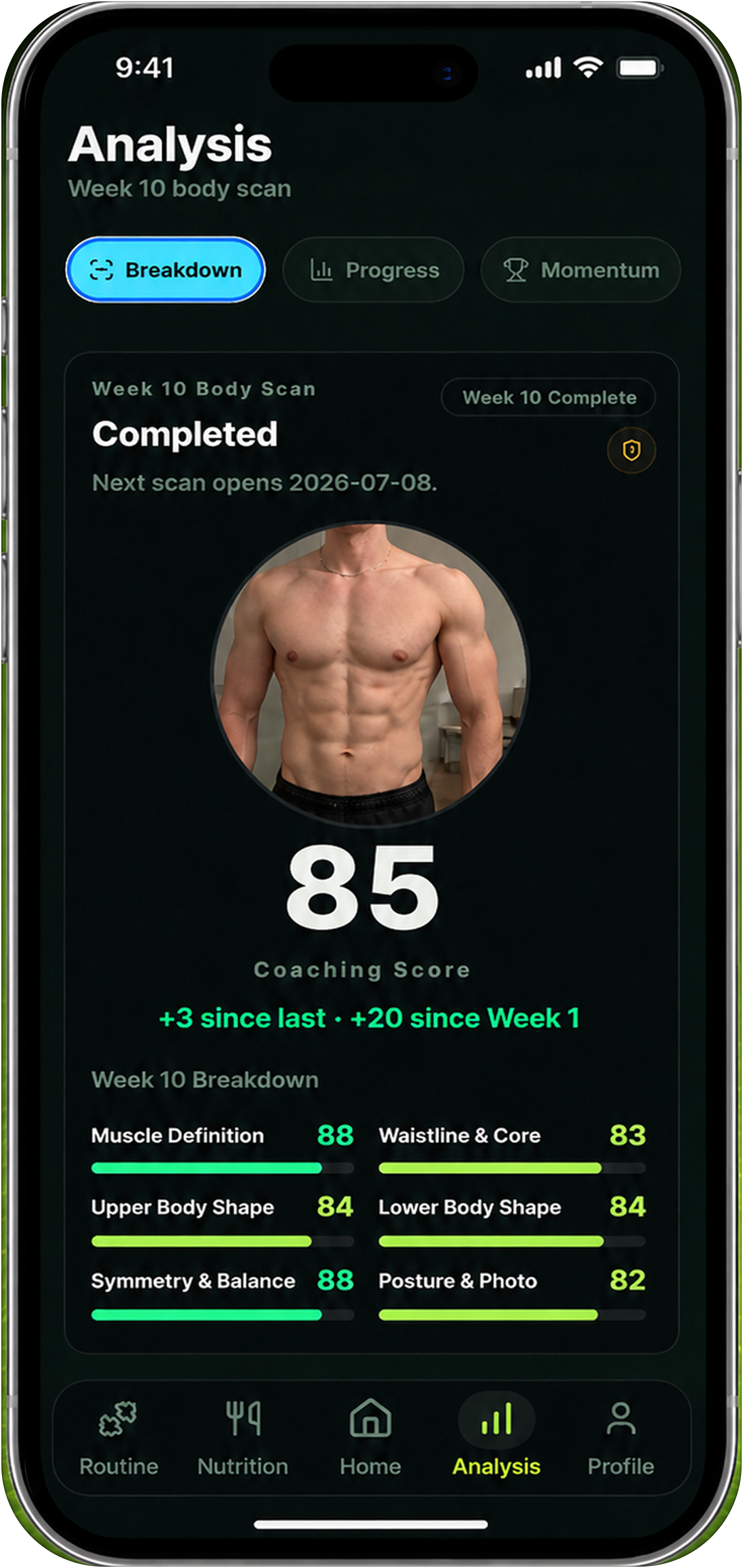
A nutrition target is easier to follow when it sits inside the same daily system as training and progress review. Reset90 can help you keep the target visible, log meals, and review whether the plan is still realistic as your training block changes.
Use the Reset90 macro calculator as a starting point, then use your weekly adherence and progress signals to decide what needs to change. The product should support the routine, not imply that one nutrition number can guarantee a physique outcome.
For a broader comparison of tools that combine training, nutrition, and recovery, see Reset90’s training, nutrition, and recovery guide. Keep the final decision grounded in your own goal, schedule, preferences, and health context.
12When to get more support
Protein planning is general fitness education, not a diagnosis or treatment plan. If you have kidney disease, a history of disordered eating, a medically prescribed diet, pregnancy-related nutrition needs, or another condition that changes your nutrition requirements, speak with a qualified health professional before making a major change.
If muscle gain is not happening after a consistent period, review the full system: training stimulus, calories, protein, sleep, stress, and measurement quality. A single macro target cannot explain every result. Reset90’s health and safety guidance describes the boundary between fitness planning and medical advice.
13Frequently asked questions
How much protein should I eat per meal?
Start with your daily target and divide it across the number of meals you can repeat. Use a meaningful serving at each meal, but treat the result as a flexible anchor rather than a strict pass/fail threshold.
Is it better to eat protein evenly throughout the day?
A reasonably distributed plan can make the daily target easier to reach and repeat. It does not need to be perfectly even, and total daily intake and adherence still matter.
Do I need protein immediately after a workout?
You do not need to panic about a narrow post-workout deadline. Plan a protein-containing meal or snack around training when it fits your schedule, then focus on the full day and the full week.
Can I build muscle with plant-based meals?
Yes, a plant-based approach can support training when total protein, calories, meal portions, food variety, and the training plan are appropriate. The practical details may require more planning for some people.
Should I increase protein if I am not gaining muscle?
Not automatically. Review total calories, training progression, sleep, adherence, and the length of the observation period first. Change one variable at a time so you can tell what helped.
14The practical answer
Build the protein plan from the day outward. Choose a realistic daily target, divide it into repeatable opportunities, anchor each meal with a protein source, and review the pattern weekly. The best per-meal target is the one that helps you meet the full day without making the rest of your nutrition and training routine impossible to follow.
The Reset90 system
Useful ideas for building a body you can keep.
Training notes, product updates, and practical ways to make your next 90 days count.
Start your next 90 days
Get your daily training, nutrition, and check-in priorities in one adaptive system.


Keep reading
Related articles

Ideal Body Measurements for Women
There is no single ideal body measurement set for women. Learn how averages, waist-to-height, body shape and repeatable tracking fit together without chasing a fixed beauty standard.
Read article
Bulk, Cut, or Recomp? A Practical Decision Guide
A practical way to choose a bulk, cut, recomp, or maintenance phase using your goal, training age, recovery, and repeatable progress signals.
Read article
How Often Should You Take Progress Photos?
How often should you take progress photos? Use this goal-based guide to choose weekly, biweekly, or monthly check-ins and make every comparison more consistent.
Read article