

Why Does My Weight Fluctuate? Water, Food, Training, and Fat
Why does your weight fluctuate? Learn how water, food, training, hormones, and timing move the scale—and how to read the weekly trend instead of one morning.
By Reset90 AI Editorial Team
Why does my weight fluctuate? Your scale weighs more than body fat. Water, sodium, carbohydrates, food and waste in your digestive system, glycogen, exercise recovery, hormones, sleep, stress, and the timing of the weigh-in can all move the number. A few pounds of day-to-day fluctuation can be normal. The useful signal is usually the multi-day or multi-week trend, not one morning. Reset90 helps you review weight alongside nutrition, training, photos, measurements, and check-ins.
A scale reading can feel like a verdict. You followed your plan yesterday, then the number is higher today, so it seems as if the plan failed overnight. But the scale does not know whether the change came from fat, water, yesterday’s meal, a hard workout, or the fact that you have not used the bathroom yet. It reports total mass at one moment.

The calmer question is not “What did I do wrong?” It is: Is this a short-term fluctuation, a several-day pattern, or a persistent trend that deserves a plan review?
01What does your scale actually weigh?
Your body weight includes fat and muscle, but it also includes the water in your tissues, the glycogen stored in your muscles and liver, food and fluid still moving through digestion, and the contents of your bladder and bowel. These fast-changing parts can move by pounds while fat and muscle change much more slowly.
That is why daily weight is best understood as a slow signal buried under several fast signals. Body tissue changes over time. Water, food, sodium, carbohydrates, bowel movements, and exercise-related fluid shifts can change from one morning to the next or even within the same day.
This does not make weighing yourself useless. It means you need a method that reduces the noise and a review window long enough for the underlying trend to become visible.
02How much can weight fluctuate in a day?
Many people see a few pounds of movement between consecutive mornings or between morning and evening. Health explainers commonly describe a daily window of roughly 2–5 pounds, and some report an average range around 5–6 pounds for certain adults. Those are population-level reference points, not a personal normal range or a health target. Your baseline will vary with body size, food, hydration, activity, hormones, and measurement timing.
A larger number is not automatically fat gain, and a smaller number is not automatically fat loss. A late meal, a salty restaurant dinner, a high-carbohydrate day, a hard training session, travel, or constipation can all change the next reading. Focus first on whether your weighing conditions were comparable and whether the weekly average is moving.
If a sudden change is unexplained, persistent, or accompanied by symptoms such as unusual swelling, shortness of breath, severe fatigue, or feeling unwell, treat that as a health question rather than a fitness-tracking problem. A consumer scale cannot identify the cause.
03Why water retention changes the scale
Water is one of the biggest reasons your weight can rise quickly without a matching change in body fat. Your body regulates fluid in response to hydration, sodium, carbohydrate intake, physical stress, hormones, temperature, and other factors.
A salty meal can temporarily increase fluid retention. Drinking more than usual, sweating less, traveling, or changing your routine can also alter the amount of water represented on the scale. Being dehydrated does not guarantee a lower reading either; your body can respond to a fluid deficit in ways that make the next few readings harder to interpret.
Think of a water-related spike as a temporary change in the container, not proof that your underlying body-composition goal reversed. It may take a few days for the number to settle. Do not try to “correct” a normal water swing with extreme restriction or dehydration.
04How carbohydrates and glycogen affect weight
Carbohydrates are stored partly as glycogen in your muscles and liver. Glycogen is stored with water, so a higher-carbohydrate period can raise scale weight while a lower-carbohydrate period can lower it quickly. That is one reason the first days of a restrictive low-carb diet can show a dramatic drop that is not equivalent to fat loss.
The reverse can happen when you eat more carbohydrates after a lower-intake period. Your muscles replenish glycogen, water comes with it, and the scale rises. That can be a normal refueling effect, especially around training, not evidence that the entire increase is body fat.
If your goal is muscle gain, glycogen and water can be part of a well-fueled training routine. If your goal is fat loss, they can temporarily hide a downward trend. In both cases, a weekly average tells you more than the highest or lowest point.
05How food, digestion, and waste change scale weight
Food and fluid have mass before your body digests, absorbs, and excretes them. A large dinner can make you heavier the next morning simply because more material is still in your digestive system. A high-fiber day, a change in meal timing, or constipation can extend that effect.
This is not a loophole in energy balance. It is a reminder that the scale is measuring what is physically present at the time you step on it. The number can rise before calories are stored as tissue, and it can fall when food and fluid leave your body without representing a matching amount of fat loss.
When the reading is surprising, record the context instead of judging yourself: late meal, unusual fiber, restaurant food, more fluids, travel, or a change in bowel movements. That short note can explain a spike that would otherwise distract you for the rest of the day.
06Why exercise can make your weight go up
New or unusually hard training creates a temporary recovery demand. The worked muscles can hold extra fluid while they repair, and a new program may also change your glycogen storage, appetite, meal timing, and daily movement. The scale can rise just as you begin doing something positive.
That is different from saying every post-workout increase is muscle gain. Muscle tissue takes time to build. A short-term increase after lifting is usually a mixture of fluid, glycogen, food, and the normal effects of training—not a reason to assume you gained several pounds of muscle in a few days.
Our guide to why weight goes up when you start lifting covers that narrower situation. This article is broader: the same trend-reading method applies whether the change followed lifting, a high-sodium meal, travel, a rest day, or no obvious event at all.
07How hormones, stress, sleep, and medication can affect the number
Hormonal changes can alter fluid retention, appetite, digestion, and the timing of meals. People who menstruate may see a recurring pattern around their cycle. Stress and poor sleep can also change appetite, movement, recovery, and fluid balance, which makes the scale harder to read for a few days.
Medication can affect weight through appetite, fluid balance, digestion, or other mechanisms. Do not stop or change a prescribed medication because a scale moved. If you notice a new, persistent, or concerning change after starting or changing a medication, discuss it with the prescribing clinician.
These factors do not make progress impossible. They make consistency and context more important. Compare similar points in your routine and avoid treating a single reading as a complete explanation of your health.
08Is an overnight three-pound gain fat?
Usually, no. A three-pound overnight increase can be real body mass on the scale without being three pounds of newly created fat. It could reflect water, glycogen, food, waste, or the timing of the measurement.
Actual fat gain requires a sustained energy surplus, and tissue does not appear at the same speed as a glass of water or a meal. The same logic applies in reverse: a three-pound drop after a very low-carbohydrate day, a sweaty workout, or a bowel movement is not automatically three pounds of fat loss.
Use the energy trend and the scale trend together. If your average weight rises steadily for several weeks while your intake is consistently above maintenance, some of that change may be tissue. If one morning jumps and the next week returns toward baseline, it was probably short-term noise.
09How to weigh yourself consistently
There is no single “true” weight that appears only once per week. There is a more repeatable measurement window. For many people, the easiest routine is:
- Use the same scale. Different scales can have different calibration and surface behavior.
- Keep it on a hard, level floor. Avoid moving it between carpet, tile, and uneven surfaces.
- Weigh at a similar time. Morning, after using the bathroom and before eating or drinking, reduces the amount of timing noise.
- Keep clothing consistent. Similar or no clothing makes comparisons easier.
- Record unusual context. Note travel, a salty meal, late eating, a hard workout, poor sleep, illness, or a cycle-related change.
- Review a trend. Compare the weekly average with the previous week instead of reacting to one point.
Consistency does not make the number perfect. It makes the numbers more comparable. That is enough to turn a frustrating daily reading into useful evidence.
10How to calculate a seven-day weight average
A weekly average is simply the sum of your comparable readings divided by the number of readings. For example, if your morning readings are 180.0, 180.8, 179.6, 181.2, 180.4, 179.9, and 180.5 pounds, the average is about 180.3 pounds. Compare that average with the previous week’s average, not with the lowest reading from either week.
| Pattern | What it usually means | What to do |
|---|---|---|
| One high day, then readings return toward baseline | Short-term water, food, waste, or timing noise is likely. | Keep the routine; do not make a large adjustment. |
| Several high days after a new training block | Recovery fluid, glycogen, soreness, and changed activity may be contributing. | Compare the next one to two weekly averages and check performance. |
| Average slowly falling across several weeks | Your current energy pattern is producing a downward mass trend. | Check whether the rate fits your goal and recovery. |
| Average slowly rising across several weeks | Your intake and activity pattern is producing a sustained upward trend. | Decide whether that matches a gain phase or needs adjustment. |
| Average changes quickly and stays changed without explanation | This is no longer just one noisy morning. | Review the plan and seek qualified medical guidance if unexplained or symptomatic. |
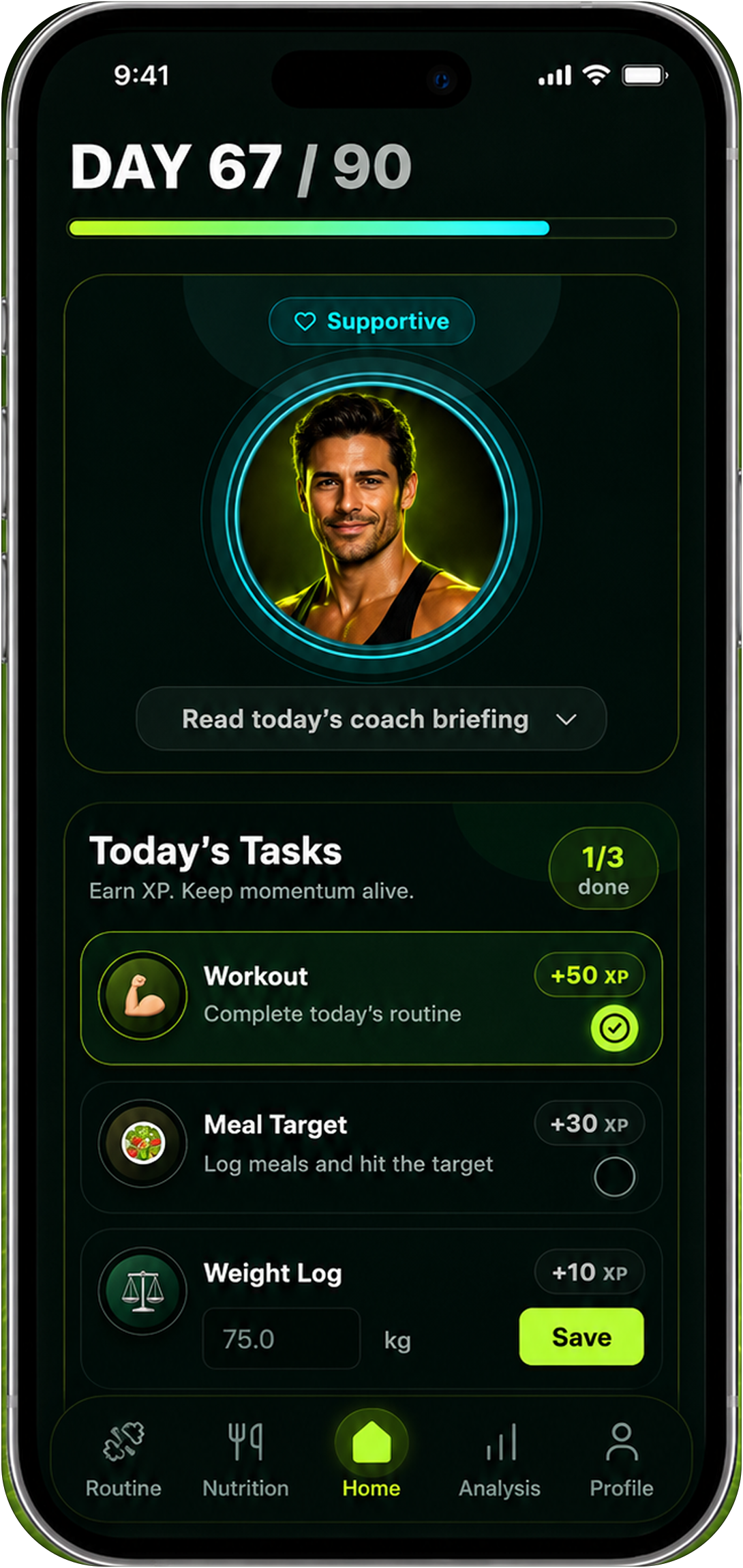
Reset90 can make the weekly-average habit easier by keeping weight trends near the rest of your plan. The App does not decide whether a change is fat, water, or a medical symptom. It helps you see the pattern alongside nutrition logs, workouts, progression, check-ins, photos, and measurements so one scale reading does not control the entire decision.
11How to tell noise from a real trend
Use three questions:
- Did the change happen once or repeatedly? One spike is different from a new average that persists.
- Were the measurement conditions comparable? Morning after the bathroom is easier to compare than morning versus late evening.
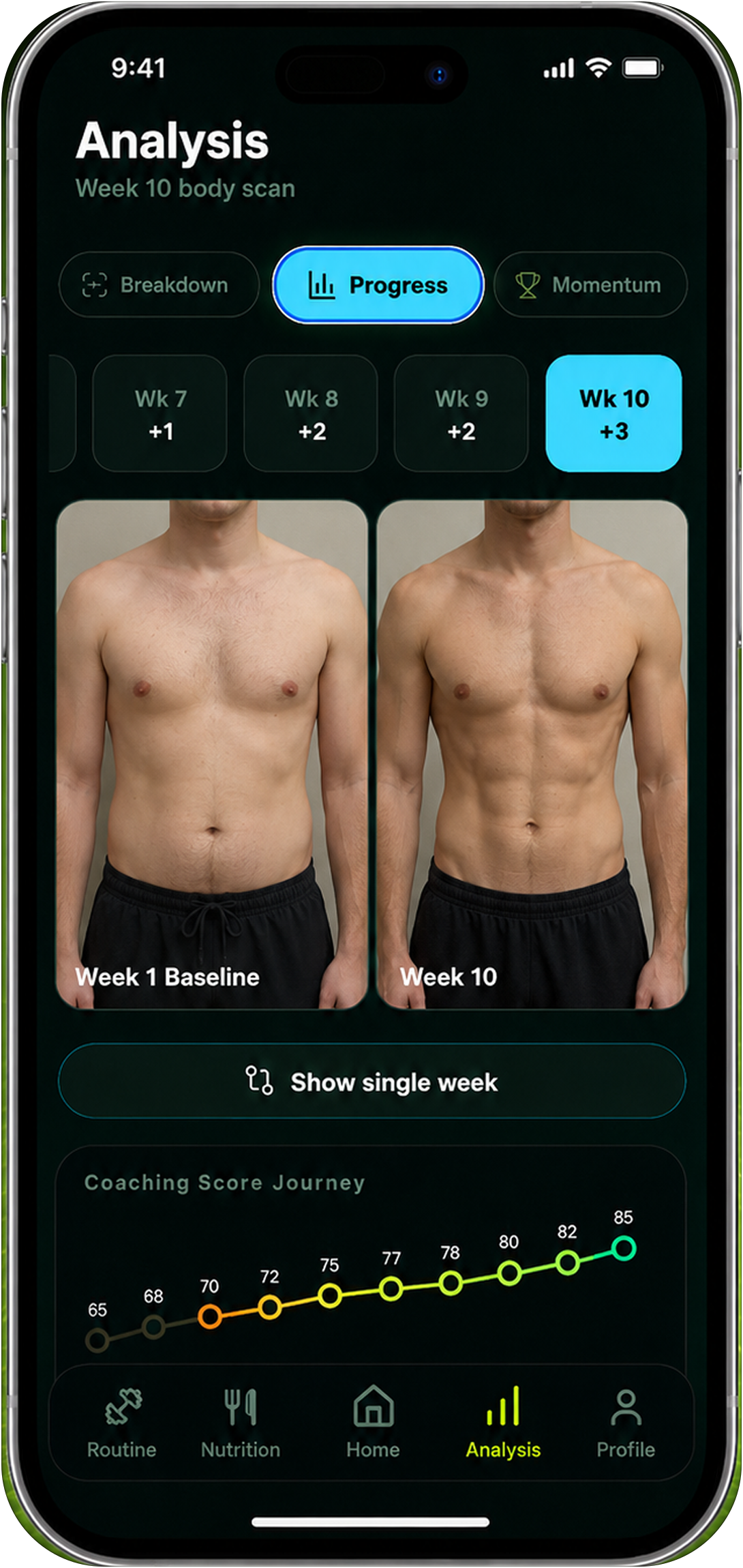
- Do other signals agree? Waist, photos, strength, clothing fit, nutrition adherence, and energy can help explain what the scale cannot.
During fat loss, a stable or rising day does not automatically mean failure if the weekly average is falling. During muscle gain, a stable day does not automatically mean the surplus is insufficient if performance and the longer trend are improving. During recomposition, weight may remain relatively stable while waist, photos, and strength change.
Our guide to progress photos versus the scale explains why multiple signals are more useful than forcing every goal into one number. For a longer body-recomposition review, use the four-signal approach in our body-recomposition tracking guide.
12How Reset90 helps you track the signal
Reset90 is useful when the goal is not simply to collect weigh-ins but to decide what to do next. The App can keep a weight trend alongside food logs, nutrition targets, workout progression and RIR context, check-ins, progress photos, and body measurements.
That context helps answer questions such as:
- Did the average change, or did one unusual day get your attention?
- Did a new training block change weight while performance improved?
- Is your intake consistent enough to judge the plan?
- Do photos or measurements support the scale trend?
- Should you keep the plan steady for another week instead of reacting?
If you use a smart scale that also estimates body fat, keep that estimate in perspective. Our guide to smart-scale accuracy explains why composition numbers are more uncertain than body weight and why consistent trends matter more than a single percentage.
13What to do when the scale conflicts with your goal
If you are trying to lose fat and the scale rises for one or two days, check sodium, carbohydrates, digestion, training soreness, sleep, and timing before cutting more aggressively. Keep collecting comparable readings.
If you are trying to gain muscle and the scale stays flat, check the average, actual food intake, training progression, appetite, and recovery. A flat week does not prove that the plan failed, but a flat multi-week average may justify a small increase in food.
If you are trying to recomp and weight is stable, look at waist, photos, strength, and adherence. A stable scale can be compatible with progress, but only the other signals can show whether that is happening.
If the change is rapid, unexplained, and persistent, do not try to solve it by changing calories repeatedly. Document the pattern and discuss it with a qualified healthcare professional, especially if you also notice swelling, shortness of breath, severe fatigue, pain, or other concerning symptoms.
14Frequently asked questions
Why did I gain three pounds overnight?
Water, sodium, carbohydrates, food still being digested, waste, exercise recovery, and a different weigh-in time are common explanations. A three-pound overnight change is not automatically three pounds of fat.
What time of day is your true weight?
There is no single perfect number, but morning after using the bathroom and before eating or drinking is often the most repeatable time. Consistent conditions matter more than searching for a magical “true” weight.
Is it normal for weight to fluctuate five pounds in a day?
A few pounds of daily movement can happen, especially when fluid, food, carbohydrates, sodium, exercise, hormones, or timing change. Your personal baseline varies. If a large unexplained change persists or comes with symptoms, discuss it with a healthcare professional.
Should I weigh myself every day?
Daily weighing can be useful if you can treat each number as one data point and review the weekly average. If daily readings increase anxiety or trigger extreme decisions, weigh less often and use consistent weekly check-ins instead.
Does weight fluctuation mean I am losing muscle?
Not by itself. Daily scale movement cannot identify muscle loss. Review strength, measurements, photos, nutrition, recovery, and the longer weight trend. A sudden single-day change is usually not enough evidence to draw that conclusion.
When should I worry about weight fluctuations?
Persistent, rapid, or unexplained changes deserve more attention than ordinary daily noise, especially when paired with swelling, shortness of breath, severe fatigue, pain, or other symptoms. A fitness app cannot diagnose the cause; speak with a qualified clinician.
15The practical answer
Your weight fluctuates because the scale measures the entire system, not just fat. Water, salt, carbohydrates, glycogen, food, waste, training, hormones, sleep, stress, medication, and timing can move the number faster than body tissue can change.
Weigh under similar conditions, calculate a seven-day average, compare week to week, and use waist, photos, strength, nutrition, and recovery as supporting signals. A noisy day is not a failed plan. A persistent trend is useful information—but it still needs context before you decide what to do next.
Download Reset90 from the App Store or Google Play using the buttons on this page to connect those signals in one progress routine. The goal is not to ignore the scale. It is to make the scale earn its place in a broader, calmer measurement system.
The Reset90 system
Useful ideas for building a body you can keep.
Training notes, product updates, and practical ways to make your next 90 days count.
Start your next 90 days
Get your daily training, nutrition, and check-in priorities in one adaptive system.


Keep reading
Related articles

Ideal Body Measurements for Women
There is no single ideal body measurement set for women. Learn how averages, waist-to-height, body shape and repeatable tracking fit together without chasing a fixed beauty standard.
Read article
Bulk, Cut, or Recomp? A Practical Decision Guide
A practical way to choose a bulk, cut, recomp, or maintenance phase using your goal, training age, recovery, and repeatable progress signals.
Read article
How Often Should You Take Progress Photos?
How often should you take progress photos? Use this goal-based guide to choose weekly, biweekly, or monthly check-ins and make every comparison more consistent.
Read article