
Why Your Weight Goes Up When You Start Lifting (It's Not Always Fat)
Starting a lifting routine can raise the scale before your progress is obvious. Learn how glycogen, water, repair fluid, food, muscle, and calorie surplus affect weight—and how to read the trend.
By Reset90 AI Editorial Team
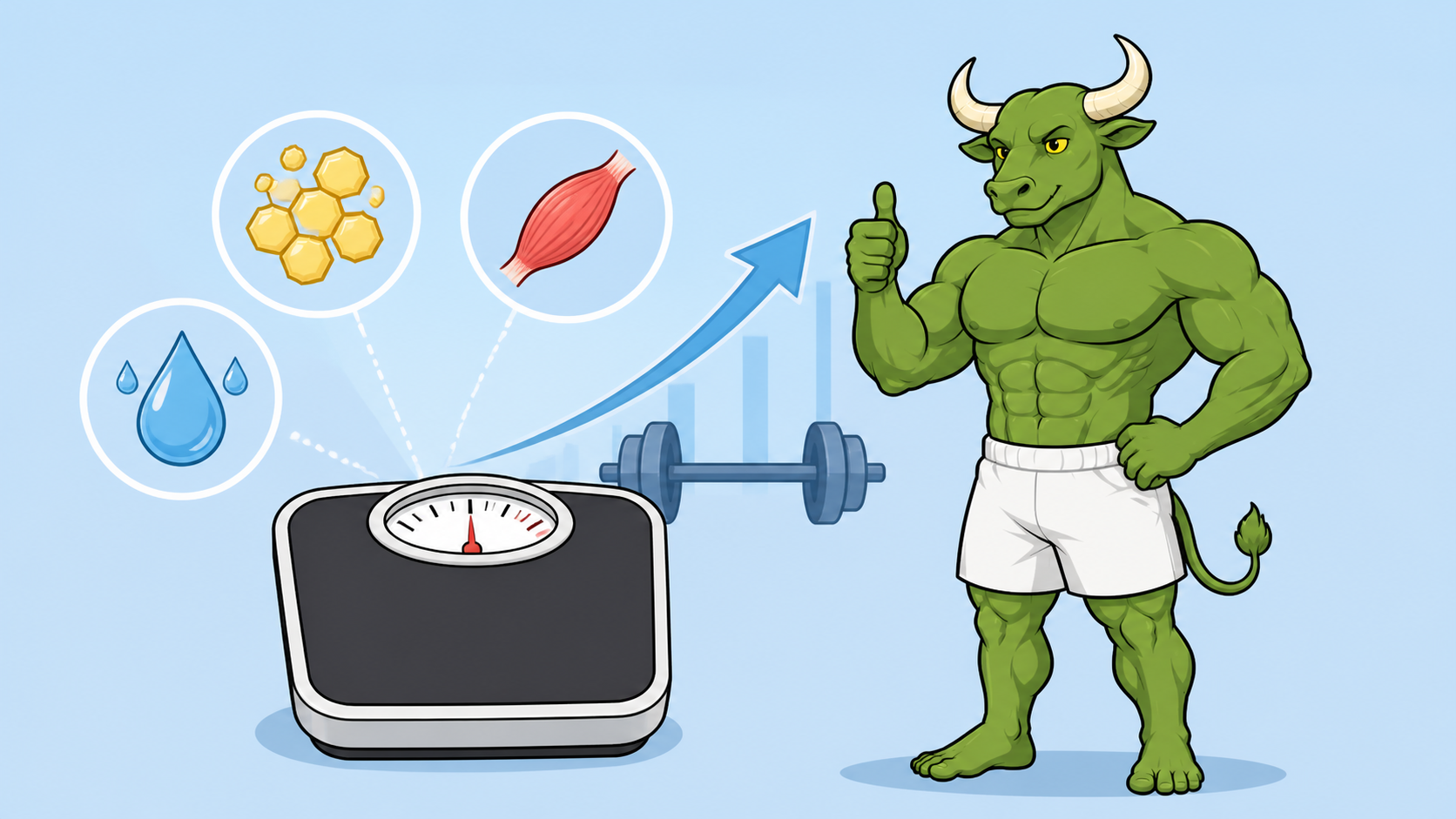
Short answer: Your weight can go up after you start lifting because your muscles store more glycogen and water, because training creates short-term repair-related fluid, because food and sodium intake changed, or because you are gradually adding muscle. A higher scale reading is not automatically fat gain. The useful question is whether the increase is a short-term jump or a sustained trend that is happening alongside a calorie surplus.
01Why does weight go up when you start lifting?
A new lifting routine changes more than the number of calories you burn. Your muscles are adapting to a new training stimulus, and that adaptation changes what your body stores and how much fluid it holds. At the same time, your eating, hydration, soreness, sleep, and daily activity may change.
That is why the scale can rise during the first few weeks even when your goal is fat loss. The number is measuring total mass, not a neat label that says “muscle,” “fat,” or “water.” Several normal changes can appear at once.
02Five common reasons the scale rises
1. Glycogen comes with water
Your muscles store carbohydrate as glycogen so they can use it during training. When you start lifting regularly, your body may store more glycogen to support the extra work. Glycogen is stored with water, so topping up that fuel can move the scale even though you did not add an equivalent amount of fat.
This is one reason a new training plan and a higher-carbohydrate diet can produce a quick change. The scale is partly showing a better-filled fuel tank. It is not proof that the program failed.
2. Training-related fluid can hide in the short term
Strength training places stress on muscle tissue. The repair process includes a temporary inflammatory response, and the area can hold extra fluid while it recovers. That is also part of why a new workout can make you sore.
This effect tends to be more noticeable when the routine is new, when you increase volume quickly, or after a demanding session for a large muscle group. It can make the next morning’s weight higher without representing a meaningful change in body fat.
3. You are eating and drinking differently
Many people start lifting and also start eating more regularly, adding a post-workout meal, increasing carbohydrates, using more salt, or simply drinking more water. Food and fluid still have mass while they are in your digestive system. Sodium and carbohydrate changes can also influence how much water you retain.
That does not make those choices wrong. It means they belong in the explanation when you interpret a scale trend. If your workouts make you hungrier, the extra intake may eventually become a real calorie surplus. That is different from the temporary water and food-volume effects, so it needs to be judged over several weeks.
4. Muscle is growing, but slower than the first water shift
Beginners can make meaningful strength progress quickly, and new lifters may build muscle more efficiently than experienced lifters. But actual tissue gain is usually slower than the first scale jump. In the first weeks, glycogen, water, food volume, and repair fluid often arrive before a large amount of new muscle.
Also, avoid the common phrase “muscle weighs more than fat” as if one pound could weigh more than another pound. One pound of muscle and one pound of fat weigh the same. Muscle is denser, so the same weight can take up less space. That is why your clothes, waist, or photos can improve even when total weight is stable or slightly higher.
5. A sustained surplus is adding body fat
Sometimes the scale is rising because you are consistently eating more energy than you use. Starting a lifting program can increase appetite, and a “bulk” can become a larger surplus than intended. Water may explain an early jump, but a weight trend that keeps climbing for many weeks—especially with a steadily expanding waist—deserves a nutrition review.
The point is not to panic or force the scale down after one high reading. It is to separate the early adaptation period from the longer trend.
03Is a two- or three-pound jump after lifting fat?
Usually, a one-day jump is not a useful way to identify fat gain. It can reflect glycogen, water, sodium, digestion, a late meal, clothing, or the fluid response to a hard session. Fat gain is a tissue change that follows a sustained energy surplus; it does not normally appear as several pounds of fat overnight because you trained yesterday.
That does not mean every increase is harmless or that the scale should be ignored. It means the time window matters. Compare weekly averages and the surrounding signals before changing your plan.
04How long does temporary weight gain from lifting last?
There is no single schedule for everyone. A new lifter may see a noisy increase during the first one to four weeks while glycogen storage, training soreness, food intake, and routine changes settle. After that, the initial water shift often becomes less dramatic and the longer-term trend becomes easier to read.
Some people continue to see fluctuations whenever training volume, carbohydrate intake, sodium, sleep, stress, or recovery changes. The goal is not to wait for the scale to become perfectly flat. The goal is to create a consistent enough routine that a weekly trend is more informative than any one morning.
05How to tell whether it is water, muscle, food, or fat
You cannot identify every component from a home scale alone. You can, however, combine a few signals and look for a pattern. Use this as a decision aid rather than a diagnosis.
| Pattern | More consistent with | What to check next |
|---|---|---|
| Fast jump after starting training, then noisy readings | Glycogen, water, repair fluid, food volume | Training novelty, carbohydrate/sodium changes, soreness, and weekly average |
| Weight stable or slightly up, strength improving, waist stable or down | Possible favorable recomposition or productive training response | Comparable photos, measurements, nutrition consistency, and several weeks of data |
| Weight rising for several weeks and waist rising quickly | Possible larger-than-planned calorie surplus, plus normal water noise | Portions, logging, liquid calories, weekend intake, and target rate of gain |
| Weight falls quickly after a diet or carbohydrate change | Water and glycogen shift may be part of the change | Do not treat the first week as pure fat loss; watch the longer trend |
| Weight changes with swelling, breathlessness, severe pain, or other unusual symptoms | Outside the scope of normal fitness-tracking interpretation | Seek qualified medical guidance |
06Use a two- to four-week tracking protocol
The most useful response to a confusing scale change is usually better context, not a more aggressive reaction. Try this simple review period.
- Keep weigh-ins comparable. Use the same scale under similar conditions, such as after waking and using the bathroom, before food and training. If frequent weighing is stressful, choose a less frequent routine.
- Read the seven-day average. A daily number is an observation. The weekly average is a more stable signal of total-mass direction.
- Record training context. Note unusually hard sessions, new exercises, soreness, rest days, and changes in training volume.
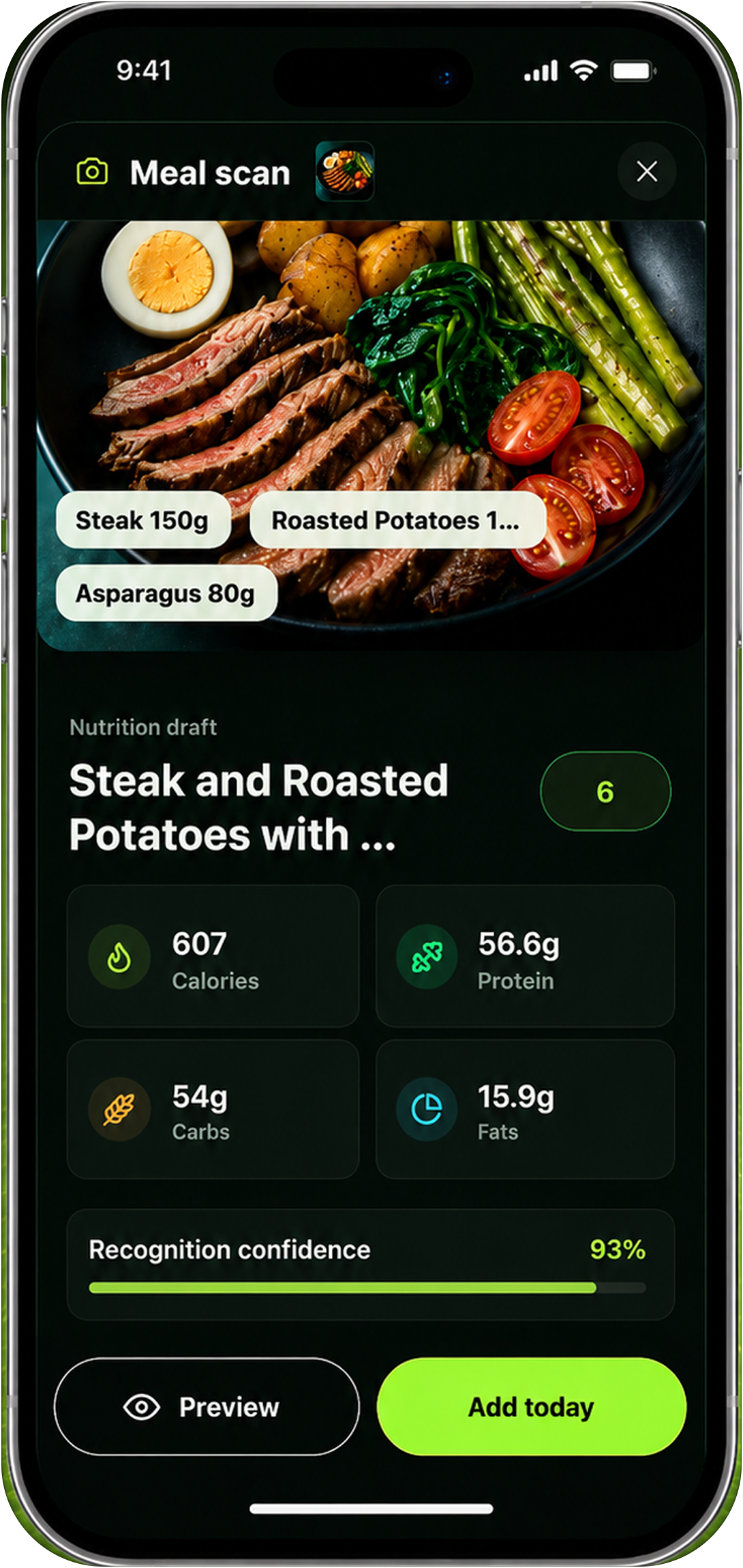
- Track the inputs that move the scale. Pay attention to carbohydrate, sodium, fluid, meal timing, supplements, and appetite—not to create perfect data, but to explain unusual jumps.
- Add two supporting signals. Use a repeatable waist measurement, standardized progress photos, strength performance, or how clothing fits. You do not need to measure everything.
- Change one variable at a time. If the longer pattern suggests an adjustment, change the calorie target, training volume, or recovery routine—not all three at once.
07What should you do if the scale goes up?
Start by asking which of these situations you are actually in:
- It has been a few days: keep collecting data. There is not enough information to classify the change.
- It has been two to four weeks: compare the average weight, waist, photos, strength, and food pattern. Look for agreement.
- You are intentionally gaining: check whether the rate of gain and waist trend fit your goal, rather than trying to eliminate every fluctuation.
- You are trying to lose fat: check whether training-related hunger or untracked intake has erased the intended deficit.
- Your weight is rising and you feel unwell: fitness explanations are not enough; use qualified professional guidance.
If strength is improving and your waist is stable, a small early increase may be compatible with a productive training response. If weight and waist are both rising steadily while your intake is higher than planned, a smaller surplus or a different nutrition target may be appropriate. Make that decision from a trend, not from one post-leg-day weigh-in.
08Why the scale and photos can disagree
The scale measures total mass. A progress photo shows visible shape under a particular camera, pose, lighting setup, and hydration state. They answer different questions.
You might weigh more while looking leaner because fat, muscle, glycogen, and water are changing in different directions. You might also look different in a photo because the angle or lighting changed. That is why a repeatable photo protocol and a weekly weight average work better together than either one alone.
Our progress photos versus the scale guide explains what each signal can and cannot show. For the actual training timeline, see how long it takes to see results from lifting.
09How Reset90 can make the review easier
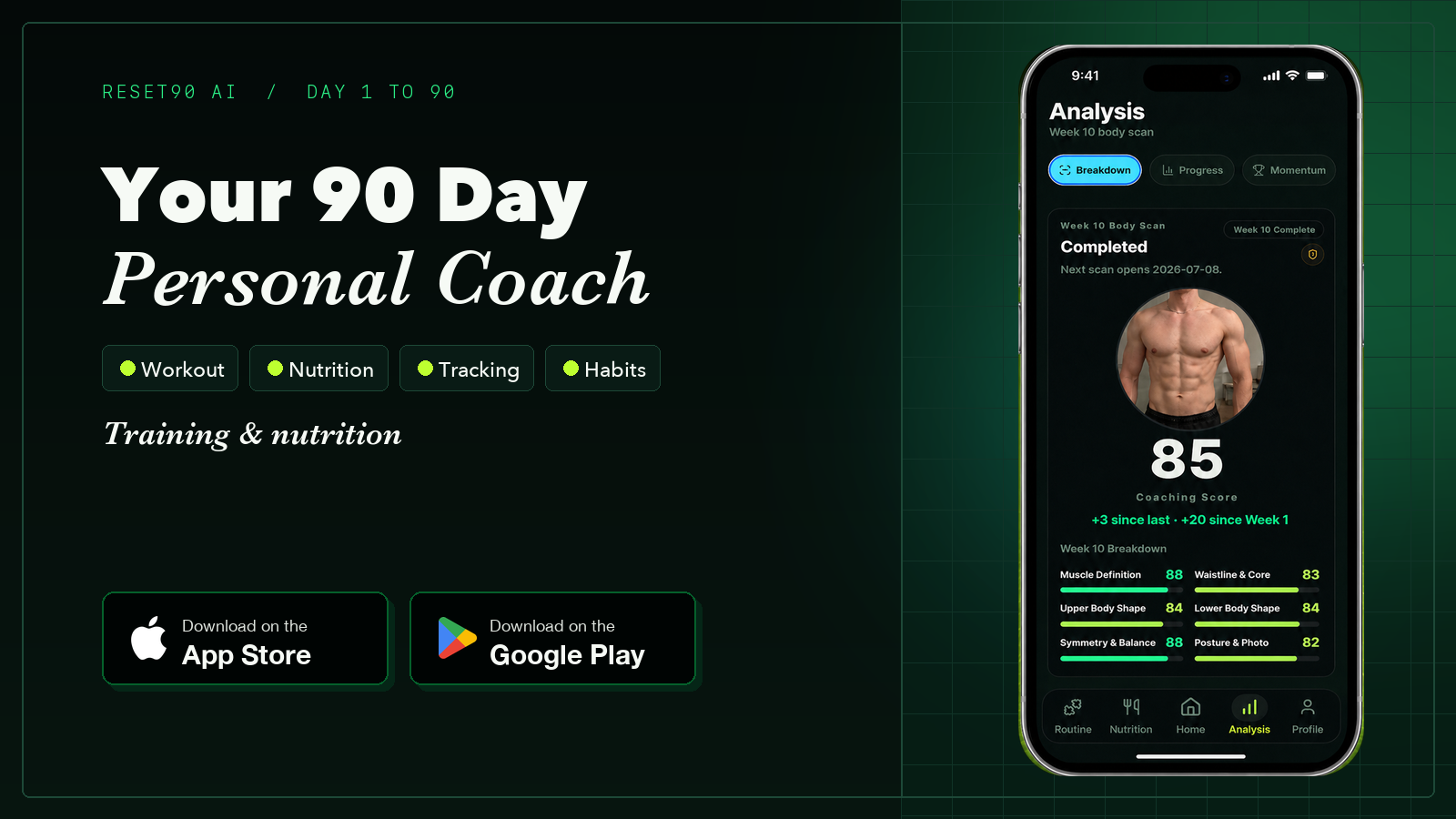
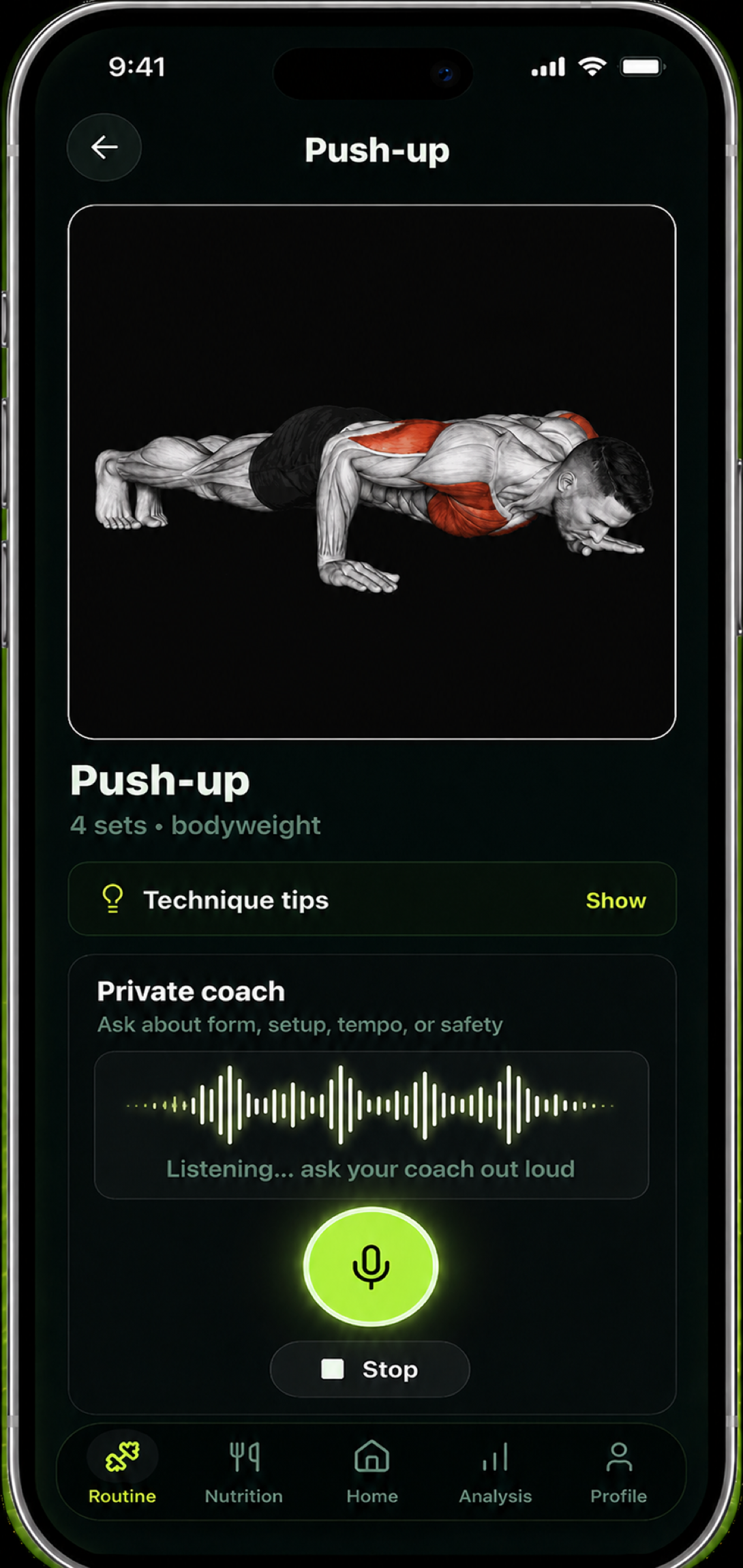
Reset90 is useful when you want the scale reading to sit beside the context that explains it. A 90-day plan can bring together workouts, nutrition targets, weight trends, progress photos, measurements, and check-ins so you can review a pattern instead of reacting to a single number.
The app does not diagnose why your weight changed, measure body fat clinically, or replace a medical assessment. Its role is to help you keep the inputs and progress signals organized enough to make a calmer next decision. If the question is whether a broader recomp is working, use the body-recomposition tracking guide for the multi-signal review. If food intake is the variable you need to audit, the macro calculator can help you plan a starting target before you compare it with your actual weekly pattern.
10When should you talk with a professional?
Do not use a fitness article or tracking app to diagnose unexplained body changes. Seek qualified medical guidance for rapid unexplained weight gain, persistent swelling, shortness of breath, severe pain, unusual fatigue, or symptoms that concern you. A clinician can evaluate causes that a workout log cannot.
Also reduce or stop frequent tracking if weighing or photographing yourself becomes compulsive, distressing, or connected to restrictive eating. A useful system should support your health and training, not make your body occupy every thought.
11Frequently asked questions
Why did I gain weight after starting to work out?
Common short-term reasons include glycogen and associated water, repair-related fluid, more food or sodium in your system, and the start of muscle gain. A sustained calorie surplus can also add fat over time. Use weekly averages and supporting signals to separate these possibilities.
Why did I gain three pounds overnight after working out?
An overnight change is usually too short a window to interpret as new fat tissue. Check hydration, sodium, carbohydrate intake, digestion, sleep, and the difficulty of the previous session. Continue the same measurement routine and look at the weekly average.
Why have I gained ten pounds since starting to work out?
That depends on the time period and the rest of the pattern. Ten pounds over a short period deserves a careful review of food intake, fluid changes, supplements, and measurement conditions rather than an automatic assumption that it is muscle. If the increase is rapid, unexplained, or accompanied by symptoms, seek professional guidance.
Can I gain weight before losing it?
Yes. A new routine can temporarily increase glycogen, water, repair fluid, and appetite. If your goal is fat loss, judge the plan by the trend across several weeks and include waist, photos, strength, and adherence—not just the first few weigh-ins.
Does weight going up mean my lifting plan is working?
No. Weight gain alone cannot prove that a plan is working. Improving strength, consistent training, stable or improving measurements, comparable photos, and a nutrition pattern that matches your goal provide better context.
12The practical answer
When you start lifting, the scale can rise because your muscles are storing fuel and water, because training creates short-term repair fluid, because food and sodium changed, or because your body is gradually building tissue. It can also rise from a calorie surplus. Those explanations look similar in a single weigh-in, so give the pattern two to four weeks, use a seven-day average, and add at least two supporting signals.
Do not let one high number decide whether your program worked. Track the change, classify the pattern, and make one controlled adjustment only when the longer evidence supports it.
The Reset90 system
Useful ideas for building a body you can keep.
Training notes, product updates, and practical ways to make your next 90 days count.
Start your next 90 days
Get your daily training, nutrition, and check-in priorities in one adaptive system.


Keep reading
Related articles

Ideal Body Measurements for Women
There is no single ideal body measurement set for women. Learn how averages, waist-to-height, body shape and repeatable tracking fit together without chasing a fixed beauty standard.
Read article
Bulk, Cut, or Recomp? A Practical Decision Guide
A practical way to choose a bulk, cut, recomp, or maintenance phase using your goal, training age, recovery, and repeatable progress signals.
Read article
How Often Should You Take Progress Photos?
How often should you take progress photos? Use this goal-based guide to choose weekly, biweekly, or monthly check-ins and make every comparison more consistent.
Read article