
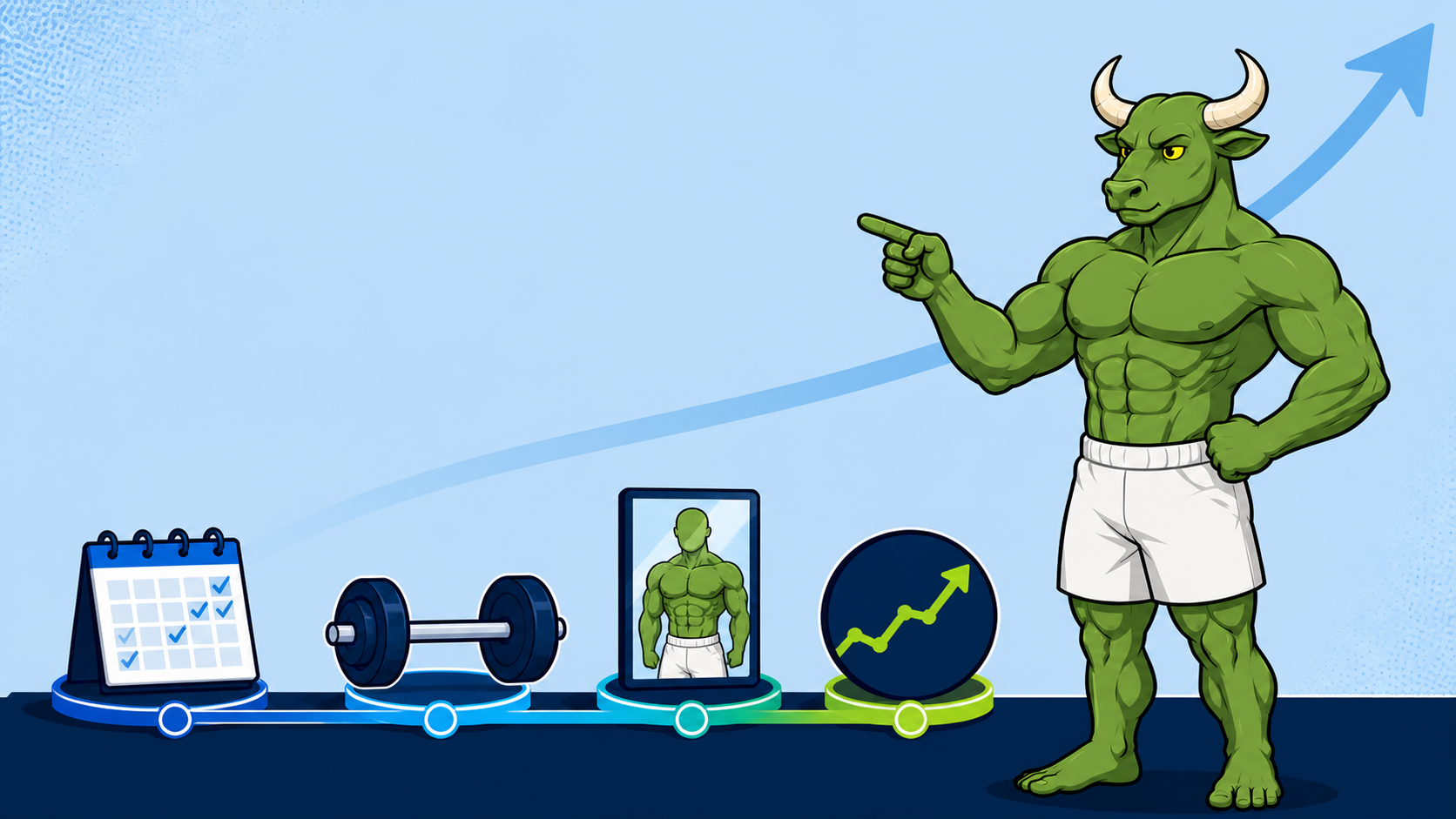
How Long Does It Take to See Results From Lifting?
How long does it take to see results from lifting? You may feel stronger in 2–4 weeks, see clearer photo and measurement changes around 6–12 weeks, and notice more substantial changes after several months. Here is how to track each stage.
By Reset90 AI Editorial Team
How long does it take to see results from lifting? You may feel stronger or more capable within 2–4 weeks, but visible changes usually need 8–12 weeks of consistent training. Other people may notice later, often after several months. The important detail is that “results” can mean strength, energy, photos, measurements, muscle growth, or fat loss—and each signal moves on a different timeline.
That answer is less exciting than a guaranteed 30-day transformation, but it is much more useful. If you expect the mirror to prove that lifting is working after two weeks, you may quit during the exact period when your body is learning the movements and your performance is beginning to improve.
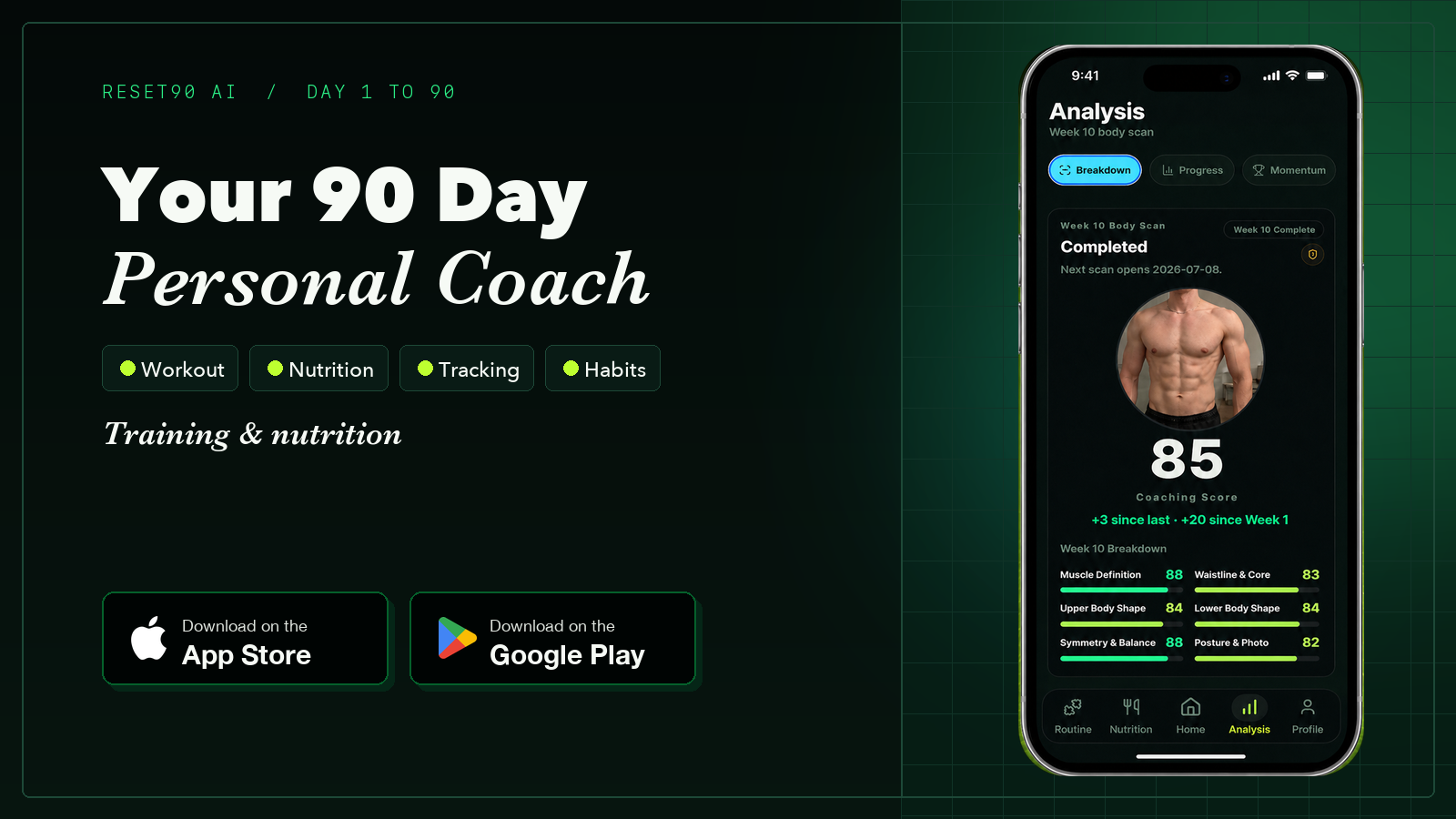
A better approach is to decide what result you want, choose the measurement that can actually see it, and review the trend over a long enough block. Reset90 helps with that process by keeping workouts, progression, nutrition targets, check-ins, photos, and weight trends in one record instead of asking your memory or your daily mirror to do the tracking.
01When will you see results from lifting?
Use this as a realistic timeline for a beginner or someone returning to structured resistance training. It is a set of useful checkpoints, not a promise. Your starting point, program, nutrition, sleep, age, genetics, and consistency can move the timeline in either direction.
| Time from starting | What may change first | Best way to check it |
|---|---|---|
| Weeks 1–2 | Movements feel less unfamiliar; energy, mood, or workout tolerance may improve. | Note how the session feels and whether technique is becoming more consistent. |
| Weeks 2–4 | Strength and reps often begin to climb, especially for a new lifter. | Compare the same exercises, loads, reps, and effort across repeated sessions. |
| Weeks 4–8 | Small changes may show in clothing fit, measurements, or standardized photos. | Use the same pose, lighting, tape placement, and time of day. |
| Weeks 8–12 | Visible changes become easier to compare; a real training trend is emerging. | Review strength, photos, measurements, and body-weight averages together. |
| Months 3–6+ | Muscle and body-composition changes become more apparent if the plan is sustainable. | Compare the beginning of the block with the current checkpoint, not yesterday. |
Someone who has trained for years may see slower visual change than a beginner. Someone who is losing fat while gaining muscle may see little movement on the scale but a meaningful change in waist, photos, and performance. That is why a single “how many weeks?” answer cannot describe every kind of progress.
02What changes first: strength, appearance, or muscle?
Strength often improves before your body looks different. In the early weeks, your nervous system is learning how to coordinate the exercise and recruit muscle efficiently. Better technique, confidence, range of motion, and bracing can all help you lift more even before a large amount of new muscle has been added.
That early improvement is still a real result. It means the training is becoming more familiar and your capacity is increasing. It just should not be translated into an exact amount of muscle growth.
Visible muscle change usually takes longer because it is a small change accumulating over many sessions. Lighting, posture, hydration, muscle pump, clothing, and daily attention also affect what you see. The mirror is especially bad at noticing gradual change when you look at it every day.
Actual muscle growth and body-composition change are longer-term signals. They are affected by training stimulus, protein and total food intake, sleep, stress, and your starting level. For a related estimate, read how much muscle you can gain in a month, but keep its ranges in perspective: one month is a useful checkpoint, not a final verdict.
03Why the mirror may not show your progress yet
The mirror updates every day, so your brain adapts to small differences. A photo taken four or eight weeks apart creates a comparison that your normal routine does not. It also lets you control the variables that make a same-day visual judgment unreliable.
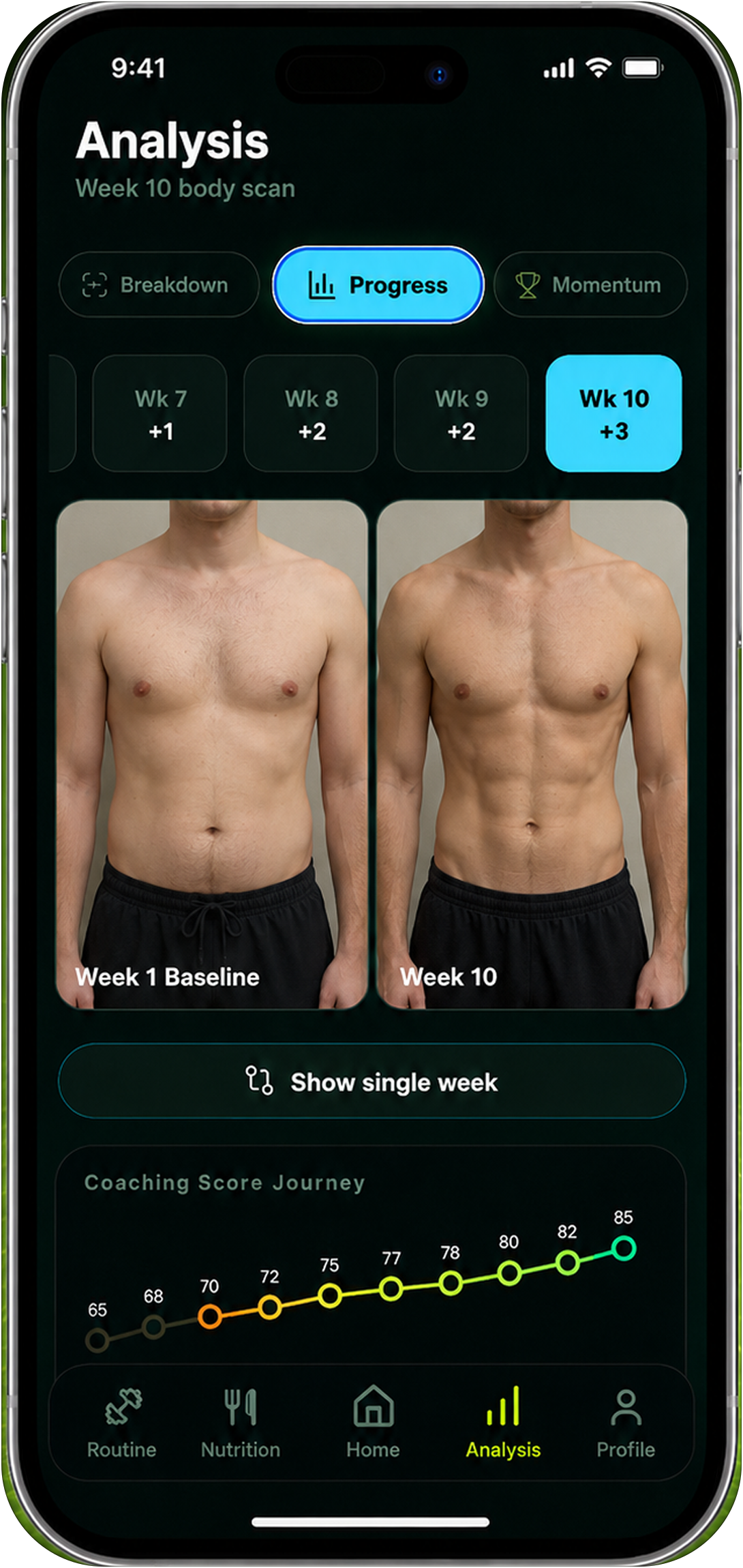
Take progress photos under repeatable conditions: similar time of day, distance from the camera, lighting, clothing, pose, and relaxed versus flexed position. You do not need to take them every day. Every four weeks is usually more useful than a daily gallery of nearly identical pictures.
Photos are one signal, not a diagnosis. Combine them with waist or limb measurements and workout performance. During a recomposition phase, your body may look different even when scale weight is flat. Our guide to building a progress-photo timeline covers how to make those comparisons easier to trust.
04How to tell if your lifting is working
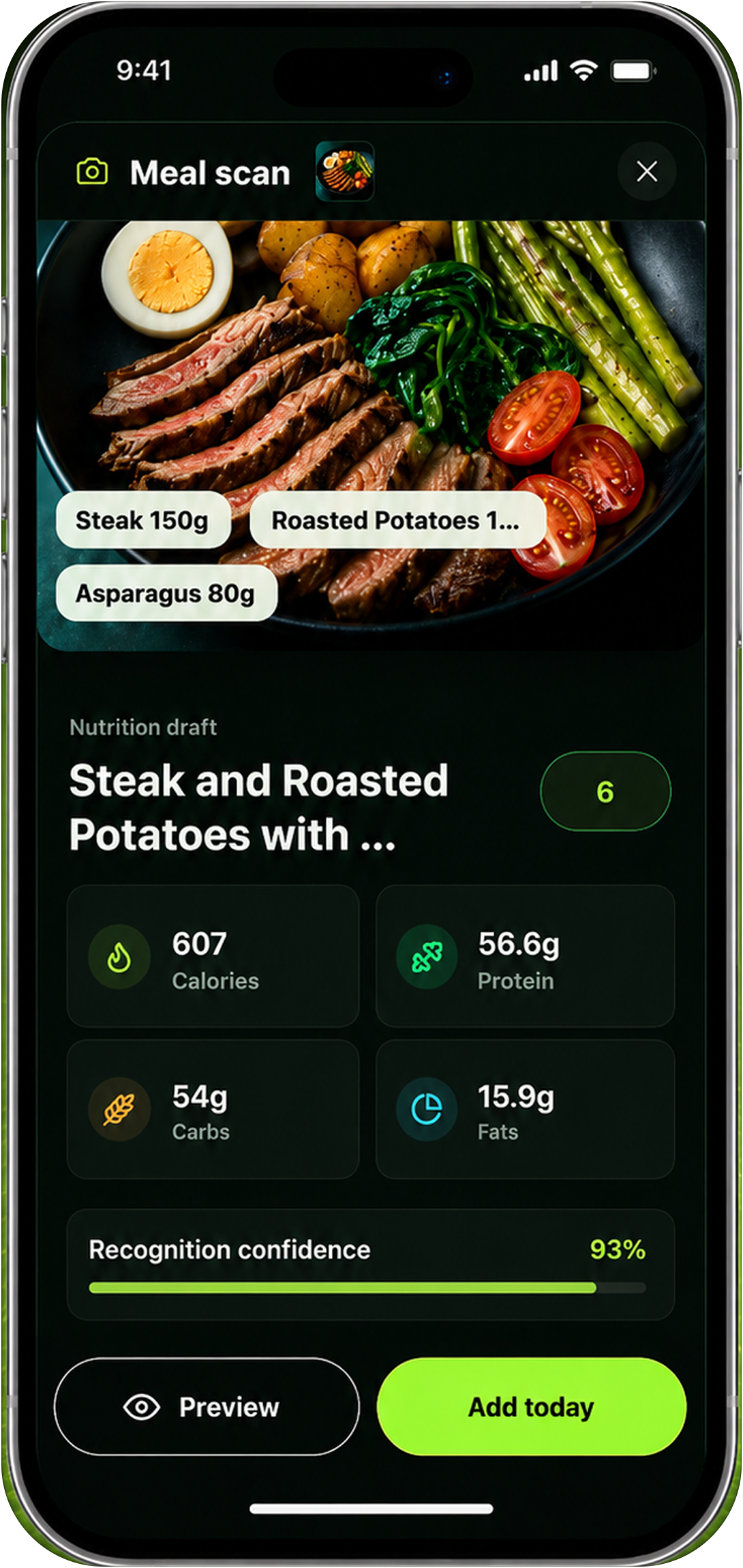
Do not wait for a dramatic before-and-after photo to decide whether the program is working. Review these signals at the end of each four-week block:
- Performance: Are you doing more quality reps, using more load, controlling the movement better, or working at the same load with less effort?
- Consistency: Did you complete enough of the planned sessions to judge the program? A perfect plan that you rarely follow produces little evidence.
- Measurements: Are selected circumferences, waist, or clothing fit moving in the direction that matches your goal?
- Photos: Does a standardized comparison show a difference when you place the images side by side?
- Recovery: Are you sleeping, eating, and recovering well enough to repeat the work?
Reset90 is useful here because the App gives you a repeatable place to follow the workout, record progression and RIR context, review check-ins, and keep the longer trend visible. You can use the record to answer “what changed?” with more than a feeling from today’s session.
If you want the training-specific version of this process, see how to track progressive overload when the weight on the bar is not moving every session.
05What to do when you see no change after four weeks
Four weeks is long enough to review your process, but not always long enough to expect a visible transformation. Before changing everything, check the basics:
- Was the plan repeatable? If exercises changed every session, you may not have enough comparable data to see progression.
- Did you train close enough to a productive effort? Every set does not need to be a maximum, but easy work that never becomes more challenging may not provide a strong enough stimulus.
- Did reps or load progress? If not, look at technique, exercise order, rest periods, fatigue, and whether the target muscle is doing the work.
- Did nutrition match the goal? Building muscle, maintaining weight, and losing fat require different expectations. Under-fueling can make performance and recovery harder.
- Did recovery support the plan? Poor sleep, high stress, and too much extra activity can hide progress or reduce your ability to train well.
- Did you measure under the same conditions? A post-workout photo and a tired evening photo are not a fair comparison.
Change one meaningful variable at a time, then give the revised plan another block. Constantly restarting makes it difficult to know which change helped.
06How training age changes the timeline
Beginners often improve quickly because almost every well-executed session is a new stimulus. They may add reps, learn better technique, and feel more capable in the first month. That does not mean every beginner will look dramatically different in 30 days.
Intermediate lifters usually need more precise programming and more patience. They have already adapted to common movements, so gains come from managing volume, intensity, exercise selection, recovery, and nutrition over repeated blocks.
Advanced lifters may be improving in ways that are difficult to spot from week to week: a small strength increase, cleaner reps, a better sticking-point strategy, or a modest change in a measurement. Their comparisons should usually span longer periods.
Returning lifters are a special case. Someone who has trained before may regain performance and size more quickly than a first-time beginner because the body has prior experience. That is one reason your own history matters more than a generic transformation timeline.
07How nutrition and recovery affect visible results
Training provides the stimulus; recovery gives your body the opportunity to adapt. A routine built around progressive resistance, adequate protein, enough total food, and regular sleep is more likely to produce a clear trend than a hard workout plan that you cannot recover from.
Your goal matters too. If you are in a calorie deficit, you may be trying to lose fat while preserving or slowly building muscle. If you are in a surplus, scale weight may rise before you can tell how much of the change is muscle. If you are maintaining weight, recomposition can be visually meaningful while the scale barely changes.
Reset90’s nutrition dashboard can keep calorie and macro targets visible alongside the workout record. The point is not to chase perfect numbers. It is to make your intake and training consistent enough that the next four-week review has useful evidence.
If the goal is muscle gain, you can also compare the timeline with our guide to food tracking for muscle gain. If the goal is recomposition, use the multi-signal approach in our body-recomposition tracking guide.
08What does three months of gym results look like?
Three months is a useful first training block because it is long enough to compare repeated workouts, several photo checkpoints, and a meaningful body-weight trend. A beginner may have clearly improved strength and technique, see some change in clothing fit or photos, and feel more capable in daily movement.
That does not mean everyone will have the same visible transformation. Starting body fat, training history, goal, nutrition, and consistency all change the result. Someone focused on strength may lift much more without a dramatic change in size. Someone losing fat may look noticeably leaner even if the scale moves slowly.
Use the three-month point to ask whether the full process is working: Are the sessions getting better? Are your chosen measurements moving? Are the photos comparable? Is your recovery good enough to continue? Those answers are more valuable than comparing your body with a stranger’s three-month image online.
09Frequently asked questions
How long does it take to see results from working out?
You may feel better or stronger within a few weeks. Visible changes often need roughly 8–12 weeks of consistent training, and more substantial body-composition changes usually need several months. The exact timeline depends on the goal and the starting point.
How long does it take to see muscle results?
Strength and technique can improve before muscle size is obvious. Give a consistent program at least one full block, often 8–12 weeks, before judging visible muscle results. Use performance, photos, and measurements together.
Can I see gym results in one month?
You can see meaningful early results in one month, especially in strength, exercise confidence, energy, and consistency. A dramatic visual transformation is a different expectation. One month is better used as a process check than as a final before-and-after.
What if I do not see results after three months?
Check adherence, progression, nutrition, sleep, measurement conditions, and whether your goal matches the metric you are using. If nothing is improving, adjust one variable and track another block. If you have pain, unusual fatigue, or a health concern, get advice from a qualified professional.
Do you get results faster if you lift more often?
Not automatically. More sessions help only when they provide useful training and you can recover from them. A sustainable schedule performed consistently for months is usually more valuable than an aggressive schedule that lasts two weeks.
10The bottom line
You may feel the first benefits of lifting in 2–4 weeks, see clearer photo and measurement signals around 6–12 weeks, and notice more substantial changes after several months. Strength, muscle, fat loss, energy, and appearance do not all move at the same speed.
Give your plan enough time, track the signals it can actually change, and review four-week and 12-week trends instead of checking the mirror for proof every day. Download Reset90 from the App Store or Google Play using the buttons on this page to keep your training, nutrition, photos, measurements, and check-ins connected while you build the next block.
The Reset90 system
Useful ideas for building a body you can keep.
Training notes, product updates, and practical ways to make your next 90 days count.
Start your next 90 days
Get your daily training, nutrition, and check-in priorities in one adaptive system.


Keep reading
Related articles
Ideal Body Measurements for Women
There is no single ideal body measurement set for women. Learn how averages, waist-to-height, body shape and repeatable tracking fit together without chasing a fixed beauty standard.
Read article
Bulk, Cut, or Recomp? A Practical Decision Guide
A practical way to choose a bulk, cut, recomp, or maintenance phase using your goal, training age, recovery, and repeatable progress signals.
Read article
How Often Should You Take Progress Photos?
How often should you take progress photos? Use this goal-based guide to choose weekly, biweekly, or monthly check-ins and make every comparison more consistent.
Read article