

Newbie Gains: How Long Do They Last?
Newbie gains are real, but they are not a permanent shortcut. Learn why beginners progress quickly, how long the phase usually lasts, what changes when it slows, and how to build a sustainable training system.
By Reset90 AI Editorial Team
Short answer: Newbie gains usually feel fastest during the first 3–6 months of consistent resistance training, and some beginners continue to make unusually quick progress through roughly 6–12 months. There is no universal cutoff. The pace gradually slows as your body adapts, but slower progress is still progress. The useful question is not whether the phase suddenly ended; it is which training, recovery, and measurement habits need to become more deliberate.
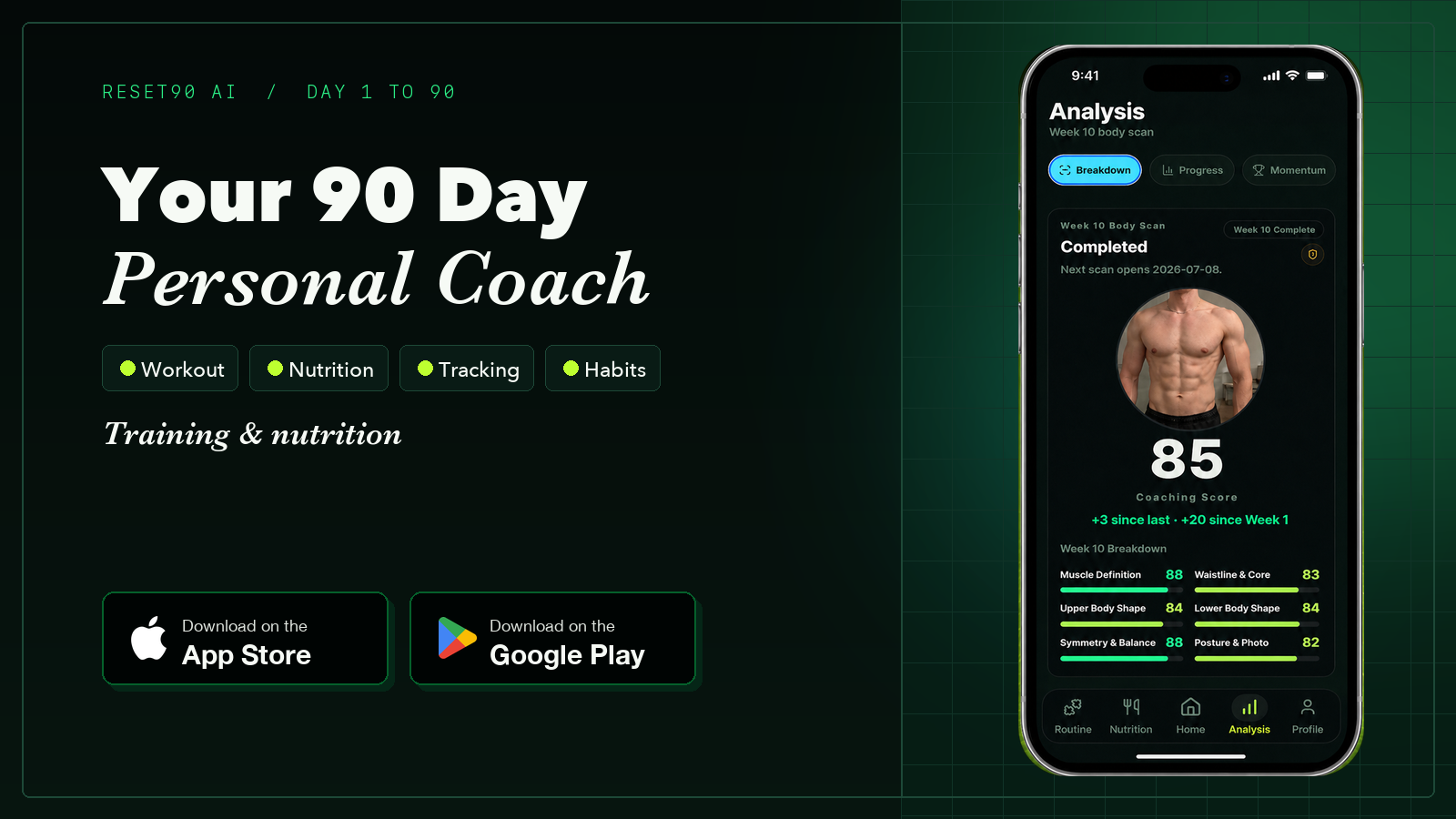
Starting strength training can feel almost unfair in the best possible way. A beginner may add reps or weight from session to session, learn movements quickly, and notice changes in confidence before the mirror has caught up. Lifters call this period newbie gains or beginner gains.
The phrase is useful, but it can also create bad expectations. It does not mean every new lifter will gain a fixed amount of muscle in a fixed number of weeks. It does not mean your progress is over when the easy personal records stop. And it does not mean a missed month permanently destroys your chance to build muscle.
This guide gives you a practical timeline, explains what is happening underneath the early progress, and shows how to adjust when the pace changes without throwing away a good plan.
01What newbie gains (or beginner gains) actually mean
Newbie gains, also called beginner gains, describe the faster-than-usual improvements that often happen when someone starts structured resistance training, returns after a long break, or begins following a more effective program. The improvements can include:
- strength and rep increases;
- better technique, balance, and control;
- early muscle-size changes;
- improved work capacity and confidence; and
- body-composition changes when training and nutrition support the goal.
These are related, but they are not identical. A new lifter can become stronger before adding a large amount of muscle because the nervous system is learning to coordinate the movement. Muscles can also look fuller because of glycogen, fluid, and the temporary effect of training. Those changes are real, but they should not be confused with a precise measurement of newly built muscle tissue.
That is why “how much muscle can a beginner gain?” is harder to answer than it sounds. Starting size, training history, age, sex, genetics, program quality, food intake, sleep, and consistency all affect the outcome. A range can set expectations; it cannot predict your personal result.
02Why progress is fast at first
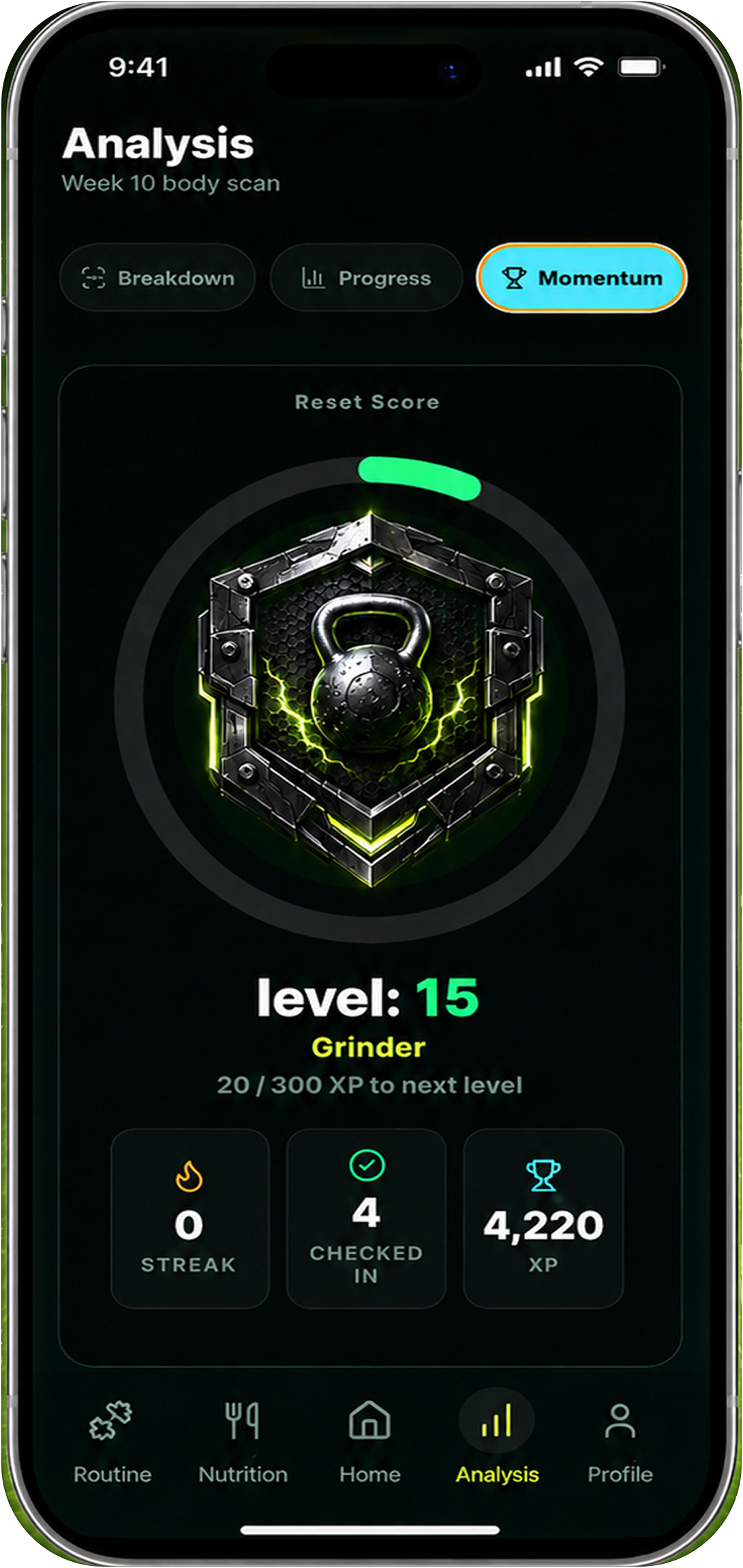
Early progress usually comes from several adaptations happening at the same time.
Your nervous system learns the lifts
A squat, press, row, or deadlift is a skill as well as a physical challenge. Your brain learns how to brace, sequence the joints, recruit muscle fibers, and repeat the movement with less wasted effort. That can make the same exercise feel dramatically easier within the first few weeks.
Those strength gains matter, even when they are not all new muscle. Better coordination gives you a more reliable base from which to train. It also makes your log more useful because you can compare similar reps with more consistent technique.
Your muscles are receiving a new stimulus
Untrained muscle has a large amount of room to adapt. A well-designed beginner routine does not need to be complicated to create a meaningful challenge. Repeated exposure to resistance training can support muscle growth, stronger connective tissues, and better tolerance for training volume.
The important word is repeated. One hard workout can create soreness and a pump. A series of recoverable workouts creates a trend you can evaluate.
Your baseline may change quickly
For someone starting with little muscle, limited work capacity, or inconsistent training, many basic improvements are available at once. Better movement, more regular meals, more sleep, and a repeatable program can all contribute to a noticeable first block.
That does not make the beginner phase magic. It makes the first few months a high-leverage period for building skills and habits that will continue to matter after the quick wins become less dramatic.
03How long do newbie gains last?
For many beginners, the fastest pace is most noticeable during the first 3–6 months of consistent training. Some people continue to experience above-baseline progress through 6–12 months, especially when they start with little training experience and have a lot of room to improve. Others notice the pace changing sooner.
Think of this as a slope that becomes less steep, not a switch that turns off. You might go from adding weight almost every session to adding weight every few weeks. You might still improve, but the improvements may show up as cleaner reps, more total work, better control, or a small measurement change rather than a dramatic personal record.
| Training stage | What may improve first | How to interpret it |
|---|---|---|
| Weeks 1–4 | Technique, coordination, confidence, and repeatable reps | Early strength is often strongly influenced by skill and nervous-system learning. |
| Months 2–3 | More stable progression, better work capacity, and possible early visual or measurement changes | Use repeated exercises and comparable check-ins instead of judging one workout. |
| Months 3–6 | Continued strength and muscle progress when training, food, and recovery are consistent | This is often where people feel the classic beginner momentum, but individual results vary widely. |
| Months 6–12+ | Smaller, more deliberate improvements | The phase may be slowing, not ending. Programming and recovery usually need more attention. |
Do not use the table as a promise or a deadline. If you have been training for two months and do not look dramatically different, that does not prove the plan failed. If you are still progressing after a year, that does not mean you are doing anything wrong. Training age is a continuum, and the rate of progress is affected by far more than the calendar.
04Do newbie gains come back after a long break?
If you trained consistently before and return after months or years away, you may regain strength and muscle faster than someone starting for the first time. That pattern is usually better described as muscle memory and reacquisition of movement skill than as a second, identical beginner phase. Your previous training history, the length of the break, and how much strength or muscle you retained all matter.
Restart below your old working loads and make the first block easy to compare. Keep a few movements stable, progress gradually, and give yourself roughly 8–12 weeks of consistent training before deciding whether the plan or your nutrition needs a major change. Returning progress can be quick, but it still needs recoverable sessions.
- Begin with a load and volume you can repeat with controlled form.
- Compare the same movements, range of motion, and effort across sessions.
- Review performance, measurements, photos, weight trends, and recovery together.
05How to tell when the pace is changing
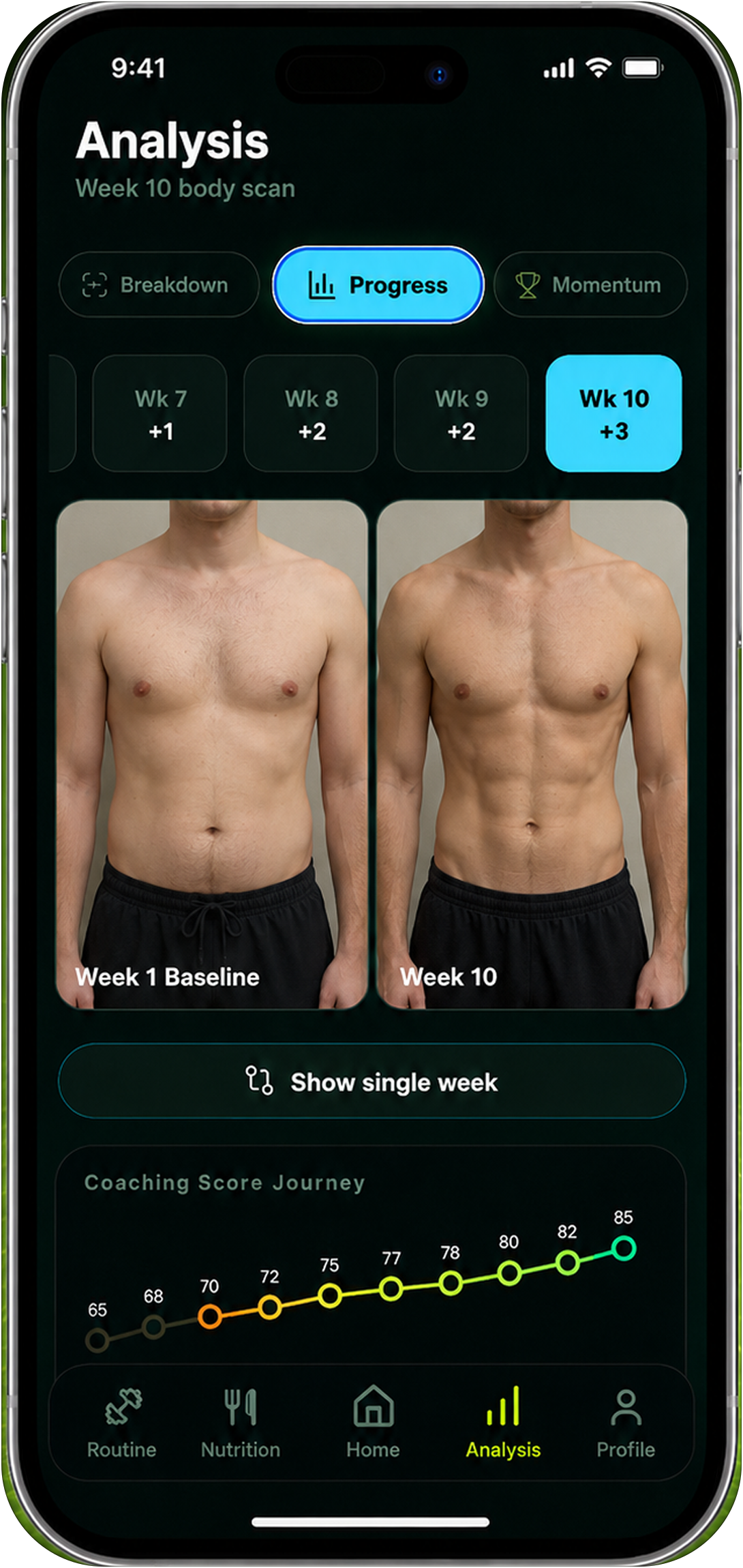
The end of the fastest phase usually appears as a pattern, not one bad session. Watch for several changes happening across a few weeks:
- the same lift no longer increases every workout;
- adding weight requires more repetitions at the current load first;
- your recovery takes longer after hard sessions;
- progress depends more on exercise selection, volume, and effort;
- visual changes are easier to see across months than across weeks; or
- your performance is stable even though the number on the bar is not rising.
None of these is a failure signal by itself. A plateau can come from poor sleep, a calorie deficit, inconsistent sessions, an exercise that no longer fits your structure, or fatigue that has accumulated faster than you can recover. Before declaring the newbie gains phase over, check the inputs.
06Can you waste your newbie gains?
You can waste time, but you do not permanently spend a biological coupon by having a messy first program. Missed workouts, an imperfect diet, or a few months of inconsistent training may mean you made less progress than you could have made. They do not prove that you can never respond well to training again.
The better response is to restart with a simpler system:
- Choose a schedule you can actually repeat.
- Keep a small number of main movements stable long enough to compare them.
- Progress gradually instead of testing a max every session.
- Review food and sleep as training inputs, not as afterthoughts.
- Use a block of consistent data before making a dramatic change.
If you have pain, unusual fatigue, a medical condition, or a history of disordered eating, a qualified clinician or registered professional should help shape the plan. Fitness content can explain general patterns; it cannot diagnose why a specific person is not progressing.
07How to make the most of the beginner phase
The best beginner plan is usually the one that creates enough stimulus to improve while leaving you ready to train again. You do not need advanced intensity techniques to benefit from early training momentum.
Practice the basic movement patterns
Use a manageable set of exercises that covers the major movement patterns and fits your equipment, mobility, and preferences. Full-body sessions two or three times per week can be a practical starting point for many beginners because they provide frequent practice without requiring a complicated split.
Do not change exercises every time a workout feels difficult. Consistency makes it easier to separate a real adaptation from a difference in equipment, range of motion, or technique.
Progress without chasing exhaustion
Progressive overload can mean more load or reps, but it can also mean better control, a fuller range of motion, a steadier tempo, or the same work with less effort. Add challenge when the current work is repeatable and your form remains sound.
A simple training log can show whether the plan is moving. Our guide to tracking progressive overload explains how to do that when the weight does not increase every session.
Support the work with food and recovery
Muscle gain requires more than a hard workout. Eat enough to support your goal, include regular protein-rich foods, and pay attention to sleep and rest days. You do not need perfect numbers to start, but you do need enough consistency for the next review to be meaningful.
If you are trying to gain muscle, our guide to food tracking for muscle gain can help you make calories and protein visible without turning every meal into a pass-or-fail test.
08What to track when beginner progress feels confusing
New lifters often look for one number that proves the phase is working. There is no perfect single metric. Use a small set of signals that answer different questions:
| Signal | What it can tell you | What it cannot prove alone |
|---|---|---|
| Workout performance | Whether capacity, technique, or work quality is improving | Exactly how much new muscle you have built |
| Measurements and clothing fit | Whether selected body areas are changing under a repeatable protocol | Whether every centimeter is muscle or fat |
| Progress photos | Whether shape and proportions look different across a longer interval | A precise body-fat or muscle estimate from one image |
| Weight trend | Whether total body mass is moving up, down, or staying near stable | Whether the change is muscle, fat, water, glycogen, or food volume |
| Adherence and recovery | Whether the inputs are stable enough to interpret the outcome | That a perfect week guarantees a particular result |
Review these signals over about 28 days. Daily fluctuations are too noisy for most decisions, and a single great workout can create false confidence. For a deeper explanation of this multi-signal approach, read the reliable signs of muscle growth and how long it takes to see results from lifting.
09What to do after the beginner gains slow down
When progress becomes slower, do not respond by making every variable harder at once. Use the slowdown as a prompt to improve your feedback loop.
- Check consistency. Did you complete enough comparable sessions to judge the plan?
- Check technique. Are the reps using the same range of motion, tempo, and control?
- Check progression. Can you add a rep, improve quality, or increase load without losing form?
- Check recovery. Are sleep, rest days, stress, and training volume compatible?
- Check nutrition. Does what you are eating match whether you want to gain, maintain, or lose weight?
- Change one lever. Give the adjustment enough time to teach you something.
Reset90 AI is a training and nutrition app for beginners and returning lifters who want their workout record, progression context, nutrition targets, check-ins, progress photos, and weight trends in one feedback loop. It is useful when your next decision is “what changed, and what should I adjust?” rather than “can I force a faster result?” Explore the Reset90 system to see how the workflow fits together. Reset90 helps you record and compare trends; it does not diagnose a plateau, determine exactly how much muscle you built, or replace a qualified clinician or coach.
If your goal is body recomposition, use the same principle described in our body-recomposition tracking guide: compare several signals before changing the plan because one number moved.
10Frequently asked questions
Do newbie gains happen to everyone?
Most people who begin a consistent resistance-training routine can improve strength and movement skill quickly. The amount of visible muscle gain varies widely. Your starting point, program, training effort, nutrition, sleep, health, age, and genetics all matter, so “newbie gains” should describe a common pattern rather than guarantee an outcome.
Can beginners build muscle while losing fat?
Some beginners can gain muscle while losing fat, especially when they have more body fat to lose and are new to effective resistance training. It is not automatic, and it is not a reason to assume every scale change represents muscle. Track performance, measurements, photos, and weight trends together.
Are newbie gains only about muscle?
No. The early phase can include neural and technical strength improvements, muscle growth, better work capacity, changes in glycogen and fluid, and improved confidence. That combination is why a beginner may feel substantially stronger before the mirror shows a large change.
What if my progress slows after two months?
Two months is not a universal deadline. First check whether the plan was consistent and whether you are comparing the same exercises under similar conditions. Then review sleep, food, recovery, and progression. A slower week does not tell you that the phase is over; a repeated pattern across several weeks is more useful.
What happens after newbie gains?
You keep training, but the rate of progress becomes more gradual and the plan may need more precise volume, exercise selection, effort management, and recovery. The goal changes from collecting easy personal records to building a system that can produce small improvements for a long time.
11A better beginner milestone
The most useful milestone is not “I used up my newbie gains.” It is “I built a repeatable training system.” If you can train consistently, record comparable work, eat in a way that supports your goal, recover well enough to repeat the effort, and review your trend without overreacting to daily noise, you have already turned the beginner phase into something more valuable than a short burst of progress.
Newbie gains may last a few months for one person and closer to a year for another. The exact number matters less than what you do with the time: learn the movements, build the habit, track the evidence, and keep progressing after the slope becomes less dramatic.
The Reset90 system
Useful ideas for building a body you can keep.
Training notes, product updates, and practical ways to make your next 90 days count.
Start your next 90 days
Get your daily training, nutrition, and check-in priorities in one adaptive system.


Keep reading
Related articles
Ideal Body Measurements for Women
There is no single ideal body measurement set for women. Learn how averages, waist-to-height, body shape and repeatable tracking fit together without chasing a fixed beauty standard.
Read article
Bulk, Cut, or Recomp? A Practical Decision Guide
A practical way to choose a bulk, cut, recomp, or maintenance phase using your goal, training age, recovery, and repeatable progress signals.
Read article
How Often Should You Take Progress Photos?
How often should you take progress photos? Use this goal-based guide to choose weekly, biweekly, or monthly check-ins and make every comparison more consistent.
Read article