
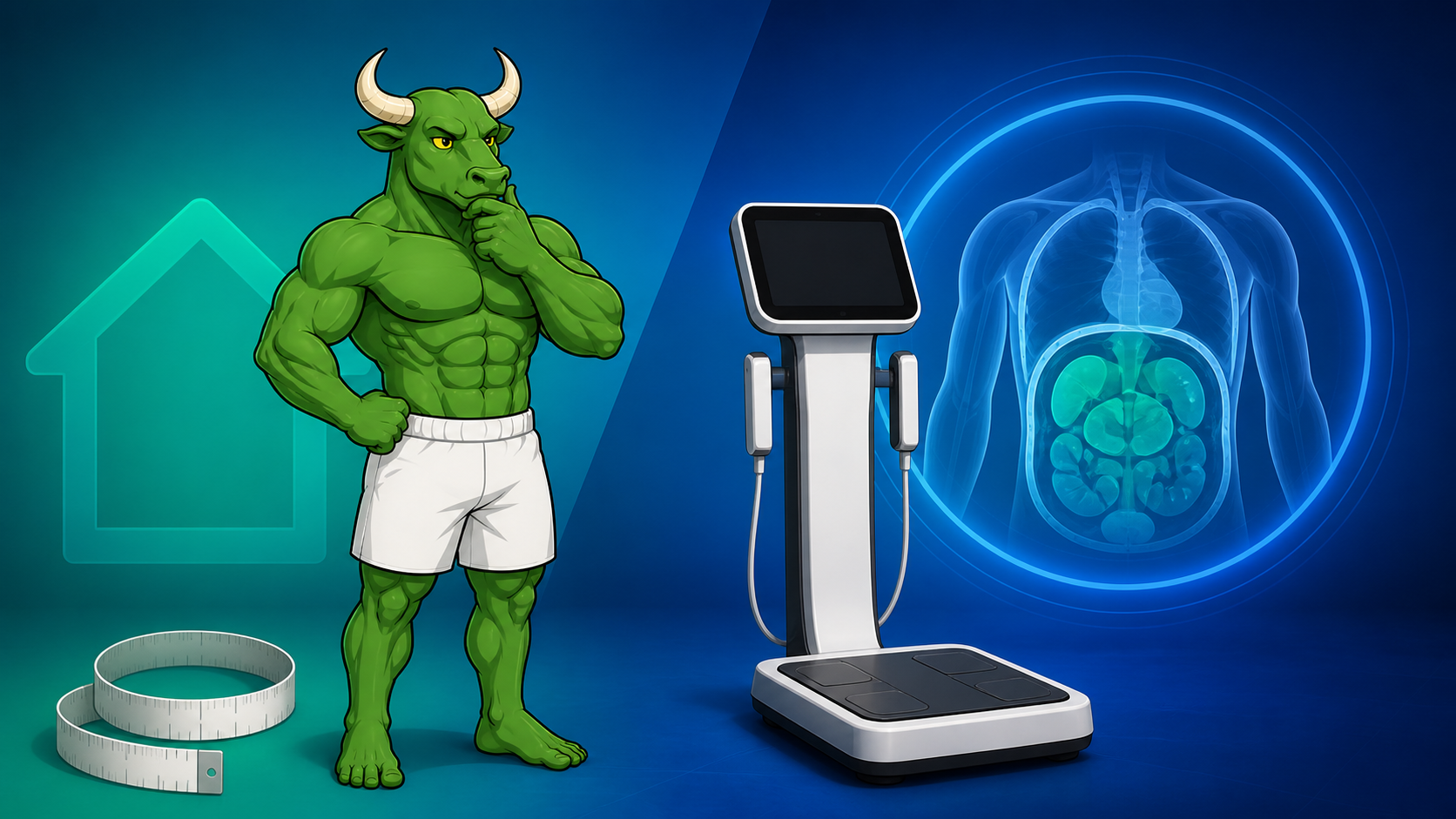
Visceral Fat Level and Testing: What Your Number Can Tell You
A visceral fat level is a device-specific estimate, not a universal diagnosis. Learn how to read the number, compare testing methods, and follow the trend.
By Reset90 AI Editorial Team
Short answer: A visceral fat level or rating on a home body-composition monitor is usually a device-specific estimate, not a universal measurement of the fat around your organs. Read the scale's method, units, and reference band first. Then use repeatable readings alongside waist measurements, weight trends, progress photos, and health context. A single number—especially one that changes overnight—should not be treated as a diagnosis.

01What visceral fat is
Visceral fat, also called visceral adipose tissue, is fat stored inside the abdominal cavity around internal organs. It is different from subcutaneous fat, the softer fat you can pinch under the skin. Both are normal parts of the body, but they answer different questions when you measure them.
The important limitation is that visceral fat is not one simple number with one global scale. A laboratory or imaging report might use an area, a mass estimate, a volume, a percentile, or a risk category. A smart scale might show a whole-number “level,” “rating,” or “index” produced by its own algorithm. Those outputs are not interchangeable just because they use similar words.
Waist circumference and waist-to-height ratio can provide practical clues about central fat distribution, but they are proxies. They do not show how much fat is located inside the abdominal cavity. Body-composition monitors add another estimate, but their result still depends on the device, model, electrodes, software, and measurement conditions.
02What a visceral fat level or rating actually means
When a home monitor reports a visceral fat level, it is generally combining electrical impedance information with inputs such as height, weight, age, sex, and the manufacturer's prediction model. The monitor is not looking through your skin and directly measuring the fat around each organ. Treat the result as a modeled signal that may be useful for following a trend on the same system.
Some manufacturers publish a rating scale such as 1–12, while others use a wider index such as 1–50 or 1–59. Another device may report a percentage, an estimated mass, or no visceral-fat field at all. A rating of 7 on one product does not automatically equal a rating of 7 on another. Even when two devices use the same numerical range, their algorithms and reference populations may differ.
That makes the device manual part of the result. Before interpreting your number, record:
- the manufacturer and exact model;
- whether the output is called a level, rating, index, percentage, mass, or area;
- the units and the manufacturer's reference categories;
- whether the monitor uses foot-to-foot or hand-and-foot electrodes;
- the conditions under which you measured.
So, is a visceral fat level of 7 good? It may sit inside a “standard” or “healthy” band on some consumer monitors, but the number alone is not enough to make that conclusion. Is 14 high? It may be above a manufacturer's reference band on some systems, but it is still not a universal clinical cutoff. Use the range documented for your own device, then discuss persistent concerns with a qualified clinician rather than translating the number across products.
03A visceral fat level chart without false precision
The most useful chart is not a universal list of numbers. It is a map of the output type and what that output can answer:
| Output you see | What it usually represents | How to use it |
|---|---|---|
| Visceral fat level or rating | A manufacturer-specific model output | Compare trends on the same device; use that device's own bands |
| Visceral fat index | Another label for a device or software index | Check the definition and range before comparing it with a rating |
| Waist circumference | A tape-measured proxy for central adiposity | Repeat at the same landmark and conditions; do not call it a direct test |
| DXA regional fat estimate | A body-composition estimate from a scan and its software | Read the report's method and reference population; it is not the same as CT/MRI |
| CT/MRI visceral adipose area or volume | Imaging-based quantification of abdominal fat distribution | Interpret in the clinical or research context for which the scan was ordered |
Notice that these rows do not share a common unit. A chart that places a consumer rating, waist inches, DXA pounds, and CT square centimeters in one “normal range” can look precise while combining different measurement tasks. A reliable comparison begins with the label, not the number.
04How visceral fat is tested
The right method depends on the question you are trying to answer. If you want a low-cost trend at home, a repeatable waist protocol may be more useful than chasing a new device. If a clinician needs a more specific view of body composition or abdominal fat distribution, the appropriate test may be different.
| Method | What it can help answer | Important boundary |
|---|---|---|
| Waist circumference | Has central size changed under a consistent protocol? | It is affected by tape placement, posture, breathing, meals, and bloating; it is not a direct visceral-fat measurement |
| Waist-to-height ratio | How does waist size compare with body height? | It is a screening proxy and does not separate visceral from subcutaneous fat |
| BIA smart scale | Is the same device's estimate moving over time? | Hydration, food, exercise, skin contact, posture, temperature, and the algorithm can affect the estimate |
| DXA | What does a scan estimate about regional fat and lean mass? | Software may estimate visceral fat from the scan; DXA does not directly image abdominal fat in the same way CT/MRI does |
| CT or MRI | What is the imaged abdominal fat distribution in a clinical or research setting? | These are not routine fitness tests; cost, availability, clinical need, and—for CT—radiation exposure matter |
For a general fitness check-in, “how to measure visceral fat” usually means choosing a consistent proxy and understanding its limits. A smart scale can be convenient, but convenience does not turn an estimate into direct imaging. The broader question of BIA accuracy is covered in Are Smart Scales Accurate?, while the detailed tape-measure landmarks are covered in How to Take Body Measurements.
05Why the number can change overnight
A home visceral fat rating can move even when your actual abdominal fat has not meaningfully changed. BIA estimates are sensitive to the body's electrical properties and to the inputs that surround a reading. A late meal, a hard workout, alcohol, a salty day, poor sleep, dehydration, a large glass of water, a hot shower, cold feet, or different foot placement can all change the measurement context.
There are also ordinary sources of variation that have nothing to do with fat gain or loss: bowel contents, menstrual-cycle-related fluid changes, inflammation after training, a different floor surface, and a device software update. If the device has changed its algorithm or you switch from foot electrodes to a hand-and-foot model, treat the new series as a new baseline.
That is why a single reading is a weak decision signal. A better question is whether a pattern is moving under comparable conditions, and whether other measures tell a similar story. If the visceral fat number changes while your waist, seven-day weight average, photos, and training performance stay stable, do not force a dramatic interpretation onto one device estimate.
06A repeatable 28-day workflow
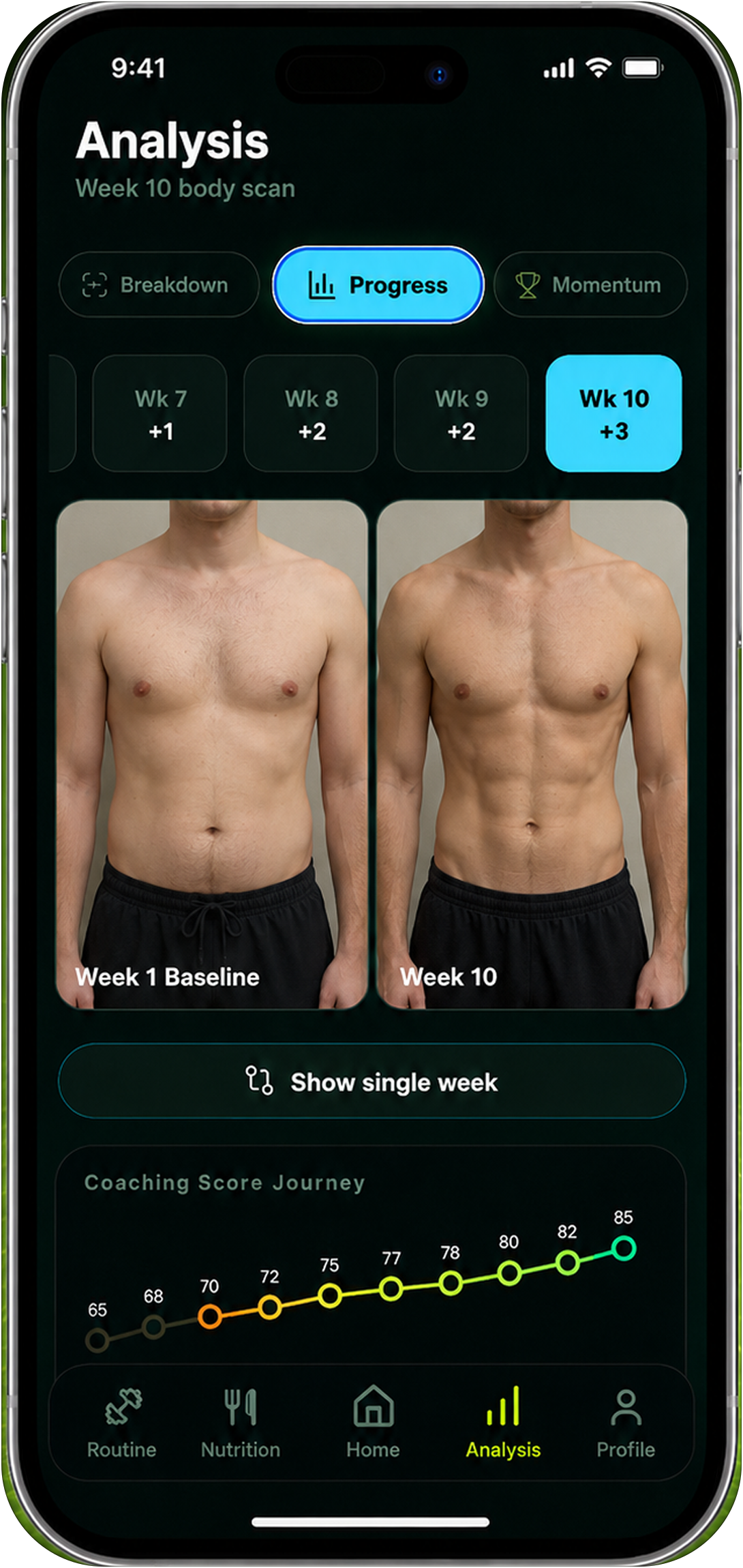
Use the following workflow when you want to learn from a visceral fat level without pretending it is more exact than it is:
- Write down the device. Save the manufacturer, model, app version if visible, output name, range, and units. Do not merge readings from different devices into one line.
- Choose one measurement window. Many people find it practical to measure in the morning, after using the bathroom, before food or training. The exact time matters less than repeating the same routine.
- Control the basics. Use the same hard floor, barefoot contact, posture, and hand position. Follow the device instructions and avoid comparing a post-workout reading with a rested morning reading.
- Record context, not just the score. Note unusual hydration, alcohol, a large meal, a hard session, illness, travel, or poor sleep when one result looks surprising.
- Review the trend after four weeks. Look at the direction and consistency of the series, not the biggest single change. If daily readings create noise, compare a weekly summary or a consistent monthly checkpoint.
Alongside the device output, track waist circumference with a consistent tape protocol, a seven-day weight average if weight is relevant to your goal, progress photos taken under similar conditions, training or activity consistency, and the habits that explain the context. A photo can show visible change, but it is not a visceral-fat test. A body-fat calculator can provide an estimate, but it is not a replacement for a scan; see How Accurate Are Body Fat Calculators? for that distinction.
Reset90 can help organize this 28-day context: workouts, nutrition targets, check-ins, measurements, and progress photos can live in one repeatable routine. It does not measure visceral fat, verify a smart-scale rating, or replace clinician-directed testing. Its value here is helping you follow the behaviors and surrounding signals that make a trend easier to interpret.
07What to do if the number is high
First, check whether the result is actually high according to your device's documentation and whether the reading was taken under your normal conditions. Repeat it rather than reacting to one unusual result. Then look for agreement—or disagreement—between the device, waist trend, weight trend, photos, activity, and how you feel.
If a result stays concerning, changes persistently, or appears alongside symptoms or other health findings, bring the device model and your measurement log to a qualified healthcare professional. They can decide whether a waist assessment, laboratory work, body-composition scan, or another evaluation is appropriate. Do not order CT or MRI solely to settle a consumer-scale number without a clinical reason.
For general health, the useful next step is usually a sustainable routine around movement, nutrition, sleep, and follow-up—not a promise that one app or scale can diagnose what is happening inside the abdomen. If you are comparing tracking options, this guide to visceral-fat tracking apps explains what different tools can and cannot monitor.
08Frequently asked questions
Is a visceral fat level of 7 good?
It may fall inside the reference band on some consumer monitors, but there is no universal meaning for “7.” Confirm the exact device, output definition, and reference range. Use the result as a same-device trend rather than a diagnosis.
Is a visceral fat level of 14 high?
Some devices place 14 above their own reference band, while other products use a different range or unit. It is reasonable to repeat the reading under consistent conditions and discuss a persistent concern with a clinician, but do not translate 14 into a universal amount of abdominal fat.
Does every scale use the same visceral fat range?
No. “Level,” “rating,” and “index” can describe different manufacturer models. The range, reference population, and algorithm are product-specific, so numbers from two scales should not be combined.
Can a smart scale directly measure fat around my organs?
Generally, no. A consumer BIA scale estimates body composition from electrical measurements and a prediction model. It may provide a useful trend signal for one person on one device, but it does not directly image the fat around individual organs.
Is waist circumference a visceral-fat test?
It is a practical proxy for central adiposity, not a direct visceral-fat test. Its usefulness depends on consistent landmark, tape tension, posture, and timing. Follow the same protocol every time and interpret it with other context.
Is DXA the same as CT or MRI for visceral fat?
No. DXA can provide a body-composition scan and, depending on the system and software, a regional visceral-fat estimate. CT and MRI can quantify abdominal fat distribution directly in the imaged area, but they have different clinical, cost, availability, and— for CT—radiation considerations.
Why did my number change overnight?
Hydration, food, exercise, sleep, fluid shifts, temperature, contact, posture, and other measurement conditions can affect a BIA estimate. Check the context and look at the trend before deciding that body fat changed.
09Bottom line
A visceral fat level is best understood as a labeled output from a specific device or method, not as a universal score. Start by identifying the unit and reference system. Use the same method under repeatable conditions, review the trend over several weeks, and compare it with waist, weight, photos, activity, and health context. When a number remains concerning, move the question to a qualified healthcare professional instead of chasing false precision from another home reading.
For more context on body-composition metrics and progress tracking, explore the body fat percentage chart and keep the measurement method visible beside every result.
The Reset90 system
Useful ideas for building a body you can keep.
Training notes, product updates, and practical ways to make your next 90 days count.
Start your next 90 days
Get your daily training, nutrition, and check-in priorities in one adaptive system.


Keep reading
Related articles

Ideal Body Measurements for Women
There is no single ideal body measurement set for women. Learn how averages, waist-to-height, body shape and repeatable tracking fit together without chasing a fixed beauty standard.
Read article
Bulk, Cut, or Recomp? A Practical Decision Guide
A practical way to choose a bulk, cut, recomp, or maintenance phase using your goal, training age, recovery, and repeatable progress signals.
Read article
How Often Should You Take Progress Photos?
How often should you take progress photos? Use this goal-based guide to choose weekly, biweekly, or monthly check-ins and make every comparison more consistent.
Read article